

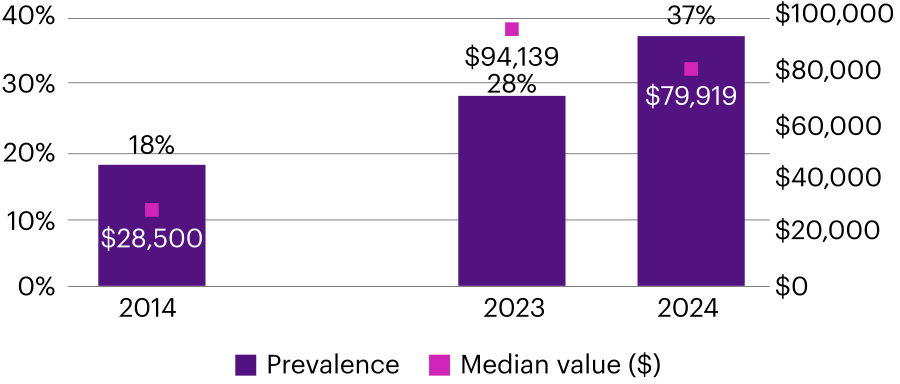
In 2024, nearly two in five (37%) S&P 500 companies disclosed enhanced security services for their CEOs, up from 28% in 2023 and more than double the number that disclosed protective services a decade ago (18%).
This increase underscores the heightened focus on executive security amid growing transparency around corporate activities and visibility of business leaders. An effective security program both provides safety and allows the executive to maintain focus on their responsibilities.
Known security threats as well as specific incidents (e.g., the 2024 murder of UnitedHealthcare CEO Brian Thompson) are sometimes cited as justification for establishing or enhancing executives’ security services. While companies often don’t view security protections as personal benefits, the U.S. Securities and Exchange Commission (SEC) does, based on its perquisite disclosure rules. The SEC’s June roundtable addressed executive compensation disclosures, including security benefits.
Panelists noted that companies often are criticized for excessive pay when these costs — which internal and external stakeholders generally consider to be a cost of doing business — are included in the Summary Compensation Table (SCT).
WTW’s Global Executive Compensation Analysis Team (GECAT) evaluated CEO security programs as disclosed in S&P 500 proxy statements filed by June 5, 2025, comparing the data to prior years.
The median value of security services for CEOs in 2024 was approximately $80,000, down from approximately $94,000 in 2023 (Figure 1). The rise in prevalence but drop in median value in 2024 likely were related, as there was an influx of newly established programs with relatively low costs by end of year. Among 25 companies that reported they had established security services for the CEO in the past year and disclosed an associated value; the median was just $54,630.
Source: WTW Global Executive Compensation Analysis Team analysis of S&P 500 proxy statements.
Unsurprisingly, corporations with the largest revenue were most likely to report security benefits. Nearly two-thirds (64%) of S&P 500 companies with revenue of more than $30 billion provided their CEO with security services (up from 53% in 2023). Conversely, just 16% of companies with less than $6 billion in revenue did the same, up from only 9% in the prior year.
Also, sectors with a concentration of high-profile CEOs are more likely to provide security services. Sixty percent of S&P 500 communication-sector CEOs received security services — the largest percentage of the group. Healthcare saw the biggest jump in the number of CEOs in our study receiving enhanced protection in 2024, with 40% receiving services (up from 25% in 2023). Similarly, the IT sector grew from 30% to 42%, with both the communication and IT sectors reporting median values of more than $100,000 in 2024.
Personal security, including physical or general protection as well as certain transportation-related services (e.g., car and driver) are the most commonly reported (Figure 2). That is followed by home and residential security, which typically includes installation and maintenance of monitoring equipment as well as monitoring services. However, the number of S&P 500 companies disclosing cybersecurity or identity theft protection for CEOs more than doubled in 2024, rising from 3% to 7%.
Though the personal use of corporate aircraft is not included in disclosed values for security services (these values are reported separately), companies often cite safety and/or security as justification for approving and, in some cases, requiring or encouraging, the CEO to use corporate aircraft for personal travel (Figure 3).
When boards of directors and senior management consider including or enhancing their executive security program, there are several factors to keep in mind.
Threat assessments, often commissioned by third parties, identify both physical and digital vulnerabilities and inform the suite of services appropriate for the CEO’s personal and professional safety. A substantial portion (39%) of companies with a CEO security program disclosed having conducted a security risk assessment (14% of the entire S&P 500), with most of these performed by an independent or third-party firm.
The results of the threat assessments typically are reviewed with the board to align on any enhancements to the current security program. Finding the appropriate balance of services is key to an effective security program. Similarly, determining the level of sophistication of equipment or services needed to meet and maintain the executive’s security goals is equally important.
Successful implementation and ongoing management of an executive security program typically involves engaging a multi-stakeholder group to understand the governance, disclosure, tax and employee-related considerations of potential changes. Furthermore, reviewing any external SEC disclosures carefully to balance compliance without compromising intent of the security policies that have been put in place is critical.
Ensuring the safety of leadership teams — particularly the CEO — has been an increasing priority in the past several years. The number of S&P 500 companies disclosing enhanced security services for their CEO rose significantly in 2024, especially in sectors with high-profile or highly visible executives. Boards and senior management teams must consider several factors when authorizing a security program, including administrative and disclosure specifics.
We will continue to watch for potential updates to the SEC disclosure rule, including any changes that may affect whether and how companies disclose details of executive security programs.


