


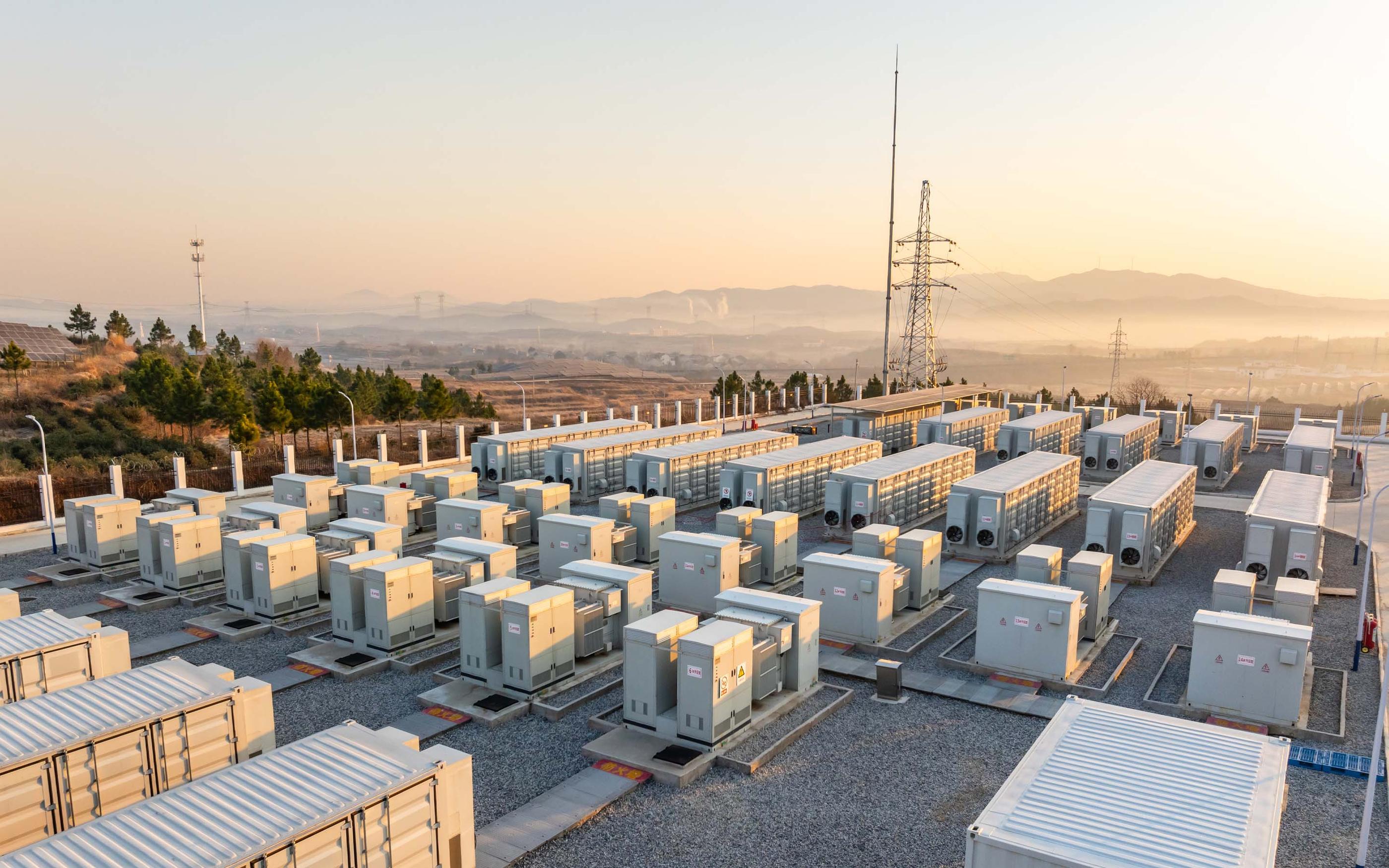
Given global grid capacity needs to grow 2.5 times its current size, with annual expenditure on grids more then doubling to $970 billion by 2050, battery energy storage systems (BESS) are becoming a cornerstone of the electrified future because they solve one of the biggest challenges of renewable energy: intermittency.
If you're looking to supply a growing energy demand with renewable, clean generation sources, then that's going to introduce volatility and intermittency, which is where you need your energy storage to help balance out supply and demand”Alastair NicklinDirector, Business Development Willis Natural Resources
“If you're looking to supply a growing energy demand with renewable, clean generation sources, then that's going to introduce volatility and intermittency, which is where you need your energy storage to help balance out supply and demand”, Alastair Nicklin, Director, Business Development, Willis Natural Resources.
But solving one issue raises another, and BESS manufacturers and developers are increasingly challenged by supply chain volatility.
Demand for critical minerals is surging, and competition to source lithium, cobalt, nickel, and graphite is increasing. This pressure is making it harder for battery manufacturers to secure reliable supplies at stable costs. Oversupply in some regions (especially China) has also led to downward pricing pressures, which paradoxically squeeze manufacturer margins due to global competition, rather than benefiting those producing battery cells.
Geopolitical tensions—such as trade restrictions and tariffs—are disrupting the global flow of both raw materials and finished batteries. The U.S. has placed restrictions on Chinese battery imports, driving BESS manufacturers and developers to diversify sourcing and production bases rapidly. These restrictions are leading to uncertainty, forced adaptation, and sometimes higher procurement and compliance costs for manufacturers, particularly if they need to shift away from dominant and develop new relationships or facilities elsewhere.
Operational challenges such as unpredictable logistics networks cause extended lead times for components such as transformers, while changing market and regulatory conditions put added pressure on manufacturers to innovate and diversify. The reliance on manual labor for end-of-life disassembly also raises costs and resource complexity, as manufacturers try to adapt to new recycling protocols and second-life market opportunities.
Over the course of our Global Renewable Energy Conference 2025, original equipment manufacturers (OEMs), project developers, renewable energy specialist brokers and insurance markets all converged to discuss innovation and opportunity to manage supply chain risk.
Six key strategies BESS manufacturers and developers can use to tackle supply chain risk
Related content
“Bottlenecks in the supply chain of lithium-ion cells means our clients are looking for alternatives. Some of the OEMs who spoke at Willis’ Global Renewable Energy Conference shared how they’re building alternative models in their supply chains, with distribution hubs strategically located around the world to get the materials and equipment they need”, Alastair Nicklin, Director, Business Development, Willis Natural Resources.
Diversification
Avoiding reliance on sourcing materials from any single country creates a single point of failure for supply chains. Building multi-region supply chains for critical components like battery cells and inverters reduces this reliance on one link in the chain and enables supply chains to reroute and avoid restrictive headwinds. Some developers are steering procurement to BESS‑dedicated factories and vertically-integrated suppliers to secure access to raw materials and reduce competition with electric vehicle (EV) demand.
Recycling
Exploring alternative raw materials and investing in battery recycling technologies are actionable ways to reduce dependency on finite resources. Lifecycle strategies such as second‑life use and recycling partnerships are used both to manage end‑of‑life risk and to create a secondary material stream that cushions future supply disruptions.
Long-term contracts
Long‑term framework agreements, volume commitments, and early cost‑fixing with key suppliers are used to secure production slots and buffer price and lead‑time volatility. Contracts are increasingly embedding supply‑chain‑related protections such as diversification requirements, step‑in rights, alternative supplier options, and clearly allocated delay and change‑in‑law risks. Securing long-term supply agreements with tier-1 suppliers is a key strategy to lock in pricing and availability.
Nearshoring
An enduring impact of the COVID-19 pandemic is the shift from ‘just in time’ to ‘just in case’ supply chain models. Increasingly, battery manufacturers and developers are exploring local manufacturing capacity through partnerships and government incentives to reduce geopolitical risk. Although major hubs, such as China, offer cheaper manufacturing, nearshoring—although at potentially higher costs—can pay dividends in reducing costly supply chain disruption. Risk leaders will need to harness sophisticated scenario modelling to make informed decisions.
Cyber risk management
Cyber networks across supply chains have multiple points of failure, creating a vast exposure surface with the potential to bring operations to a halt. Some providers view supply diversification as a cybersecurity control, avoiding over‑reliance on hardware and software from a single jurisdiction and mixing domestic and international vendors to reduce systemic exposure. Implementing secure firmware and software protocols, multi-stage authentication, and encrypted communication all contribute to preventing supply chain cyber threats.
Technology and artificial intelligence
Many battery energy storage companies and software vendors are using AI and machine‑learning tools to predict both technical and supply‑chain‑related issues. Speaking at our Global Renewable Energy Conference 2025, Eric Liu, Marketing Director and Huangneng BATTERO CEO, REPT BATTERO explains: “AI‑enhanced battery management systems and cloud analytics monitor temperature, voltage, current and other telemetry in real time to detect abnormal patterns and predict failures such as thermal runaway, capacity loss or imbalance before they cause outages or fires.” Electrochemical impedance spectroscopy is being used by Prime Batteries to analyze the behaviour of batteries, studying corrosion and electrode kinetics, supporting real-time data to monitor machine health and indicate any potential risks.
AI‑enhanced battery management systems and cloud analytics monitor temperature, voltage, current and other telemetry in real time to detect abnormal patterns and predict failures such as thermal runaway, capacity loss or imbalance before they cause outages or fires.”Eric LiuMarketing Director and Huangneng BATTERO CEO, REPT BATTERO
Risk management: A complete and comprehensive strategy
Resilient developers are implementing project‑specific quality control plans covering the full lifecycle, from cell production through container integration and commissioning, to catch quality or process issues before they translate into field failures and delays. Regular audits and spot checks enable BESS companies to identify any vulnerabilities in the supply chain that need to be addressed. This is a critical foundation of a robust risk management strategy.
Supported by sophisticated data and analytical tools, such as Willis’ Supply Chain Diagnostic, BESS manufacturers, developers and other companies in the supply chain can assess and measure critical risks, such as natural catastrophe, terrorism and pandemic, across the lifecycle of product supply chains. The tool allows risk managers to sort, aggregate and prioritize risks by geography, asset type, and risk category. Through a central platform, risk managers can analyze risks through a business continuity lens, providing timely insight into possible failure points ahead of risks crystallizing.
With this forward-looking view of supply chain vulnerabilities, risk managers can use the data to make informed decisions about building a resilient risk strategy.
Although complete end-to-end supply chain insurance solutions are developing, there are several coverages that combine to create a comprehensive risk transfer strategy.
- Delay in start-up
- Business interruption
- Contingent business interruption
- Parametric insurance
- Trade disruption insurance
- Strikes, riots and civil commotion
- Cyber
- Trade credit
- Marine cargo
Knowing which products are relevant and appropriate, and at which levels of cover, are all questions a trusted renewable energy insurance broker can answer.
To find out how you can create a tailored supply chain risk strategy contact our team.
Author
Contact

Bottlenecks in the supply chain of lithium-ion cells means our clients are looking for alternatives. Some of the OEMs who spoke at Willis’ Global Renewable Energy Conference shared how they’re building alternative models in their supply chains, with distribution hubs strategically located around the world to get the materials and equipment they need.”Alastair NicklinDirector, Business Development, Willis Natural Resources