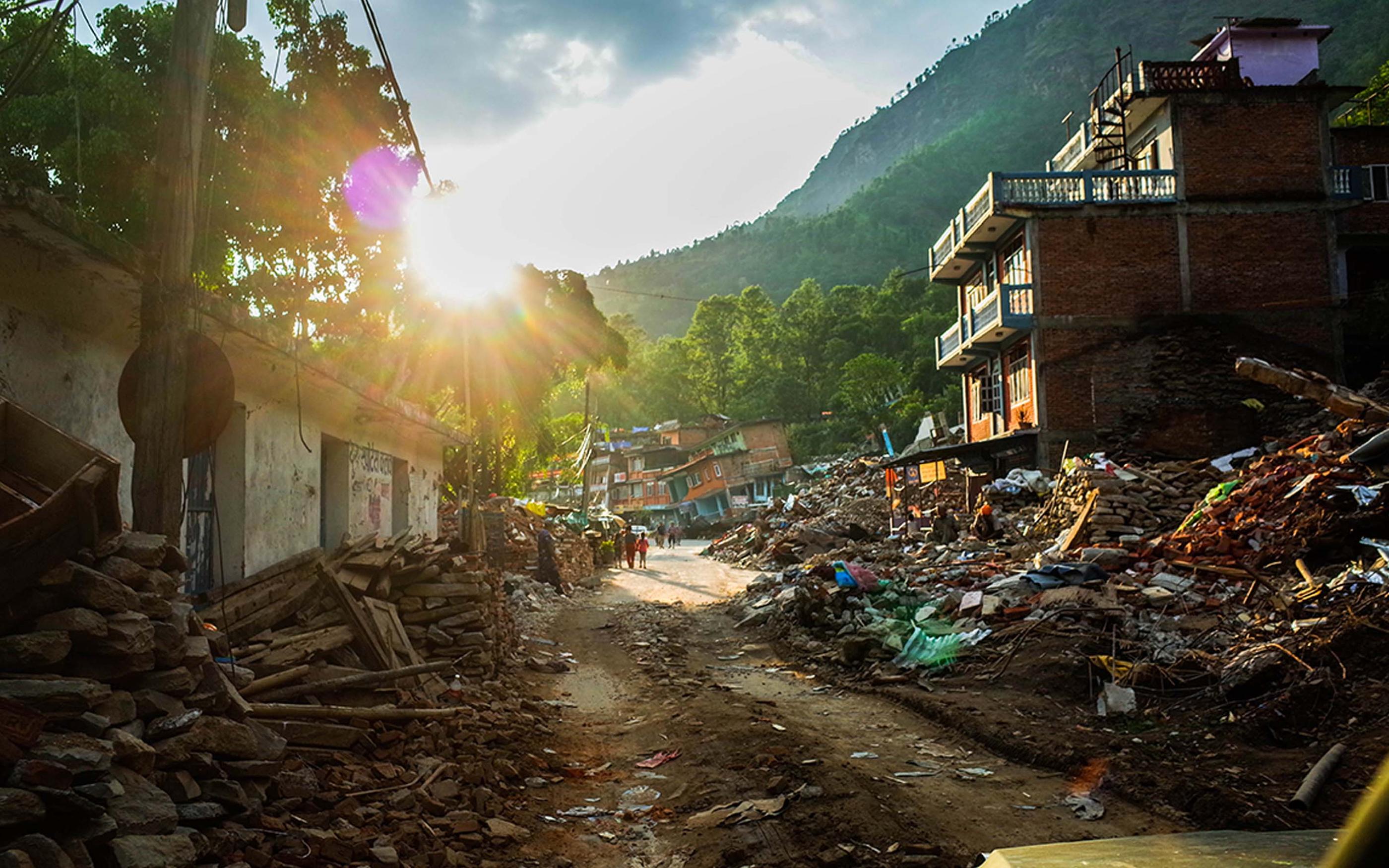
On March 28, 2025, a Mw7.7 earthquake struck along a section of the Sagaing Fault in Myanmar at a depth of 10 kilometers, causing Modified Mercalli shaking intensities of IX (violent) around the epicenter. But over 1,000 kilometers away in Bangkok, Thailand, a 30-story tower under construction collapsed, resulting in at least 96 fatalities.
How could an earthquake so far away cause such damage? The answer lies in the complex interaction between seismic waves and local geology. Bangkok sits on a deep sedimentary basin that amplifies longperiod surface waves — those most dangerous for tall structures (Figure 1). This event brings to the forefront a well-known seismic hazard: Distant quakes can wreak havoc on mid- and high-rise buildings in cities built on soft soils.
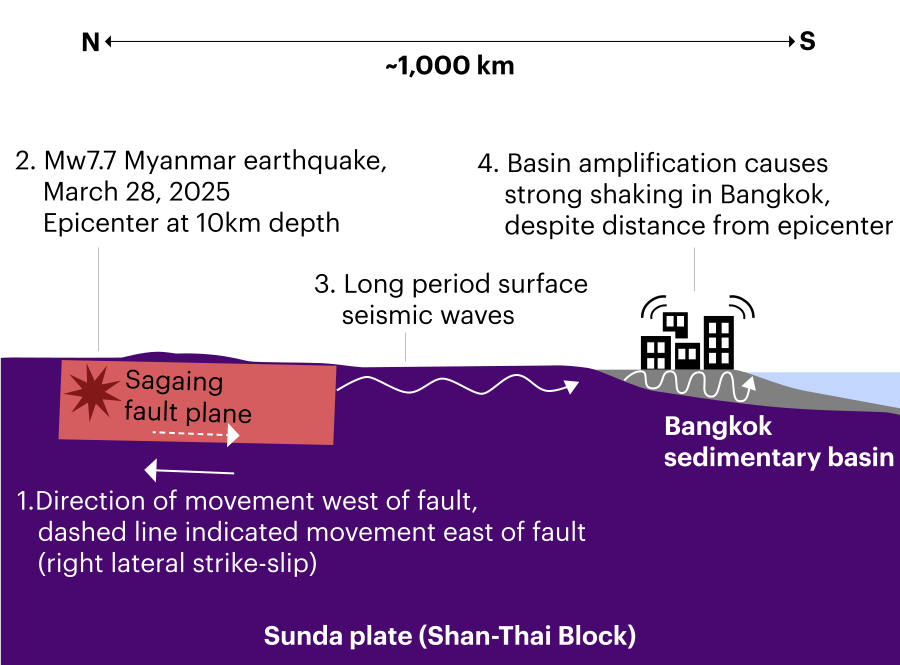
Figure 1. Cross sectional diagram showing long-period waves travelling from earthquake epicenter in Myanmar to Bangkok, Thailand and being amplified by sedimentary basin to cause excessive shaking.
These long-distance effects are not a new phenomenon. In 1985, mid-rise buildings in Mexico City collapsed more than 350 kilometers from the epicenter of a Mw8.0 earthquake, as lakebed sediments amplified long-period waves. And in 2011, the Mw9.0 Tohoku earthquake generated similar long-period waves that traveled over 370 kilometers, causing high-rise buildings in Tokyo and Osaka to sway for minutes and sustain non-structural damage.
Long-period waves are a known hazard, and most catastrophe models do attempt to capture their effects. But for insurers and other risk managers with exposure in sedimentary basins — such as San Francisco, Seattle and Istanbul — it's worth asking three pointed questions to better understand modeled loss estimates.
Natural Catastrophe Program 2025

So ask your model vendor: Which distant sources are included that could contribute to long-period risk?
If a model relies on global averages and isn’t locally calibrated with site-specific research, it may fail to reproduce the true character of long-period shaking.
References
- “M.A. Eder, R.L. Vollum, A.Y. Elghazouli, Performance of ductile RC flat slab to steel column connections under cyclic loading, Engineering Structures, Volume 36, 2012, Pages 239-257”, ISSN 0141-0296 Return to article
- Sen, S., Singh, Y. (2015). “Seismic Performance of Flat Slab Buildings. In: Matsagar, V. (eds) Advances in Structural Engineering Springer, New Delhi,”. Return to article
Authors


If local construction practices and vulnerabilities are not explicitly reflected in modelling, there’s a risk that modelled loss estimates will not match actual damages from long-period shaking events.