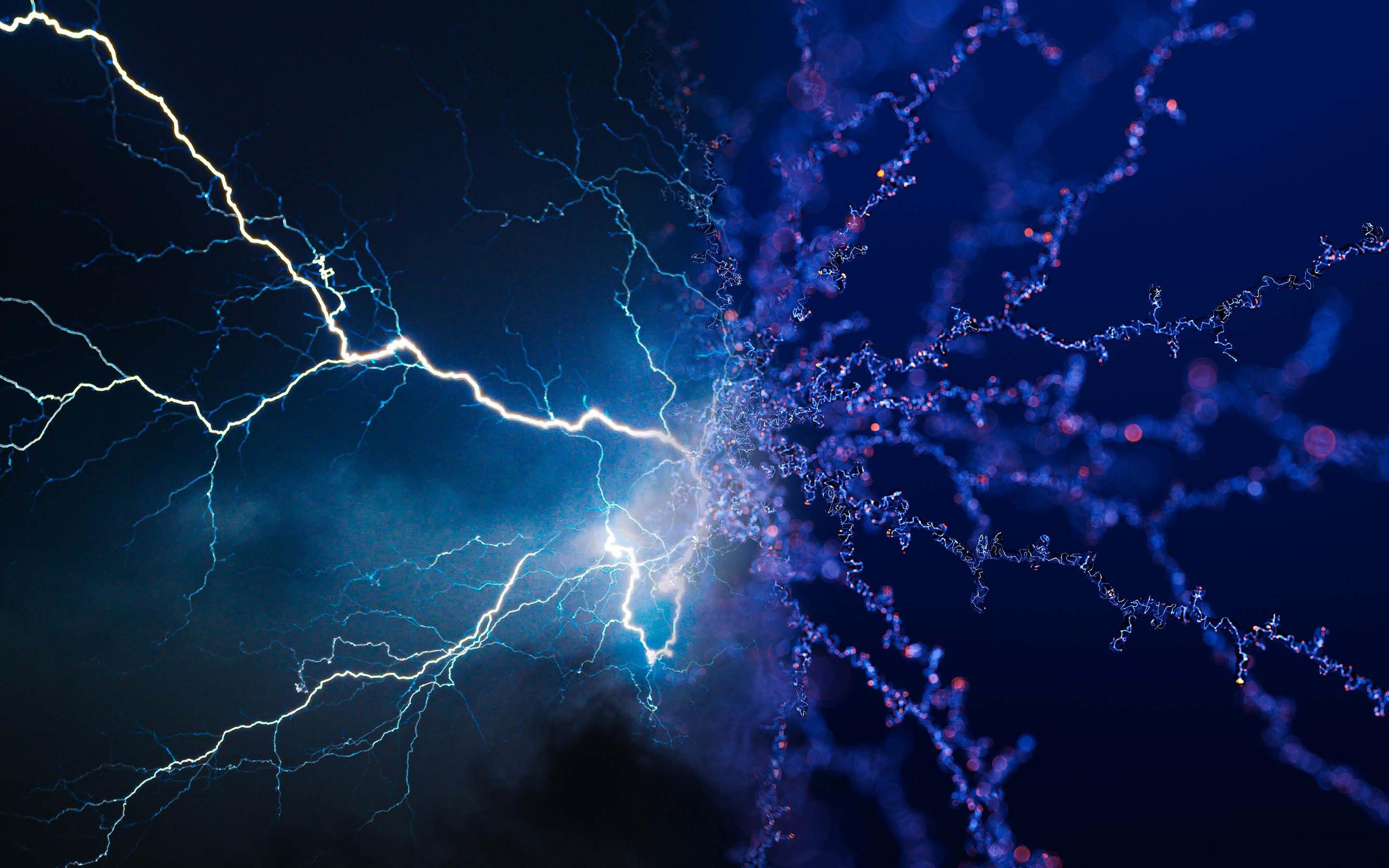
How seriously should (re)insurers consider loss scenarios that haven’t happened?
For decades, the insurance industry labelled severe convective storms — which include tornadoes, hailstorms, and straight-line winds — as a secondary peril. By contrast to primary perils such as severe earthquakes or tropical cyclones, which are rare but can cause extremely high insured losses, secondary perils happen more often but are generally expected, even in aggregate, to produce lower losses. For an insurance company, a catastrophe caused by a primary peril can be an extinction-level event. Losses from secondary perils are just the cost of doing business.
At least, that’s what the industry consensus was a decade ago. By the middle of the 2010s, some people began to suspect tornado and hailstorms were actually much more significant threats to insurers than had been supposed. A new generation of catastrophe models put the global Annual Average Loss above $30B — a surprisingly large contribution from a peril still widely regarded as “secondary”.
There was some skepticism about these new, much higher loss estimates. The United States accounts for the vast majority of insured severe convective storm (SCS) losses globally, and its loss history certainly included some very high insured losses — for single years. The May 2011 tornado outbreak across the Midwestern and southern United States, which included the devastating EF5 tornado that struck Joplin, Missouri, contributed to a year with more than $36B in losses (adjusted to 2026 dollars). But in most years, US tornado and hail losses remained below $15B, which prompted some (re)insurers to downplay the higher estimates from catastrophe models and adjust their view of risk for severe thunderstorms downward. How could expected losses be so high when actual losses had only exceeded that threshold once?
Keeping pace with a rapidly rising peril
This sort of situation — where there is disagreement between industry practice and model predictions — can only be resolved by applied research. To understand how risks from severe convective storms had changed (and might change in the future) the Willis Research Network turned to Professor Michael Tippett. Michael is Associate Professor of Applied Physics and Applied Mathematics at Columbia University in New York and is expert in severe weather and weather prediction. Through a series of targeted projects, Michael and his team, in collaboration with Willis, described recent changes in tornado behavior across the United States, created new tools to model tornado outbreaks, and predicted the future evolution of tornado risk over the coming decades. Taken together, their research indicated that risks from this sub-peril had already increased and were likely to keep rising:
- In a December 2016 article in Science[1], Michael and his co-authors Chiara Lepore and Joel Cohen reported the frequency of tornado outbreaks (clusters of tornadoes) and the number of extremely powerful tornado events in the United States had increased substantially over the past fifty years.
- Writing for the Monthly Weather Review[2] Kelsey Malloy and Prof. Tippett showed the frequency of tornado outbreaks during the winter and spring had increased all across the southeastern United States. For some cities including Atlanta, Birmingham, and St. Louis, since the early 1980s the risk of outbreaks had more than doubled.
- A 2021 study[3]led by Chiara Lepore modeled the particular atmospheric conditions that are favorable to the development of severe weather. The Columbia team found that, for every 1°C of global warming, severe convection should be expected to increase by 5-20% across all continents and regions worldwide.
Thanks to our collaboration with Columbia and Prof. Tippett, Willis was well aware of the elevated risk landscape for tornadoes and other sub-perils associated with severe convective storms. Data from this partnership was also ingested by WTW’s Property Quantified platform, ensuring it provided portfolios with an up-to-date view of convective storm risk. And because we understood the environment for SCS risk was now much more favorable than it had been a decade or two prior (particularly in the United States), we were not surprised by the sequence of high-loss years that began in 2023.
A stormier, more volatile future?
The first clear indication that severe convective storms posed a much more significant threat came three years prior. The industry set a record for losses due to SCS ($44B) in 2020, including damages from the extraordinary Midwest Derecho on August 10. Convective storm losses also exceeded $30B in both 2021 and 2022. Suddenly, an Annual Average Loss of $30B from this ‘secondary’ peril did not seem so outlandish.
Even so, before the industry could adjust to this “new normal”, losses from SCS again set a new record in 2023. Instead of being dominated by one or two large events, 2023 was defined by an extraordinary accumulation of damaging SCS outbreaks, with cumulative insured losses exceeding $60B. Over the next two years, SCS losses stayed close to that level. In both 2024 and 2025, losses exceeded $50B, making them the second- and third-highest loss years on record, respectively.
For industry insiders, the consensus view is that this step-up in storm-related losses was caused primarily by a rapid increase in exposure and the effects of inflation on rebuilding and repair. Some experts have also argued the industry had previously overestimated the resilience of older buildings to wind and hail damage. But even if exposure and vulnerability remain the dominant drivers, an increase in the hazard — more intense or more frequent convective storms and their consequent sub-perils — would amplify their effects. To the detriment of the insurance industry, all three components of severe convective storms risk have moved in the same direction.
And now again, the industry is faced with a gap between claims history and modeled losses. The latest generation of catastrophe models, released within the past year, yield even higher estimates of the annual average loss for US severe convective storms — now standing around $60B[4]. Will the industry accept these new estimates and recalibrate its expectations? Or if we again experience a low-loss year, will analysts feel pressure to revise models downward, despite the inherent volatility of severe convective storms?
Many of these questions are no easier to answer now than they were a decade ago. But our longstanding partnership with Columbia has given us good reason to expect the hazard from severe convective storms to continue increasing. As the world warms, the atmospheric conditions that favor severe convection are expected to become more common, while changes in exposure, vulnerability and repair costs will continue to shape the losses that follow.
The experience of the last decade offers a lesson. In the late 2010s, modeled SCS losses appeared difficult to reconcile with the historical record; a decade later, the loss history looks very different. That rapid evolution shows the value of looking beyond past losses, as research can reveal changes in risk before they become evident in claims. For (re)insurers, the challenge is deciding when that evidence is strong enough to act on, before the lesson is learnt through hard experience.
Footnotes
- Michael K. Tippett et al., More tornadoes in the most extreme U.S. tornado outbreaks. Science 354, 1419-1423 (2016). Return to article
- Malloy, K., and M. K. Tippett, A stochastic statistical model for U.S. outbreak-level tornado occurrence based on the large-scale environment. Monthly Weather Review 152, 1141–1161 (2024). Return to article
- Lepore, C., Abernathey, R., Henderson, N., Allen, J. T., & Tippett, M. K. Future global convective environments in CMIP6 models. Earth's Future 9, e2021EF002277 (2021). Return to article
- Verisk, Global Modeled Catastrophe Losses Report (2026). Return to article
Authors
20 years of the Willis Research Network