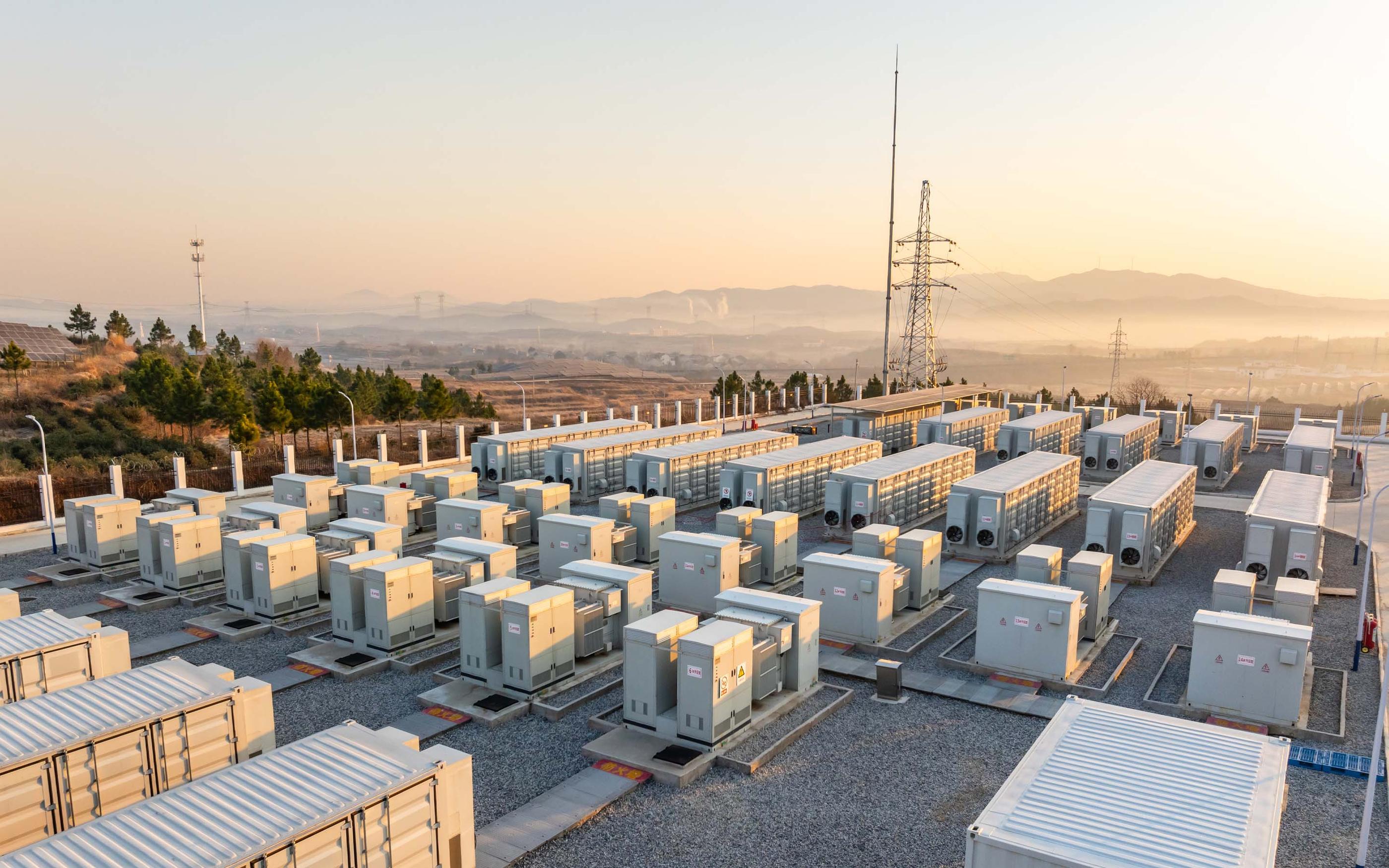


BESS innovation is providing safer, more affordable and environmentally sustainable technology. But risk managers need to keep pace.
Changes in battery chemistry have mainly focused on improving safety, while new technology designs have increased the energy storage capacity. New doublestacked container designs and non-lithium-based storage technologies are being explored. The future of the energy storage market is bright.
Lessons in chemistry: Shifting away from nickel manganese cobalt
The development of lithium-ion battery technology has shifted from nickel manganese cobalt (NMC) chemistry towards lithium iron phosphate (LFP) chemistry.
LFP batteries offer a longer cycle life, improved safety due to a lower risk of thermal runaway, and more cost-efficiencies: a triad with appeal for investors and insurers alike. This combination of factors is driving a shift away from cobaltbased technology.
ESG issues endure
NMC batteries’ reliance on the cobalt-rich Democratic Republic of Congo (DRG) connects NMC supply chains to associated human rights abuse concerns. But the lithium supply chain itself has also come under scrutiny, with much work to be done to make it more ethical and sustainable.
The lithium supply chain has seen a monopolization by a few resource-rich regions such as South America and Australia, with China dominating lithium refinement and processing. Some of the U.K.’s main energy storage developers recently issued a joint statement condemning forced labor in the global lithium supply chain: “U.K. government on robust regulatory standards on supply chain transparency, wider sustainability and due diligence standards.”
Due diligence across complex and interconnected supply chains – particularly spanning ESG-regions – is a critical challenge. Stakeholder and investor confidence, along with legal, humanitarian and regulatory obligations, all hang on making the right decisions.
The long and short of it: Balancing system dispatch is key to a flexible, efficient and resilient grid
Many BESS projects are currently one or two megawatthours (MWh), designed to quickly dispatch stored energy to the grid. These systems stabilize the grid in real time by providing frequency regulation, ancillary services, and voltage support. The market is moving towards technology with higher storage capacity, which have longer dispatch times. Four MWh BESS systems can provide increased support for periods of extended demand or grid imbalances. Enabling energy arbitrage, demand charge management, and overall capacity support.
Widely regarded as the ultimate enhancement for grid performance and security, long dispatch plays a pivotal role in balancing supply and demand and facilitating renewable energy integration. Combining quick- and long-duration dispatch systems is essential for building a flexible, efficient and resilient grid.
Both types must manage thermal safety risks, but the risk profiles differ due to operational tempo and market dynamics.
Summary of risks and dispatch in BESS
| Risk | Long dispatch BESS | Outcome |
|---|---|---|
| Opertaional risk | Risk of battery degradation due to sustained charge/discharge cycles over hours. | High cycling frequency with rapid charge/ discharge increases risk of accelerated battery wear and thermal stress. |
| Safety risk | Thermal runaway risk remains, amplified by larger energy throughput and sustained discharge periods. Fire propagation risk across larger capacity cells | Thermal events linked to high power bursts and rapid cycling. |
| Integration risk | Grid export/import limits more pronounced due to longer discharge events. | Rapid grid response is vulnerable to communication lags or cyber interference. |
| Financial risk | Revenue depends on energy shifting over hours; affected by market price volatility and long-term capacity contracts. Risk of underperformance if dispatch signals fail or market signals weaken. | Revenue tied to fast frequency response or ancillary services involving secondsto-minutes dispatch. Risk from rapid changes in grid needs and regulatory compensation uncertainty. |
| Asset degradation | Controlled cycling needed to balance throughput and lifespan due to long discharge periods affecting battery chemistry differently. | Frequent charge/discharge cycles accelerate capacity fade and cell stress, requiring advanced battery management systems to mitigate. |
Design a 360-degree risk strategy
Property damage and business interruption insurance covers physical damage and equipment failures. This insurance adapts standard property policies to address the specific hazards posed by battery storage technology. The business interruption component provides compensation for loss of revenue or additional expenses if a BESS is damaged by an insured peril and cannot operate temporarily.
Third-party liability covers third-party claims for bodily injury or property damage caused by BESS operations such as fires that spread beyond the system or explosions. Environmental liability coverage may also apply if battery leaks or fires lead to pollution or contamination of neighboring communities, which can incur costly clean-up and legal liabilities.
Data-driven monitoring and predictive analytics enable early detection of anomalies such as thermal runaway, which lowers risk and claims severity, improving insurability. Combining diagnostics for cyber, natural catastrophe and geopolitical events can help risk managers design and implement robust strategies and contingency plans.
Make the optimal decision using advanced Risk & Analytics. Tools such as Connected Risk Intelligence model an efficient frontier of risk decisions that balance retention and transfer for the entire portfolio of risk. Risk managers can make the optimal risk financing decision that aligns with the company’s risk tolerance.
Double stacking pushes BESS risks to new heights
Often, stacked single-storey designs have been implemented by third-party contractors and contravened manufacturers’ single-story guidelines, meaning:
- The designs were not sufficiently fire tested
- Containers are not engineered to bear the weight of additional containers, raising structural concerns
- The vents used for dissipating flammable gases (early indicators of thermal runaway/fire) are positioned on the top surface of containers, and stacking would block these vents, compromising a critical safety feature and increasing the likelihood of gas build-up and explosion
The disproportionately high risk that came with stacking putting single-storey containers on top of each other was not indemnifiable for many insurers.
Such inherent risk has meant that insurers would see double stacked sites as 100% estimated maximum losses (EML). This meant that any available insurance capacity was extremely limited, if acquirable at all. It was at an absorbent premium cost and with coverage restricted, fundamental coverages for thermal runaway and/or fire sub limited, leaving the full value of the BESS assets exposed.
Innovation in stacking
Recently, however, CATL have introduced the ‘Tener Stack’ a two-in-one design featuring two units stacked vertically. This is the first time that a manufacturer has brought out their own, factory-tested double-stacked’ design. This solution delivers higher energy density, with capacities reaching up to nine MWh per footprint. Given the rising costs of land, the Tener Stack offers developers significantly greater MW capacity per square meter, improving project value by maximizing energy output within limited space. Tener stack comes with triple-layer insulation design, which boosts fire resistance to two hours, and the system meets IEEE693 seismic standards, enduring magnitude nine earthquakes and category five hurricanes.
Keep asking questions: Considerations for risk and insurance managers
- Thermal runaway: How does the ‘Tener Stack’ perform in the underwriter laboratory (UL) 9540a tests where the technology has been forced into thermal runaway? The UL tests are available for all full tested BESS manufacturers and should be reviewed to show any BESS’ safety performance. This is a critical component of robust risk information that insurers will look for in making decisions about coverage and cost
- Site layout: The spacing between stacked containers would need to be considered, as current guidance is based on singular containers. Careful planning and spacing of the site layout is the most effective means of mitigating risk and optimizing project procurement costs. Risk engineering surveys provide in-depth site analysis to identify vulnerabilities, model potential loss scenarios, and provide actionable risk controls
Flow batteries are charging innovation
An overreliance on a monopolized lithium supply chain has led to research in alternative technologies. Flow batteries do not require lithium ion like traditional batteries. While lithium-ion batteries typically provide backup power for durations of two or four hours, flow batteries can offer much longer discharge durations, typically between eight to ten hours, making them well-suited for applications such as load levelling, seasonal energy storage, grid support and frequency regulation.
The key difference between conventional lithium-ion batteries and flow batteries is how energy is stored. Traditional batteries store energy in electrode materials, whereas flow batteries store energy in electrolyte fluids contained within flow cells. During operation, the electrolyte fluid is pumped through electrodes, where electrons are extracted from the charged fluid. The depleted fluid is then sent to a separate tank for recharging.
“Flow batteries have a reduced environmental impact by using non-toxic, abundant materials and they avoid an overreliance on lithium, protecting against potential supply chain issues. Flow batteries also do not pose a significant risk for fire/thermal runaway like their lithium counterparts. They also have better durability and generally have longer lifespans, as they do not rely on degrading electrode materials.”
Chris Ketley, Account Director & Broker, Natural Resources.
Opportunity is not without risk
Different components like pumps, sensors, and complex management systems, making maintenance more complicated for flow batteries then their traditional counterparts. The systems are physically larger than typical lithium-ion battery containers, requiring more land per megawatt. Flow batteries are still very much in their prototypical phase, and they need to become scalable, efficient, economical and investable to become a viable alternative to lithium BESS.
Get strategic: The future of BESS
Our BESS article series has demonstrated the significant opportunity, investment and associated risks that the energy storage market offers. BESS will continue to provide a vital foundation to enable a clean energy future.
It is clear that a diversified energy storage landscape is crucial in enabling a stable and secure grid, but the journey to clean energy future will continue to challenge risk managers and other key decision makers along the way.
For more information on how energy storage is powering the future, please contact our team.
Contact