
The global dynamics of business have changed in the past three years and powerful forces have reshaped the way we work and live. Employees’ expectations have changed, and this year employers will be challenged like never before to create value out of redefined and redesigned employee experiences.
To thrive (rather than merely survive), employers must think differently. Under the shadow of ongoing global disruption thriving will require a more compelling and purposeful employee experience that reconnects, re-energizes and retains employees while supporting their healthy productivity.
The concept of quiet quitting received much fanfare in late 2022, reflecting employees’ low levels of discretionary effort coupled with a lack of desire to leave their employer. However, evidence suggests this is nothing new. In fact, engagement levels have remained reasonably stable recently, suggesting no increase in quiet quitting.
What has changed is the broader context. With inflation and an increased cost of living, real wages are down. And with the Great Resignation and decreased staffing, real workload is up. This has led to an imbalance between work and life combined with a decline in perceived leadership support. Together, this creates a potent mix of raw emotion, real hardship and a sense among employees that they are being taken advantage of.
The relationship between employee experience and business value
To understand the current state of employee experience and the factors employers need to pay attention to in 2023, we tracked the financial performance of 355 global organizations of different sizes and a range of industries. Simultaneously, we tracked their employee experience through employee survey data, resulting in feedback from nearly 4 million employees. This analysis uncovered four distinct business states and revealed that an organization’s business state has a significant impact on business value and financial results.
We segmented the 355 organizations according to the current level of employee engagement and intent to stay, comparing each to their respective industry average. The four segments, their defining experiences, and how they generate business value, are described in Figure 1.
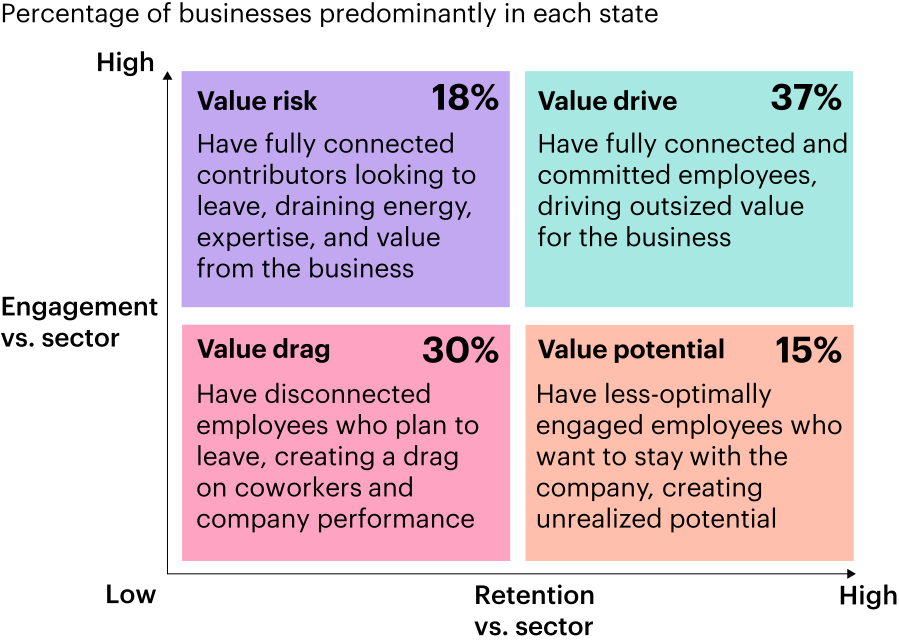
Figure 1. Employee experience impacts business value in one of four ways
Source: WTW employee experience normative database
The four types of employee experience in 2023
During economic recessions and periods of financial uncertainty, employees tend to stay with their employer rather than venturing into the unknown. As a result, the number of organizations in the value potential state may increase. This makes employee experience design more urgent than ever.
The financial impact of employee experience
To illustrate the impact of employee experience on business performance, we looked at the average financial performance of each state. A clear pattern emerged that matches the predicted business value of each state.
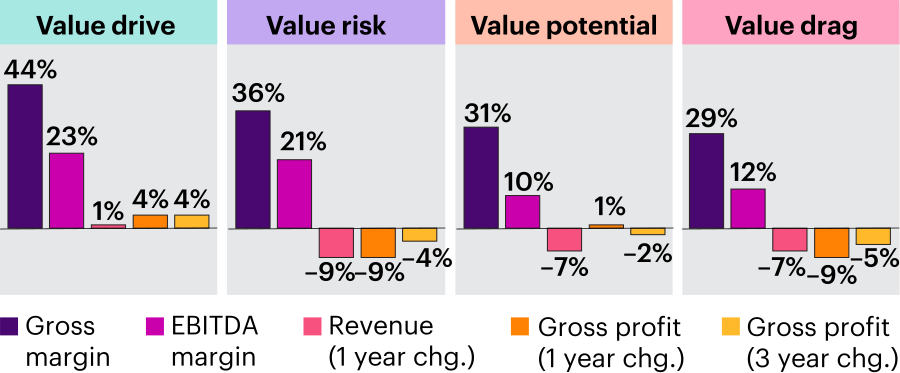
Figure 2: Employee experience determines financial outcomes
Source: WTW employee experience normative database
Organizations in a value drive state outperform all others, delivering the greatest profits and being the only segment with growing revenues and margins. Simply put, the only way to grow business value in 2023 is to attract and retain employees who are more engaged and have above-average intentions to stay.
Those in a value risk state enjoy the next best level of margin. However, revenues and margins decline as highly contributing employees leave and take business value with them.
Organizations in the value potential state place third in terms of margins delivered, with declining revenues and profit.
Organizations in the value drag state deliver the lowest margins and post declining revenues. These organizations also deliver virtually zero returns. See Figure 2.
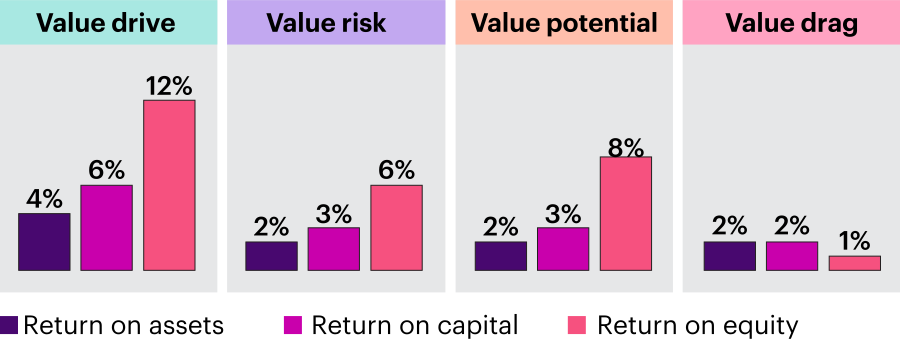
Figure 3: Employee experience state determines financial returns
Source: WTW employee experience normative database
Next steps: Determine your business state and tailor a value driving employee experience
The implications of this research are profound. Employee experience shapes business value and is a predictor of business performance. Only organizations that are in a value drive state will grow. Organizations in a value drag state will decline and deliver low to no returns.
By understanding your organization’s current state, you can design a thoughtful and tailored employee experience that maximizes connection, contribution and commitment, all while delivering positive impact.
Leading organizations are deploying several solutions to improve employee experience this year:
- Employee experience design – Treat your EX as you would any other significant business imperative. Every company has a culture and EX, either by default or design. Ensure your EX is designed – and executed with purpose – to deliver on your business expectations.
- Wellbeing – Go beyond wellness programs by preparing managers to recognize signs of wellbeing distress and guide employees towards resources and solutions to support and improve total wellbeing.
- Pay clarity and transparency – Help employees understand how pay is determined. Employee experience communication platforms are a great way to provide clear insight on pay policy, processes and changes as well as demonstrate the full value of total rewards through total rewards communications.
- Career growth opportunities – Help employees get more from their employment deal than just pay and benefits by articulating career pathways, coaching and development opportunities. Consider reworking your employee value proposition to provide a more engaging and inspiring vision of the future and a clear step-by-step plan of how it will be achieved, with the support and contribution of employees to more meaningful work.
- Voice and involvement – Provide real opportunities for employees to challenge the status quo and contribute in meaningful ways that support their interests and ambitions. Foster a culture of psychological safety and inclusion so employees recognize that their input matters. Offer ongoing opportunities throughout the year for employees to speak up, share perspectives and ideas.
- Inspiring and inclusive leadership – Companies with a high-performing employee experience clearly articulate the company vision, how they will get there and how each person contributes to the company value. Open, honest, timely and relevant communication from leadership is critical to (re)building trust and confidence.
Amid increasing disruption, businesses who listen and effectively respond to the unique ideas and needs of their employees will be more successful. With fast-paced changes in the macro-environment, your employee listening tools should adapt quickly to the current issues and environment.
WTW helps organizations around the world understand and improve their employee experience and enhance business value. Get quick insights on your current business state and most pressing employee challenges, then plot detailed action plans. Contact an WTW employee experience expert today to discuss your employee experience value driver analysis.
Authors