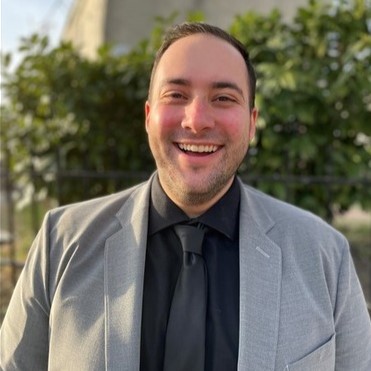
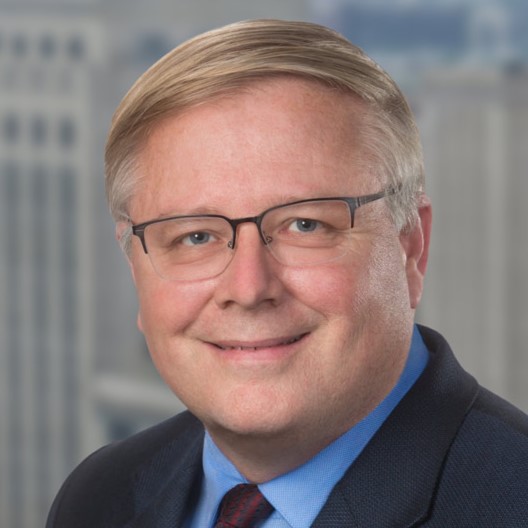
KLAYTON SOUTHWOOD: Thank you Chris, happy to be here.
CHRIS ZANONI: Thank you. Prior to jumping into our topic, we asked our guests what is something they like to do outside of work? So, Travis, I'll start with you. What is something you like to do outside of work?
TRAVIS MILLER: My wife and I have four children. They are college age or above, so we spend a lot of time traveling and trying to spend time with them.
CHRIS ZANONI: Fantastic, Klayton?
KLAYTON SOUTHWOOD: I love to garden. My wife and I live on a hobby farm, and just to have a big garden, and like to use that as a de-stressor on the weekends.
CHRIS ZANONI: Fantastic well, jumping into our topic with Florida property insurance. The general population may think of Florida as a place where they can go on vacation, enjoy the sunshine, or evacuate when a hurricane hits the Doppler Radar. This leads those to believe that hurricanes are the main driver of loss within the state. However, the Florida property insurance market has proven itself to be much more complex than hurricane exposure. What are some key challenges that the Florida market has faced?
KLAYTON SOUTHWOOD: Well, there have been a number of them, Chris, that we'll talk about here today. I mean, I don't want to downplay the impact of hurricanes. I would like to spend just a few minutes on that topic before we talk about some of the other issues that have been significant contributors to the challenges in Florida. If you think about the Florida market, prior to Hurricane Andrew coming ashore in September of 1992, the market there looked like many other insurance markets across the country, or generally large presence of national writers, fairly competitive, things were generally pretty stable.
But there's a series of three different events over the years that have caused carriers to really think about the exposure that they have related to hurricanes. And the first one of those was, Andrew. In the grand scheme of things, if you look at what's come after Andrew, that wasn't a particularly big storm in hindsight, but at the time it was. It came ashore in Homestead, Florida, close to Miami, and it really caused a lot of market disruption, eventually led to large national carriers being concerned about exposure, concentration.
They struggled a bit with getting what they felt were adequate rates for the exposure they were taking on. It led to some upheaval in the reinsurance market, which caused the formation of the Florida Hurricane Cat Fund. And so while some of the national carriers continued to have a presence, it was generally through a Florida specific subsidiary to protect surplus of the broader organization, which we still see today.
After that, things were fairly quiet until 2004 and '05. And then you had a big spate of storms just back to back to back. You had in 2004, hurricanes Charley, Frances, Ivan and Gene, and then in '05 Katrina, Rita, and Wilma, and the issue there was frequency. Carriers learned that storm frequency can be much higher than they had previously thought, and it was really coming out of further retrenching after that, that you saw some fairly substantial growth among the Florida specialist carriers that tend to dominate the market today.
Some of them had formed prior to the '04 and '05 five seasons, but that became a huge catalyst for the growth of that part of the market. That has really become a key part of the engine that moves Florida homeowners insurance even today. And then 2017 comes along after a period of about 12 years of again, fairly moderate storm activity, and you have Irma, that causes all headaches that Travis, I think, is going to talk about a bit here related to AOB and one way attorney fees, and some of the other underlying issues that had manifested themselves.
TRAVIS MILLER: Yeah, that's right, Klayton. And I think during this time as well, it's important to remember the significant population growth in the state of Florida, certainly over the last 30 years, but even continuing today and over the last five years, we just continue to see more residents in this state, more housing units coming online. And so we have greater exposures to contend with than we ever have, which really drives a need for capital.
Another thing that really impacted this entire period that you're talking about, Klayton, is we had symptoms along the way that there might have been problems in our statutory structure or in our marketplace behaviorally with claims, but those symptoms tended to be limited enough that they didn't receive the comprehensive treatment that we"ll later see in the statutory reforms of 2022.
Some of those episodes along the way were concerns with sinkholes really driving a lot of sinkhole losses, even though the underlying nature of the peril hadn't changed, we didn't have a significantly higher exposure truly, to sinkholes. There were a lot more sinkhole claims for a period of time that was addressed through enhancing the laws defining catastrophic ground collapse versus sinkhole. We also had concerns with mold claims for a while. We had concerns with screened enclosures for a while.
More recently, maybe it's been with water damage claims or roof claims. And each step of the way, rather than dealing with these things comprehensively, maybe recognizing that there was an underlying concern to all of them. We tended to deal with them as individual symptoms. And so they were met with, like I mentioned, on sinkholes, maybe some statutory definitions or refining the difference between catastrophic ground collapse and sinkhole. And some of the other areas, what we began to see extensively in this market was reductions in coverage, sometimes coupled with a buy back.
So now the base homeowner's product would no longer cover or will only provide limited coverage for a certain peril. And then that later being an opportunity to buy back, which many consumers might not choose to do because of course, it would increase the cost of their product. So one of the challenges, big picture that we saw during this entire period was a decline in the comprehensiveness of the homeowner's product and individualize or pocketed areas where prices were going up, maybe availability would be more limited
CHRIS ZANONI: From that, what are some of the catalysts in the pre-reform environment that led Florida policymakers to intervene?
TRAVIS MILLER: Well, I think by the time we got to 2017 and Hurricane Irma, as Klayton was mentioning, that event really highlighted some of the weaknesses. It brought all of the flaws and weaknesses of our market into light. So from that period forward through the 2022 reforms, losses increased substantially. Loss adjustment expenses increased substantially to the point where it really became unsustainable. The premiums were going up dramatically, double digits year after year.
Availability in the private market fell off and the product was less available to consumers. The price was much more expensive. And then, of course, Citizens Property Insurance Corporation, our state residual insurance market, saw its policy count explode. It more than doubled, well over doubled during this period. So prior to the 2022 reforms, in a sense, you could say all of the market trends, all of the market signals were bad, and deteriorating to the point where the legislature really felt like they had to act in a definitive way.
KLAYTON SOUTHWOOD: Yeah, I agree with that, Travis. I mean, part of the evidence of the financial strain that Travis is talking about is really evidenced by the number of insolvencies that you had in the market that began in about 2019, as companies were grappling with the volume of litigation coming out of Hurricane Irma.
You had insolvencies of Florida Specialty and Gulfstream, and FedNat, and St. Johns, and Avatar, and Lighthouse, and Western & Southern Fidelity, and United Property & Casualty, all within about a three year period, beginning in 2019. It was a situation where the legislature really had to do something to prevent the entire market from really collapsing. I mean, it would be untenable for Citizens to get any bigger than it already was.
It was already at its peak here within the past year or so. It was already at an untenable position which, fortunately, the legislation has allowed that to begin to correct itself. There's still ways to go. But if you just think about the importance of a stable, profitable, private-market insurance mechanism to drive the Florida economy, we've all, I think, heard about the population growth in that part of the region.
Back to a point that Travis made earlier about population growth, if you just look at the increase in the value of residential property in Florida, even back as recently as 2000 the estimate on the value of property in Florida was about 750 billion. And in the latest reporting from Citizens Property Insurance Corporation through the end of last year, they were reporting that value had increased to about 3.6 trillion, which is a combination of both exposure, growth, and impacts from inflation and things like that on the value of housing stock.
But it's a situation where something had to be done because if you're going to keep the Florida economy humming along, if people are going to be able to own real estate, they have to have mortgages, and to have mortgages they have to have adequate property insurance. So it was a situation where the legislature, quite frankly, had to do something to prevent the entire Florida economy from collapsing, in my opinion.
CHRIS ZANONI: So how were carriers navigating the pre-reform market then?
TRAVIS MILLER: Well, from my perspective, I think it was an acceleration and accumulation of some of the things that we've been talking about thus far. And that would be, carriers had limited tools at their disposal to deal with the increase in losses and increase in loss adjustment expenses. One of the things that they would do is we continued to see reductions in the scope of coverage, more of the limitations or exclusions coupled with a buy back, further reducing the scope of the H03 product.
I think you saw during that time, a number of carriers really restrict their writings, particularly in the most exposed areas of the state. Exposed being not only from a hurricane exposure standpoint, but from the perspective of where the most represented, solicited, litigated claims were occurring. So you saw a reduction in capacity at that time. And then, of course, the price increases that went with the product.
So the insurers had limited ability to deal with these things. And I think you saw them taking incremental steps in each of those areas adjusting price, adjusting coverage, and adjusting the availability of capacity. I think all of those things happened at an increasing rate, and with a cumulative effect over this period.
KLAYTON SOUTHWOOD: Yeah no, I agree with all that. I mean, I think the other key part of this, Chris, honestly, in order to survive, a number of carriers in Florida had to get capital infusions to just from a practical business standpoint. To Travis's point, they certainly did everything they could around managing their exposure, and the way it was distributed across the state, trying to avoid some of the areas that had the highest litigation rates, like the Tri-County area around Miami and doing things of that nature.
But still that wasn't enough, so you saw a number of years in the last several years where carriers have had to get pretty hefty capital contributions. And in years where there were these big capital contributions across the industry, you still in some years saw overall surplus levels decline. So just imagine if carriers didn't have access to that capital, just to try and manage through the state of the market in the past several years.
CHRIS ZANONI: Travis, are you able to provide a snapshot of these reforms?
TRAVIS MILLER: Certainly, and we'll dive into this more next time. But during this period that we're talking about, 2017 to 2022, the legislature took incremental steps along the way to try to improve the market. What we saw, though, is that none of those interim steps was sufficient to turn around the downward trend that we were on, the negative experience in the market. And it wasn't until 2022 that the legislature hit upon the right combination of reforms to really make a meaningful difference. One of the concerns in that pre-reform period was the impact that the former attorney’s fee statute was having on the solicitation and litigation of claims. Another concern was the assignment of insurance benefits and how that was proliferating litigation and the solicitation of claims. And then another thing that sometimes gets overlooked, but several years ago, we in Florida had a three-year reporting window for claims that eventually became two and then ultimately one year, which makes a big difference in the quality of the information and the ability to adjust that claim. So we'll talk more about this as we go along. But it really is going to be the attorney's fees, the assignment of benefits and the reporting window. But we can't forget, as we talk about those things, that the legislature increased its expectations of the industry as well. So we had some accountability measures as part of the reforms that we’ll talk about.
CHRIS ZANONI: Thank you. Based on this, Florida is certainly a unique market, a complex market. Clayton, thank you for joining us.
KLAYTON SOUTHWOOD: Absolutely, Chris, happy to have had the opportunity.
CHRIS ZANONI: Travis, thank you as well for joining us.
TRAVIS MILLER: Yes, thank you, Chris, I appreciate it as well.
CHRIS ZANONI: And to our listeners, stay tuned for part two when we discuss the Florida reforms in detail and look at the impacts they've had on the Florida market. Thanks for joining this episode of (Re)thinking Insurance.
NARRATOR: Thank you for joining us for this WTW podcast featuring the latest perspectives on the intersection of people, capital, and risk. For more information, visit the Insights section of wtwco.com. This podcast is for general discussion and/or information only, is not intended to be relied upon and any action based on or in connection with anything contained herein should not be taken without first obtaining specific advice from a suitably qualified professional.