
There’s an ongoing shift in how end-of-service benefits (ESB) are structured and delivered in the Gulf Cooperation Council (GCC) countries. Governments are actively reforming their ESB frameworks to move toward more sustainable funded arrangements — aimed at safeguarding employee entitlements and strengthening long-term financial resilience for both employers and employees.
Inadequate outcomes and the risk of unfunded benefits
Nearly all organisations operating in the GCC (96%) provide ESB to expatriates as mandated. And although legislation only mandates ESB for expatriates, 74% of respondents to our survey choose to extend these benefits to local GCC nationals as well.
The rationale for providing ESB is largely strategic; nearly two-thirds (61%) of organisations cite attracting and retaining key talent as the primary driver (Figure 1).
Over the past decade, ESB liabilities have grown sharply, primarily due to an increase of headcount (56%), longer employee tenure (39%) and rising references wages (34%).
One in five (20%) of organisations report liabilities exceeding USD 50 million
One in five (20%) of organisations report liabilities exceeding USD 50 million, up from 6% a decade ago (Figure 2). Overall, the results show that 85% of organisations still have unfunded arrangements for their ESB, which could pose a risk to employees exposed to financial risk during economic downturns, and to employers as they may put sudden pressure on cashflows.
Transition to funded solutions
Funded ESB solutions remain the exception rather than the norm in the GCC. Where they exist, the following are the most prevalent:
- Government-managed schemes (e.g., Bahrain’s Social Insurance organisation)
- Employer-sponsored international pensions or savings plans (IPP or ISPs) or provident funds
- Local plans like DEWS in DIFC
Yet, fewer than 1 in 5 employers plan to move to a funded model in the next three years.
Figure 3: Organisations use a variety of funding arrangements
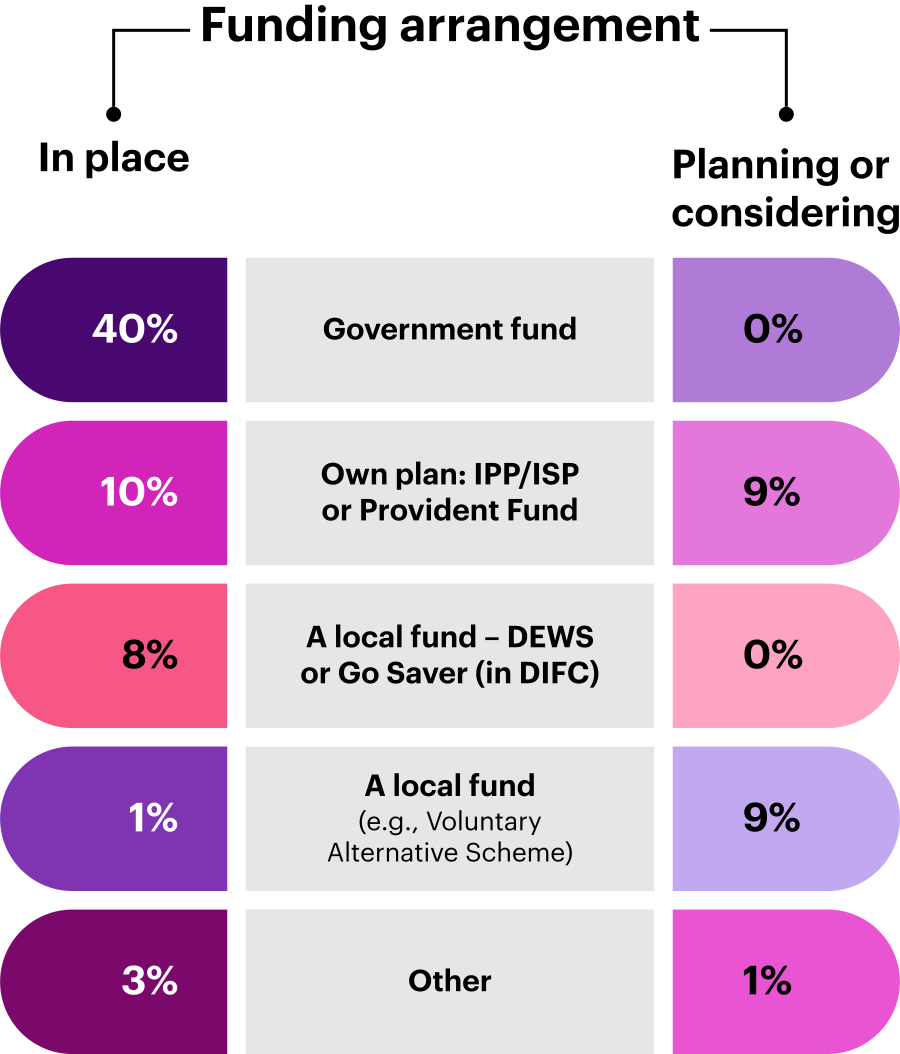
Represents the different kinds of funding arrangements used by organisations.
This figure presents various funding arrangements used by organisations across the GCC, showing the percentage split between those already “in place” and those “planning or considering” implementation.
Future outlook: From compliance to choice
Employers in the GCC are signaling a shift toward more flexible and employee-focused benefits, considering the following plan designs:
- Voluntary employee contributions and matching employer contributions
- Shariah-compliant and diversified investment options
- Digital access and financial planning support
These enhancements aim to deliver greater transparency, portability, and long-term value for employees.
For more detailed findings, please complete the form on the right to access the full report.
Contact us