

ZURICH / LAUSANNE / GENEVA, April 14, 2026 – WTW’s Pension Index fell by 5% over the first quarter of 2026, declining from 128.5% at the end of Q4 2025 to 123.5%. This development underscores the continued sensitivity of pension balance sheets to a volatile market environment. Although Swiss pension funds remain in an excellent position, it is crucial for them to preserve diversification, actively manage interest rate exposure, and avoid excessive concentrations in assets that are particularly sensitive to energy price shocks.
WTW’s Pension Index fell by 5% over the first quarter of 2026, declining from 128.5% at the end of Q4 2025 to 123.5%, reflecting a deterioration in pension funding positions. Discount rates declined by 11 basis points over the quarter, falling from 1.21% to 1.1%, which resulted in a 2.2% increase in defined benefit obligations. At the same time, asset values declined by 1.7%, further weighing on net funding levels.
This development underscores the continued sensitivity of pension balance sheets to interest rate movements in a volatile market environment. The reduction in discount rates was driven by declining bond yields, directly increasing pension obligations on the balance sheet, while negative investment returns on the asset side compounded the negative impact.
Overall, Q1 2026 represents a reversal of the positive momentum observed in previous periods, although the Pension Index remains well above the 100% mark. The quarter highlights that Swiss pension funds remain highly exposed to macroeconomic conditions.
The pension fund index of WTW’s Swiss Pension Finance Watch is published quarterly by the consultancy and is based on the International Accounting Standard 19 (IAS19) and US GAAP FASB ASC 715. The index gives an indication of how the general funding position under these accounting standards has changed from quarter to quarter, as opposed to giving the typical funding ratio of Swiss pension plans.
Swiss pension funds: resilient after demographic update despite asset ‑side setback
Following the exceptionally strong performance achieved over the extended post pandemic period, Swiss pension funds experienced their most pronounced setback on the asset side in two and a half years. Despite this recent dip, WTW’s Pension Index remains‑ at a materially higher level than at the end of 2024, underlining the resilience of the system.
“Over recent years, Swiss pension schemes have also undertaken significant structural adjustments, updating actuarial assumptions and technical bases in line with rising life expectancy,” notes Adam Casey, Head of Corporate Retirement Consulting at WTW Switzerland. He adds: “The newly published demographic tables (i.e. BVG 2025) in Switzerland have not resulted in any material changes to longevity expectations, providing additional stability on the liability side. Overall, despite the recent market-related setback, Swiss pension funds remain in an excellent position, supported by strong reserve buffers, improved structural foundations, and the lasting effects of the exceptional post ‑pandemic performance years.”
Central banks on hold amid growing geopolitical uncertainty
Overall, Q1 2026 was shaped by a broadly coordinated pause in monetary policy among the major central banks. Rather than implementing further policy rate adjustments, central banks shifted their focus toward closely monitoring inflation dynamics, evolving geopolitical developments, and emerging risks to economic growth. This cautious stance reflects the increasing complexity of the macroeconomic environment, where disinflationary progress remains uneven and downside risks to growth have become more pronounced. At the same time, geopolitical uncertainty—most notably the escalation of tensions in the Gulf region—has added a new layer of volatility to an already fragile global outlook.
Strategic positioning amid heightened geopolitical uncertainty
The escalation of conflict in the Gulf region during Q1 2026 further complicated the macro financial backdrop. Disruptions to key shipping routes and critical energy infrastructure, particularly around the Strait of Hormuz, triggered sharp swings in oil prices and reignited inflationary pressures across global economies. As a result, energy markets emerged as the primary transmission channel through which geopolitical risks spilled over into broader financial markets, influencing inflation expectations, bond yields, and the valuation of risk assets worldwide. While there have been recent tentative signs of stabilization, markets continue to price in a persistent geopolitical risk premium, especially in energy related assets, keeping overall volatility elevated.
“Given the heightened geopolitical risks in the Gulf region,” says Alexandra Tischendorf, Head of Investment at WTW Switzerland, “it is crucial for pension funds to preserve diversification, actively manage interest rate exposure, and avoid excessive concentrations in assets that are particularly sensitive to energy price shocks.”
She further emphasizes the importance of stress ‑testing portfolios against scenarios of sustained energy price volatility and renewed inflationary pressures, especially in light of the risk of prolonged disruptions to global energy supply routes. “An active and forward-looking‑ approach enables investors to identify risks at an early stage and capture opportunities, while remaining aligned with long-term‑ strategic objectives,” she explains.
WTW Pension Index - Switzerland
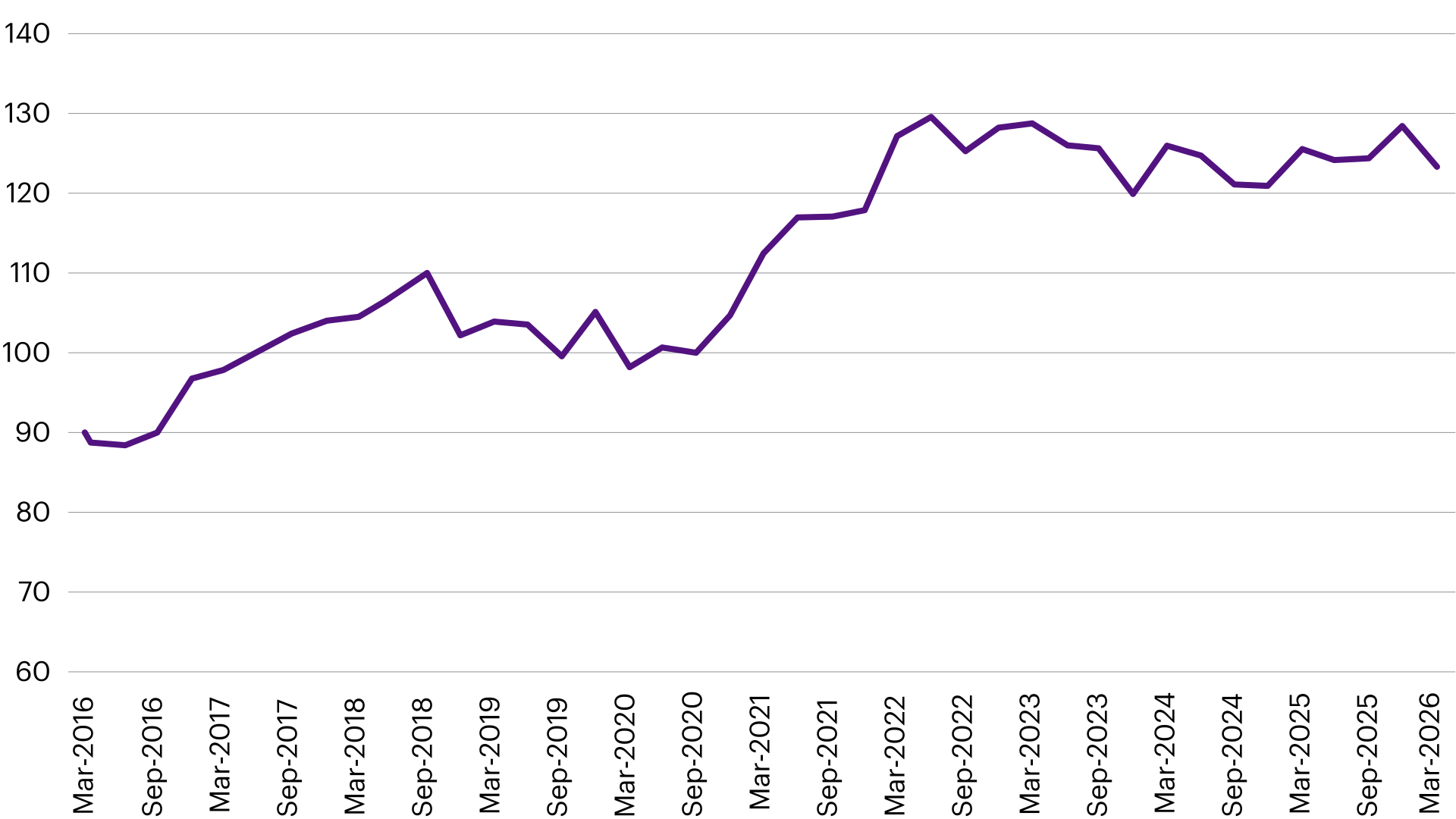
The Pension Index measures the movement in the ratio of the assets to the defined benefit obligation of a sample pension plan with index level 100% on 31.12.2006.
Background information on the study
Swiss Pension Finance Watch reviews quarterly how capital market performance affects pension plan financing in Switzerland. The study is part of the Global Pension Finance Watch from WTW which includes results back to 2000 for major retirement markets worldwide. The results are published quarterly with a focus on linked asset/liability results. It covers pension plans in Brazil, Canada, the Euro-zone, Japan, Switzerland, the U.K., and the U.S.
The impact of capital markets on these pension plans is two-fold:
- Investment performance on fund assets
- Changes in economic assumptions on plan liabilities (as measured by international accounting standards)
WTW’s model defines a benchmark pension plan that is intended to be representative of the pension liabilities and plan assets (including asset mix) that are typically found in each global market. The impact of movements in capital markets on assets and liabilities is combined to produce a Pension Index which reflects the movement in the funding level of the benchmark pension plan.
About WTW
At WTW (NASDAQ: WTW), we provide data-driven, insight-led solutions in the areas of people, risk, and capital. Leveraging the global view and local expertise of our colleagues serving 140 countries and markets, we help organizations sharpen their strategy, enhance organizational resilience, motivate their workforce, and maximize performance.
Working shoulder to shoulder with our clients, we uncover opportunities for sustainable success - and provide perspective that moves you.
In Switzerland WTW is based with offices in Zurich, Geneva, and Lausanne.