
In Switzerland, occupational pension plans (2nd pillar) play a central role in maintaining living standards in retirement. For many insured members, a significant portion of their retirement income depends directly on the savings accumulated throughout their working lives, based on the contributions paid and the interest rate credited each year by the pension fund.
According to our latest study of SLI companies, an additional 1% in annual interest increases the retirement pension based on the final salary by an average of two to three times more than a 1% increase in contributions.
The credited interes rate is based largely on the investment performance of the pension funds, but also on the correct balance between distribution and safety. It is therefore in the interests of employees to ensure that their pension fund has an efficient investment approach, both in terms of returns and risk management.
For their part, beyond the challenges of longevity, pension funds face several challenges in an environment marked by the SNB’s 0% policy rate and the associated low long-term returns in Swiss francs for high-quality debt (e.g., sovereign bonds or investment-grade corporate bonds). In order to maintain or even increase their target interest credit rate on savings, they must optimize risk-taking within their investment strategy, in particular through a more efficient allocation between different sources of return (e.g., foreign currency bonds, credit, equities, real estate, or other alternative investments), while ensuring that they remain within their risk capacity and adapt their safety mechanisms.
This approach is all the more challenging given the current uncertain economic, geopolitical, demographic, and climate context. It is therefore essential for pension funds—particularly in the context of an ALM study (analysis of the aligment between investment strategy and liabilities)—to verify:
- Whether the level of risk taken is adequate;
- Whether the expected return is optimal in relation to the risk assumed;
- Whether the performance generated is being used effectively.
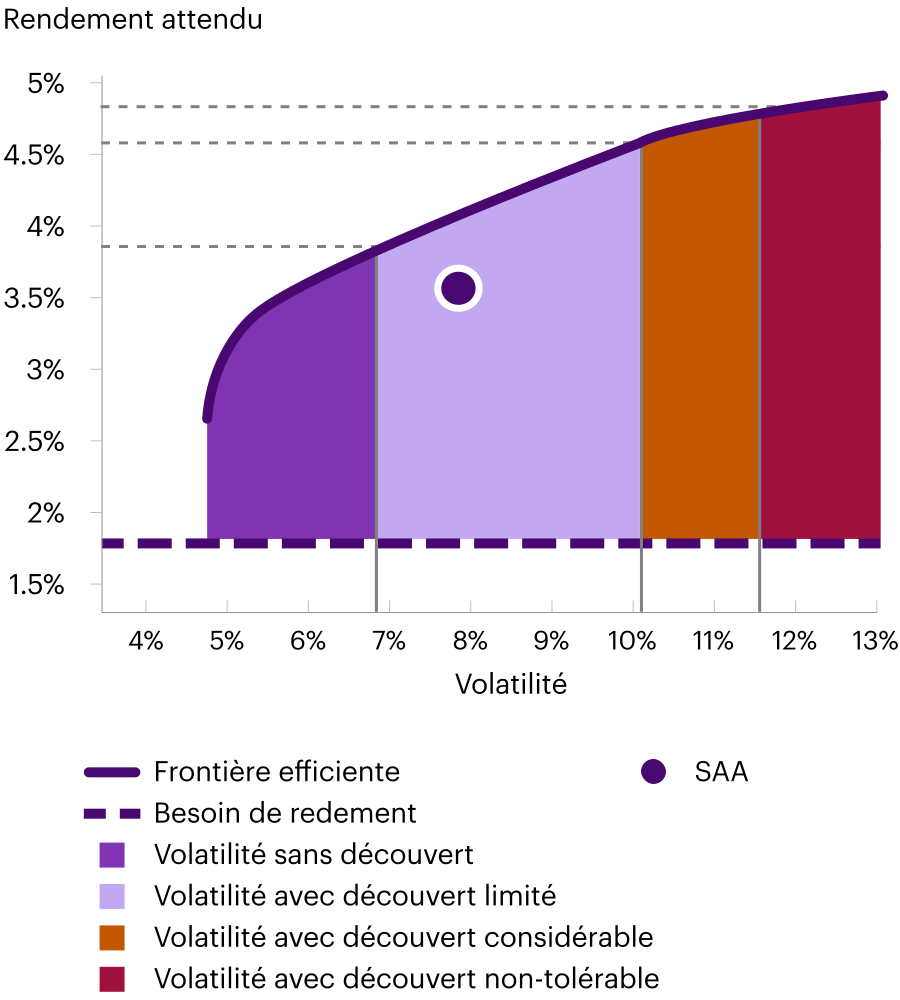
WTW‑Risk Compass
In practice, the level of tolerable underfunding is specific to each pension fund and depends in particular on the required rate of return, the measures that are considered acceptable by the insured members and the employer, and the maximum time allowed to restore financial equilibrium. As these factors are numerous and closely interconnected, we have developed the Risk Compass tool, shown in Fig. 1, which brings them together into a single indicator. This enables the decision making body to define a risk budget by identifying the most appropriate compromise between the potential size of a deficit and the objective of improving benefits, including through the credited interest rate.
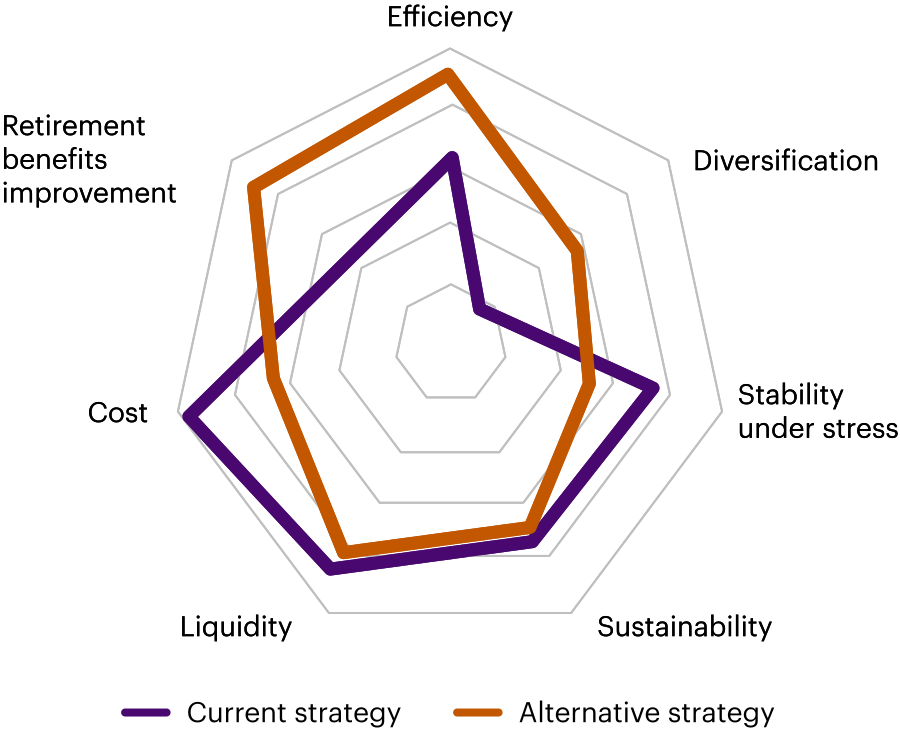
Comparison of the Portfolio Quality Score
In conclusion
Today, the total assets of the second pillar have reached, or even exceeded, CHF 1,200 billion. The sensitivity of accumulated savings to the interest rate credited is significantly higher than that of contributions paid, which underscores the need for an efficient investment strategy.
In this context, an ALM study is essential to assess the credited interest rate that the pension fund can reasonably expect based on the various strategic allocations under consideration. Such as study also makes it possible to verify whether the distribution policy remains in line with the objectives set by the Board of Trustees.
For a member of the Board of Trustees, it is crucial to be able to rely on a rigorous methodology and a reliable decision support tool, both for this validation and for the many other parameters that must be taken into account when selecting an investment strategy. An asset and liability management study should therefore include a synthesis tool that incorporates both quantitative and qualitative dimensions, allowing for a clear ranking of the different strategies under consideration.
This approach enables the pension fund to define and implement a robust strategic allocation that is tailored to its objectives and convictions, while remaining aligned with the long term interests of its members.