Inspired by the themes and conversations emerging from the Willis Aviation Conference, James Coventry, Managing Director, Global Aviation & Space, Willis, and Sir Simon Gass GCMG CVO, Senior Adviser, SC Strategy, consider how organisations can navigate an increasingly complex risk landscape. Drawing on Willis’ aviation insurance expertise and SC Strategy’s geopolitical advisory experience, they explore how timely intelligence, strategic judgement and trusted relationships can help leaders anticipate geopolitical and security challenges, make better-informed decisions, and build lasting organisational resilience. SC Strategy supports senior leaders with geopolitical assessment and strategic advice on risks that may affect operations, exposure and major strategic decisions.
- Preparing for risk
- Geopolitical change
- A changing world order
- Insurance market response
- Collaboration
- Building resilience
- Future conflict
How can organisations prepare themselves for geopolitical events?
Organisations generally approach geopolitics in three ways: reactive, tactical and strategic. Each has a role, but the strongest risk management comes from using them together, so that immediate information, operational judgement and longer-term assessment inform the same decisions.
The reactive approach relies on widely available open-source media and public reporting. That can be useful, but it means organisations are often receiving information at the same time as competitors, clients and markets. By the time the whole industry is trying to respond, the immediate opportunity to act earlier may already have narrowed.
The tactical approach draws on operational intelligence, sector data and local advice to support immediate decisions. It helps organisations turn information into practical operational choices, whether that means securing supply chains, protecting assets or adapting operational plans.
Aviation decisions are often high-cost and high-commitment, but taken under pressure. Route planning, fleet deployment, crew positioning, underwriting, claims decisions and security posture may need to be adjusted in days rather than months. In that environment, earlier judgement can make the difference between manageable disruption and severe loss.
The strategic approach adds a further layer of judgement about direction of travel, actor intentions and plausible escalation or de-escalation pathways. It draws on regional expertise, sector knowledge and sources beyond the public debate to help senior decision-makers understand not only what is happening today, but how individual developments may combine to create exposure across routes, regions and portfolios, and what this could mean for operations, insurance and capital allocation.
The aim is to map plausible pathways, test assumptions early and give decision-makers more time to act
There are too many variables for perfect prediction. The harder question is whether organisations have the judgement-led capability to anticipate how risk is likely to develop before operational disruption is already visible. The aim is to map plausible pathways, test assumptions early and give decision-makers more time to act before geopolitical risk becomes operational fact.
In recent crises, including in the Gulf, this approach has helped organisations develop a clearer view of the direction of travel and gain time to consider their response before the operational consequences became fully visible.
Is the pace of geopolitical change genuinely unprecedented, or does it simply feel that way because information moves faster today?
The pace of change can feel unprecedented because information now moves at a speed and volume that compresses events into a constant stream of alerts. But geopolitical change itself is not new. The strategic centre of gravity has been shifting towards Asia for decades, Africa is becoming more prominent, and organisations have always had to manage change as both a challenge and an opportunity.
It is always worth being careful about using words like ‘unprecedented.’ Most geopolitical events contain new features, but they usually develop from older pressures, unresolved disputes and gradual changes in capability, intent or alignment.
There’s no doubt that this is a period of change and relationships between several major powers have evolved. But most strategic shifts do not happen in a single day. The event that everyone talks about is often the most visible aspect of a combination of incidents, decisions and pressures that have been building over years. Good geopolitical assessment helps organisations identify those signals earlier and understand when they may start to matter operationally.
Has the rules-based international order fundamentally changed, and are governments, airlines and insurers adapting to a more multipolar world?
Yes. The rules-based order has changed, and that matters because aviation and insurance largely depend on shared assumptions about access, stability, sanctions, airspace, claims environments and, fundamentally, the way states behave. Mark Carney, prime minister of Canada and former governor of both the Bank of Canada and the Bank of England, has argued that the traditional rules-based international order is fracturing, requiring middle-power nations to act collectively to protect their interests.
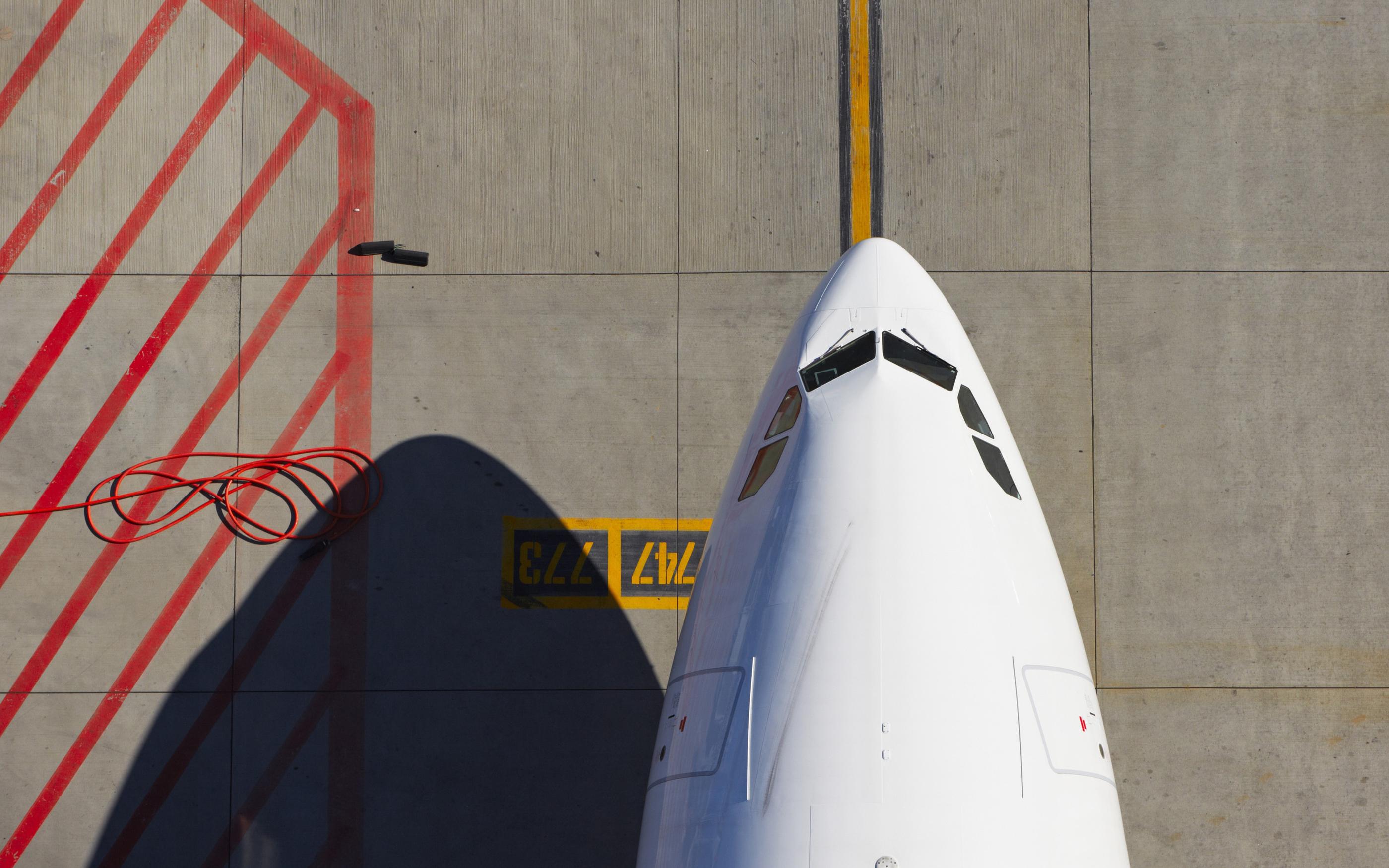
We hosted our 23rd Willis Aviation Conference 'Smarter Skies: Managing risk and complexity for a sustainable future in aviation' in Istanbul, Turkey.
His point is that great powers are increasingly willing to use economic integration, tariffs and access as instruments of coercive leverage. As Mark Carney has onserved, “middle powers must act together because if we’re not at the table, we’re on the menu”.[1]
Whether you are a government, an aviation organisation or a global insurer, the practical takeaway is flexibility. Plans built on stable relationships, predictable access to markets or a single central forecast need to be tested against a much wider range of scenarios and outcomes. Recent months have shown how quickly and painfully assumptions about airspace, demand, route viability and exposure have to be revised when tension spills over into conflict.
The advantage comes not from having more data, but from knowing which signals matter
The positive news is that more information, arriving faster, can improve decision-making if organisations have the tools and relationships to interpret it. The advantage comes not from having more data, but from knowing which signals matter, how quickly they could affect operations, and what decisions should follow.
How has the aviation insurance market responded to the increase in geopolitical risk over the past decade?
The insurance market is particularly exposed when it fails to anticipate or interpret changes in geopolitical risk. In periods of stability, the price of risk moves in a relatively restrained way, responding to market cycles and known events. Unfortunately, geopolitics in the real world can disrupt those patterns sharply, as the insurance markets saw in the aftermath of the 9/11 attacks and more recently the Russian invasion of Ukraine.
Interpretation is what turns data into intelligence that can be acted on
There has been a significant increase in the use of intelligence and analytical tools to better understand geopolitical threats and aggregated exposure. The challenge that will always remain is that risk pricing is not a forecast of a single outcome. It is a judgement about plausible outcomes, their likelihood, their severity and the confidence an insurer has in the available information, including what has happened in the past.
Data matters, but interpretation is what turns data into intelligence that can be acted on, explained to stakeholders and priced into an insurance policy. That remains one of the central challenges for insurance markets.
Has the relationship between airlines, brokers and insurers evolved during this period, and has information-sharing improved?
In the past, a major geopolitical event often led to a blunt operational response: airspace in a conflict zone was simply closed, aircraft were grounded, or airlines were barred from flying into, within or out of the affected area. Insurance market responses often reflected the same uncertainty, with insurers reviewing war risk cover or issuing notices of cancellation as the risk profile changed.
Today, continued engagement and appropriate information sharing between airlines, brokers, insurers, reinsurers and other intermediaries can support a more differentiated understanding of risk. That can help insurance markets distinguish between exposures, recognise credible mitigations and continue supporting operations where the risk is understood and appropriately priced. The challenge is that major unexpected incidents can still make markets tighten quickly, with prices rising sharply in the immediate aftermath and then falling back as confidence returns.
Relationships between airlines, brokers and insurers have always been built around the need to meet challenges and respond effectively to events. Greater availability and transparency of data, and the ability to share appropriate information and analysis, have strengthened those relationships. But in many cases, there remains a significant gap between having data and interpreting it in a way that improves decision making.
Can the aviation industry ever be fully prepared for geopolitical events, or is resilience now more important than prediction?
The reality is that no organisation can be fully prepared for every geopolitical event. From an airlines’ and insurers’ perspective, prediction is valuable because avoiding loss is always preferable to managing a claim. But prediction will never be perfect, which is why resilience matters; it gives organisations options when events move faster than forecasts.
Prediction will never be perfect, which is why resilience matters
The phrase ‘black swan’ has been overused,[2] but the point remains important: the global economy will always face shocks that are difficult to anticipate. Up-to-date risk registers and free-flowing data and information between organisations matter, but they are not enough on their own if decision-makers have not tested how they would act under pressure.
As a result, effective risk management depends on both preparation and resilience: the ability to see more clearly, decide earlier and adapt when events do not unfold as expected.
How has the nature of conflict changed, and what does that mean for aviation risk?
Conflict has always been unpredictable, and weaker actors have often found asymmetric ways to challenge stronger ones. What has changed is the range, cost and accessibility of the tools now available.
The nature of conflict has evolved. Cyber threats, electronic warfare and low-cost drones have reduced reliance on conventional military platforms such as ships, aircraft and tanks in some contexts. They have also allowed states and non-state actors to create disruption without necessarily invading, occupying or holding territory.[3]
Drones may operate at lower altitudes than military aircraft or missiles, creating a different risk for commercial aviation. Spoofing and jamming can further degrade the navigation and situational-awareness systems on which crews and operators rely.
At the same time, ballistic and cruise missile proliferation, more precise targeting and the greater use of coordinated mass strikes are changing the scale of the threat. States continue to invest in highly capable integrated air and missile defence networks across wider regions,[4] while we are seeing examples of adversaries seeking to overwhelm those networks with mixed waves of missiles and drones. Their trajectories, and the resulting interception activity, may extend into third-party airspace. Their objective is often to disable critical infrastructure, exhaust defensive capacity and impose political pressure. For aviation, this means risk can spread well beyond the immediate conflict zone: airspace restrictions, interception activity, falling debris and attacks on airports, fuel facilities, power networks and navigation systems can disrupt operations across an entire region.
This fundamentally changes aviation risk in conflict zones. There is always a risk that a stray missile or other weapon takes down an airliner in mid-flight. Static risks on the ground can be less visible but still severe, particularly where large numbers of aircraft, crews, fuel infrastructure or airport operations are exposed. Even the threat of conflict can disrupt trade, connectivity and confidence across a state or region. The effects can extend beyond the immediate conflict area, affecting the accumulation of exposure across several markets at once.
This underscores the importance of the free flow of appropriate data and information-sharing. If an airline can show, for example, how it trains crews to verify their position manually during a flight, that evidence can help insurers understand the quality of the risk rather than relying only on the location of the route.
The best outcomes come when both sides can distinguish between a calculated risk and an avoidable exposure
In short, the insurance market is adept at creating appropriate and efficient policies when it has confidence that it understands the risk it is supporting. That depends on trust running both ways between client and insurer. Insurers need credible information from airlines about how risks are being managed, and airlines need clarity about the conditions under which operations can continue, pause and or recommence. The best outcomes come when both sides can distinguish between a calculated risk and an avoidable exposure.
This article builds on discussions from the recent Willis Aviation Conference, where industry leaders explored the evolving geopolitical, operational and insurance challenges facing aviation. To discover more about our Global Aviation & Space events and join future conversations shaping the industry's response to emerging risks, visit Global Aviation & Space Events
Footnotes
- 'The old order is not coming back,' Carney says in provocative speech at Davos, Return to article
- Why We Need to Stop Calling Everything a Black Swan, Return to article
- Mystery drones are causing havoc across Europe. Here’s what we know, Return to article
- Ukraine's Tryzub laser weapon enters final testing stage to destroy Russian Shahed drones, Return to article
Authors

Contacts


“Middle powers must act together because if we’re not at the table, we’re on the menu"Mark CarneyPrime Minister of Canada