
The defense industry is undergoing a profound transformation. A period of relative calm has given way to a new age of geopolitical instability, marked by a rise in violent conflicts involving governments. And this return to intergovernmental warfare has ignited a significant increase in defense spending worldwide.
Yet, even as spending on defense procurement rises, the sector faces a complex web of structural, financial and strategic risks which threaten long-term stability. In a newly unstable geopolitical environment, understanding and proactively managing these emerging risks will be vital for defense manufactures and contractors.
Even as defense procurement orders soar, the sector faces unprecedented structural, financial and strategic risks which threaten long-term stability.”Evan FreelyGlobal Head of Credit Risk Solutions
Defense under pressure: A new era of defense risks
To understand the most pressing economic risks facing the defense sector, Willis, a WTW business, worked with Oxford Analytica to convene a panel of external affairs and risk management leaders, representing defense manufacturers based in Australia, Europe and North America. The findings from these discussions form our economic risk radar of the top risks facing the defense industry.
The top five economic risks facing the defense sector
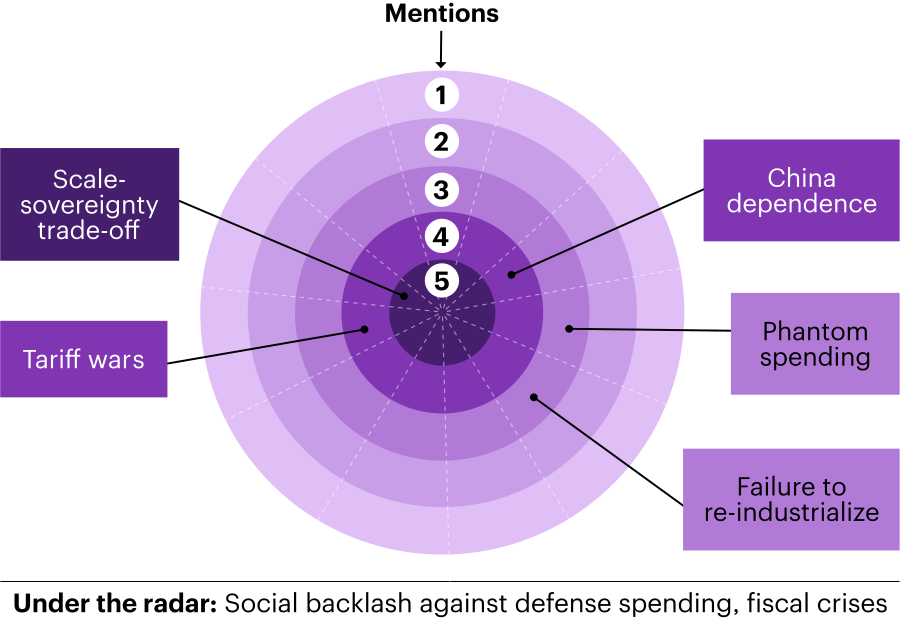
Economic risk radar for the defense sector (ranked by number of mentions)
- Scale-sovereignty trade-off: With nations struggling between pooling defense resources for efficiency and preserving national control, the defense industry is facing fluctuating demand and complex procurement landscapes.
- Tariff wars: Escalating trade barriers are creating significant headwinds for the defense sector, disrupting established supply chains, driving up costs and introducing unpredictable variables for long-term planning and procurement processes.
- China dependence: The defense sector's reliance on Chinese materials and components, particularly rare earths and electronics, is presenting significant supply chain vulnerability amid geopolitical risks.
- Phantom spending: The gap between political pledges to increase defense budgets, which do not always translate into actual sustained industrial investment, is preventing the expansion of production capacity.
- The failure to re-industrialize: The defense industry is facing hurdles in scaling production as Western nations rediscover the need for industrial capacity, but face difficulties rebuilding it under modern economic conditions.
Download the ‘Managing the new economic risks in the defense sector’ report
In this report, we provide a risk-by-risk analysis of the radar and its implications. The report also features in-depth essays from Oxford Analytica, as well as a series of insights from Willis specialists to help executives understand the intricate economic forces shaping the future of defense and how to navigate this turbulent environment.
The future of the defense industry
This report reveals a story of a sector that's in structural transition. One that is both invigorated by renewed demand, and simultaneously constrained by economic nationalism, fiscal fragility and supply chain risks. Defense executives will need to embrace innovative strategies and informed decision-making to ensure resilience in this evolving landscape.
Download the full report to gain critical insights and strategic guidance on navigating the new economic realities in the defense sector.
Author

Political risk contact

How will rising tariff barriers, concerns about the security of supply chains and a major focus on re-industrialization reshape the sector?”Sam WilkinDirector of Political Risk Analytics, Credit Risk Solutions