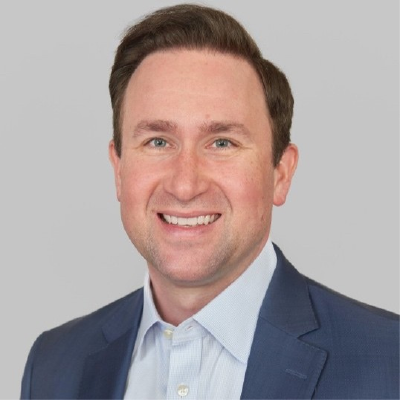
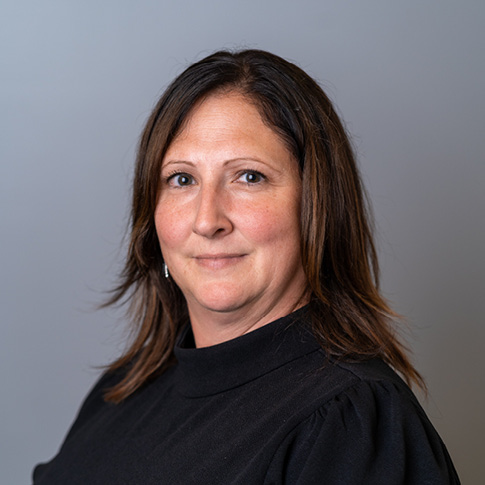
In this episode of the Global Insurance Marketplace Insights podcast, Jackie Bolig, Head of Placement and Broking Solutions, North America, discusses the current state of the North American insurance market with Michael Machin, Beth Cohon, Scott Pizzi, Ed McNenney, Simon Delchar and Krista Cinotti.
Transcript for this episode
ED MCNENNEY: What we're seeing now is a lot of legislation. The EU AI legislation, the AI Lead Act, which is coming from the Senate shortly. And they are trying to characterize AI, especially generative AI, as a product liability exposure. And at this point, the markets have not responded because the courts have not interpreted that, yes, you're on the hook for a generative AI product that you didn't really create. You just insisted in.
And we're concerned that if the markets do respond to this and the current AI generative AI language that exists, we're going to create huge gaps across all of our coverages.
SPEAKER 1: Welcome to Global Marketplace Insights by Willis, a WTW business, a podcast series showing the latest trends from the specialty and regional insurance markets.
JACKIE BOLIG: Hello. Welcome to our podcast today. I am Jackie Bolig. I am the Head of Placement and Broking Solutions for Corporate Risk & Broking for Willis for North America. The title of our fall edition of the insurance market realities report is a Specialist view navigating tomorrow's risk landscape for 2027.
In order to help you navigate not just the landscape, but our report, I'm joined by a number of the North American product line leaders. I am joined by Mike Machin, the Head of FINEX, Beth Cohon, the Head of Middle Market Placement, Scott Pizzi, the Head of Property Placement, and Ed McNenney, the Head of excess Liability and Products Recall Placement. I am also fortunate to be joined by Simon Delchar, our Global Head of Placement, and Krista Cinotti, our Head of Placement Strategies.
I also have the pleasure today of actually handing off the microphone for the interview to Simon. So all bets are off on the format of this question and answer session. But, Simon, take it away.
SIMON DELCHAR: Thanks, Jackie. It's great to be here. So the prior podcast talks about the markets in terms of the moving back to the future. And keeping with that theme of back to the future, the need for speed to innovate is increasingly rapid. What is one area you believe the need for rapid innovation is critical? I'm going to point that question at Scott.
SCOTT PIZZI: Yeah, so when I think about-- and thank you for the question. I'm sure a lot of us will have similar answers. But when I think about it, particularly from the property space, clearly the data center explosion has created a lot of need for innovative products, whether it be on the construction side or the operational side. And that's notwithstanding the fear or excitement around AI and what we're doing in that regard.
But I also think from an innovative standpoint what we can maybe do and think more broadly is in claims. I think the way we manage claims, the way we handle claims. The manual data entry and back and forth. I think some of the innovative things that we could possibly start thinking about on how to get claims to resolution a lot quicker might be something we want to continue to explore.
But as the landscape for property, it's more of the same. When you're in a softening market, the ability to utilize things like we have with Gemini and broking platform, the ease of doing business, the transactional nature, making that more seamless. I think what you're going to find is until the market starts to go a different direction, we want to make the process as smooth and transparent and as collaborative as we can. So from an integrated standpoint, I think, for me, claims on the property side is one item that I take off and think about how do we change the dynamic.
SIMON DELCHAR: I think innovation is also helping us in terms of our placement strategies and our placement initiatives. And I guess the ability to-- we've got more data than we had before. We've got the ability to analyze data. And as you say, things like the broken platform, help us capture that data. But, Krista, can you talk a bit about that facility strategy in North America and where you think that the technology advances have allowed us to pick up the pace on that?
KRISTA CINOTTI: Sure. Thanks, Simon. Yeah, I think the technology is a key piece. And the technology piece is important for both the colleagues standpoint and the carrier partner standpoint for not marrying up our strategies with our carrier partners. The speed will dilute during that process. So making sure our brokers know how to get to market quickly, and then also partnering with our carriers to make sure that they're connected in a way that they can underwrite quickly and get us a quote back.
We think we're ahead of the pack on that, and we're in a great spot to do that on both large accounts and middle and small accounts. So we are really looking at that from every segment strategy, not just one segment. And we think we'll be able to deliver more to our clients more quickly and at a speed, with more solutions in all areas of the business.
MIKE MACHIN: Yeah, I would just add to Krista's comments. I mean, I think our investment in technology has really paid significant dividends for us already as we continue to strive for best in class client service and risk management solutions and financial lines. For example, we're live with a tech enabled digital platform for SMEs, cyber business as part of the broader strategy organizationally and eliminates multiple touch points during the submit quote bind policy issuance process, bringing capital to our clients much more effectively and efficiently than ever before.
SIMON DELCHAR: So with the advancement of AI and how it's impacting everything in the world at the moment, how are you seeing insurers addressing potential AI exposures in current forms and particularly cyber, I guess? And what coverage gaps exist for losses that AI could deliver that aren't contemplated existing forms anyway?
MIKE MACHIN: Yeah, it's a great question, Simon. I mean, I think with a lot of exposure, you see things change from year to year with respect to AI, though. I mean, I think we're seeing a change day to day. I mean, just over the weekend, you saw comments from Anthropic's CEO about the need to slow down and really take a more prudent approach to risk management around their AI technology.
I think here at Willis, we've done a really good job of working, not just with our cyber clients, but across the board in terms of trying to see around the corner to understand what exposures might manifest themselves, whether it's in a cyber product, to be an E&O product, professional E&O product. I think cyber is probably the primary area of focus right now. We're working on best in class product solutions to proactively address some of the gaps that we see in cyber products more broadly.
But I think it extends beyond that to work that we're doing with Scott's colleagues in property trying to address and James' colleagues in casualty trying to address where cyber AI property casualty all intersect. And so there's a lot of work still to be done. But I think we're doing a pretty good job of working with our clients to address those exposures proactively.
ED MCNENNEY: Yes, we're very concerned. Generally, the liability contract is interpreted by the courts, and the insurance companies respond to the court's interpretation of certain plaintiff's arguments. What we're seeing now is a lot of legislation, the EU AI legislation, AI Lead Act, which is coming from the Senate shortly, and they are trying to characterize AI especially generative AI as a product liability exposure.
And at this point, the markets have not responded because the courts have not interpreted that, yes, you're on the hook for a generative AI product that you didn't really create. You just assisted in. And we're concerned that if the markets do respond to this and the current AI generative AI language that exists, we're going to create huge gaps across all of our coverages. So although we're all looking into our own silos right now to see what limitations might exist around that, I think we have to look across the platforms and see where the gaps lie between cyber and liability, between property, business interruption and liability.
They're all coming together, and we've got to get out of our silos and figure it out across platforms.
SIMON DELCHAR: I think the market's been more sensible this time around. I mean, if you go back five years now, cyber and the blanket approach that was taken, I think the market's being more considered this time. And I guess if the loss event is triggered by AI, but the loss event would be covered anyway, then that should remain the case. Can AI create a loss that is not a loss under a recognized policy? I guess what we all need to think about.
ED MCNENNEY: Or this legislation shifted from one coverage to the other. So automobile liability everyone talks about that. And self-driving cars. But we don't have a lot of liability market anymore. Is it just products liability. How is the industry going to address that?
SIMON DELCHAR: So who wants to take the next question of what advice would you give clients navigating this environment?
BETH COHON: I can take this one. So I think the advice is what we've all been saying, which is lean on us to be proactive advisors of where the market might go. Because as Ed mentioned, a lot of it is a guessing game on how the courts might rule or what policy might respond. But I think that we've been collaborating to try to come up with creative solutions that could be introduced to customers of any segment.
So even middle market buyers are finding that they might need to accept defense inside or explore alternative risk transfer to actually be able to source and transfer risk for AI liability. Especially as we see, generative AI exclusions being filed by different carriers and by ISO. So I think the advice is we might not be able to lean on analytics to model what the claims might look like because it's really to be seen, but to stay open minded to a different way to transfer their risk or look at their risk, even if they were historically a guaranteed cost buyer.
JACKIE BOLIG: What I love about all of the ways you answered the questions, and I'll use your words. You can't live in a silo. This world is changing so fast that the ability to go across multiple products and multiple solutions seamlessly is critical.
SIMON DELCHAR: So an industry leaving here, is there any particular industry that is most exposed to this?
ED MCNENNEY: I would have to say it starts with the technology and it will trickle down to everything manufacturing, food, and beverage. Everyone is using generative AI. Everyone is trying to figure out how to streamline their business. Certainly going to start with the people making the product, but those that use the product will suddenly feel the effects of the limitations that the manufacturers are beginning to feel.
BETH COHON: And I think our hope is that our carrier partners can help differentiate what part of the life cycle our customers play, because if they are going to take a broad brush approach of if they're leveraging generative AI, then that's really not going to leave anything that's untouched. But obviously that's our job as well to educate the market on that and come up with solutions together.
SIMON DELCHAR: So if we look back over 5 or 10 years, what are we using now that would have been a real benefit last time around?
SCOTT PIZZI: Last time around, let's see. So the property market went through its hardening phase from '17 to call it '23, a precipitous climb of rate change. And now we've done a steep decline over the past two years. So for me, it's pretty easy. The influence of facilities, whether that be Gemini, whether that be client edge, and the utilization of broking platform, to be sure that we have the ability to secure capital on programs for longer term periods.
We had certain classes during that '17 to '23 run that were extremely difficult to either buy limit in general, or they had to buy less limit, or retentions had to change significantly. With the advent of Gemini and client edge, that ability to lock that capital down for a long term play provides a lot of respite for those clients moving forward. That's probably the biggest thing in the property space for us that would have been-- well, if we had that back then, it would have made a lot of lives a little bit easier.
SIMON DELCHAR: I guess you go back five years in cyber D&O you can buy them with a lot more money. Construction project extensions, and as you say, these facilities, Gemini for example, now give us that automated capacity in space, for example. Space is one area of the market which does remain challenging because it's so volatile.
There's exclusive capacity unavailable under these facilities that you can't access through the open market. So I think you're right. I think-- I guess it's the data that we've been able to compile and the portfolio approach that underwriters have taken because of that data smooths out the volatility. Hopefully it reduces the peaks and troughs.
SCOTT PIZZI: Yeah, I think you're right. And if you look at something like broking platform, where we've been able to harness the data, because for years-- I've been in this business over 34-- data collection and data utilization has been terrible in the insurance brokerage space. It just has been. Nobody's known what to do with it. We've all had thoughts about where it can do, what it can play, and how do you get it, how do you aggregate it.
But now with things like we're using it in broking platform, the ability to transfer that and get some stakeholders on the insurance company side to sit down and look through portfolios of risk rather than individualistic risk creates a whole different dynamic for us to be able to play.
ED MCNENNEY: I would say building solutions proactively rather than reactively. And 2020 is when the excess liability changed dramatically. And it was unusual. Mostly price and coverage drive the hard market. This was very much a capacity driven hard market. And it wasn't driven by insolvencies or complete withdrawals from the market. It was just a reduction in capacity across the marketplace.
And that reduction would have been severely tempered if we had on the side capacity that could fill in across our tower. And taking the time to respond and get the data and build the product kind of took the edge off a little bit. I mean, I came to market while the product was solving itself. Being proactive in seeing the problems ahead and guiding ourselves to those solutions is how brokers and clients.
MIKE MACHIN: I would echo everything Ed and Scott just said. I mean, I think it's the combination of the facilities themselves and the distinct capital pools, but then the technology that enables us to get to them quickly to be able to again, be responsive to clients in an efficient manner. I think whether it's Gemini or CyXS access for the cyber marketplace, I think to Simon's point, five years ago, the cyber market got turned upside down and we didn't have the same type of breadth of facility or market to be able to solve problems for clients. So I think it's a material difference where we stand today versus where we were a handful of years ago.
BETH COHON: I think as a broker-- I know we talked about ensuring AI risks, but I'm also an AI adopter. And I think if we had tools like Nova back in the prior hard markets, that could make us not only faster, but the insights that we're able to leverage and bring to our customers is really game changing. And so I think it would make us more consistent, positive results to everyone had we had that at the time, so really excited about how that might help us be a little more nimble.
SIMON DELCHAR: I think Nova and Navigator are both game changers.
BETH COHON: Exactly
SIMON DELCHAR: And I think they're going to transform the way that we look after our clients. I think they're going to transform the way that we deal with markets, and I think they're going to transform the way that our people deal with their jobs on a day to day basis. I think it's a fantastic progress. Shame it's come so late in my career.
So if there's one last point that you'd like the readers in the audience to take away from the review, what would that be, Jackie?
JACKIE BOLIG: So one last thing that was really focused on in the prior insurance market realities report was data centers. And I can't believe we've made it through the half hour without saying that. But the last thing I will leave is around data centers and other tools, technology, cetera, that are driving emerging risks is that you can't live in silos.
That when you think about all the new risks that come from data centers around the energy sources, the technology, the space, the environment, all of the different things that you have to deliver for our clients in a structure and a manner that is free of silos. So that's the one last thing I will leave. And Ed, sorry to borrow your word, but I think it's the most important thing that faces our industry today is the ability to dissolve silos.
ED MCNENNEY: I hate to bring this from the digital world back to the analog world, but as our market changes in the excess liability market, there was a lot of ground given up when capacity was retreating around coverage, whether that's communicable disease exclusions that emerged from the pandemic or assorted other cyber/biometric limitations.
We have to look to that coverage and bring it back to what is a best in class standard across all boards. And frankly, technology is really helping us do that and helping us mechanize that. But I think that we're looking at the numbers and the premiums. Sometimes we get lost and spend your time looking at the coverage, improving the coverage, bringing it to best in class and worry about the price next.
SIMON DELCHAR: I couldn't agree more. I think the last few years have been all about price. And I think if clients want cheap insurance, of course, we can do cheap insurance. But some clients are looking at value rather than price now, and maybe not taking all the reduction that they could get for the market, but getting back some of the coverage that was stolen from them.
ED MCNENNEY: Couldn't agree more.
SCOTT PIZZI: Yeah, from a property perspective, having gone through the emerging in the middle of the soft market, the one thing we talk about today is the first onset was clearly priced. It's now about resolving nonconcurrencies across that program and trying to get back some of the things that may have disappeared, whether that be your cyber endorsements. If we go back to 5401, I guarantee you we're going to have more conversations about that.
But for us, it's a flight to quality. At some point, the pricing conversation ends, and there has to be a very discerning conversation with our buyers around who are we replacing the business with? Who will be long term participants to support that business?
SIMON DELCHAR: Do they pay their claims?
SCOTT PIZZI: And do-- you stole my thunder. And do they pay their claims? Coverage is king. And I think we have to get back to the T's and Cs to make sure those are tight. And we have an ability now in trading the capital the way we have because we have such an amount of it to do just that. So I think for me, it's a flight to quality for me and making sure you're with the right person for the long term.
MIKE MACHIN: Yeah, the only other thing I would add, and it ties into everything folks have just said, I mean, we shouldn't mistake a favorable market environment for a low risk market environment or a low risk environment. Take advantage of the fact that we are in a competitive place right now, reinvest in quality of coverage.
We've talked a lot about AI risk and what that means for companies and clients, but there are a lot of other risk elements out there that we haven't addressed, whether it's geopolitical or otherwise. And so take advantage of where we are today and look towards the future.
BETH COHON: Yeah, I mean, I would just reemphasize the silos aspect, but I think it plays into what Mike was saying, because even though we are all product specialists, if we're not familiar with how other areas can solve for potential gaps in coverage, then we're not advising them the way we should. So I think all of our teams are becoming more familiar with what our SCR team can offer with active assailant or political risk. I think it's really important for us to have the familiarity of what these other groups within Willis can bring to our clients and leverage them accordingly. So that would be one of I going to takeaways to emphasize all these wonderful points my colleagues made.
SCOTT PIZZI: It's going to seem a little corny, but we're going to a new office effective tomorrow. And that'll be really the first time. I think we have one full office, with all of us supporting groups, all being isolated in the city, on the same floor, in the same area, which will allow for this cross collaboration even more than we do today. I think it's a big thing of breaking down silos, Ed, to use your terms. And I think this is a new chapter for us moving forward.
JACKIE BOLIG: We're going back in time.
Yeah.
SCOTT PIZZI: Which is it?
ED MCNENNEY: Go back to offices now.
SCOTT PIZZI: Back to work.
ED MCNENNEY: If only I have a phone
SIMON DELCHAR: People need to be in the office, or they'lll never catch up.
ED MCNENNEY: Right.
SIMON DELCHAR: I guess one more buck there-- I'm conscious of time, but again, we're in largely in a very soft market, and largely a price driven market. And I don't think the industry is particularly good at innovation. Innovation is an overused word. But right now, as Mike says, this is a very risk heavy world that we live in.
And the insurance industry continues to sell products that our clients don't necessarily think are relevant for their top risks. So I would challenge our colleagues and I would challenge the market to continue to come up with some new products which actually address the exposures that our clients are really worried about.
JACKIE BOLIG: Thank you Simon. Thank you to all of our product line leaders. I am going to turn it over to Krista to bring us home.
KRISTA CINOTTI: Thanks, everybody, for your time today. We hope you found it informative and mildly entertaining, as entertaining as insurance can be. As you can see from all the leaders, innovation, tech, speed, foresight and data will help us solve more and deliver more to our clients at the pace they need in this market.
Remaining nimble will be a key factor, and we at Willis are uniquely positioned to be able to deliver to our clients in all segments, industries, and products. Please keep an eye out for our Insurance Marketplace Realities and future podcasts. Thanks again, everybody.
SPEAKER 3: Thank you for joining this WTW podcast featuring our latest global market commentary. WTW offers insurance related services through its appropriately licensed and authorized companies in each country in which WTW operates. For further authorization and regulatory details about our WTW legal entities operating in your country, please refer to our WTW website.
It is a regulatory requirement for us to consider our local licensing requirements. The information given in this podcast is believed to be accurate at the time of publication. This information may have subsequently changed or have been superseded, and should not be relied upon to be accurate or suitable after this date.
This podcast offers a general overview of its subject matter. It does not necessarily address every aspect of its subject or every product available in the market, and we disclaimer all liability to the fullest extent permitted by law. It is not intended to be, and should not be used to replace specific advice relating to individual situations. And we do not offer and this should not be seen as legal, accounting, or tax advice.
If you do intend to take any action or make any decision on the basis of the content of this podcast, you should first seek specific advice from an appropriate professional. Some of the information in this podcast may be compiled from third party sources we consider to be reliable. However, we do not guarantee and are not responsible for the accuracy of such.
The views expressed are not necessarily those of WTW. Copyright WTW 2026. All rights reserved.
Disclaimer
Podcast guests

Listen to this episode on:
PODCAST SERIES
Global Insurance Marketplace Insights Q3 2026