In this episode of the Global Marketplace Insights podcast, Neil Harrison, Global Head of Claims, is joined by specialist colleagues Dom Spinelli, Head of Transactional Liability Claims and Phill Mace, Head of Marine Claims to review Q3 2026 key trends, transactional liability and the impact of geopolitical conflict on the insurance market.
Transcript for this episode
DOM SPINELLI: Ultimately, our clients are buying a promise to pay a claim and that might not be tested for 2, 3, 4 years after a deal closes. And so pricing and scope of coverage certainly matter. But the cheapest policy is probably not the best policy.
SPEAKER: Welcome to Global Marketplace Insights by Willis, a WTW business, a podcast series showing the latest trends from the specialty and regional insurance markets.
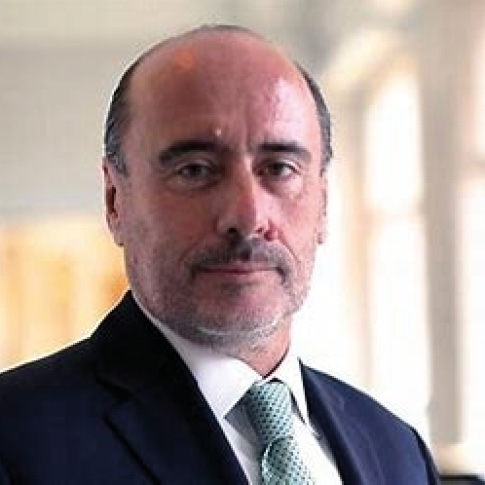
NEIL HARRISON: Well welcome to our third quarter 2026 review of the claims marketplace. I'm Neil Harrison. I'm the Global Head of Claims at Willis. I'm very pleased to be joined today by two of my specialist colleagues, Dom Spinelli and Phill Mace. They're going to introduce themselves a little bit later on in our conversation and get into a couple of topics that we think are particularly important and of great interest to clients, prospects, and markets around the world.
If we look back at the quarter, some of the trends that we've discussed before-- issues with nuclear verdicts, issues related to AI, how that should be used in the claims world, some of the risks that are incumbent on that-- much of that commentary is consistent with what you heard from us in Q2 and indeed in Q1 of this year. It certainly continues to be a very challenging claims environment on a global basis, perhaps despite the soft market that we see in many areas of the risks that we place in many lines of coverage that we focus on as a global specialist broker.
But we've picked today two areas of the claims world that we think are particularly important, particularly topical. And I'm going to come first to you, Dom. And perhaps just quickly introduce yourself. That will make it clear to people the area of focus that we're going to have. And then I've got a few questions for you on your specialist subject. So over to you just, to quickly do an introduction of yourself.
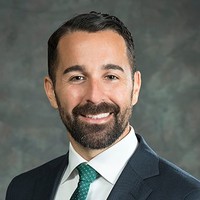
DOM SPINELLI: Sure Thanks, Neil. Dom Spinelli. I am the Head of Transactional Liability Claims at Willis. And so I oversee all transactional claims for our clients. That includes reps and warranty insurance, RWI (Representations and Warranties Insurance) tax, and contingent.
NEIL HARRISON: Great so, as I'm sure many of our listeners know, there's been a lot going on in your world through this year, but I think particularly active in the last quarter with carriers changing their risk appetite. We see news feeds on that pretty much every day. So what's going on there? What do you see that's really driving some of that change in underwriting behavior?
DOM SPINELLI: Sure, yeah. Certainly a lot of headlines, a lot going on in the market. The biggest news is QBE exiting the North American transactional liability market. And we've seen an additional four or five MGUs losing part of their capacity. My main message for today is everyone should take a deep breath. What we are seeing is really an expected and frankly, long overdue market recalibration.
And it helps to remember how young specifically reps and warranty insurance is. We went from five carriers in 2016 to now more than 30, and we continue to see new carriers and MGUs [Managing General Underwriters] enter the space. We've never had a truly hard market during this 10-year run. So what's changed over the past quarter? Claims. You the claims picture has become much clearer. RWI claims do have a long tail-- often 3, 4, or 5 years. So the actuarial data on profitability has just started to emerge.
And naturally, that's causing some carriers to reassess their risk appetite where they deploy limits. But that's the normal evolution of insurance. And I think importantly, it also shows the product is working. The market has paid billions of dollars in reps and warranty claims to clients. So it's a matter of the market finding the right balance among coverage, pricing, profitability. At the same time, RWI still needs to remain an attractive product to buyers, and carriers certainly get that.
So for clients, we do expect some pressure on pricing retentions. We expect greater scrutiny on diligence and scope of coverage. But clients can still get broad coverage on good terms. And so at the end of the day, there will be some short-term friction-- I'm not going to disagree with that, but I think we will end up with a more stable and sustainable market going forward, for all market participants.
NEIL HARRISON: That's good to hear. And you mentioned in your comments there, Dom, that it's still a fairly new line of business. And so my own observation is that the world in which you're operating-- the transactional liability world-- has really matured in its approach to claims over the past one to two years. Is that something that you agree with? I mean, in the world of claims, there's outcomes, and then there's the process that gets to the outcome. And so I think my sense is that the process has matured a little bit?
DOM SPINELLI: Yes, I certainly agree. I would say the biggest change is increased sophistication, really, on both sides of the table. Most carriers now have handled hundreds of RWI claims. They've paid hundreds of millions of loss, even billions for some carriers. So typically, carriers are well equipped to make claims decisions efficiently. On the policyholder side, we're seeing clients and their advisors-- they've become much better at using their RWI policies and really quantifying loss.
So I'd say over the past one to two years, we generally see strong, well-presented claims are resolved quickly. Weaker or poorly supported claims, you're going to get quick pushback. Where I see the greatest room for improvement is those gray area claims. And we do see those on financial statement issues and situations where there is a legitimate disagreement. So I think both sides can do a better job of coming to the table early, identifying the key points of disagreement, and seeing whether there's a reasonable path forward. And I do think that the better claims carriers do recognize the value of direct and commercial negotiations.
NEIL HARRISON: Yeah. That's, again, all good to hear. And so let me piece together both your first response and the second response that you just gave, and put a client hat on for a moment. If I'm a client, how should I be thinking about the importance of claims service when I'm selecting the carriers to write this type of risk for me? Because again, you've got the changing risk appetite piece, which implies a bit of market volatility, even though I think you've given some calming words around access to capacity.
Then you've got this maturing, if you will, of claims process and an increased level of claims experience. We always want our clients to be accessing capacity that's going to perform when a claim occurs. So what advice do you give to clients in that regard when they're sitting with our placing teams and thinking about claim performance from the carrier community?
DOM SPINELLI: Yeah, absolutely agree. I think claims performance and long-term carrier stability, they need to be at the top of placement decisions. And ultimately, our clients are buying promise to pay a claim. And that might not be tested for 2, 3, 4 years after a deal closes. And so pricing and scope of coverage certainly matter. But the cheapest policy is probably not the best policy. And clients really should lean on their brokers. Willis's claims performance is a daily discussion between me and our placement team.
And when we're talking about claims performance, there's a bunch of different factors we're looking at. There's historical claim outcomes, and we have a ton of data on that. And it's not just payment, it's how long did it take for the carrier to get there. I think one thing that's really overlooked is the skill and experience of individual claim handlers. We've seen a lot of the markets hire really talented claim handlers, And, that makes a big difference. Responsiveness is key and the strength of broader business relationships.
So yeah, it's certainly something we have always been focused at Willis. And I think, especially nowadays, carrier selection, placement strategy are more important than ever. And at Willis we want to be comfortable not only recommending a carrier today but comfortable standing behind that 2, 3, 4 years down the line when a claim arises.
NEIL HARRISON: OK, great. Thanks for that, Dom. Really appreciate it. And we're going to change tack a little bit here. I'm going to move from one of the newer lines of coverage in the insurance world to one of the oldest. We're going to talk about marine. And so with that, Phill- quick introduction from yourself.
PHILL MACE: Thanks, Neil. Hi. My name is Phill Mace. I head up the Marine Claims Team out of London. We handle all lines within marine class of business-- so machinery, marine liabs (liabilities) ports and terminals and yachts.
NEIL HARRISON: OK, great. So let me start with the obvious. The Strait of Hormuz-- a lot of ongoing press-- not just industry press, but obviously worldwide news. What are you seeing and what are the impacts of that situation?
PHILL MACE: Your podcast is quite timely in that we've just surpassed 100 vessels that have been either attacked or seized by the Iranian government. We've also just the second time 10 vessels have been attacked in a week. So there's not really any signs of that abating anytime soon. Unfortunately, it appears that we're going in a slightly different direction.
But in terms of what we're seeing, I think at the outset, the attacks are more sporadic. It was difficult to ascertain from an exposure perspective which vessels were going to be struck next. Underwriters, as you know, they like consistency, they like to understand where their exposure sits. And it was really difficult to do that. However, the Iranian government of late have focused on a more targeted approach.
They put together a blacklist of countries and vessels attached with that country, and they're the type of vessels that they're now attacking. So the likes of Saudi Arabia and Abu Dhabi are on that list. Abu Dhabi have got a ship owner by the name of ADNOC, and they've had over 19 vessels now that have been attacked by the regime. So that's enabling underwriters to get a bit better feel for where their exposure lies.
And claims-wise-- the two aspects you can really look at, there's obviously the physical damage-- the ones that you're talking about that we're seeing in the press where drones are actually striking vessels and the damage that ensues from that. So damage to the vessel itself, the repatriation of the crew on board, any pollution that comes from that.
The unknown element in all of this is there's still quite a number of vessels that are trapped within the Persian Gulf. Most of those vessels will have 12-month blocking and trapping clauses in their policy. And what that means is that once 12 months have passed and the vessel is still trapped, they will be entitled to a total loss payable under their policies. That exposure, I think, is quite significant.
I think we were having a chat a couple of months ago and everything quietened down a little bit, and the prospect of actually getting to 12 months seemed quite far off. But I think now as we slowly walk towards that day, I think underwriters are going to be getting a little bit more concerned about their portfolio. So I think we're still having this conversation in December. I think some underwriters will be a little bit more concerned.
NEIL HARRISON: Interesting. And you linked to that, the situation is challenging and it's complex. How do you think that the carrier community has performed during this period? I mean, are carriers stepping up? Are carriers shying away? What do you see from the market dynamics on that?
PHILL MACE: Yeah, they're performing well. I mean, it's times like these when we look to underwriters to show their worth, to come forward and help their clients, support their clients in a time of need. And losses that we're seeing aren't unusual in the marine market-- so grounding, fires, having to sell vessels-- we deal with on a daily basis. There's nothing unusual about that piece.
There's obviously a complexity of jeopardy, I guess, around having to do all of this whilst the live war is raging overhead. So I think some of the challenges around sending experts in, there's the human element, sending a surveyor in, sending salvors in when drones are flying around is something we have to be obviously very mindful of. And then there's the expense associated with that. Sending these experts in is very expensive, and the cost of repairs are inflating significantly because of this.
But equally, war insurance is a very specialist insurance within marine, the specialist underwriters and the expertise that goes with it. And the claims guys follow that expertise. So when we're dealing with the markets-- of which there aren't a huge number, but they have claim specialists who have dealt with casualties such as this in the past. So we're really good hands there. I think in reality, it's owners working with us as brokers, working with their underwriters, collectively coming together to get the vessel to safety and probably most importantly, making sure that the crew get home to see that families.
I think additionally, I'd add the types of war cover or the heads cover that I've been talking about traditionally sit separately. So hull will have its own policy. He and I will pick up crew costs and the pollution, then we can also have separate loss of hire. So competing interests with different policies. Whereas under the war policies that we have, these are all combined. Obviously, that really helps expedite the claim. It shows the focus is on the safety of the crew, the vessel, the environment, rather than having a conversation around who pays what. So I think all in all, we're well placed to meet the challenges for us as brokers and underwriters.
NEIL HARRISON: Again, thanks for that. That all makes sense. So given what you've said, my expectation is that the answer to the next question is probably minor change, not major change. But do you expect to see new approaches to cover all the way claims are managed as a direct result of what's been happening in the Straits?
PHILL MACE: Yeah. I mean, you're right. Policy conditions that are well established, they're fit for purpose, cover is dealt with on a case-by-case basis, and the complexities around the ownership that I've spoken about in terms of which nationality sits with which owners. We're looking at different risks and it's ever-evolving. So underwriters are looking at the risk that sits on their desks. We are seeing some restrictions in the form of warranties for the transit itself. But in terms of the Gulf and those vessels that are contained within, it's more around deductibles and limits, et cetera.
But one of the changes that we saw-- and this was at the outset, actually, of the conflict-- the high-risk zones were reevaluated. So there's a committee called the Joint War Committee that sits in London. It's a market body. And they decide which areas are considered high risk. And that was extended at the beginning of the conflict to bring in the Persian Gulf. And what that meant at that point was that any vessels that were either sitting in or wanted to transit that water without having to take out war insurance.
From a claims-handling perspective, exposure brings experience, naturally improves the process. As I said, these are experts in dealing with war-related losses, but we just adding to that level of experience, really. The first one is obviously a challenge-- understanding which salvors are willing to go in, which surveyors are available, again, and willing to do it. And then the local authorities are navigating that piece all takes time, and there's an education around that. But once you're doing it second, third, or fourth time, you have everybody on speed dial and everything happens a little bit quicker. So I think all in all, I think we're well placed to deal with losses. Shipping, sadly, continues to be drawn in as a pawn in the wider conflict.
NEIL HARRISON: Great. Well, listen, Dom, Phill, thanks for joining us today. I know you've given everyone plenty to think about. And of course, we could have focused on many other topics-- both in your areas of specialty and beyond. But as everybody knows, specialization matters to us, to our markets, and most importantly, to our clients. So your insights on this quarter and your ability to look ahead is of great value to everybody.
That brings our Q3 podcast to an end and we look forward to more of the same in Q4. Thank you very much, everybody.
SPEAKER: WTW offers insurance-related services through its appropriately licensed and authorized companies in each country in which WTW operates. For further authorization and regulatory details about our WTW legal entities operating in your country, please refer to our WTW website. It is a regulatory requirement for us to consider our local licensing requirements. The information given in this podcast is believed to be accurate at the time of publication. This information may have subsequently changed or have been superseded, and should not be relied upon to be accurate or suitable after this date.
This podcast offers a general overview of its subject matter. It does not necessarily address every aspect of its subject or every product available in the market. And we disclaimer all liability to the fullest extent permitted by law. It is not intended to be, and should not be, used to replace specific advice relating to individual situations. And we do not offer, and this should not be seen as legal, accounting or tax advice. If you do intend to take any action or make any decision on the basis of the content of this podcast, you should first seek specific advice from an appropriate professional.
Some of the information in this podcast may be compiled from third-party sources we consider to be reliable. However, we do not guarantee and are not responsible for the accuracy of such. The views expressed are not necessarily those of WTW.
AUTOMATED VOICE: Copyright WTW 2026. All rights reserved.
Disclaimer
Please note the observations in the Global Marketplace Insights podcast series are based on our experience with WTW clients and trends across the global markets, but they are not a whole market study.
Podcast host
Podcast guests

Listen to this episode on:
PODCAST SERIES
Global Insurance Marketplace Insights Q3 2026