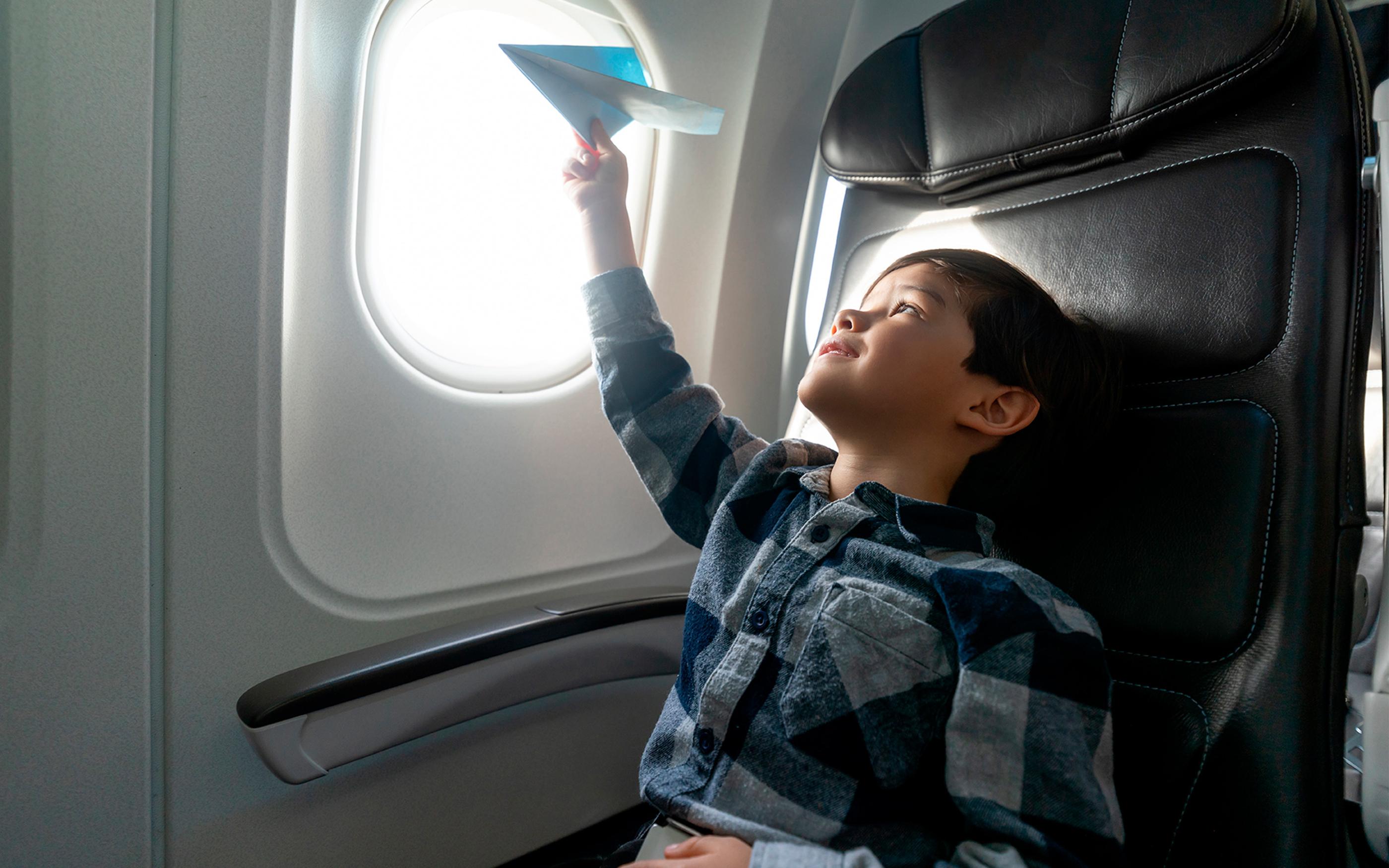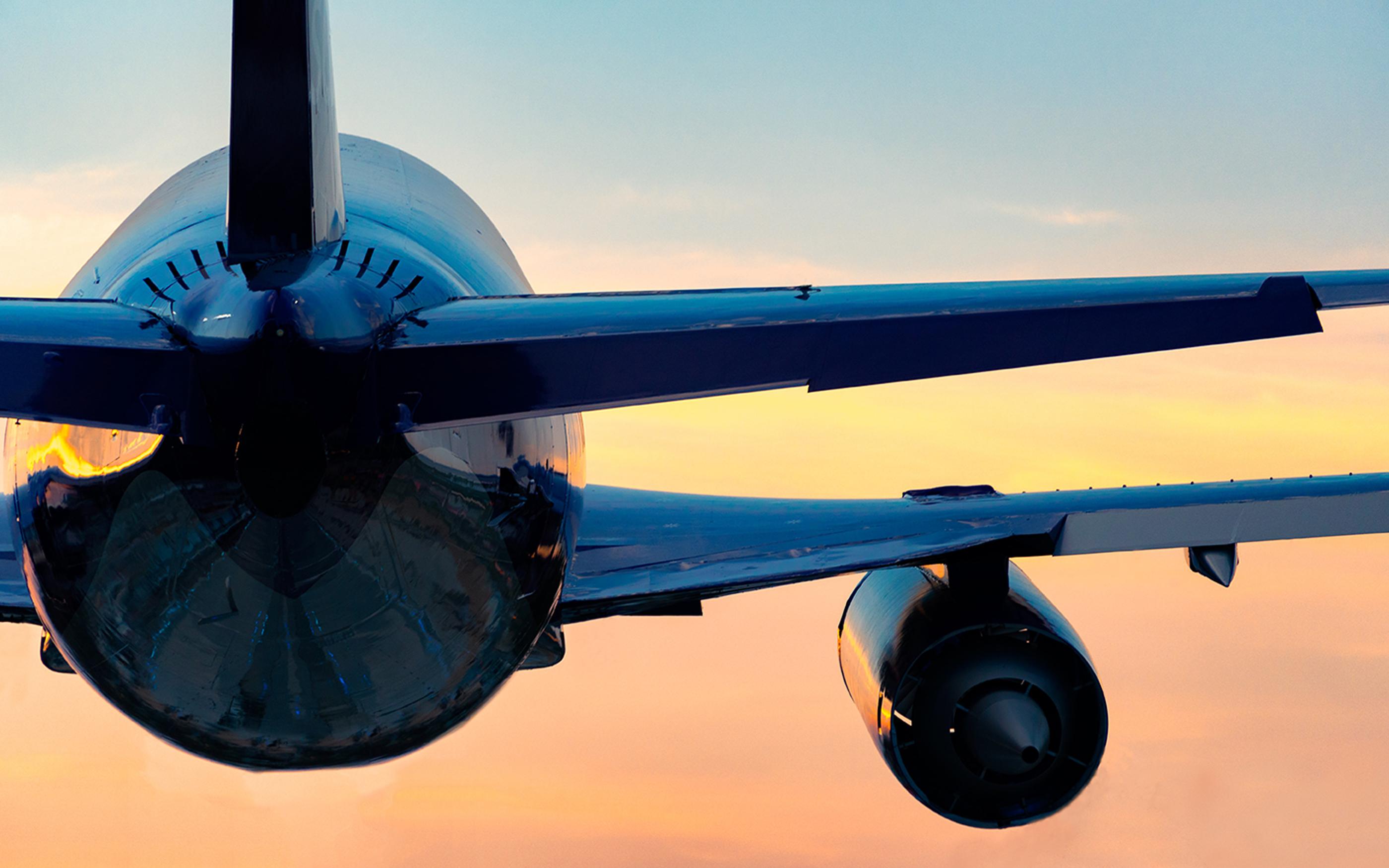
The aviation experience can be stressful for passengers. There’s a combustible mix of excited children going on vacation, tired parents trying to shepherd them, noisy groups of people trying to get their fun going early and focused businesspeople who know exactly where they are going and don’t want to be distracted by anyone getting in their way.
Airline and airport staff do an exceptional job of managing these situations each day. Meanwhile, in the background, extensive work is done on both airport and aircraft design to try and soften the stress of being surrounded by other people heading in a variety of directions with a myriad of agendas. Sometimes though, tensions rise to a point the point of conflict, often in the airline cabin.
Disruptive and unruly behavior is not common, but incidents increased during the COVID-19 pandemic, and they remain more common than they were prior to the early 2020s. The disruption and cost of diverting flights because of tempers fraying beyond breaking point, the ability to film them and their popularity on social media, and the potential for technology to increase tensions in the future, makes air rage a source of discussion across the aviation industry.
A spectrum of incidents
Unruly or disruptive behavior is a spectrum of responses rather than a single phenomenon. At one end there is the low-level tension that cabin crews can manage quietly and efficiently such as non-compliance with instructions (safety instructions or otherwise), verbal abuse, harassment, smoking/vaping in toilets and mild intoxication. At the other end though, there are the incidents we read about in the news that require passenger constraint, aircraft diversion, police response and even prosecution. These extremes of behavior include physical violence or attempts to endanger the flight itself by trying to open cabin doors in flight.
FAA unruly passenger statistics
At the height of the COVID-19 pandemic in 2021, unruly passenger incident reports had risen to 5,973 and remained over 2,000 for the next three years
Up-to-date global figures are challenging to find, but the U.S. Federal Aviation Administration (FAA) publishes data on the unruly-passenger incidents that airline crews report to the agency.[1] According to their most recent data, in 2017 there were 544 reported incidents and 889 a year later. At the height of the COVID-19 pandemic in 2021, this figure had risen to 5,973 and remained over 2,000 per year for the next three years. In 2025, the figure stood at 1,621, which is well down from the peak but still 1.8 times the 2017-2020 average of 901.
Focus on the seat…
Commercial air travel has always been a trade-off between yield, load factor, weight, fuel burn and unit cost. Where this is clearest in passenger comfort, both in physical terms and in the psychological experience of the economy cabin. Airlines, airframe manufacturers and specialist interior designers are skilled at extracting value from the economy cabin by deploying lighter materials, denser cabin layouts and enhanced seat design to balance comfort with reduced fuel burn
The challenge is that passengers do not view these optimizations as innovative engineering design, but experience them as a reduction of personal space. Some might feel an instinctive need to defend this space when they get to their designated seat, particularly if they’ve had a stressful journey from home and there’s a long flight ahead. What they might put up with for a couple of stops on a metro might not be acceptable over a two-hour flight.
The aircraft seat is rarely the cause of an incident, but it can become the focus of frustrations. The whole process of air travel can be a stress multiplier; leaving home, navigating traffic to get to the airport, queues for passport control and security, flight delays, missed connections, tight turnarounds, and unfamiliar and inconsistent processes for each step before a passenger even gets near an aircraft. Throw in a bit of sleep deprivation and perhaps a drop or two of alcohol, and a passenger might easily start to react negatively to irritations that they might consider trivial in other circumstances.
Air rage isn’t confined to the economy cabin though. Outbursts in business or first class can be caused by an expectation of premium service, alcohol availability or a sense of entitlement or self-importance.
The disparity between cabins can also lead to disruptive behavior. Economy passengers tend to have to walk through first or business class before settling into their more modest economy seat. Seeing the contrasting travel space, the wider seats, different service rituals and quieter ambience can add to frustration and create envy that sparks an incident.
Entertainment: an answer that raises questions
Irritability can also be linked to boredom, so one way to reduce the risk of people losing their temper is to make sure that entertainment options are constantly being enhanced.
In-flight entertainment has come a long way from the days when all passengers watched the same film on a pull-down projector at the front of the cabin or a handful of small screens placed overhead in the center of the aisle. Seatback monitors are getting bigger and contain more functionality, giving individual passengers the ability to choose from a massive library of films, binge-watch a box set, listen to their favorite music, play a game, or simply follow the aircraft’s progress on a rolling map.
While enhanced seat-back technology can offer a diversion, in some parts of the world it is starting to become obsolete as airlines move to offer constant data connectivity. This creates the potential for people making video calls in the airline cabin, competing with others watching films or listening to music on their devices without headphones.
Will it become necessary for airlines to publish rules for in-flight etiquette to help manage the passenger experience and prevent additional outbursts of frustration? Or will seats have to come with privacy bubbles to ensure that whole cabins are not disturbed by one side of a conversation during a flight? It may be that what airlines gain from a weight perspective from removing entertainment systems from the backs of seats will be lost by having to offer additional partitions or create quiet zones in a cabin.
The other driver of tension within the aircraft cabin is alcohol and there is an ongoing debate around consumption in and around airports and on flights.[2] On the one hand, people should be able to enjoy themselves, but on the other when it spills over into unruly behaviors that disrupt other passengers, staff and potentially flight operations, then it is clearly a problem.
All in the job
Cabin staff are well versed in managing disruptive passengers, but sometimes the only option available is to divert the aircraft from its intended destination to a nearby airport and off-load the rowdy passengers.
This is a last resort because diversions come with a hefty financial cost for airlines. In addition to the costs of landing, refueling and taking off again, diversions can also trigger crew duty-time issues and diverted passengers have a reasonable expectation of accommodation and refreshments during an unscheduled stop-over, as well as support with missed connections.
Eurocontrol's analysis suggests that that costs of diversions can range from anywhere between EUR15,000 (US$17,500) and EUR82,000 (US$95,500).
The costs of diversions vary, depending upon aircraft type, airport involved and level of disruption, but Eurocontrol’s analysis suggests that it can range from EUR15,000 (US$17,500) up to EUR82,000 (US$95,500).[3] Examples reported in the news suggest that costs can be even higher.[4]
The costs and ramifications of diverting flights and managing unruly behavior are significant enough that there is serious discussion around creating national databases of people found guilty. This would potentially extend bans beyond the airline where the offence took place to all national airlines.[5] It could be challenging to implement under the European Union’s Global Data Protection Regulation (GDPR) and comparable rules worldwide, but if it could be enacted, international bans might well become a possibility given the close regulatory integration that exists across the aviation industry.
Insuring unruly behavior
For the aviation insurance market, unruly passenger behavior sits between operational disruption, liability exposure and reputational risk. While individual incidents may be relatively infrequent, their escalation can quickly trigger a complex chain of consequences ranging from passenger or crew injury claims, diversion costs, delay and compensation liabilities, and in extreme cases, potential hull or safety exposures.
The increasing visibility of these incidents, fueled by social media, adds a further dimension, amplifying brand damage and placing additional scrutiny on airline response protocols. From an underwriting perspective, this raises questions not only around frequency and severity trends, but also around how airlines manage behavioral risk through training, cabin design, alcohol policies and passenger handling procedures.
In that sense, air rage is not simply a behavioral curiosity; it is a small but telling indicator of broader system stress. As cabin densification, evolving passenger expectations and new sources of onboard friction continue to shape the inflight environment, insurers and operators alike will be watching closely.
The real challenge lies in maintaining the delicate balance between efficiency, passenger experience and risk control – because even a single disruptive passenger can, quite literally, change the trajectory of a flight and its associated loss profile.
Let's navigate what's next, together.
Behavioral risk is evolving, and so are the conversations around it. Reach out to explore how we're approaching risk modeling and underwriting frameworks in today's cabin environment.
Footnotes
- Dangerous Behavior Doesn't Fly. Return to article
- Booze-fuelled air rage: Should alcohol be banned on planes? Return to article
- EUROCONTROL recommended values. Return to article
- Diversions Due To Disruptive Passengers: Who Pays The Costs & Are You Entitled To Compensation? Return to article
- Abusive passengers could be blacklisted from all airlines under new proposal. Return to article
Author
.jpg?imgeng=/w_2800)
Contact
Related content
Global Aviation & Space Events
Our Global Aviation & Space events provide a forum to discuss how the industry can stabilise its future and discover smarter ways to finance and optimize risk.