In this episode of the Global Insurance Marketplace Insights podcast, Simon Delchar, Global Head of Placement, and Alastair Swift, Head of Willis Global Specialties & CEO of Willis Limited, discuss the current state of the global insurance market.
Transcript for this episode
ALASTAIR SWIFT: I actually think the insurance market is quite a good place to transfer risk at the moment. So whether or not self-insurance is the solution, I don't know. That's where modeling and analytics becomes really, really useful.
SIMON DELCHAR: But I think with the uncertainty around, you need to have a plan B.
ALASTAIR SWIFT: You need to have a plan B, exactly.
SPEAKER: Welcome to Global Marketplace Insights by Willis, a WTW business, a podcast series showing the latest trends from the specialty and regional insurance markets.
SIMON DELCHAR: Hello, and welcome back to the Marketplace Insights podcast series. I'm Simon Delchar, global head of placement for Willis. And I'm delighted to be joined today by Swifty, Alistair Swift, CEO Willis UK and global specialties.
Swifty, thanks for your time. 2025 was a very good year for insurers. You're looking at combined ratios mid 80s, whatever. So it looks like 2026 should be a good time to be a buyer. But the world's a very uncertain place at the moment, obviously. How do you see the current geopolitical situation, one? And do you see that that could have an impact elsewhere geographically? Could there be contagion?
ALASTAIR SWIFT: Great question. Absolutely, couldn't agree with you more around where the insurers are and the fantastic year that they had in 2025. As you think of that geopolitical situation that is out there at the moment and in there, it isn't just the Middle East.
I think everybody at the moment is concerned around the Middle East. But we forget the Ukraine-Russia conflict is still going on. There are other hotspots and areas of conflict, unfortunately, around the rest of the world. And there are other political tensions that exist in the aggregate.
My own view is it is creating more uncertainty from a global economic perspective for the business. And that hasn't necessarily yet been felt to the extent we might expect from an inflationary perspective or other areas of the business. But if this type of uncertainty continues for a prolonged period of time and you see oil prices rise even more significantly than they have done today, you could see the impacts of inflation actually playing out across the global economy. And you could see them playing out across how insurers might think of treating clients. And I think that's one of the things that we need to be particularly aware of across the business.
SIMON DELCHAR: So thinking about what you're saying. So, loss costs could go up because commodity prices are going up. And inflation is going up. I mean, there could be some real challenges on supply chain, some massive challenges on supply chain.
But therefore, premiums will probably go up in line with commodity pricing, inflation as well. And obviously, in a high inflationary environment, one would think that interest rates would go up. So there'd be more investment income.
So it's not necessarily a bad thing for insurers. It could lead to a continuation of growth, albeit subsidized by inflation. And we all know that every insurer, every reinsurer is obsessed with growth at the moment.
ALASTAIR SWIFT: I think it could. But I also think you have the backdrop of this incredible set of results that the insurers have had and this very significant drive for growth that they've got. And actually, I think probably it will put more exposure into the insurers and more transfer from clients to insurers and not necessarily result in corresponding changes in premium--
SIMON DELCHAR: Because of increased competition.
ALASTAIR SWIFT: --because of the increased competition that is there from a market perspective. And so there could be an increased risk for insurers and not a huge change from an insurance perspective for--
SIMON DELCHAR: That's a good point.
ALASTAIR SWIFT: --clients. And we don't yet know what the lost cost inflation could be from some event from a supply chain perspective. And I think if you take the Middle East as one area at the moment, obviously, there are impacts on oil and gas infrastructure as a result of the troubles.
But no one quite yet has figured out what that actually means for global gas prices over the next to five years or what's going to happen to the oil price in that period of time. What you are seeing is clients thinking around their own energy strategies and thinking around, how do I create sustainable sources of energy given the volatility in those prices? But there still isn't a true alternative that is available from a point of view of not using fossil fuels. So I think it's definitely an environment that's going to be very fluid. And I think if we're talking to clients, the really important thing for them to realize is there is going to be change. It's going to happen faster than it normally would, and we need to be absolutely on it and we need the insurance community and the insurers to be able to adjust to that change.
SIMON DELCHAR: Yeah, I think you're right. The speed of change just over the last few months I mean, things are certainly picking up from a pace perspective. Trying to predict what's going to happen in the next 12 to 24 months with any degree of confidence, frankly, you could say that about the next few weeks or months. It's such a volatile and such an uncertain time. What advice would you have for clients in terms of how they manage their insurance risk transfer through that process? Increase use of captives, self-insurance?
ALASTAIR SWIFT: I think it could be. I actually think the insurance market is quite a good place to transfer risk at the moment. So whether or not self-insurance is the solution, I don't know. That's where modeling and analytics becomes really, really useful.
SIMON DELCHAR: But I think with the uncertainty around, you need to have a plan B.
ALASTAIR SWIFT: You need to have a plan B, exactly. You can have a plan A. And your plan A could be, if you took a political violence placement, you might have placed that on a multinational global basis. But what we're seeing with the bifurcation of the market-- incredibly aggressive pricing, let's say, if you're in some areas of Latin America at the moment in comparison to the Middle East, where, obviously, it's significant. There's limited limit and prices are very high.
Well, then you need to think, am I going to be prepared to self-insure my Middle Eastern assets but buy externally? Am I going to split my program and potentially buy different limits in different places? Those are all things that I would be expecting our clients to be considering and us be talking to our clients about, is the creative solutions and whether bundling or unbundling of risk is going to be appropriate and cost-effective and for us to be planning with them the different scenarios that could play out for them as companies.
SIMON DELCHAR: You'd also hope that insurers and reinsurers were thinking about that at the moment in terms of how can they provide some stability to their, certainly, their key customers, if not all customers, in the regions. I mean, marine, aviation, PVT (political violence / terrorism) you mentioned, they're, obviously, all in sharp focus at the moment.
Capacity is tight in certain parts of the world, as you say. But the markets are generally open and are generally providing terms. But we are hearing-- I'm certainly hearing-- some early signs of what I-- I wouldn't quite call it poor behavior. But I'd call it a return to a harder market in pockets-- so capacity squeezes, delayed quotes, quotes open for a very short period of time, coverage restrictions, and obviously enormous price rises.
Pricing, in a way, is the easiest thing to understand. But it's the service. And what worries me is clients who had huge limits previously, not being able to buy those limits at all.
ALASTAIR SWIFT: I think that is a very valid concern to if you have exposures in certain bits of the world.
SIMON DELCHAR: I mean, we've seen it in California. We've seen it in Florida. We've seen it seen it anywhere with potentially large event aggregation, I guess. And on that front, I guess, Swifty, 2025 was pretty benign from a loss perspective. I mean, it started off pretty badly with the California wildfires, but that was shrugged off very early.
I think we all know, at some point, there is going to be a single cat (natural catastrophe) event of greater than 100 billion. Right now, I think there's more than enough capital to cater for that. But at some point, things are going to return to not quite normal, but things are going to get tougher.
And I think clients need to have half an eye on that. The sun's shining at the moment, but you never know what's around the corner.
ALASTAIR SWIFT: I agree. And I think it was interesting. Rachel Turk, when she stood up and talked about Lloyd's and Lloyd's results was talking about the property D&F (Direct and Facultative) market as an example of a market that was in such rapid decline from a rating perspective that actually the floor was probably going to be hit far faster than everybody thought.
And you can't keep giving 30%, 40% rate reductions year over year and claim that you have pricing adequacy as an insurer. At some point, someone will look and go, actually, no, the rating environment just isn't where it needs to be and that potentially has the ability to trigger a reaction.
And that could be driven by loss events of a significant magnitude, as you say. It could be driven by a financial event of some sort. We all predict that equities will stay similar in value to where they are today. It wouldn't necessarily take a lot for things to shift from that perspective.
So I think you're right. To move the market, there probably has to be a capital event of some sort for an insurer. It might not necessarily be out of a traditional NatCat (natural catastrophe), but some type of capital eroding event will probably cause it, but I do also agree with you that there does come a point where things just can't keep going down.
And clients need to be ready for that. And we need to make sure that we are absolutely delivering the very best result for them, all the way down, if that's--
SIMON DELCHAR: If that's what the client wants.
ALASTAIR SWIFT: --what the client wants. But know, there will be a bottom, and whether that's this year, in two years time, three years time, at some point, we will hit the bottom. I don't think any of us thought that D&O (Directors and Officers) pricing would continue to be as pressured for as long as it was, given how sharp the decline there was. But if you have a another benign NatCat (natural catastrophe) year this year, you could potentially see that pressure continuing.
SIMON DELCHAR: I do think that the prevalence of some of the market facilities that we have now, multi-line facilities, such as Gemini, should smooth those peaks and troughs. Let's hope so, but I guess one final thought, Swifty, in terms of what could have an influence on the market, I guess it's M&A (Mergers and Aquistions) and consolidation in the insurer world. 1 plus 1 doesn't necessarily equal 2.
We've seen a bit of that. And I suspect there'll be a bit more. Your view.
ALASTAIR SWIFT: Yeah, absolutely. I think we're in that stage of the cycle where insurers need growth. Growth isn't naturally occurring. It's not like global GDP growth is at a rate that it's keeping up with the insurers' expectations. So at some point in time, if you're going to deliver that growth from a shareholder perspective--
SIMON DELCHAR: You're going to go and buy.
ALASTAIR SWIFT: You're going to have to go and buy it. And if you're going to go and buy it or you're thinking of selling, now's not a bad time to sell. If you've got a combined ratio in the 80s, you've had a few years of growth, you probably look quite attractive-- or probably quite an attractive time to sell.
So I think that, definitely, that will happen. And I think it'll probably happen within the industry. So with interest rates potentially not dropping, maybe private equity has less ability to be able to deploy than it did in the past.
But I think within the trade environment, I think you'll see further consolidation. And if I'm a client in that, the insurer may want 1 plus 1. But I might not want the counterparty risk of placing that amount of my business with a single insurer who at a point in time could change their appetite given the previous conversation that we were having. And so making sure you still have spread in an acquisition environment, I think, is important. Making sure you are using facilities that themselves have spread, like Gemini, I think will be even more important from a client perspective as we go through this cycle.
SIMON DELCHAR: Yeah, I don't think insurer consolidation, M&A (Mergers and Aquisitions) whatever you want to call it, has-- at the end of the day, we have to talk to our clients about what their priorities are, whether it's price, whether it's coverage, whether it's capacity, whether it's retention limits, whatever.
And then if it's the combination of those two markets is what the client wants, then fine. But ultimately, it's our duty obligation, It's our job, to make sure that the client outcomes are the best as they can be.
ALASTAIR SWIFT: Yeah.
SIMON DELCHAR: Swifty, thank you very much.
ALASTAIR SWIFT: Not at all.
SPEAKER: Thank you for joining this WTW podcast featuring our latest global market commentary. WTW offers insurance-related services through its appropriately licensed and authorized companies in each country in which WTW operates. For further authorization and regulatory details about our WTW legal entities operating in your country, please refer to our WTW website.
It is a regulatory requirement for us to consider our local licensing requirements. The information given in this podcast is believed to be accurate at the time of publication. This information may have subsequently changed or have been superseded and should not be relied upon to be accurate or suitable after this date. This podcast offers a general overview of its subject matter.
It does not necessarily address every aspect of its subject or every product available in the market. And we disclaimer all liability to the fullest extent permitted by law. It is not intended to be and should not be used to replace specific advice relating to individual situations. And we do not offer and this should not be seen as legal, accounting, or tax advice.
If you do intend to take any action or make any decision on the basis of the content of this podcast, you should first seek specific advice from an appropriate professional. Some of the information in this podcast may be compiled from third-party sources we consider to be reliable. However, we do not guarantee and are not responsible for the accuracy of such. The views expressed are not necessarily those of WTW. Copyright WTW 2026. All rights reserved.
Podcast host
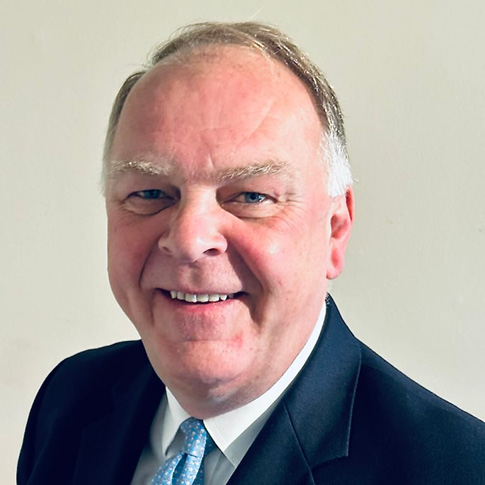
Podcast guest

Listen to this series on:
PODCAST SERIES
Global Insurance Marketplace Insights Q1 2026