In this episode of the Global Insurance Marketplace Insights podcast, Jo Holliday and Fergus Critchley discuss the current state of the political violence insurance market.
Transcript for this episode
FERGUS CRITCHLEY: It's going to be really important to be thinking about other structures, whether that be different deductibles, attachment points in terms of maybe a ventilated layer, maybe coinsurance, maybe a sublimit for the Middle East, or even no insurance for the Middle East, but everywhere else globally. Again, how do we structure the program to be able to adapt in this existing environment?
SPEAKER: Welcome to Global Marketplace Insights by Willis, a WTW business, a podcast series showing the latest trends from the specialty and regional insurance markets.
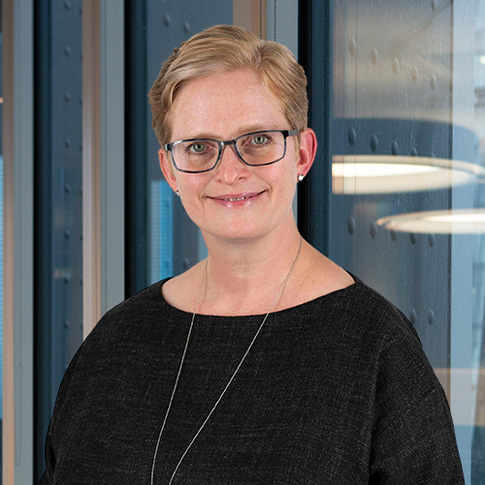
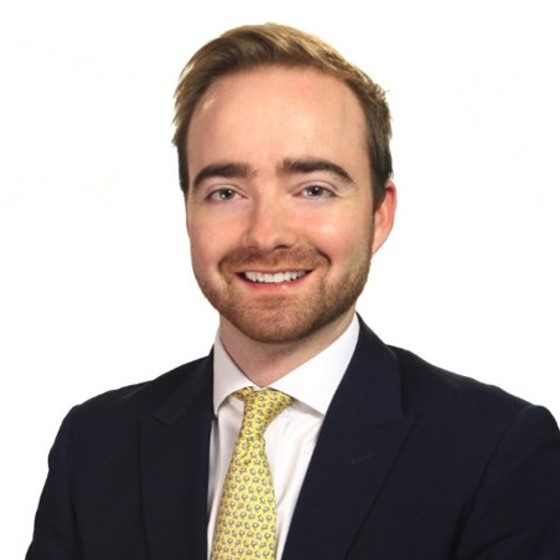
JO HOLLIDAY: Hello, and welcome back to the Marketplace Insights podcast series, where we're discussing the current state of the terrorism and political violence market. I'm Jo Holliday, and I lead the Willis Global Specialty Crisis Management. And I'm joined today by Fergus Critchley, who leads terrorism and political violence for us globally.
So, Fergus, it's been a really busy quarter for the TPV (Terrorism and Political Violence) market, with the events in the Middle East obviously dominating and having a significant impact. How has the market reacted?
FERGUS CRITCHLEY: Thanks, Jo. So the market has reacted, understandably, to look at their exposures in the Middle East on a critical basis. And as a result, a two-speed market has emerged. There has been a lesser impact to those insurers that have exposure outside of the Middle East and North Africa in general region.
And then those that have exposure in the Middle East have certainly found that they have seen pricing increases. They've seen capacity from insurers significantly reduce. They have seen restrictions to the terms and conditions of their programs, whereas, outside of the Middle East, really, the market has continued to provide stable-- or a stable rating environment, with broad terms and conditions, pricing, and longevity.
JO HOLLIDAY: Great. And I suppose one of the questions that lots of clients will be asking is around claims and whether there's any estimate of what the impact on the market might be, estimates around claims likely to hit the market. What have you heard?
FERGUS CRITCHLEY: So early estimates-- and, of course, it changes daily and would probably put the gross insurable loss somewhere around a 1 billion mark now, maybe a little bit higher than that. But it's important to note that often our insurers are quoting gross loss numbers rather than actually insurable losses that they expect to pay out.
And it's early days in terms of having access for loss adjusters to get to the sites and to be able to make proper estimations. And so as a result, really, these are rumors at the moment, and ones that we are trying to temper to make sure that the market doesn't spiral off the back of numbers that we need to validate.
JO HOLLIDAY: So usual potentially inflated claims commentary, but it will be interesting to see how that unfolds over the months ahead. What do you expect to see from the market as we go into the second quarter and beyond?
FERGUS CRITCHLEY: Yeah, so clients with exposure in MENA are going to certainly see significant rating change. And getting out to the market early is going to be critical. Our insurers are seeing well over 500 new submissions already since the conflict started. And therefore, looking at the programs early and looking at options is going to be really important.
And what we're expecting to see is potentially three different pieces. One is that if the conflict finishes soon, we will see the capacity return to the market. It will not likely return to preconflict levels. I think our insurers are now going to be more wary of the impact of this conflict and what could happen again.
But certainly, the capacity will return, and pricing will stabilize, certainly reduce for MENA, back down to not preconflict levels, but, again, significantly less than what it is right now. If the conflict continues in the same sort of vein that it is right now, we're going to still see significant pressure on the amount of available capacity in the market, what that pricing is, and, really, what impact deductibles and terms and conditions have on that program.
We are certainly talking to clients about how to restructure that program. Especially if you've got a global portfolio, how does that MENA exposure fit within your global risk appetite? And how does that structure of that program flex in order to be able to deal with the current insurance environment?
And then, thirdly, if the conflict escalates, likely by either geographic or by the volatility of the events that are happening, then, ultimately, we could see, again, even further reduction in capacity from the market and increase in pricing.
Right now, that is not a scenario that I think our market is particularly looking at. They are looking to be able to secure solutions for incumbent clients first and foremost, and continue to provide solutions even if the war escalates. But certainly, some of the capacity that we have right now and the appetite of some insurers will continue to shift as this continues.
JO HOLLIDAY: Yeah. So there is capacity available, Fergus, is what we're saying at the moment, for war in the region. But how can clients position themselves best to access that capacity as we go forward, either from a pricing or structure perspective?
FERGUS CRITCHLEY: Yeah, so I think the investment by clients into the data quality and making sure that the schedule of locations is as accurate as possible, geocoded, what is the occupancy of the particular of the locations in the Middle East, what is the security of the site in terms of building hardening. Maybe it could be security personnel.
How have they adapted to the situation that is on the ground and very real for them on a day-to-day basis, how is that changed, and what other mitigation actions do they have if this conflict continues? And so being able to get into the market early and being able to talk through your program, your narrative, and sell your program versus a lot of the other programs-- as I said, over 500 submissions to the market.
We need to be able to get clients to stand out in this market. And so we need to be making sure that information is quality as possible. Secondly, we can look at doing probable maximum loss scenarios in other analytics in order to be able to understand what that exposure is and how that could look like in a potential claim scenario.
That can help us and also insurers with conversations around how to maybe layer a program and to be able to find the right attachment point that might attract new insurers onto the program that would otherwise find it very challenging.
I think also looking at wordings as well, making sure that we are providing the wording that is correct for you and your exposure, and also making sure that you are comfortable with some of the mandatory terms and conditions that are being adopted by insurers at the moment.
And then lastly, structuring the program-- I mentioned before around layering. It's going to be really important to be thinking about other structures, whether that be different deductibles, attachment points in terms of maybe a ventilated layer, maybe coinsurance, maybe a sublimit for the Middle East, or even no insurance for the Middle East, but everywhere else globally.
Again, how do we structure the program to be able to adapt in this existing environment and attract insurers to your program?
JO HOLLIDAY: Great. And I think the Middle East is obviously attracting a huge amount of attention and client focus. Are there any opportunities elsewhere, outside of the region, either from a coverage perspective or geography perspective, that clients should be having a look at to see if there's an opportunity for them?
FERGUS CRITCHLEY: Yeah, so insurers are still concerned about the potential impact of this conflict in the next 2, 3, 5 years, and, potentially, the trade and supply chain challenges of the Middle East that could have impacts on, for example, food, water scarcity, and other impacts that could be the catalyst for civil unrest and rioting around in different pockets of the world.
And so certainly clients that aren't even-- or don't have exposure in the Middle East should certainly be looking at how do they look at this particular exposure for themselves, also other supply chain or trade disruption insurance, maybe also looking at how the programs-- the property program, casualty program, marine program-- how does that all intertwine with each other, and how does terrorism and political violence cross over those various different coverages, and making sure that when we think of this exposure as a global problem, as a global, holistic risk that you face, how are we dealing with that?
And I would say that there is an opportunity for clients that aren't in the region to be looking and purchasing insurance and other solutions for those perils, such as civil unrest, such as active assailant and other malicious events, and also trade disruption and supply chain.
JO HOLLIDAY: Great. Thank you very much, Fergus, and thank you for your insights on this episode of The Marketplace Insights podcast series. See you on the next one.
SPEAKER: Thank you for joining this WTW podcast featuring our latest global market commentary. WTW offers insurance-related services through its appropriately licensed and authorized companies in each country in which WTW operates. For further authorization and regulatory details about our WTW legal entities operating in your country, please refer to our WTW website.
It is a regulatory requirement for us to consider our local licensing requirements. The information given in this podcast is believed to be accurate at the time of publication. This information may have subsequently changed or have been superseded and should not be relied upon to be accurate or suitable after this date.
This podcast offers a general overview of its subject matter. It does not necessarily address every aspect of its subject or every product available in the market. And we disclaimer all liability to the fullest extent permitted by law. It is not intended to be and should not be used to replace specific advice relating to individual situations. And we do not offer and this should not be seen as legal, accounting, or tax advice.
If you do intend to take any action or make any decision on the basis of the content of this podcast, you should first seek specific advice from an appropriate professional. Some of the information in this podcast may be compiled from third-party sources we consider to be reliable. However, we do not guarantee and are not responsible for the accuracy of such. The views expressed are not necessarily those of WTW.
Disclaimer
Podcast host
Podcast guest
Listen to this episode on:
PODCAST SERIES
Global Insurance Marketplace Insights Q1 2026