In this episode of the Global Marketplace Insights podcast, Ben Dunston, Placement Leader for Asia, and Steve Hutchinson, Head of CRB, Hong Kong & Macau, provide insights into the current state of the insurance market in Asia.
Transcript for this episode
BEN DUNSTON: So I think we'll see some risks hit the bottom sooner than others. And this may be industry specific or a type of non-preferred coverage the insurers are providing. But I think the softening will level out in parts first, and I don't believe we'll see a major leveling out or hardening environment anytime soon.
SPEAKER: Welcome to Global Marketplace Insights by Willis, a WTW business, a podcast series showing the latest trends from the specialty and regional insurance markets.
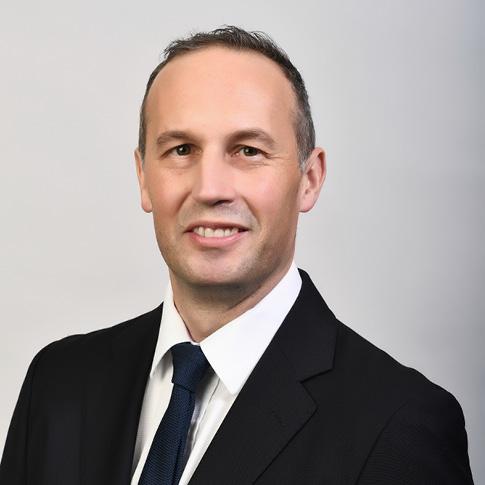
BEN DUNSTON: Hello and welcome back to Marketplace Insights podcast series, where we're discussing the current state of the market for Asia. I am Ben Dunston, Placement Leader for Asia, and I'm delighted to be joined today by Steve Hutchinson, Head of Corporate Risk and Broking in Hong Kong, who has worked in this region for over 15 years. He leads the Hong Kong office and coordinates major placements for large Asian clients all over the world.
You'll hear from my colleagues in specialty in their own podcasts about capacity, coverage, and pricing particular to their markets and line of business, so we encourage you to access those reports within this website. Whether you're preparing for renewals or navigating new risks, this report is designed to help you make informed decisions. Steve, welcome to the podcast.
STEVE HUTCHINSON: Thank you, Ben.
BEN DUNSTON: And let's dive into these questions.
STEVE HUTCHINSON: OK.
BEN DUNSTON: Steve, the first question in was, what can we tell our clients about the current and forecasted market conditions and rate trends in Asia?
STEVE HUTCHINSON: OK. Thanks, Ben. I think across Asia, the overall sentiment is that this year will probably remain a competitive market for most commercial insurance lines. I think that's supported by ample regional capacity as well as global capacity, strong reinsurer capitalization, and several years of favorable underwriting results.
However, I think this outlook is highly conditional upon loss experience. Natural peril activity remains elevated and increasingly volatile. I think 2025 was the sixth consecutive year where globally insured cat losses exceeded $100 billion US. That's according to Swiss Re, but some sources report up to a figure of around $130 billion for 2025.
For Asia, I think we continue to experience a succession of floods, typhoons, earthquakes, and other secondary perils that continue to expose underinsurance and aggregation risk. So I think for this reason, any benchmarking will always be subject to outliers, and rate trends are really being driven by actual risk profile.
BEN DUNSTON: That's right. And when we look at the rate environment in international markets, i.e. those that service large clients, for non-impacted, non-loss-impacted risks and non-cat (catastrophe) exposed risks, we're seeing a transitioning market with around 10% to 15% reduction for property, marine cargo casualty, energy, and financial lines risks. So it's quite a consistent picture. However, sometimes larger rate reductions about risk is well managed or an appetite for a large number of insurers and has a lot of capacity available for it.
As you said, Steve, rate pressure is up and down, are extremely multifactorial and dependent on profitability, industry, or account. And there are markets in Asia. Obviously, those are very diversified, and many of them march to their own tune. Asia is very diverse, and there are a lot of influences surrounding reinsurance, government policy, and traditional role of insurance, even in supporting the industries that are important in that country as well.
So slightly different picture for a lot of the domestic markets, but the international market rate quite consistent with its 10% to 15% and maybe more reductions. Second question we got, Steve, was, should clients expect rate softening to continue? And how long do you think that could go on for?
STEVE HUTCHINSON: OK. Well, I think there's no way of predicting it with full accuracy, but one of the ways we can look into it a bit more detail is to look at the financial results. So for 2025, I think the combined loss ratios overall for the major international insurers are at a promising level. The underwriting results look good, and that's even before you consider investment income, which is a large part of the revenue that they derive.
So against this backdrop, I think we could expect more softening. However, I think the level of recurring losses year on year that we talked about, the potential that those levels of losses could increase, and also the potential for adverse development on prior year losses definitely always give the potential for a slowdown of any softening. So I think insurers will remain somewhat selective where they can, and it's my personal opinion that those clients with strong risk, quality, and relationships will probably continue to outperform.
BEN DUNSTON: And then at a micro level, these conversations we've had, just this week, actually, with the execs of major insurance companies, both independently said that their current portfolios remain technically adequate at today's rating environment. And I think what this means is that brokers such as Willis can continue to use this too as a lever for negotiations on clients behalf.
What has changed, though, I think in a macro sense within insurance is the use of data. This has massively improved in the last few years, and insurers have a much clearer picture and sometimes very forensic picture about the pockets of profitability within their portfolio. So I think we'll see some risks hit the bottom sooner than others. And this may be industry specific or a type of non-preferred coverage that the insurers are providing.
But I think the softening will level out in parts first. And I don't believe we'll see a major leveling out or hardening environment anytime soon.
STEVE HUTCHINSON: OK, Ben, so I've got a question for yourself. I think my question will be, what strategic advice should Asian clients consider for their upcoming placements, given everything that we've just discussed?
BEN DUNSTON: Well, I think the key is in differentiation. Major clients or clients entering the market right now, they're entering a softening environment where there's excess capacity. It's a really good time to surround yourself with the best possible panel of insurers around those core lines.
And what do I mean by that? I mean, the experience, the insurer's experience in your industry is important, the level of their underwriting resources, and the client's access to decision makers. In practical terms, you could meet your insurers in person, either during a roadshow, or you could diarise it during the year outside the renewal cycle. So you can create longer-term commercial relationships with those key insurers that support you over a longer period of time, both in risk management and, of course, in claim support as well.
So that would be my first piece of advice. The second piece of advice, I would say, ask about claims payment. I think it's right that clients should ask insurers not only about their ability to pay and their balance sheet strength but also their willingness to pay, what experience they can show in doing that, and the structure that they put in their company around making simple and speedy claims payments. After all, that's the purpose of buying the insurance.
How about you? What would be your advice?
STEVE HUTCHINSON: Look, I think I totally agree with everything that you just said, particularly the comment around panel insurers and long-term relationships. From what I've seen, it really is a focus area of many of our more experienced or sophisticated clients.
It's definitely a two-way street. Those relationships are there to be tested and challenged. But I think from recent experience, some of the best results we've achieved for our clients have been through leveraging a longer-term relationship that they have with insurers. So I totally agree.
BEN DUNSTON: Steve, the last question that we got, South Asia alone has over $150 billion of inwards investment pegged for the next five years in AI. What effects are you seeing in the insurance industry around this area?
STEVE HUTCHINSON: OK, so although I'm not so involved directly in this part of the business in South Asia, I think the scale of investment is phenomenal, and it is already reshaping both demand and underwriting behavior. I think we see materially higher insured values, more complex construction and delay exposures, and increased scrutiny on power reliability, cooling systems, and concentration risks.
In Hong Kong, we aren't really looking at that level of investment for a variety of different reasons, but I do follow this with interest. And I think two of my biggest questions would be, one, whether the grid investment is being outpaced by the private development, and, two, what the cyber-aggregation landscape will look like if we get towards the level of investment that's being talked about.
BEN DUNSTON: Yeah, the data center industry is-- it's attracted a lot of attention. Naturally, insurance requirements follow investment flows. Inquiries tend to start the construction phase and then move through to operational property, commercial, general liability, cyber, as you mentioned. And the insurance market has been so active around providing large capacity solutions stacked up behind the major insurer on a market facility.
I find this a rather traditional insurance response and maybe a little old fashioned. I just maybe feel like more can be done on the client and risk advisory side across multiple lines of business. And actually, I think that's a key area for Willis and our data center proposition, focusing extensively on client needs, not structured insurance solutions. But data center industry, definitely one to watch, insurance and investment space as well.
That brings an end to our podcast. Steve Hutchinson, thank you very much--
STEVE HUTCHINSON: Thank you, Ben.
BEN DUNSTON: --for your contribution on this episode. And we look forward to presenting another episode later on this year. Thanks so much.
STEVE HUTCHINSON: Thanks.
SPEAKER: Thank you for joining this WTW podcast, featuring our latest global market commentary. WTW offers insurance-related services through its appropriately licensed and authorized companies in each country in which WTW operates. For further authorization and regulatory details about our WTW legal entities operating in your country, please refer to our WTW website. It is a regulatory requirement for us to consider our local licensing requirements.
The information given in this podcast is believed to be accurate at the time of publication. This information may have subsequently changed or have been superseded and should not be relied upon to be accurate or suitable after this date.
This podcast offers a general overview of its subject matter. It does not necessarily address every aspect of its subject or every product available in the market. And we disclaimer all liability to the fullest extent permitted by law. It is not intended to be and should not be used to replace specific advice relating to individual situations. And we do not offer and this should not be seen as legal, accounting, or tax advice.
If you do intend to take any action or make any decision on the basis of the content of this podcast, you should first seek specific advice from an appropriate professional. Some of the information in this podcast may be compiled from third-party sources we consider to be reliable. However, we do not guarantee and are not responsible for the accuracy of such. The views expressed are not necessarily those of WTW. Copyright-- WTW, 2026. All rights reserved.
Disclaimer
Podcast host
Podcast guest

Listen to this episode on:
PODCAST SERIES
Global Insurance Marketplace Insights Q1 2026