In this episode of the Global Insurance Marketplace Insights podcast, Trent Williams, Global Construction Broking Leader, and Cristina Recio Rey, Global Construction Sales Leader, discuss the evolving state of the global construction insurance market.
Transcript for this episode
TRENT WILLIAMS: Today, I'm really going to focus on the builder's risk or contractors all risk or contract works, depending on what part of the world you're in, and also the construction liability products because they're the ones that have really seen some change come through in this calendar year.
NARRATOR: Welcome to Global Marketplace Insights by Willis a WTW business, a podcast series showing the latest trends from the specialty and regional insurance markets.
View Full TranscriptCRISTINA RECIO: Hello, and welcome back to the Marketplace Insights podcast series, where we are discussing the current state of the market for construction. I am Cristina Recio, global construction sites leader, and I am delighted to be joined today by Trent Williams, our global construction broking leader. Hi, Trent.
TRENT WILLIAMS: Hey, Cristina. Great to be here.
CRISTINA RECIO: Thank you. Can you talk about the current state of the construction insurance marketplace from a global perspective.
TRENT WILLIAMS: Absolutely, yeah, looking forward to having a chat with you today. So look, really interestingly, I think when we looked at the early part of the year and where the market was going and where it's got to now at the tail end of Q3. It's been quite interesting that the markets continue to soften. There's no doubt that it's a buyer's market for clients. It's a great position for them to be in. They've had years of pain.
Today, I'm really going to focus on the builders risk or contractors all risk or contract works, depending on what part of the world you're in. And also the construction liability products because they're the ones that have really seen some change come through in this calendar year.
So construction always a tricky one because we're looking at-- and we've always had our construction rate tracker that looks at rate quarter by quarter and where it's going. But when you think about-- and Cristina, you've been attached to large tier 1 contractors all of your working career-- is that you look at the annual programs and then you look at some of the projects that are now commencing in this year.
And one of the elements that's coming through really fast is that there is so much competition. So in a hard market, in a challenging market, construction and builders risk/contractors all risk seems to be the first one that carriers start to look at pretty carefully and in some cases exit.
So we noticed in the first part of the year that there was increased interest in contractors all risk. There was interest from insurers that had previously not been interested in that product. So that's driven competition, that's driven rate.
And to be honest, rate has come off on builders risk contractors all risk quite significantly as the year's gone on. So large annual contractors. So whether it's a contractor or an owner, their programs are seeing significant reductions year on year.
Projects. And I know projects are hard to gauge, but if you go back 12 months ago and look at similar projects that are now commencing 12 months on, rate is, again, lower than where it was 12 months ago. Is it significant? No, you're still looking at 5, 10, 15% depending on the type of construction that's happening. But coverage, like some of the coverage that disappeared in years gone by, is starting to come back in.
We're looking really closely at the breadth of cover provided under the design exclusion, under the contract works policies. So we're looking at that closely. We're looking at how our retention structure is set up. So some of the retention structures have been really onerous for contractors and owners in the past couple of years.
Starting to see some balance coming back into the way that the retention structure is set up. As I said, it's competitive. It's come off. But some of the additional what we'd call bells and whistles or enhancements that have been there under the builder's risk policies in a tough market, they start to get stripped right back. You're starting to see some carriers trying to differentiate themselves by adding some enhancements, adding some endorsements, adding some extensions that haven't been there in previous years.
So I think it's a really interesting place at the moment. You've got internationally, so a lot of the European and U.S. carriers, really strong on construction. We look at our business. I mean, we as construction professionals work really closely with all global specialty businesses across Willis.
You've got aviation where airports are getting built. You've got natural resources where there's oil and gas building. There's mining, building. There's renewable energy projects going on. There's so much happening that touches so many parts of the Willis world and our Willis clients. Getting the best result and having the best markets on these programs is absolutely essential.
Lloyds has really come back. There's a lot of people movement in Lloyds at the moment in London, so a lot, a lot of insurers like underwriters are moving around to different insurers at the moment. So there's obviously increased desire to get back into contractors all risk/builders risk.
So it's a really good marketplace at the moment, really, really interesting. The one that I feel has probably acted at an even greater speed than builders risk has been construction liability. Construction liability was really hampered by some pretty significant capacity restrictions in previous years.
So a lot of markets looking to move away from primary and in some cases not even being there on the excess or umbrella. A lot of those insurers have come back into the marketplace now. A lot, a lot of lead line capacity was really dwarfed in previous years.
So we were at one stage looking at 10 mil, 20 mil primaries that got paid all the way back to 5 mil at a max. But generally, 5 was the limit that most were looking to deploy. That started to come back and come back really quickly.
There's a lot of entrants that have either re-entered the market or new entrants that have come into the market on construction liability. Worker to worker or personal injury has always been the retention issue, I guess you could call it Cristina.
It's one where carriers, just on some of these claims, these long-tail claims, coming through where personal injury and the claims are coming in years down the track and trying to account for those claims and build rate and build a deductible structure that works for the long term was proving problematic for carriers. So seeing some of the retention start to settle down, particularly around worker-to-worker and personal injury, has been really important.
And again, you're looking at two products within a product here. So you're looking at your annual programs, annual contractor programs for liability, but also your project specific. Again, it depends on the type of construction project that's getting built, but there is competition driving rate and it's favorable for clients. It's a position that we haven't seen in the construction sector for a good three or four years. So again, it's really pleasing signs.
One caution I would add on the construction liability is that-- and I've talked to a lot of our geographic construction leaders around the place in our broking leaders in different regions globally-- is that yes, there's competition and some advice for buyers out there is that embrace that competition. That's fine. Work with your broker and get the options that are needed.
But a really telling part is that incumbency is so important, and I always talk to our team around making sure that you're looking at carriers on your program that are long-term players. They're not the carrier that come in and out of product classes. So they can go for the builder's risk and for the liability.
You want carriers on your programs that have been there for the long term. They're not in and out depending on the market cycle. When there is a market cycle, they'll underwrite their way through it. They'll work through it. They won't just disappear because I'm really cautious about markets coming out than coming back in.
So particularly on that long-tail class, I'm really cautious about making sure that you're working really closely with the new competition that's out there. Get the options. See what's available. Drive a better result.
But work with your incumbent. Your incumbents been there through the harder times. Your incumbents been there to settle claims. And that's what we're in the business of doing is getting our clients claims settled. So make sure the respect is given to the incumbents through that process as well.
CRISTINA RECIO: Thanks, Trent. Very interesting global insight and advice. Can you give us your thoughts on the market outlook for the rest of 2025 from a global perspective?
TRENT WILLIAMS: Yeah, rest of the year, so Q4 and then heading into next year. Look, the market conditions will remain there for the favor of clients. There's no doubt about that. Have we reached the bottom as far as where it's going? I don't think we have. I think there's still some more to come.
There's just too much competition out there for it to have bottomed out at this point in time. But in saying that construction is a sector where the claims come and when they come, they're large. There's no shying away from that. It needs to be carefully navigated and carefully working our way through it.
And one of the things through this process, this market changing process, is that the focus, the scrutiny on underwriter submissions and quality of submissions, not just contractor selection and the project itself and who some of the key stakeholders involved in the project, but how we as brokers present that risk to the underwriters is really important. That should never change. It shouldn't change through a hard market cycle into soft. It should just be there as part of your broker's DNA the whole way through.
So I can see the market, as we get into next year, starting to just stabilize somewhat. I do think we've got some time to go before we get there, but the way that we can separate our client's exposure and our client's risk, whether it be renewals coming up in calendar year '26 or whether it's new projects coming to market in '26, is just making sure our commitment to a best in class underwriter submission by working with all those key stakeholders, early engagement, the right level of information.
The brokers know the risk inside out. We're taking it to market knowing what some of the questions the underwriters are going to pose. We're essentially selling the risk to the insurance market. We're not buyers. We're selling the risk. And I think that's what can set us apart as we go into next year.
CRISTINA RECIO: That's very good insight as well about underwriting, submission, preparation, and how we are working. And can you touch on the current issues affecting the construction industry from a global standpoint?
TRENT WILLIAMS: From a global standpoint, I mean, some of the things we've spoken about, Cristina, in previous updates-- inflation, supply chain. Contractor selection is an interesting one. So one of the things I do want to touch on is the competition for contractors and owners, developers, everyone out there is extreme at the moment.
So winning jobs, what their margin are for these clients winning jobs, it's really competitive. It's really complex. It's really competitive. And with that dynamic in the construction field, you start to see contractors or owners going out of their key areas that they've been specialists in for a long time. They start to do different type of projects and different style of projects and get involved in different things, bidding on different jobs.
So as a broker, working with your construction client around. They may be heavy industrial, or they may be looking at the renewable sector for the first time and thinking there's so much opportunity there we need to get in. But they may not have necessarily the experience of other contractors in that space. So that increases your exposures and that increases the level of information and engagement needed.
So working really closely with your clients, particularly when they're starting to veer off into some areas of construction that they may not have had a whole lot of experience in the past is going to be something I'm watching really closely as a sector as we go into the new year.
I guess another market conditions cycle that's out there at the moment is that broker facilities are a lot more prevalent. As we see the market cycle. We as Willis we have our own fast follow facility that's been launched this year, which is a fantastic initiative.
So looking at how facilities can influence certain industries that are growing and growing at rapid rates at the moment. So data centers is one obviously, a lot of press about data center growth at the moment. I think one of the things I want to stress on data centers is that the level of complexity and the level of rapid development that's going into these data centers at the moment.
I think it's just so important to make sure that the data center development space is really closely worked through with your Willis broker to make sure that all of these emerging risks are being factored in, that there's not a one-size-fits-all solution out there. And you really do need to work with your broking partners around what the right program is for a data center because there's a lot of regions around the world looking at data centers at the moment and saying, is there a one-size-fits-all solution.
Ultimately, we have a great level of experience through clients in that space. We've taken a lot of risk to market in that space. We see how it's evolving and evolving quickly, and early engagement with your broker and not relying on facilities, making sure that there are fit for purpose programs. Because case by case, some of these TIV's on data center programs are extraordinary at the moment.
CRISTINA RECIO: We are proud, Trent, of helping our clients, developing new type of projects and providing access to different facilities and capacities, as you have mentioned. Are you foreseeing any changes in capacity, appetite, or pricing fluctuations in 2025?
TRENT WILLIAMS: Yeah, look, I've touched on pricing haven't I. But I haven't spoken about capacity. And I guess the capacity I referenced it with the liability earlier around a lot of new entrants or re-entrance coming back into that space. But across the board there is enough capacity.
And this is the challenge at the moment is in a difficult market, hubs like London are a lot more prevalent, a lot more relied on to get deals done. At the moment, if you look at some of our larger regions, like Western Europe and Asia-Pacific, a lot of those projects that are coming up, Cristina, are getting placed within region.
So there's enough capacity available. It wasn't that long ago. There wasn't like London and Singapore and Bermuda, some of the hubs that we have around the world were absolutely mandatory.
I think the best approach to get the best result. You should still be agnostic as far as where your entry point to the market is. You still should be talking to your global leaders around the world about the right entry point, the right market, because capacity is plentiful. But as we in the construction world, capacity can disappear quite quickly and rapidly.
So I say this and say it regularly around advice for clients moving into next year is focus on your next renewal or if it's a project specific program, look at your next project. But you've got to forecast ahead as well. You've got to look at what the market cycle will look like in 18, 24, 36 months as well.
And make sure you're preparing for the next market cycle and making sure that you've got provisions in place to make sure you're aware of the cycle that you've come out of, the cycle you're in now, but also where the market's going as well. Because capacity at the moment is not a problem. It's making sure it's strong, reliable capacity that's there for our clients.
CRISTINA RECIO: Trent, thank you for your contribution on this episode of The Marketplace Insights podcast.
TRENT WILLIAMS: It's my pleasure, Cristina. Thank you.
NARRATOR: Thank you for joining this WTW podcast featuring our latest global market commentary. WTW offers insurance related services through its appropriately licensed and authorized companies in each country in which WTW operates. For further authorization and regulatory details about our WTW legal entities operating in your country, please refer to our WTW website.
It is a regulatory requirement for us to consider our local licensing requirements. The information given in this podcast is believed to be accurate at the time of publication. This information may have subsequently changed or have been superseded, and should not be relied upon to be accurate or suitable after this date.
This podcast offers a general overview of its subject matter. It does not necessarily address every aspect of its subject or every product available in the market, and we disclaimer all liability to the fullest extent permitted by law.
It is not intended to be, and should not be used to replace specific advice relating to individual situations. And we do not offer and this should not be seen as legal, accounting, or tax advice. If you do intend to take any action or make any decision on the basis of the content of this podcast, you should first seek specific advice from an appropriate professional.
Some of the information in this podcast may be compiled from third party sources we consider to be reliable. However, we do not guarantee and are not responsible for the accuracy of such. The views expressed are not necessarily those of WTW. Copyright WTW 2025. All rights reserved.
Disclaimer
Please note the observations in the Global Marketplace Insights podcast series are based on our experience with WTW clients and trends across the global markets, but they are not a whole market study.
Podcast host

Podcast guest
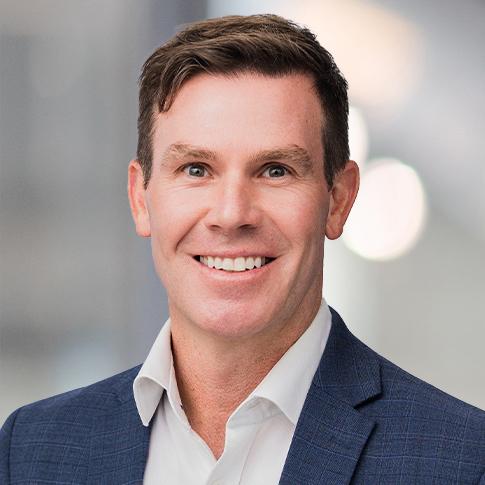
Trent Williams
Head of Broking, Global Construction
In his role, Trent leads our Global Construction Broking efforts and resources across all product lines and coverages. Bringing together a unified and connected Broking community of Construction placement experts. With a career spanning nearly three decades, Trent has invaluable technical expertise and market insights, supporting clients globally. Prior to this, Trent served as the Head of Broking, Pacific for the past 7 years, where he worked closely with the Australian and New Zealand businesses to provide tailored placement options for our regional clients’ unique needs. Trent first joined Willis in 2006 in the Construction Practice after an extensive career in both Australia and the UK.
Trent Williams
Head of Broking, Global Construction
In his role, Trent leads our Global Construction Broking efforts and resources across all product lines and coverages. Bringing together a unified and connected Broking community of Construction placement experts. With a career spanning nearly three decades, Trent has invaluable technical expertise and market insights, supporting clients globally. Prior to this, Trent served as the Head of Broking, Pacific for the past 7 years, where he worked closely with the Australian and New Zealand businesses to provide tailored placement options for our regional clients’ unique needs. Trent first joined Willis in 2006 in the Construction Practice after an extensive career in both Australia and the UK.
Listen to this episode on:
Podcast series
Global Marketplace Insights – Insurance trends from Q3 2025