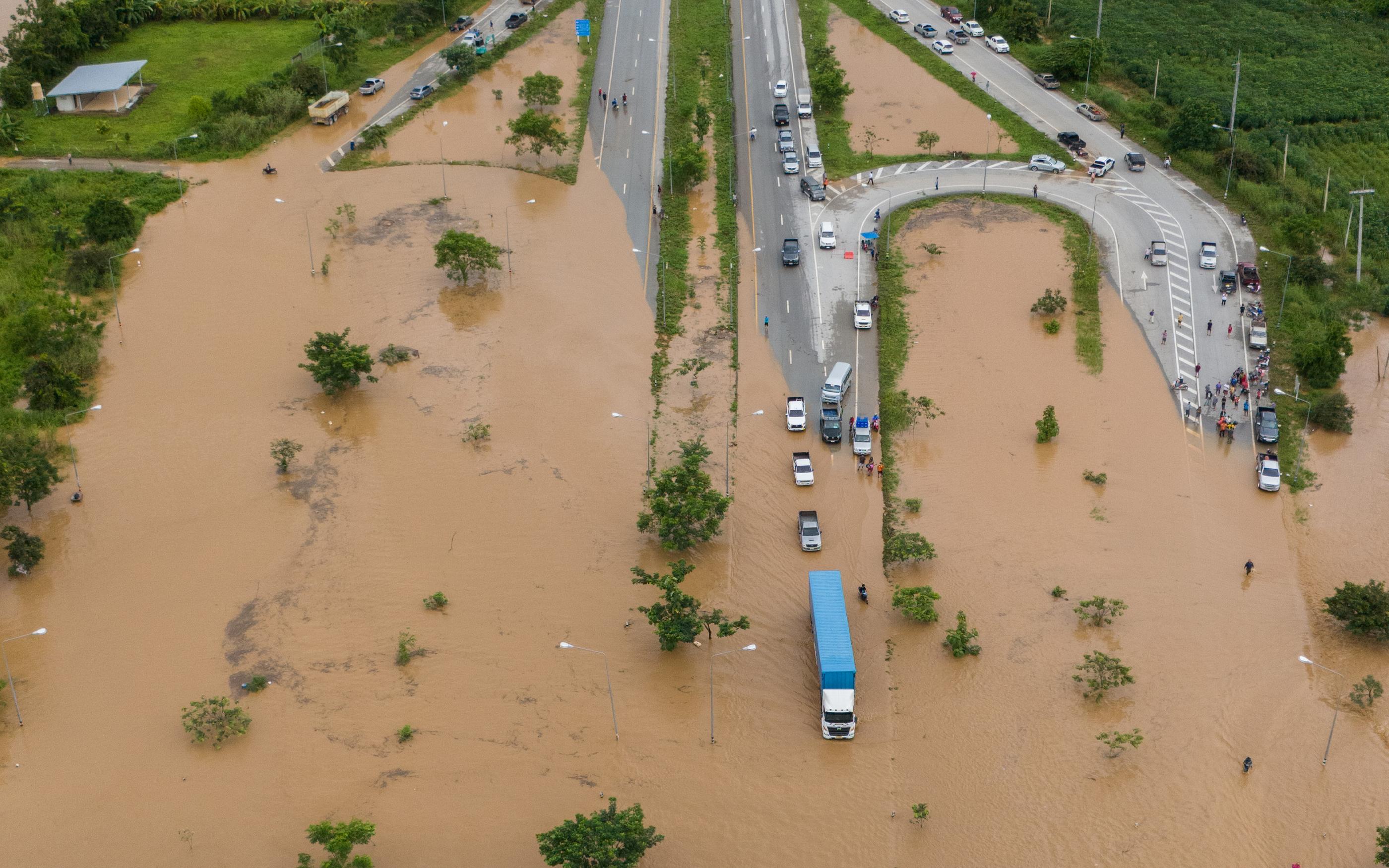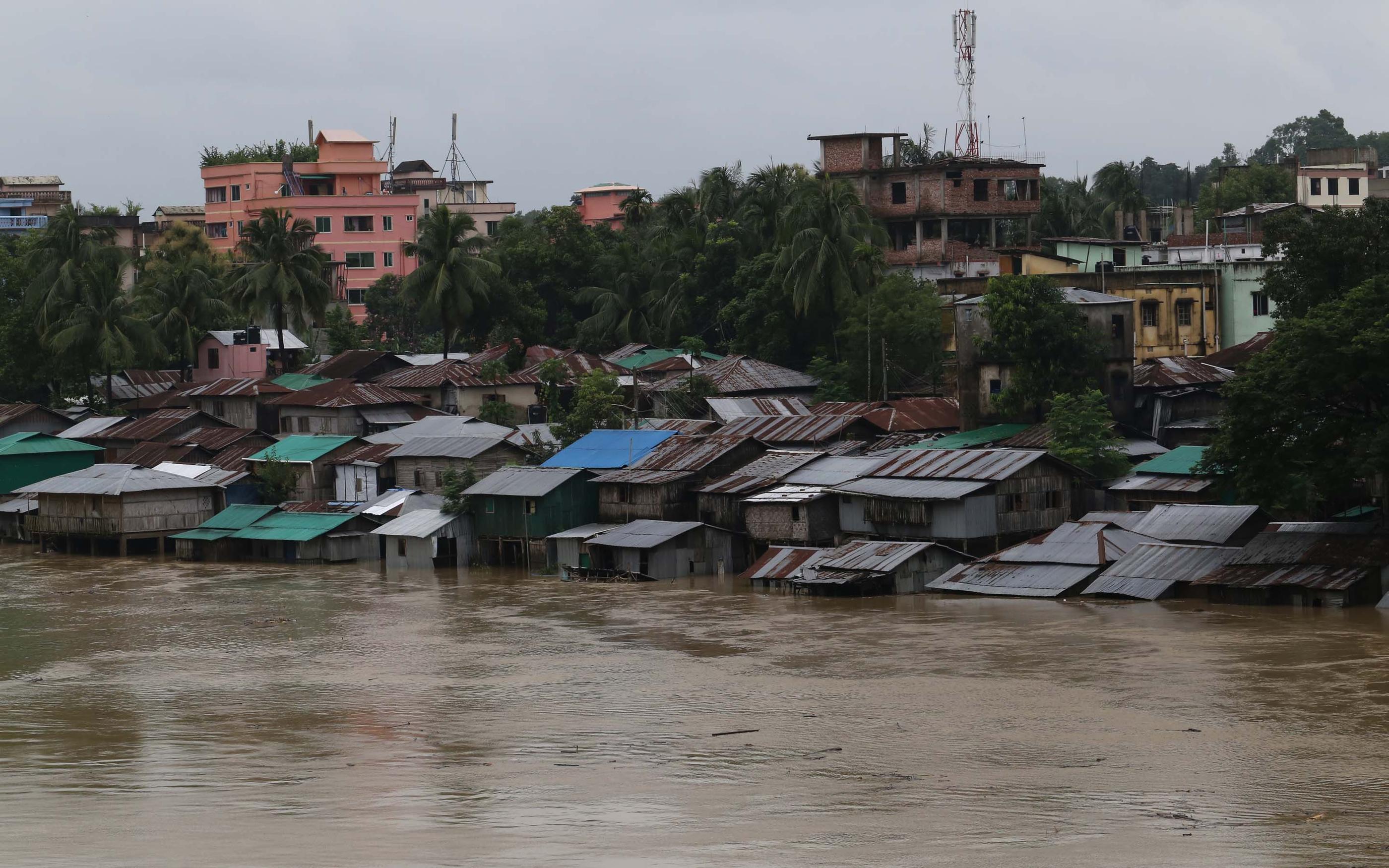
Our sense of living in "unprecedented times" facing extraordinary challenges is amplified by growing globalized interconnectedness, rising uncertainty and fast evolving news cycles. Regardless of whether the world faces greater or more probable threats, we are almost certainly facing a continuous supply of emerging risks that require a smarter way to manage risk.
Several annual global risk reports find their way into your inbox each year. Each has its own viewpoints and recommendations on risk, but it is rare to find one devoted to emerging and interconnected risks across risk, people and capital. Our research uncovers how unprepared organizations feel in the face of the complex risk landscape and their need for enterprise-wide approaches to take action.
Smarter way to risk
Whether you're a decision maker, at the operational forefront, or an interested citizen, understanding the emerging risks and opportunities on the horizon is essential for shaping a resilient and prosperous future. With regulators around the world deepening their own exploration into emerging risks, investors asking more and more questions, and organizations continually surprised by risks as they evolve, there is a need for new approaches. These stakeholders are starting to ask organizations to go beyond providing a list of key risks; they want to know the methodology, quantum of risk and how the board are taking action. Organizations need to be ready to answer.
This survey is the second evolution in finding a smarter way to emerging risks. Since our 2021 Emerging Risks Survey, the WTW Research Network has been recording the questions organizations want answers to.
Our survey report shares new insights from;
- 333 executives responsible for
- an estimated 1.3 million people and
- $2.3 trillion in revenue, [1]
- with 42% being key C-suite decision makers for risk management in global organizations.
A complex risk landscape
Taking action is essential. The complex risk landscape is not slowing down. The survey was open between May and October 2024, during which time the world experienced the earliest Category 5 storm on record (Beryl), a global technology outage (CrowdStrike), continuing conflict in Ukraine and the Middle East, the Baltimore bridge collapse and a year of elections as countries around the world voted on their political futures. Events once thought rare are becoming more likely, or occurring at scales previously not seen, leading organizations to reassess current approaches to ensure they can navigate today’s operating environment rather than being steered by it.
The momentous stakes of the wrong action — or worse, inaction and no recovery plan — require shared understanding, a unified strategy and recognition of how deeply connected the global economy is. With the world’s largest 100 organizations responsible for $17.7 trillion of revenue[2] (15% of global gross domestic product (GDP), expected to hit $115 trillion in 2024),[3] failure by any one of those organizations to identify and respond to emerging risks can cascade through the global financial system to your boardroom table. No organization is disconnected from the complex risk landscape, whether through international trade, ownership or end customers.
Your vulnerability could be an undiscovered supplier or underappreciated risk connection, as many organizations found with the Russia-Ukraine conflict. Ukraine’s economic output is now at a fraction of its pre-war levels,[4] research estimates a loss of $1.5 trillion GDP in 2022[5] and new losses emerge every day.[6] October 28, 2024, saw the announcement a Russian court was fining Google $20,000,000,000,000,000,000,000,000,000,000,000 ($20 decillion) for failing to comply with the requirement to restore Russian media accounts on YouTube.[7] While the fine is seen as symbolic it raises an important point.
Protection gaps are growing and new approaches are needed. The pandemic and ongoing global turbulence have left too many organizations struggling to find the right approach to prepare their organizations to emerging risks. It’s why putting an emerging risk framework in place is the top action organizations are looking to take in the next two years. The complex risk landscape has left them feeling vulnerable to a range of potentially damaging scenarios with financial consequences — failure to meet strategic targets, loss of revenue, shareholder value, bankruptcy, reputation damage — constraining the capital expenditures needed to tackle complex challenges and transform tomorrows.
Navigating a complex risk landscape
To navigate through this complex world, we suggest organizations need to rethink their approach to emerging risks, be openminded, avoid concentrated risks, be sensitive to early warning signs, constantly adapt and always prepare for the worst to ensure they transform their tomorrows. WTW shares seven key findings to support this view:
Every risk category has at least one risk in the top 10, highlighting how wide the risk agenda has become...
50%confident their organization’s approach enables it to respond to today’s risk environment
23%confident their organization’s strategy will remain resilient to risks that might emerge in the next 10 years …
Download your copy of the Emerging and Interconnected Risks Survey report :
Emerging & interconnected risks survey report

Related content
49%not able to share the emerging risks of most concern to their organization
95%able to prioritize a top five view of change over next two years
90%able to prioritize a top five view of change over next 10 years
Reviewing the interconnectivity and views shared on what is driving the top risk choices uncovers hidden blind spots.”Lucy StanbroughHead of Emerging Risks
Forty percent of the wider employee respondents feel they have never been asked to feed into their organization’s emerging risk process.
A clear risk tolerance framework agreed by the top of an organization empowers people.
Those taking more consistent action are outperforming their peers.
Using “storylines” - consistent narratives of plausible future events - helps us understand and manage complex risks.
What will your tomorrow look like?
We propose four practical actions for organizations to consider as they ask questions of their strategy to navigate the complex risk landscape:
- As you explore the survey findings, ask if you are you maximizing the value from your approach?
- Ensure your framework is part of the business model
- Create a system that drives value and is future-proof
- Build a risk-aware culture that is proactively identifying and responding to emerging risks
We combine findings from the survey with further insights from global research and WTW leaders across industry, people, risk and capital to explore what your tomorrow will look like.
Will it be smarter? More flexible? Will it put you on the pathway to success? Will it allow your people to live the lives they want, now and in the future? Will you take more risks? See more opportunities?
These are the questions that drive us. At WTW, we've been helping smart people creatively solve their people, risk and capital challenges for almost two centuries because, with the right partnership and perspective, your tomorrow has endless possibilities. For a smarter way to turn risks into opportunities, explore the risk alerts and action plans across the survey report and get in touch with our specialists.
References
- Estimates based on numbers self-reported during the survey, with duplicates removed where multiple respondents participated from the same organization. Estimates use the middle value for the selected band to calculate an anonymized figure to prevent identification. For example “100 – 199 employees” is given a value of 150 and the maximum category is given the lower value. (e.g., example “$50bn or more” is given a value of $50 billion). Return to article
- The 100 largest companies in the world ranked by revenue in 2023 Return to article
- GDP, current prices Return to article
- Ukraine: what’s the global economic impact of Russia’s invasion? Return to article
- Valued at purchasing power parity exchange rates (PPP), compared to the GDP forecast made by National Institute of Economic and Social Research at the beginning of 2022. Return to article
- Economic costs of the Russia‐Ukraine war Return to article
- Требования российских телеканалов к Google достигли ₽2 ундециллионов Return to article
- How to unlock the power of portfolio approaches to risk management Return to article
Contacts

When discussing a topic, whether with one colleague or at a crowded boardroom table, does everyone understand what you do?