
In our conversations with Asia Pacific organisations, it’s clear that communication has risen to the top of the agenda for many employers. The pandemic compelled us all to think of new and innovative ways to communicate, sometimes resorting to informal channels to ensure employees could quickly access information they needed, particularly around access to healthcare.
The move to remote working has accelerated the shift to digitalised communication. However, this isn’t necessarily a one-size-fits-all solution across industries and markets. For instance, organisations in manufacturing and retail still contend with a workforce that is physically present on factory floors and in stores; and many markets in Asia Pacific still rely on a traditional 9 to 5 work culture. For these employers, finding the right mix of communication through digital channels, such as online portals, apps and email, as well as physical communications, such as posters, leaflets and handbooks, will be key.
Organisations that lead the way in employee experience initiatives are more likely to effectively use communication to change behaviours and help employees get the most out of their benefit programs and achieve people and business success (Figure 1).1
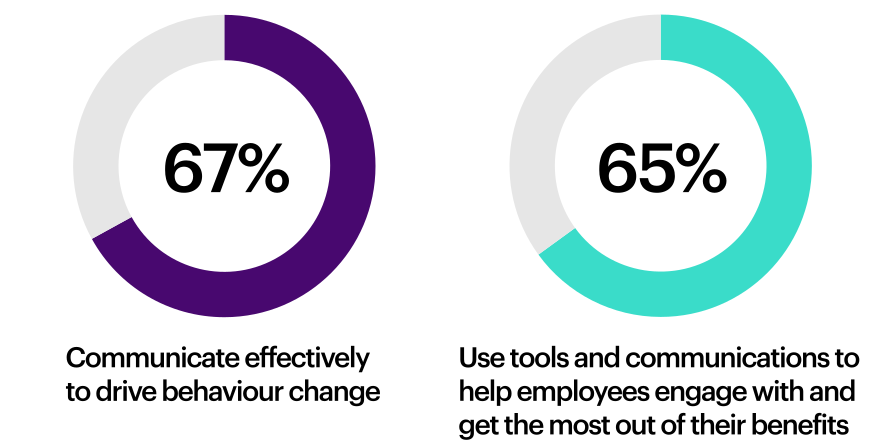
Figure 1. Asia Pacific organisations with a Transformative EX utilise benefits communication to engage employees with their benefit plan
Why benefit communication matters
Our 2022 Global Benefit Attitudes Survey (GBAS) found that employee benefits provide increasingly important motivation for employees to move to, and stay with their employers.2 And employers are putting more resources into ensuring that the benefits mix they have is relevant to their employee base.
However, without an effective communication strategy in place, even the most thoughtful benefit strategy may not receive strong engagement from employees – they may not be aware that these benefits are available, or how they can access them. The growing shift to flexible benefits makes communications more important still, to provide a framework so that employees are not overwhelmed by choice.
Without an effective communication strategy in place, even the most thoughtful benefit strategy may not receive strong engagement from employees.
Our data supports this: GBAS additionally found that the confidence employees have in their benefit selection is strongly linked to effective communication, alongside support and tools from their employers. (Figure 2).2
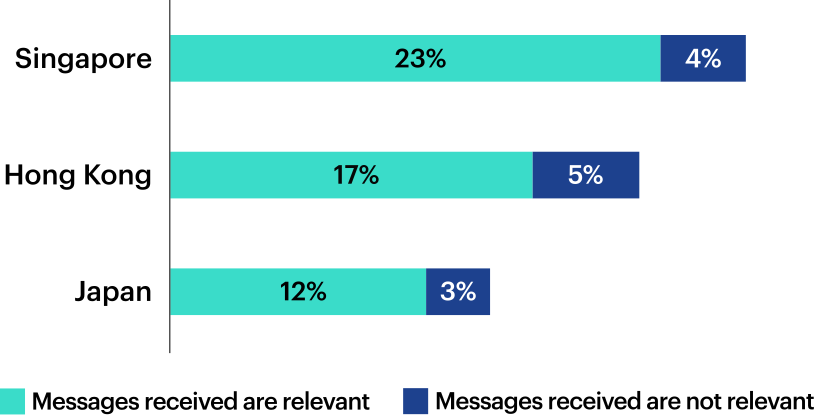
Figure 2. Employees’ confidence in benefit choices is three to six times higher when employer messages are relevant
Enhancing how your organisation communicates
Four in 10 (41%) Asia Pacific organisations said that when it came to their benefit strategy, one of their key objectives is to enhance benefit communication. Currently, employers are considering various strategies (Figure 3).3
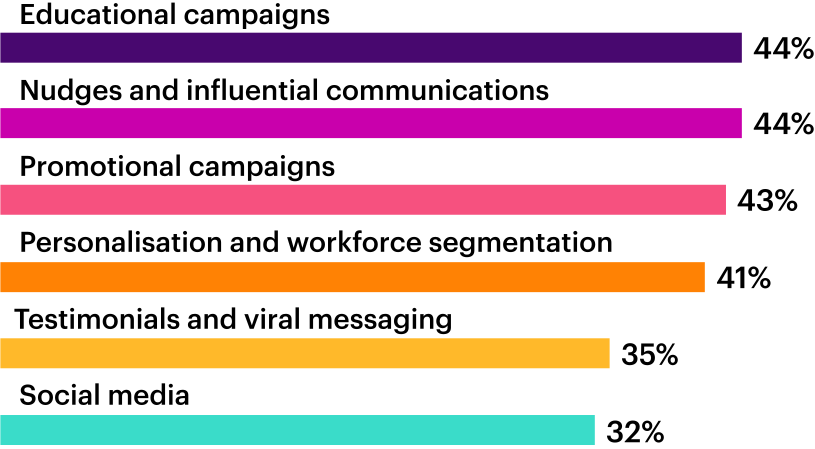
Figure 3. Asia Pacific organisations are considering diverse and less traditional communication strategies in the next two years
What an effective benefit communication strategy looks like will depend on your industry, company culture, business structure, predominant work styles and workforce demographics.
Whether you’re looking to reinvent your communication strategy or wondering where to start, you can create a dynamic benefit communication strategy by considering the following:
Strong and effective communication can bring value to your benefit offering and enhance the employee experience. Organisations that prioritise benefits communication – enjoy a workforce that understands their benefit packages better; and feel informed to make more confident and thoughtful choices for their lives, families, careers, health and future.
Sources
1 2021 Employee Experience Survey – Asia Pacific
2 2022 Global Benefit Attitudes Survey
3 2021 Benefit Trends Survey – Asia Pacific
Author


Modernising Benefits
Navigate the many complex decisions around benefit design and delivery.