

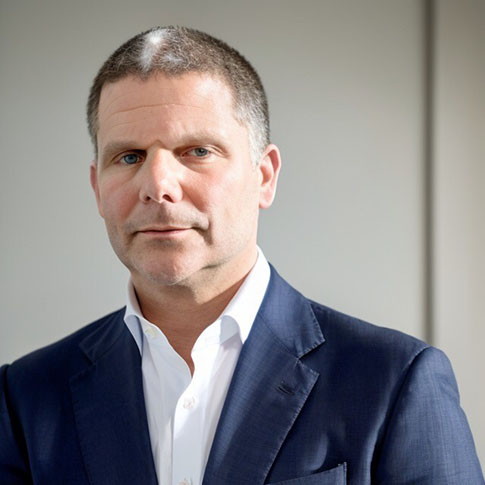
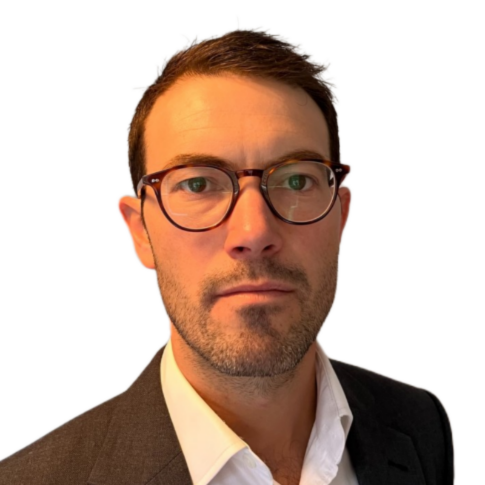
In this episode of the Global Marketplace Insights podcast, Rupert Mackenzie, Global Head of Willis Natural Resources, is joined by Will Fremlin-Key, Global Head of Mining, and Bill Helander, North American Leader, to offer a global overview of the current natural resources insurance market and key findings from the latest Mining Risk Review.
Transcript for this episode
BILL HELANDER: I think it's a challenge for clients in navigating that. They're seeing certainly some help in respects of great yield on the property. But for those with heavy casualty exposures, so think everything from service contractors, to those that have products exposure to the general public, we continue to see a fairly challenging marketplace.
NARRATOR: Welcome to Global Marketplace Insights by Willis, a WTW business, a podcast series showing the latest trends from the specialty and regional insurance markets.
RUPERT MACKENZIE: Hello and welcome back to the marketplace insight podcast series, where we're discussing the current state of the market for natural resources. I'm Rupert Mackenzie, global head of Willis natural resources, and I'm delighted to be joined today by Will Fremlin-Key, Global head of mining, and our North American leader, Bill Helander. Welcome both of you.
WILL FREMLIN-KEY: Great to be here. Thanks, Rupert.
BILL HELANDER: Thank you.
RUPERT MACKENZIE: Now, for those of you who are new to the industry, or perhaps haven't heard our marketplace update before, natural resources at Willis stretches across upstream, midstream, and downstream oil and gas, petrochemicals, mining, and metals, power and utilities, as well as renewable energy. So thinking globally about all of these areas gives us a huge amount to discuss, probably more than we can fit into one podcast episode.
This podcast follows the launch of our recent mining risk review. If you would like to read the full review, please head over to our website where you will find it. So before we get into the mining risk review, I think Bill and I are just going to touch briefly on what we're seeing in the global insurance markets for natural resource companies, and then dive into some of the specific peculiarities of the North American market.
Bill, so, generally, we're seeing a huge softening in rates. This is we're shifting back to a buyer's market, rather than a market that favors insurers. And that's fantastic news for our clients and risk buyers. Do you want to just give us a little bit as to what's driving that and how you see it, the market developing over the next six months, and then we'll get into some of the specifics for the North American market?
BILL HELANDER: Absolutely thanks, Rupert.
RUPERT MACKENZIE: Place inside podcast series, where we are discussing the current state of the market Looking for natural resources. I'm Rupert McKenzie, global head of Willis natural resources and--
BILL HELANDER: --hurricane season in the United States. The Greta statistic that is one of the lowest since 1950. And so I think a lot of us are interested to see what impact that might have, not only in the direct property market for wind, but also in reinsurance rates that will promulgate in the first quarter of 2026. So I think it's safe to say we're optimistic our clients will see the market turn the corner into 2026, still in very much a soft position yielding rate again for the buyers.
I think there is a dichotomy in the market, certainly in the United States, in respects to property and liability. We continue to see a challenging marketplace for liability, with a few glimmers of hope coming in the form of new capacity, or to some extent, some of the relaxing of some of the previous tightening of capacity and constraints. But overall, it's still a very challenging market in which many clients are seeing high single--
RUPERT MACKENZIE: A huge amount to discuss, probably more than we can fit into one podcast episode. This podcast follows the launch of our recent mining--
BILL HELANDER: --and a fairly stable general liability market, with the exception of a few specific kind of subsegments within our industry. So I think it's a challenge for clients in navigating that. They're seeing certainly some help in respect of rate yield on the property. But for those with heavy casualty exposures, so to think everything from service contractors, to those that have products exposure to the general public, we continue to see a fairly challenging marketplace in which insurers are imposing some form of self-insurance in terms of retentions or deductibles, or pretty significant rate increases as they cascade out the liability tower.
So it's not without challenges for a lot of our clients.
RUPERT MACKENZIE: Bill, is there any sign yet that there will be any new entrants coming into that casualty space? I mean, are people going to start taking advantage of the better, potentially better returns they can get from a premium perspective? As you look into 2026, do we think there's going to be some new players?
BILL HELANDER: I think there will be. And I think we've seen some bits of that come into the market. We've seen former AIG underwriter open a desk at Sompo to target upstream liability. We've seen some new MGAs step in to provide some capacity as well. And I would say working with our London colleagues, we've seen some softening in the London market part of that [INAUDIBLE] first quarter of 2026.
So I think it's safe to say we're optimistic our clients will see the market turn the corner into 2026, still in very much a soft capacity movement after at least three or four years of capacity contraction. So I think we're somewhat optimistic about that. I think the challenge remains, especially for certain clients in the first $10 to $25 million of liability in getting probably enough people interested to really drive competition there.
But I think one of the questions I always ask an underwriter is relative to their auto rate five or six years ago, where are they today? And I think, generally, the answer is somewhere between three or four fold. So you've got to think we're going to be getting to that tipping point where there is underlying rate adequacy in a lot of these primary and maybe even lead umbrella lines. And I think once we see that, we'll start to see more stabilization in the market and, hopefully, more capacity come back in to drive competition in the future.
RUPERT MACKENZIE: Fantastic. And Bill, from a property damage perspective, what are we seeing on US and Canadian risks? Obviously, there's not been any significant natcat so far this year, but there have been some quite large industry losses. Have they had any impact on rating?
BILL HELANDER: It varies by class, and I think depending on the exposures involved, there is some variation in respects of rate decrease that our clients are seeing, but it's not uncommon to see low double digit rate increases, high single digit on tougher classes, remains a pretty competitive marketplace across the board, especially those that engineer well, those that underwriters want to participate in. More challenging if there's kind of outstanding issues around either engineering dynamics, or for that matter, around valuation or loss modeling.
So I think there is somewhat of a spectrum of that softening, if you will, in the marketplace from specific asset to the next, when loads can have, obviously, an impact, depending on what degree they need to buy capacity for named windstorm. We still have seen a number of operational losses that have impacted the market, but not manifested themselves directly into something I would call a broader scale rate change.
So I think once, again, to some extent, waiting to see as we wrap up hurricane season over the next 30 days, what will happen. It seems to be a continued trend of the storms, fewer storms developing in the Gulf. And those that do, do a pretty hard right turn into the middle of the Atlantic and away from coastal landfall, which is, obviously, a good thing in respects of driving underlying rate in 2026, so hours of liability and getting probably enough people interested to really drive competition there.
But I think one of the questions I always ask an underwriter is, relative to their auto rate five or six years ago, where are they today? And I think, generally, the answer is somewhere between three or four fold. So you've got to think we're going to be getting to that tipping point where there is underlying rate adequacy in a lot of these primary and maybe even lead umbrella lines. And I think once we see that, we'll start to see more stabilization in the market and, hopefully, more capacity come back in to drive competition in the future.
RUPERT MACKENZIE: Fantastic. And Bill, from a trajectory of the marketplace, and I think it's been interesting looking at the global picture. There's been an incredible amount of competition in the marketplace, both within the broking community and also within the underwriting fraternity to secure market share. So lots of people looking at some of the larger regional insurance opportunities, large national oil companies, or large regional power utilities, and being prepared to offer very aggressive pricing to secure those opportunities.
And I think we're at the stage where as we get to the close of each quarter, we're seeing a huge amount of focus by markets to ensure that they secure their quarterly budgets. And that's working very well for clients who are going to be able to secure broader and better terms. Obviously, in a soft market, there's two different dynamics. One is the pricing environment. And, generally, in a soft market, the first pressure is around price. Once people have pushed hard on price through a renewal cycle, the next pressure then comes on coverage.
Are we beginning to see clients looking to broaden their coverage, change their underlying deductible structures or their coverage? What are you seeing around that?
BILL HELANDER: I think we are, Rupert. I do think in that willingness to compete for spots on large programs, we're seeing people evaluate everything from waiting periods to deductibles to margin clauses. Things that underwriters had spent a lot of hard yards, if you will, in the field trying to pitch, making this a little bit more global nomenclature, trying to push clients to tighter constraints within the policies and respects of retentions, or in respects of ultimate limit provided for certain loss events.
And I think a lot of that came out of the challenges around valuation and modeling for business interruption and whatnot coming out of the pandemic. But I think we're starting to see that tip in the favor of clients, where they're able to effectively buy down with little cost to no cost, some of those impositions put on them by underwriters over the past five years in the hardening market cycle.
So I think that will continue to be a lever for both insurers and clients to pull as they negotiate terms. That's something that's certainly on the table, if you will, and respects the negotiation. So I do think you'll see people push that. And that may also be something that is an easier concession to give in 2026, as I'm sure underwriters will be under pressure to hold back what they've given over the past year, or so, as their management gets more and more concerned about the amount of rate that has gone out the window, so to speak, in respects of their models.
So I think that's something clients should push on. And we're, obviously, using a lot of interesting and proprietary data and analytics to look at modeling, to look at how we try to help our clients understand what their exposures are, both on a retained basis and a transfer basis, to find out if there's an opportunity for arbitrage within that. It's something that I think if a client is well prepared for renewal with good data, good modeling, they're in the best position to understand that dynamic between passing some of that on to insurers versus maybe continuing to retain that and the cost dynamics.
I think it's an interesting opportunity. And I've got a personal kind of pet theory that we may see more of that in '26 than necessarily just hard push on pure rate alone.
RUPERT MACKENZIE: Yeah. I would agree. And I think there's a lot of clients out there who will be looking to push on coverage. And as you say, with a far greater insights available now through clients being able to fully understand their risks and analyze their exposures. I think it's a great time to start tailoring coverage to really protect the balance sheet in the way that clients should expect.
Before we move on to the mining bill, I wanted just to quickly touch on the wider industry environment. Obviously, we're seeing some challenging times in North America. On the upstream side, there seems to be lots of differing views as to how the upstream landscape is going to--
BILL HELANDER: --function and whatnot coming out of the pandemic, but I think we're starting to see that tip in the favor of clients, where they're able to effectively buy down with little cost to no cost, some of those impositions put on them by underwriters over the past five years in the hardening market cycle. So I think that will continue to be a lever for both insurers and clients.
RUPERT MACKENZIE: --briefly on that.
BILL HELANDER: Absolutely, Rupert. And I think that's a continued trend. I think, obviously, the broader energy transition, and some of the political winds that were blowing in the previous administration, I think, put some pressure on a lot of the upstream players to consider the importance of scale in this marketplace and ensuring that they have the benefit of that scale and leverage and how they are able to effectively run their business at a lower cost to prepare for some of the challenges in the commodity price environment.
I think we've seen a resurgence in that mentality, driven, especially, as kind of Nat gas prices dipped below $3. I think that sent a tough signal to those that in the upstream community that felt the kind of boom electricity need for AI and the data centers would propel and buoy natural gas prices, certainly in North America. But I think that helped, probably, shape some of the immediate financial trajectory for some of the oil and gas firms in respects of how they're looking at costs.
And I think there's, obviously, a lot of it advancement in terms of technology and how SCADA systems, and even AI, can help them run their businesses more efficiently with less human interaction. Eliminating the proverbial kind of milk run of pumpers or gaugers that might be going around the field to maybe a little bit of a more clever way of doing that more efficiently. So I think that is putting some pressure internally within the oil and gas operator space.
We've seen that with some rather public and high profile layoffs in respects of talent. And I think that's going to cascade throughout the upstream sector into service contractors, into chemical firms that are providing oilfield chemicals. And then in turn, if historical cycles will portend the future of that, it'll also hit midstream as well. So I think we're very cognizant of some of the challenges from a cost perspective that our clients are trying to navigate, ensuring that we're proactively approaching insurance renewals.
And when you look at things like service contractors, it's often the second or third highest cost of goods sold on their income statement. So understanding how insurance works in conjunction with their financial objectives is really important. And I do think you'll see continued M&A. Obviously, if there's pressure in respects of prices, day rates, whatever it may be, there is a benefit, often, to having some scale to weather that.
So I think that will, potentially, accelerate into the fourth quarter of '25 and '26 and beyond, especially if interest rates are lower than they have been over the past year and a half or so. I think, obviously, that'll make the cost to finance some of those transactions more favorable to strategics and equity sponsors alike. So I do think we'll see continued consolidation. And with that consolidation, we also may see certain business lines spun off from larger strategic buyers.
As a process of that, we're probably in a more favorable kind of anti-competitive antitrust environment than we were previously. So I wouldn't be surprised if people try to, ultimately, put big deals together in this marketplace. And I think it's something that we're trying to think about proactively, what are the risks of those transactions. We recently did one of the largest public to public reps and warranties placement in the marketplace, which is something that probably five years ago wouldn't have been done.
And part of that is, I think, the kind of advancement and adoption of that product specifically into a more modern context of how it can benefit a transaction front of pumpers or gaugers that might be going around the field, to maybe a little bit of a more clever way of doing that more efficiently. So I think that is putting some pressure internally within the oil and gas operator space.
We've seen that with some rather public and high profile layoffs and respects of seeing that to some extent in the renewable space and trying to help target that with a lot of the lessons that we learned from some of the commodity downturns, not only in 2015, but, again, during COVID and understanding how those products can protect, not only the management teams, throughout restructuring processes, but also address, sometimes, important but esoteric issues, like fraudulent conveyance.
So I think there's a lot going on, as there always is, it seems. And I think we're trying to make sure that we're proactively addressing the risks that come out of that change. And with change, there are always risks. And so making sure that we premeditate what those issues are and continue to bring tailored solutions to address those is really important in this marketplace.
RUPERT MACKENZIE: Absolutely. I think innovation is key. And absolutely-- you and your team have been at the vanguard of that this year.
BILL HELANDER: So I think that will, potentially, accelerate into the fourth quarter of '25 and '26 and beyond.
RUPERT MACKENZIE: I'm conscious of time, so thank you, Bill. That was fantastic, as always, to hear from you. Let's move across to the mining market. And there's a lot going on and a lot to digest in the mining world as well. We're, obviously, seeing an incredible materials transition as part of the energy, the broader energy transition. We're seeing incredibly high commodity prices at the moment, particularly for copper and gold.
And also from an insurance perspective, property and business interruption rates soften dramatically across the marketplace at a time when exposures are actually increasing. So Will, love you to delve into this a little deeper for us, and just tell us a little bit more about what you're seeing across the marketplace and some of the challenges that you and your clients are having to navigate.
WILL FREMLIN-KEY: Yeah. Thanks, Rupert. Yeah. I mean, as you mentioned, there's a hell a lot going on in the industry at the moment. And I think one of the key flavors at the moment is M&A, seeing some mega deals announced between major miners. A lot of that is around the hunt for copper. Outside of M&A, there's divestment that's alongside that as well. There's nationalism.
There's a lot of political risk out there in some of the jurisdictions in which clients of ours are operating. There's onshoring of downstream processing activities and such like. There's a lot of geopolitical disruption. So it's a really uncertain environment. We're helping clients navigate the full spectrum of these risks and exposures and see where innovative approaches. And as Bill mentioned, looking at-- really looking at the data in granular detail to see where we can provide some modeling to support slightly different approaches to risk and risk transfer.
As you mentioned, Rupert, the commodity space is booming in certain quarters. Copper, particularly, is moving in one direction. Their population growth, urbanization, wealth growth. And then, of course, as has already been mentioned, this transition to clean energy and, copper, obviously, supports that electrification. Plus AI. I mean, the data centers and the energy and copper requirements, ultimately, to support those is just vast.
And then we've got couple this with resource depletion. It's a really strategic risk for clients. They're having now to go further afield into less well-known and understood jurisdictions in the hunt for quality ore bodies. And you couple that with permitting issues, environmental permitting, timelines are extended. It takes 15 to 20 years to develop a mine. The cost escalation of these operations has vastly increased, primarily down to the infrastructure required.
So that sort of dynamic is supporting strong copper prices currently, and that's only going to continue into the future. And then when you've got three of the largest copper mines in the world experiencing setbacks, operational setbacks in the last year or so, or less than last year, geological and hydrogeological issues underground. Yeah. These mines supply 6% of the world's copper.
It's only pushing those prices upwards, to the extent that smelters are paying a premium for scrap copper over mined copper.
RUPERT MACKENZIE: What's that doing for business interruption values. And do you think clients are doing enough to really get their heads around how their values are changing year on year in such a dynamic commodity marketplace?
WILL FREMLIN-KEY: Look, it's a challenge for clients. Historically, the market, the property damage business interruption market, going back a number of years now, provided, effectively, open ended business interruption cover. But it was the Queensland floods of 2008 that, effectively, led to the introduction of a capping mechanism. In terms of natural resources, the mining PDBI market was first out of the gate with a BI capping mechanism, which is a commodity price cap.
There are a lot of gold miners out there who will be under-insured, that the gold price is at record high levels. It creates an issue for clients in terms of the underinsurance, but also creates an issue for markets in terms of the value of self-insured retentions on a monetary basis. So the market's exposures are increasing significantly. And the mining PDBI market aligned with the rest of the global property markets. It's extremely soft.
And we don't really see that trend changing actually. I think, probably, going to get worse for the market into next year. And so you've got extreme pressure on rates. Clients, obviously, fantastic. Time for clients to be buyers of insurance. You've got this pressure on rates and you've got this exposure base increase. And so the risk adjusted rate these markets are getting is significantly less than, perhaps, what they feel they believe is adequate.
So, potentially, that storing up some volatility for the future.
RUPERT MACKENZIE: Obviously, in certain parts of the world, we're seeing a slight shift in the narrative around ESG. I wouldn't say it's a dramatic shift, but the nuance has shifted slightly. Has that led to a greater appetite from insurers to be underwriting mining risks, and is that driving a little bit more of the competition, and hence the soft market conditions?
WILL FREMLIN-KEY: I don't think it's playing a major role, but I think when you look at certain commodities, so thermal coal was really-- clients in that space really bore the brunt of the ESG positioning that markets were taking. Some of those binary positions have not been rolled back, and I don't expect they will be rolled back. But it's certainly opening relaxation in terms of ESG, from an insurer perspective, is opening the doors to maybe a little bit more capacity for clients, and that's driving some of the competition.
I mean, you can see that from a Lloyd's of London perspective, the narrative has changed a little bit. And I think that's positive for clients. Taking a binary view doesn't really give clients the opportunity to position themselves for the future. And having a more open-minded approach from your insurance partners is certainly going to be helpful for those clients that are on a transition pathway or are looking to support the transition in some way.
In terms of the business interruption space, it really is a major component in how we're looking to innovate in terms of products and solutions. The extreme volatility in the precious metals market and the under-insurance that I mentioned earlier, what we're looking to do is build some solutions around automatic policy coverage increases and limits and so on and so forth.
Historically, clients, if they have a capped exposure base, they would have to come and redeclare. We're looking at ways that we can remove that onus and that burden on them. That's going to be something that develops over the course of the next six months. I'm sure we'll see those sorts of solutions come into place as markets compete to remain on the best programs. They're going to have to think more broadly around coverage.
It's a great time for the clients and the brokers to get together and really work out what are the key areas of risk for any given client wants to look to transfer.
RUPERT MACKENZIE: Fantastic. And in terms of mining activity, has there been any changes? Where are you seeing the most focus for new-- or new ore bodies? Is this still very heavily focused in Africa and some parts of South America? Where are you seeing that?
WILL FREMLIN-KEY: Yeah. I think it depends on-- it depends to a certain extent on the commodity. But we've seen the global kind of mega miner scramble for copper assets in Latin America. We're seeing saying recent regime change in Argentina has brought about a more favorable approach to foreign investment in the country. So I think the expectation and the hope is that Argentina, which let's not forget Argentina and Chile share a border.
The ore body runs along that border. So there's massive opportunity in consolidation and M&A activity to get their hands on more copper assets, doesn't actually create more copper. Of course, there are operational synergies. But what I think the industry needs to be doing is spending a lot more time in terms of exploration and development and looking at permitting and how those lead times can be brought forward to develop these assets quickly because we're running towards a copper deficit.
So I've slightly gone off point there, Rupert. But yes. So Latin America is pretty important. We're seeing, a fair amount of development in Africa. West Africa has become a very tricky jurisdiction lately. There's quite a bit of nationalistic behavior. We've seen nationalism in Guinea, in Mali, and other parts of West Africa, not to mention Niger.
So it's a difficult jurisdiction. A lot of the private equity houses, which back some of these junior exploration and mid-tier miners are steering clear of certain West African jurisdictions. There's an opportunity for Africa, but I think it's the way in which they approach that opportunity will determine how successful they are in developing those resources.
RUPERT MACKENZIE: We've been focused on the macro picture and also what we're seeing in the property and business interruption space. Do you want to touch just on what you're seeing around mining casualty, or mining third party liability? Have there been any more tailings events? That's normally one of the greatest contributors to the casualty, the casualty losses in the mining space.
WILL FREMLIN-KEY: There haven't been any large scale market tailings type losses. I think the general mining industry trends towards adoption. And, ultimately, the idea is conformance with the global industry standard on tailings management has given insurers across various lines of business, increased comfort with miners management of these facilities-- of the risk of these facilities present.
So I think there's certainly more willingness from the insurance market and the liability insurance market to consider, perhaps, programs or coverages that they were less comfortable within the past. So there's a competitive environment in the international casualty space for mining risks. I think when you look at the US, the US is in a different part of the cycle at the moment. Some of that is down to some of the issues that Bill mentioned earlier, in particular the auto situation and social inflation.
And so you're seeing quite a lot of these nuclear judgments and verdicts on liability claims. But from an international mining liability standpoint, it's a fairly healthy market at the moment. There's been profitability for, let's call it the Lloyd's wholesale market in the last couple of years, and there's additional competition. And, ultimately, it's all the competition that will drive the rating and coverage environment.
RUPERT MACKENZIE: Well thank you Will and Bill. Thank you both so much for your contribution to this episode of The Marketplace Insight Podcast. We've got a lot going on in the marketplace. Generally, it's a fantastic moment for buyers to really be digging into their exposures and aggressively trying to improve their terms and conditions. Thanks, again, and we'll look forward to hearing from you on our next Willis Natural Resources Podcast channel, The Risk Circuit.
Thanks for listening in.
NARRATOR: Thank you for joining this WTW podcast, featuring our latest global market commentary. WTW offers insurance related services through its appropriately licensed and authorized companies in each country in which WTW operates. For further authorization and regulatory details about our WTW legal entities operating in your country, please refer to our WTW website.
It is a regulatory requirement for us to consider our local licensing requirements. The information given in this podcast is believed to be accurate at the time of publication. This information may have subsequently changed or have been superseded and should not be relied upon to be accurate or suitable after this date. This podcast offers a general overview of its subject matter. It does not necessarily address every aspect of its subject or every product available in the market, and we disclaimer all liability to the fullest extent permitted by law.
It is not intended to be, and should not be used to replace specific advice relating to individual situations, and we do not offer and this should not be seen as legal, accounting, or tax advice. If you do intend to take any action or make any decision on the basis of the content of this podcast, you should first seek specific advice from an appropriate professional. Some of the information in this podcast may be compiled from third party sources we consider to be reliable.
However, we do not guarantee and are not responsible for the accuracy of such. The views expressed are not necessarily those of WTW. Copyright WTW 2025. All rights reserved.
Disclaimer
Please note the observations in the Global Marketplace Insights podcast series are based on our experience with WTW clients and trends across the global markets, but they are not a whole market study.
Podcast host
Podcast guests

Listen to this episode on:
Podcast series
Global Marketplace Insights – Insurance trends from Q3 2025