

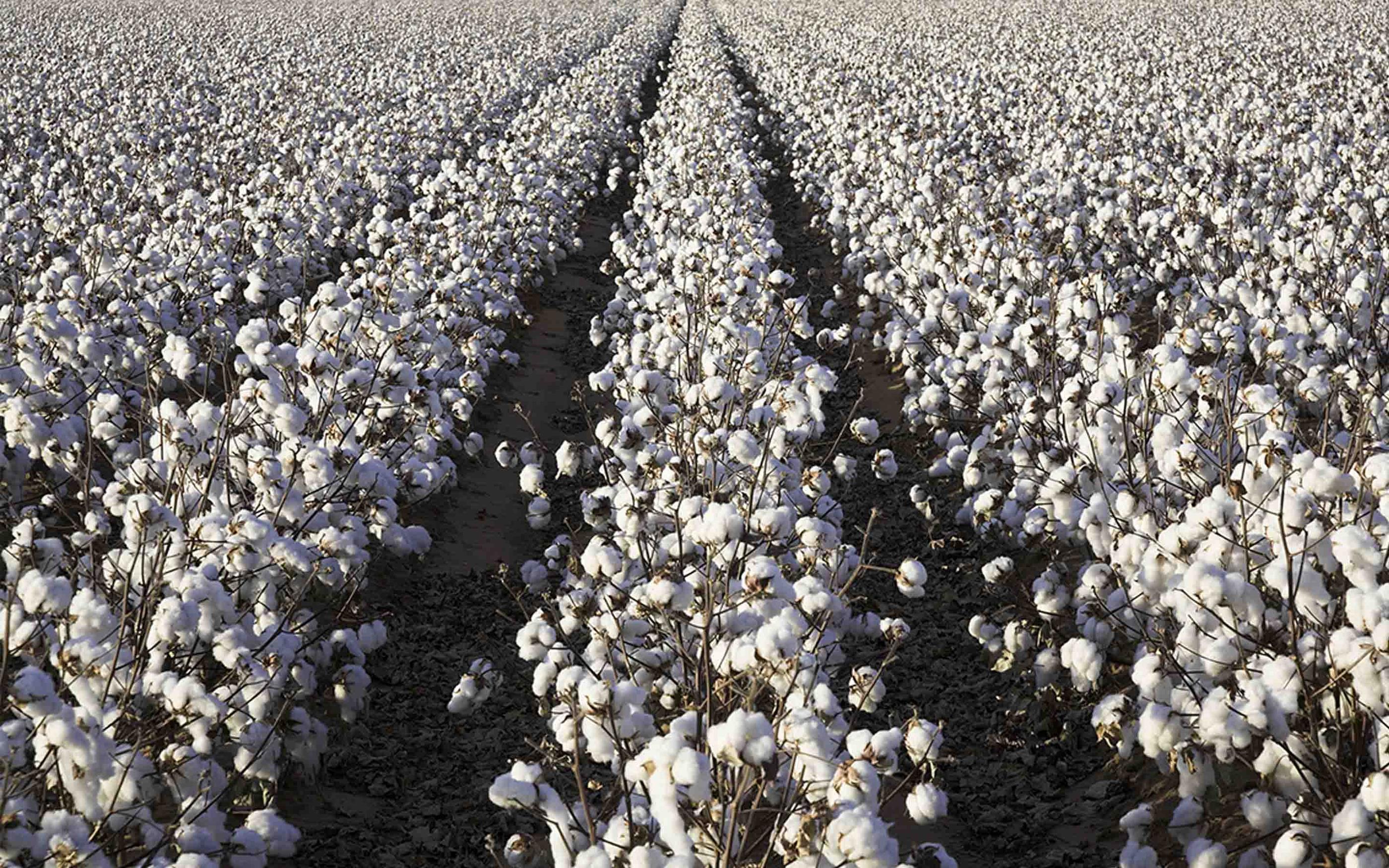

Physical climate risk to cotton growing regions
From the shirts we wear to the towels we use and the sheets we sleep on, cotton affects all our daily lives. Cotton makes up around 31% of all fibre used in the textile sector globally and supports the livelihoods of almost 350 million people. But the future of this important fibre is uncertain.
The entire cotton value chain – from producers and processors to brands, retailers or traders – is facing increasing exposure to climate risks, including rising temperatures, changes to water availability and extreme weather events. At the same time, the sector itself can also contribute to climate change. To thrive in an increasingly climate-disrupted world, the cotton sector, and the wider textiles industry, require radical change which can only be achieved through sector-wide collaborative action to understand and adapt to the changing climate.
The resources on this website are designed to enable actors across the cotton industry to better understand the serious future challenges to cotton production, and inspire more ambitious action to reduce emissions and build the sector’s resilience.
Contact Hannah Cunneen (Forum for the Future) or Olivia Palin (WTW) to find out more.
$600b
50%
350mPeople rely on cotton for their livelihood
75%of cotton regions to experience increased heat stress by 2040

Cotton 2040 Initiative
Learn more about the Cotton 2040 Initiative, related workstream and how to get involved.
Launch the interactive tool
Cotton 2040 Climate Risk Explorer
The tool presents relative climate risk scores for twelve climate indicators which are tailored to cotton’s key climate sensitivities projected for the 2040s under a high emission scenario (RCP 8.5). The climate indicators are: growing season length, heat stress, total rainfall during the growing season, extreme rainfall events, long-term drought, short-term drought, fluvial flooding, coastal flooding, strong winds, storms, wildfire and landslides.
Read more about the results of the analysis and the methodology in the Executive Summary or Full Report in the download section below.
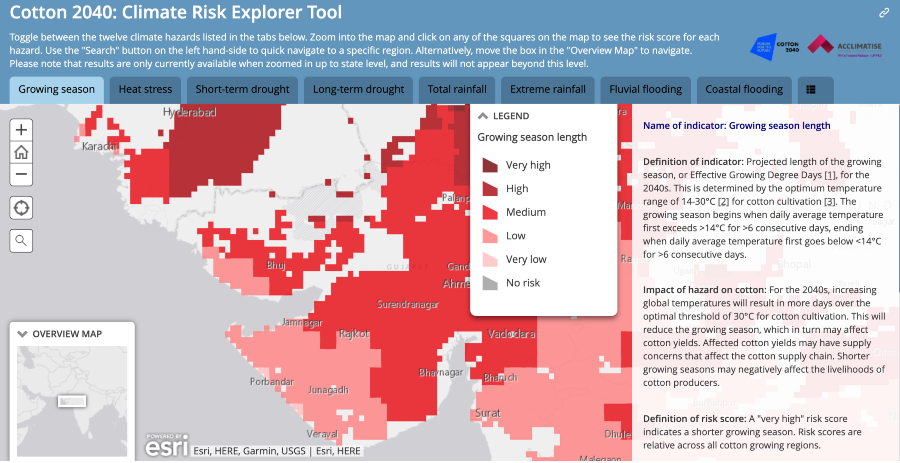
The Cotton 2040 Climate Risk Explorer Tool's interactive map interface.
Related content
Analysis reports & downloadable resources
Two analyses were undertaken as part of the Cotton 2040 initiative’s Planning for Climate Adaptation workstream: The world’s first Global Analysis of Climate Risks to cotton-growing regions, and a detailed Climate Risk and Vulnerability Assessment of cotton-growing regions in India.
The studies were conducted by Cotton 2040 partner and climate-risk specialists WTW's Climate and Resilience Hub. The Cotton 2040 initiative is facilitated by international sustainability non-profit, Forum for the Future.
Report: Physical climate risk assessment for global cotton production
This report is the first-ever global analysis of climate risks to cotton production. The study provides a high-level analysis of physical climate risks across global cotton-growing regions for the 2040s.
Key findings:
- All global cotton-growing regions will be exposed to increased risk from at least one climate hazard.
- Half of all cotton-growing regions will face high or very high climate risk exposure to at least one climate hazard.
- 75% of the world's cotton-growing regions face greater exposure to heat stress (defined as temperatures above 40°C)
- 40% of global cotton-growing regions are projected to experience a decrease in growing season
- All six highest cotton-producing countries – India, USA, China, Brazil, Pakistan and Turkey – are exposed to increased climate risk, particularly from wildfire, drought and extreme rainfall.
Download
| Title | File Type | File Size |
|---|---|---|
| Full ReportPDF | 1.2MB | |
| Executive SummaryPDF | 1MB |
Report: Physical climate risk and vulnerability assessment: India analysis
This report is the first-ever detailed physical climate risk and vulnerability assessment for India’s cotton value chain. The study considers a wide range of climate hazards including thresholds that are specific to cotton production. A total of 41 climate hazard indicators and socio-economic indicators were used to assess the risk not only to production but also to the wider cotton value chain.
The study focused on cotton cultivation and cotton processing in 13 districts across three of India's major cotton-growing states: Gujarat, Maharashtra and Telangana.
Key findings:
- Climate change could expose one third of India's cotton growing regions to high risks from temperature increases, changes to rainfall patterns and extreme weather events by 2040.
- In the 2040s, cotton-growing regions across India will be subject to greater heat stress than under present-day conditions.
- In some regions, this increase in temperature is projected tobe coupled by an increase in water stress
- All districts are projected to experience an increase in the number of days at which labour productivity significantly decreases.
- Temperatures across Gujarat are projected to exceed the thermal tolerance limits for cotton more often than in other districts.
- Common areas of vulnerability across all districts include multidimensional poverty, low female work participation rates, low male and female literacy rates, and limited access to banking services, technology and information.
Download
| Title | File Type | File Size |
|---|---|---|
| Full ReportPDF | 1.7MB | |
| Executive SummaryPDF | 1MB |
Round table series: Building a climate resilient cotton sector
The Cotton 2040 team hosted a series of roundtables with stakeholders from across the cotton supply chains. Representatives from nearly every cotton producing region across the globe attended, as well as from stakeholder groups ranging from farmers, manufacturers, traders to brands and retailers.
Key takeaway messages from the series included:
- Most risk is at farm-level
- Respondents focused on physical risks at a farm or area of production level. The potential of risks differed region by region, yet each area would face at least one if not many compounding hazards.
- But risk spreads through the value chain
- Impacts of climate change were not only felt by producers, but all through the value chain, e.g. downstream actors would face higher energy costs, logistical delays and likely significant fluctuations in volume of cotton.
- A dearth of data hinders adaptation
- Data was lacking in predictive models, in the development of financial or insurance models, and in traceability efforts. An outdated approach to data may amplify the negative consequences of each risk and hazard.
A detailed breakdown of the findings from the round table series is available to be downloaded below.
Download
| Title | File Type | File Size |
|---|---|---|
| Building a Climate Resilient Cotton Sector – Identified RisksPDF | 6.6MB |
Other Cotton 2040 resources
The two reports and the Climate Risk Explorer tool are designed to enable actors across the cotton industry to better understand the serious future challenges to cotton production, and inspire more ambitious action to reduce emissions and build the sector’s resilience. You can find out more in the webinar recording under Industry Voices below.
The following resources can help you get started with further making sense of the implications and taking action.
Download
| Title | File Type | File Size |
|---|---|---|
| Masterclass 1: Commodities and Supply Chain Risk PDF | 1MB | |
| Masterclass 2: Transition Risk and DecarbonisationPDF | .8MB | |
| Masterclass 3: Liability Risk PDF | .9MB | |
| Masterclass 4: Governance and People PDF | 1.3MB | |
| Masterclass 5: InsurancePDF | 1.3MB | |
| Masterclass 6: Social Value and Community VulnerabilityPDF | 1.3MB |
Industry voices
Why is there a need to consider the impacts of climate change on cotton production? Why should the cotton sector consider the impacts of climate change? What are the key findings from the Global and India analysis reports? And what does all this mean for farmers, brands and retailers, cotton standards and other supply chain actors? Watch the videos to learn more.
Cotton 2040: Project background
Cotton 2040 is a multi-stakeholder initiative with a mission to facilitate the shift to a sustainable global cotton industry which is resilient in a changing climate; which uses business models that support sustainable production and livelihoods; and where sustainably produced cotton is the norm.
The initiative is convened by Forum for the Future, with expert partners WTW, Anthesis and the World Resources Institute (WRI). Cotton 2040 aims to accelerate progress and maximise the impact of existing sustainability initiatives across the global cotton industry, by bringing together leading international brands and retailers, sustainable cotton standards, existing industry initiatives and other stakeholders across the value chain. Learn more here.
Planning for Climate Adaptation workstream
The resources on this site were created as part of the Cotton 2040 “Planning for Climate Adaptation” workstream. The aim of the workstream is to create sector-wide collaborative action to understand and adapt to the changing climate. The two studies were generated in response to the lack of comprehensive, readily available information about how the climate crisis is likely to impact cotton production, its supply chain, and the nature of the industry over the coming decades.
Working group members
Interested in becoming a member? Email Hannah Cunneen (Forum for the Future) or Olivia Palin (WTW) to find out more.