

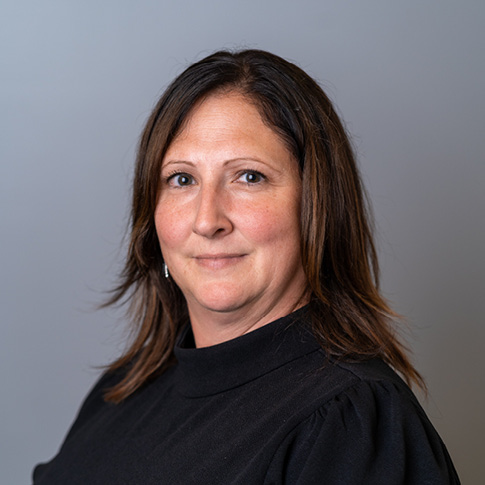
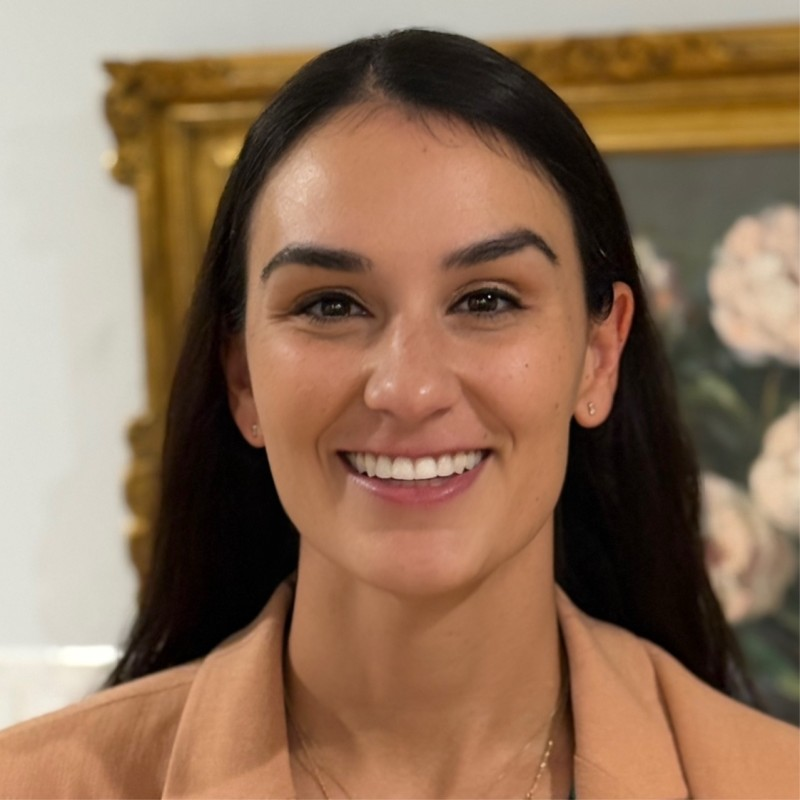
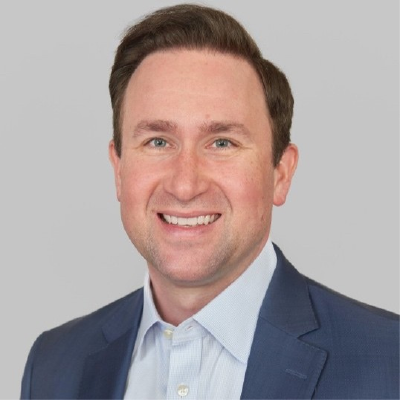
In this episode of the Global Marketplace Insights podcast, Jackie Bolig, Krista Cinotti, James Sallada, Beth Cohon, Scott Pizzi and Mike Machin discuss the current trends and conditions in the insurance markets of North America. To read more on the topics discussed, download the full report here: Insurance Marketplace Realities 2026 Spring Update.
Transcript for this episode
SPEAKER 1: Pull the program apart. Challenge your brokers. Challenge your carrier partners to do things differently. Think differently. How do you structure it? How do you put maybe SIRs in place and bet on yourself? How do you use Captive ART, et cetera? So to me, that's the advice I give is don't basically sit on the status quo.
SPEAKER 2: Welcome to Global Marketplace Insights by Willis, a WTW business, a podcast series showing the latest trends from the specialty and regional insurance markets.
JACKIE BOLIG: Welcome, everyone to our 2026 Insurance Marketplace Realities (IMR) spring update. I am joined today with my co-host Krista Cinotti. She's the head of placement strategies and head of middle market and select, also with Beth Cohon who is our head of middle market placement, Mike Machin, who is our head of FINEX placement, Scott Pizzi, who is our head of property placement, and James Sallada who is our head of casualty placement. So with that, we're going to kick it off and get right to the questions.
For those of you who had the privilege of listening to the last podcast, we talked about the market in terms of themes around movies and around music. I'm going to go back to a theme that I think was Mike Machin's, which was back to the future. And I'm going to ask everyone to talk about, describe the market in terms of where you feel we are in terms of being in the future, and then where you feel like we're going back a bit in time. And so with that, I'll kick it off with Scott.
SCOTT PIZZI: It's a good question. I do remember the themes that we did last year. Personally, if you look at the property space, I think it's more like Groundhog Day. But we'll focus on back to the future for the sake of the context. Look, especially in the property space, I think we've done tremendous work trying to harness the powers of AI, things around analytics and data. When you think about where we were all the manual data entry that our brokers continue to have to do, some of that's now becoming more refined and it's easier with our broking platform especially.
And when I think about platforms like Archipelago that we've leaned into a lot, the ability to get that data, scrub that data, be able to get that data out to underwriters quickly, more efficiently, has absolutely put us in a scale that's a little bit further down the road. When I think about where we were or where we are still from a point of are we really in the future or are we stuck in today, that's my comment around Groundhog Day, we still have that still mundane process where systems don't really talk to each other, and we still have to do double data entry on some occasions. We still have the binding process and some of that work lags.
But I think from a property standpoint, it's all about the data. It's all about getting modeling. It's all about real time, how we can assess and move. This is a people business. And we'll never get away from that element of the people business. But certainly I think some of the adaptions that are being done, especially when you think of the Newfront technology that's coming in from us. I think that will set us apart and that will move us into a greater, bigger platform that will make a lot of ease of entry for our brokers to move and really cut to the chase and be able to negotiate. And that's what we're here for at the end of the day.
JACKIE BOLIG: We're looking to use technology to eliminate inefficiencies, to enable our brokers to have more time to really focus on strategy.
SCOTT PIZZI: That's exactly right.
JACKIE BOLIG: With that, I'm going to pass it over to Beth.
BETH COHON: Thanks. I think Scott makes some great points. And those are the things that I'm really excited about as we look towards the future. I think what that technology will enable us to do, in addition to enhancing our processes, is more readily deliver solutions that I think are critically needed to solve for some of these future and emerging trends we're seeing in the industry. Obviously, this is probably cyclical and there is always a new concern.
But I think of generative AI and forever chemicals and some of these seemingly uninsurable exposures, I think that what technology will do is just give us the data and the insights to more readily solve for some of those trends. So I think that's really exciting. Insights that maybe would have taken us manual efforts of pulling together and seeing enough of it, we can really drill down on what the exposure is and how we can solve for it.
JACKIE BOLIG: Thank you Beth. So now we'll turn over to the world of FINEX to answer that question.
MIKE MACHIN: Thanks, Jackie. So yeah, when I think about the future and going back in time, I think about it in two broad constructs. The future underlying factors that are influencing litigation and risk continues to evolve in places that we couldn't have anticipated 10 years ago. AI-derived ACAs, the continued escalation of ransomware, things like that.
When I look at the insurance capacity in the marketplace, the outsized influence of alternative capital providers, MGAs and what they're doing and the impacts they're having on the industry, in particular, the prolonging of the soft market cycle, which is making it harder for legacy insurers to reprice books of business, and while that's good for clients in the short term, it may lead to greater unpredictability in the long run and over time. And then in terms of back in time, we're in the very early stages in the financial lines market of carrier consolidation in an effort to begin to combat deteriorating loss ratios while at the same time attempting to grow the top line.
This won't come as a surprise to anybody, but overzealous plaintiff's attorneys is leading to spikes in litigation across, not just D&O but fiduciary liability, employment practices liability, cybersecurity. So those are a lot of themes that we've seen before. And we continue to see now. I guess the last point I would make, just in terms of back in time, somewhat alarmingly, Chapter 11 business reorgs and bankruptcies, those filings increase 10.5% from pandemic era levels and remain elevated through '25.
There were close to 9,000 Chapter 11 cases in 2025. Whereas you go back in time, a couple of years ago, you were looking at something closer to 6,000. So there are some strains on the financial system and we'll see-- unfortunately, I think we'll expect to see these bleed through into the insurance landscape at some point here over the next couple of years.
JACKIE BOLIG: Thank you, Mike. As you talk about a little bit of uncertainty and what will bleed into the future, certainly there is a lot of volatility around casualties. So with that, I'm going to turn it over to James to answer that question.
JAMES SALLADA: Sure. A lot of the themes that Beth and Mike touched upon, I had in my head as well. But we don't need to reiterate everything. I mean, I think from a casualty space, technology advances, particularly with some of the AI work streams and inefficiencies in our business have been solved for, it's a lot of meaningful reductions in administrative inefficiencies, tasks that are happening in real time, allowing for a shift for brokers and clients and carriers to focus on solutions, growth, innovation, and being trusted advisors.
In fact, I forget the source here, but 69% of employers in the brokerage space are prioritizing the trusted advisor role versus 53% just a year prior. So this technology is enabling us to focus and really, truly adopt specialization, that includes segments as well. So strategic market trading results better outcomes for clients and carriers. We're seeing modeling of losses are getting significantly more accurate especially those with frequency driven risks.
When we look at some data around our recent casualty last quarter, from a marketing standpoint, we were at historic lows when it came to the amount of deals out to market, so 15% versus five year running average of 25%. And then of those deals that were marketed, 45% actually moved carriers. And that's well above the historic average of 25%. So is that an outlier or are we getting a little bit more strategic around knowing our clients risk partnering that with the market appetite or using data and analytics to be more efficient? I think so, yeah, that's my answer.
And the question I think talked about where are we still stuck in the past. In casualty, a compulsory airline, we're still doing UM/UIM forms on a state by state basis versus a federal solution. A lot of the admin is extremely outdated still, and, I think Scott mentioned, it feels like we're running in place a little Groundhog Day. We're still beholden to market cycles on an annual basis, and we forget what happened two years ago and don't recreate the wheel. So I think that is an area of our industry we can fix.
KRISTA CINOTTI: Thanks, everybody. We're going to move on to the next question. So I think some of you touched on it. We're obviously in a rapidly changing world. I think Beth referenced it a little bit in her commentary. So with macroeconomic uncertainty, AI acceleration, and geopolitical instability, to name a few, where do you see key gaps in the marketplace that exist currently or that you see forming in the future? I'll kick it to Beth to answer that question.
BETH COHON: Thanks, Krista. Sounds like perhaps I got ahead of myself with my initial comment, but I think that you hit the nail on the head that it seems like with some of these technology advancements between generative AI or social media and really just kind of every iteration of those classes, it's tech that every one of our competitors and our carrier partners want to leverage, and really, every industry is touching, but we haven't quite solved for how exactly it will be insured and how we're going to as an industry help these companies operate because that's what we do in insurance.
So it's going to be very interesting to see what solutions will be available to middle market customers, some of these newer companies that are in their infancy that may have been on a business owner's policy the year before, but might be having to explore risk management structures like fronted policies or defense inside, or they might be tapping into the London or Bermuda market. And I think that is something that Willis is uniquely positioned to help these customers with as advisors and bring those solutions to clients of every single segment.
But it's something that will have to, I think, solve for collectively and not necessarily wait for the carriers to solve for it for us, can we develop products or solutions. And again, I'm speaking specifically about Gen AI and emerging tech, but I think that extends to any of these emerging classes that we're discussing.
KRISTA CINOTTI: Thanks, Beth. I'm going to kick it over to Mike Machin to talk about it from a finance perspective.
MIKE MACHIN: Thanks, Krista. There's obviously a lot going on. I mean, I think from a financial line standpoint, the one key area that we remain very focused on is AI-derived exposure. I mentioned it briefly in my opening comments, we've already seen a few securities class actions as a result of AI technology. But that said, AI exposure isn't strictly limited to D&O. We see it beginning to emerge across almost all of our product lines, whether it's D&O or employment practices or cybersecurity and E&O.
And so it's something that we're constantly talking to our clients about in terms of how they're leveraging AI technology within their businesses so that we can help craft solutions because it isn't a one product line issue. It really is something that can potentially impact our clients' businesses in a variety of different areas. I will say, early days, but we've had really good success in terms of creating some bespoke solutions within our cybersecurity practice, helping our clients reduce risk or manage risk with respect to their cyber and E&O exposure. And so excited about the work that we're doing there, as well as in our other areas of the business.
Another emerging risk, and I will say that with AI and technology as an accelerant, wire transfer fraud and social engineering, that's been around for a while, but we've seen significant uptick in terms of, I'll say, volatility and ultimate loss costs paid as a result of these events. At the moment, the market is really quite inconsistent in terms of how they treat that coverage and treat that exposure. And so it's something that we're particularly mindful of as we're advising our clients in terms of something that, again, has become much more challenging over the last few years.
KRISTA CINOTTI: Thanks, Mike. We'd love to hear from Scott's perspective regarding property.
SCOTT PIZZI: Yeah thanks, Krista. From a property perspective, clearly the AI advancements are there. They're exciting, but they're also scary. I wanted to touch on some of your other points of that, which is really the geopolitical piece, especially in property. Certainly the war in the Ukraine kind of kicked things off. And now with the turmoil in Iran, I think it brings new challenges. Clearly with the blockage of Hormuz, we start getting into supply chain issues. When you think of the war issues that we have, how are policies constructed? What are those war exclusions actually say because everyone has one?
There's got to be better uniformity around the property construct. We've taken a step last year to hire a wordings expert to lead us into a little bit more of getting a more standardized approach to not only how we address our own war form in the property manuscript, but also looking at carrier forms, making sure that when we build a risk and we structure it, that the terms are all concurrent. It's the number one biggest factor that we have, especially in today's world. So the gaps we continue to see are these anomalies and wordings, who says what. I think that's one of the biggest challenges we face.
I think we also then want be sure that when we're partnering with certain markets, we're partnering with people who have financial stability here. And that's somewhat of a gap. There's a lot of chasing to the bottom because the market cycle is so soft. We have to educate buyers and what are the right partners to place your business with, because we all at the end of the day, there will be events, there will be claims, there will be issues. And when we have those disputes, we certainly want to be leaning on strong carrier partners who have balance sheets in order to pay that. So for me, it's more of the geopolitical and the instability around that that's merely more concerning for me on a property standpoint.
KRISTA CINOTTI: Thanks, Scott. And we'll close it out with James's perspective from casualty.
JAMES SALLADA: Thank you Krista. So from a casualty perspective, there's a couple elephants in the room that we'll talk about. One is on the product's general liability line, products liability. Companies that are deploying third- party AI tools may face liability if those systems fail to meet guarantees leading to downtime or financial loss for a lot of clients.
And so a lot of standard products liability cover includes coverage for physical devices like a forklift. But purely algorithmic failures probably fall outside of traditional policy scope. So as an industry, we need to figure out how do we cover that exposure and what product line best meets that need, whether it's in the cyber arena or the traditional arena.
But the other casualty specific line is workers' compensation. And personally, I'm not a doom and gloom believer. I don't think AI is going to take out the entire workforce and be replaced by robots. But there will be some disruption. There will be some uncertainty. So you think about EPLI could be something where you've got companies that are doing large scale layoffs due to automation, and that can lead to a surge in involuntary displacement claims, especially if they're wrong. If there's discrimination based on algorithmic bias, that could be a huge problem.
But when you look at work comp and you have automation replacing human risks, which is usually generally great because human beings are less exposed to getting hurt, but there's psychological risks that come with that. So there's the constant threat of job losses or interaction with machines that is causing stress and anxiety and burnout. What is that going to look like for the work comp landscape going forward, and how do we navigate those waters? So a lot to think about, a lot of concern. But obviously, this is why we're all in this business, is to address the emerging risks.
JACKIE BOLIG: Thank you all for those great answers. We're going to go a little bit more rapid fire. The next three questions are going to be a little quicker in terms of what comes quickly to mind as you think about the market. So the first one we're going to do is, we talked a lot about volatility, instability, emerging risks, et cetera. What advice would you give your clients in navigating this challenging and quickly evolving marketplace? So with that, I'll turn it over to Mike.
MIKE MACHIN: Thanks, Jackie. If it's not clear at this point, I mean, Scott, James, Krista, Beth, we've all been talking about the convergence of risk across our various different product lines. I think that would be the one piece of advice that I would give clients. I mean, you can't assume that an exposure that exists within one product line three or four or five years ago is strictly contained within that universe today. We talk about on the property side, business interruption. Business interruption can be solved for in the cyber universe today. And that's something that didn't exist just a handful of years ago.
So risk has become much more complicated over the last five years, given the macroeconomic and geopolitical circumstances. And so you can't engage your broker, your advisor enough about your holistic risk issues to ensure that you're getting a well-rounded view of things. The one other thing I would just say is in going back to Scott's comment, financial stability is key. The future is really unpredictable, and having strong counterparties and folks that you can trust is critically important.
JACKIE BOLIG: Thank you Mike. And before I turn it over to James, I would say I love what you said about going across risk. And as the market evolves, we simply can't think in silos. The marketplace is changing and evolving, and just the landscape from an economic perspective, from a geopolitical perspective, is just moving at such a rapid pace that you have to break down silos. So with that, James, I'll turn it over to you.
JAMES SALLADA: Thank you Jackie. So when it comes to navigating this environment broadly, and then more specifically in the casualty space, risk differentiation is at an all time high of importance. Just because your business is subject to certain industry specific risks doesn't mean that you're not outperforming. So work with your brokers to really help differentiate your risk in the marketplace. We've got risk score index models, like our auto liability risk index model, which really helps differentiate your fleet makeup compared to your peers, differentiating your risk in the marketplace, but you're going to get the best results.
Casualty is in a tough environment right now, and you really should look at the sustainable, long-term strategy around total cost of risk and not be beholden to these market cycles where you're buying too much risk transfer when the market is soft, and then you're retaining too much risk when it's hard. Figure out what the right optimal trading level is for the sustainable long-term-- depending on your company's appetite for risk. Pursuing alternative solutions is great. ART, captive solutions help deploy longer term strategies. But just be mindful of the amount of risk that we're retaining, exposure versus maximum appetite.
Balance sheets in the casualty space are acting as alternative capacity. Insurers are not insurers though. So we don't benefit from spread of risk the way insurance companies do. We need to be mindful of your appetite in this marketplace. But there are plethora of solutions that we at Willis can help solve for. And it's an exciting time. But again, it's a supply and demand economy for insurance. And as brokers and clients we need to navigate that strategically and really differentiate your risk, is how you're going to be successful.
JACKIE BOLIG: Thank you James. With that, I'm going to turn the question over to Beth.
BETH COHON: My advice, I think builds on what James was saying. But as what our clients should be mindful of that brokers as well, is really to be talking about your renewal all year long. I think some of the solutions that we can bring to bear that clients can explore are different ways to buy, whether that's group captives or parametrics. I'm excited from my seat that some of these solutions are now accessible to middle market customers.
But really it's something that can't be decided overnight and needs to be reconciled against some of the more traditional program structures like guaranteed cost or single carrier property like, where can we incorporate some of these other strategies. But again, I think my advice is don't wait until the renewal to have that conversation. Try to explore that, you're halfway through the year or even just have exploratory conversations. And then I think that same mindset goes to enriching your submission with data and everything else that James mentioned before.
JACKIE BOLIG: Thank you, Beth. And with that, we'll have Scott bring us home on this question.
SCOTT PIZZI: Thank you Jackie. It's hard to follow all that because as Mike said, a lot of these lines of business are intertwined. So a lot of the themes remain the same. I agree wholeheartedly with Beth. I think one of the things we preach in the property space is, this is not a 30, 60, 90-day process. This is an annual process that has to start early and has to start really early in gathering of data. It has to start early in gathering the exposure base. It has to start early with an understanding of where we are today and where we want to be in the future, similar to our theme.
I think the clients that do the best are the ones that are prepared and they differentiate their risk from their peer groups. We strongly encourage face to face market conversations, while we do a lot of that, 30, 60 days out before renewal. I also believe forming strong partnerships with your key carrier partners is important. I think having a relationship that goes beyond just the nature of the transaction to some extent makes a lot of sense.
As Mike had said, as we think about what does this look from a stability standpoint, from a long-term play, short-term thinking has to be a way of the past, so bringing in things like ART, looking at and in property together as a strategy to figure out the BI component. We've also introduced-- we built two facilities over the past two years that we've done. And those are helping us tremendously get long-term capital. Gemini and Client Edge are the two specifically.
And when we do that, we have long-term capital solutions that can be deployed across all markets. So James had made the comment about cyclical nature of the business. And it's true. And when you build programs with financial stability of your partners, also long-term capital plays with some of these facilities, you're certainly building a platform that can handle the test of time, and that's ultimately what you want.
I also would encourage in today's property market, specifically, given the nature that's-- we went 24 straight quarters from 17 to 23 of a hard market. We're clearly in a softening market. And clients, they don't like the word leverage, but I think it's time that they can leverage the position they're in to build that stability. So pull the program apart, challenge your brokers, challenge your carrier partners to do things differently. Think differently. How do you structure it? How do you put maybe SIRs in place and bet on yourself? How do you use captive ART, et cetera?
So to me, that's the advice I'd give is don't basically sit on the status quo. You have to start thinking differently and bringing your C-suite in, because those solution sets will only be more financially viable and economically stable as these programs advance and the market cycle will change.
KRISTA CINOTTI: Thanks, everyone. Sticking with rapid fire a little bit. So in one sentence, tell us what you're most excited about regarding technology advancements in our industry. And we'll start with Mike Machin on this one.
MIKE MACHIN: Thanks, Krista. When I think about technology in our industry, it feels to me like we're still very much in early days. I'm excited about improving, I will say, the end to end client experience for our clients and customers. Technology will allow us to gather information in a more effective manner, making our clients' lives easier so that we can ultimately take that information, and, I will say, find more effective risk transfer options for them.
The other thing that technology will allow us to do is leverage our client's information and ultimately secure, I will say, solutions that are leveraging insights and information that we perhaps wouldn't have been able to quite as effectively in the past. So I think there's a lot to be excited about for both our clients and potential customers.
KRISTA CINOTTI: Thanks, Mike. We'll kick it to James next.
JAMES SALLADA: Thank you Krista, I'm going to try and stick to the homework assignment, which was in one sentence or less. So when I think about technology advancement, the answer is innovation, freeing everyone up to actually focus on customer solutions, product creation, and removing the, we'll call it, the less intellectually stimulating aspects of our business and allow us to focus on those that are stimulating.
KRISTA CINOTTI: Thanks, James. We'll see if Scott can stick to the assignment. It's a one sentence or less.
SCOTT PIZZI: All right. For me, it's data, being able to harness data, gather data, analyze data, use data. It's the basic building block of everything we do in the property space. In my one sentence, I said the ability to use technology to take that data more efficiently and take mundane spreadsheet work off of our brokerage desk will make us obviously more efficient. But to James's point, also create more innovation.
KRISTA CINOTTI: Thanks, Scott. In addition to general tech advances in our industry, we're specifically excited about the tech capabilities of our Neuron team and the additional talented tech engineers that we now have access to given that Newfront is now part of Willis, and we're extremely excited to welcome the whole Newfront team and all the opportunities it brings us collectively.
JACKIE BOLIG: We'll close this one out with Beth.
BETH COHON: I am going to try to stick to one sentence as well. I'm most excited about the prospective efficiencies from digital trading solutions like Aquarius for our SME and lower middle market clients.
JACKIE BOLIG: Thank you Beth. We are very excited about Aquarius and also the references that Scott made to Gemini. Really do think that is the future here today. So we're going to finish it off with one last question. Again, ask everyone in one sentence. When we think about the IMR, we think about it as a guide for our clients to help navigate the marketplace. What is one point you would like the readers to take away from the IMR? Go back to James on this one.
JAMES SALLADA: Thank you Jackie. So when I think about the IMR and what the reader should take away from, again, a casualty specific lens, I would say that there are several impactful market dynamics at play in this environment, as well as emerging solutions and capacity. So nuclear verdicts, social inflation and litigation funding are the headwinds for the casualty market while guarded optimism around tort reform and the performance of workers' compensation to keep anxious supply at the table.
What does the balance of 2026 look like for clients and beyond, as well as for brokers and carriers? Will new entrants or broker led solutions such as Gemini provide much needed stability, while years of rate increases, structural changes and conservative limit deployment have improved underwriting results? Or will much larger corrections be ahead and a true exiting of supply versus the current limit management, or what I call quiet quitting in the casualty market?
This broker envisions the former while preparing for the latter. So what impact will rough cut season have on the property market which is in freefall? Will the data center boom be a boom or a construction bust? And then will lack of adoption of AI or over adoption of AI lead to maybe some shareholder lawsuits in Mr. Machin's space? But we're at a point where there's significant amount of solutions available to customers here at Willis, and we think that we're on the forefront of it. So I'm excited for everyone to read the IMR and see if I'm correct or not.
JACKIE BOLIG: That was great, James. But with that, I'm going to turn it over to Mike to answer the question.
MIKE MACHIN: Thank you Jackie. At this time, I will stick to the assignment one sentence or less. I echo everything that James has said. But if were to add to that, I think it's a complex landscape and continue to engage insurance experts to help you navigate the current set of circumstances.
JACKIE BOLIG: Thank you Mike. With that, I'll turn it over to Scott.
SCOTT PIZZI: I'm not sure how you follow James, is a tremendous reclamation as I said before. All of our lines seem to be intertwined The two points that I want people to take away is, be bold and be prepared. Be prepared, ready to talk about our risk. You've done the work. You have a strategy laid out. Now it's about execution. Be bold to be at your ability to not settle for the status quo and pull it down and take advantage of the market cycle that's infront of you today.
We know the claims will come. It is about how are you going to react to those claims when they do occur. I think that's the biggest question. So from that, I said if we do that and we deal with everything that's been talked about on this podcast, I think every client should walk away feeling that the brokers in their corner.
JACKIE BOLIG: Thank you, Scott. And with that, we're going to turn it over to Beth.
BETH COHON: I think my take away from the IMR would be that the broker of tomorrow is already here. So our clients should demand that out of their advisors whether that's creative solutions or proactive management, data enriched submission. There's a lot of really cool stuff going on. Just expect better.
JACKIE BOLIG: Thank you, everyone. I appreciate your insights. Some of the information in this call, and I hope everybody else did as well. Please keep an eye out for our Insurance Marketplace Realities. You can read more about these insights-- the leaders we just spoke today and other leaders from our team. We look forward to talking to you next time. Thank you.
Podcast hosts

Podcast guests

Listen to this episode on:
Learn more about the Global Insurance Marketplace Insights Q1 2026:
Related capabilities
- Aviation and Spacearrow_forward
- Constructionarrow_forward
- Credit and Political Riskarrow_forward
- Crisis Managementarrow_forward
- Direct and Facultativearrow_forward
- Financial, Professional and Executive Risksarrow_forward
- Marinearrow_forward
- Direct (Property & Casualty)arrow_forward
- Natural Resourcesarrow_forward