

In this Waves podcast episode, we explore the fascinating world of fine art insurance - from unexpected objects to unusual places - discovering how coverage protects the extraordinary in ways you would never imagine.
Transcript for this episode
ALEXIA HICKS: In regards to the fragile and unique nature of the items, obviously, that's when it comes into play, having specialist fine art insurers that have a deep understanding of the objects and what is required from an insurance point of view.
NARRATOR: Welcome to our marine insurance podcast, Waves by Willis, a WTW business. This podcast series explores key topics and trending issues facing the maritime industry.
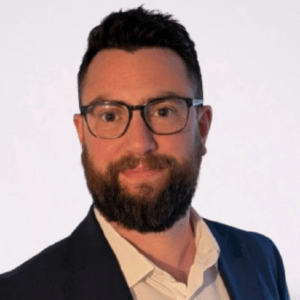
DAVID CAWDEARY: Hello, and welcome to today's episode of Waves by Willis. I'm your host, David Cawdeary, and I'm delighted to be joined by our fine art specialists, Alexia Hicks and Amelia Hunton-Leslie. Today we're diving into the fascinating world of fine art, from unexpected objects to unusual places and uncovering how insurance protects them in ways you might not expect. So to kick things off, could you tell me a little more about your roles at Willis and what first drew you to the fine art insurance space.
ALEXIA HICKS: Well, thank you, David. Yeah, thank you very much for having us. I am Alexia Hicks, and I head up the fine art team in the UK, and I recently celebrated my 10-year anniversary at Willis. I have been in the industry for about 16 years in total. I've always been on the specie fine art side. I decided that I wanted to go into insurance after I stepped into Lloyd's and, yeah, I was quite captivated by it and realized that I wanted to specialize in a niche area. So specie and fine art was perfect.
AMELIA HUNTON-LESLIE: Hi. I'm Amelia, and thanks for having us. I am similar. I come from a history of art background through undergraduate to masters and really wanted to be in the art market, like Alice, falling into the rabbit hole. I fell into insurance, but I've landed well and it's a magical place to work in. The intersection of business and the art market is a fascinating place to be, and I really enjoy it.
DAVID CAWDEARY: OK, so to set the scene, we're going to talk a bit about what is fine art insurance. So to anyone new to this space, how would you explain fine art insurance in simple terms?
ALEXIA HICKS: So in simple terms, fine art insurance is covering the physical objects for any physical loss or damage. We have very few exclusions in our policy and fine art itself is essentially anything collectible and our clients cover a very broad spectrum across the fine art supply chain, from private collectors to the auction houses, to the shippers and packers, to the museums, corporate collections, city councils, and each type of fine art client is very unique in their own way.
DAVID CAWDEARY: OK, what kinds of objects typically fall under a fine art policy, and which ones tend to surprise people?
ALEXIA HICKS: I guess the most obvious type of art that comes under our policies are paintings, sculptures, ceramics. But recently, we're seeing a huge increase in classic car collections, wine collections, stamp collections.
AMELIA HUNTON-LESLIE: Also, in the more surprising areas, the collectible market and memorabilia markets are really growing with strong collections of baseball cards, Pokemon cards. You've even got World Warcraft collections that are insured for high values.
DAVID CAWDEARY: Yeah, so some real pop cultural references there and things that aren't actually too far back in the past. You would think of perhaps more oldie worldie collections, rather than these kinds of things. I might have to dig the Pokemon cards back out. So talking about unusual objects then, what are some of the more unexpected or unusual objects that you've insured over the years?
ALEXIA HICKS: Good question, David, because we have certainly seen an array of interesting objects over the years. Some of the ones that have surprised me the most is we are the broker for the world's largest collection of dead fish, which is in America. We also have been involved in the insurance of the largest collection of PEZ dispensers, the sweet toy for children. You would be surprised by the value that is applied to it. We also have been involved in a lot of manuscript collections. Very, very old, original versions of Magna Carta and things like that.
AMELIA HUNTON-LESLIE: We're also seeing a growing trend in terms of bigger and bolder performance pieces as part of the public programs of art fairs. At Art Basel Paris last year, we covered a 20-cubic meter, helium filled artwork that was 20 meters high and 20 meters wide. It was a Kermit the Frog installation piece in a public square in Paris. It also had a performance art element to it. So you're covering the all risks and the public liability so it was quite a feat.
DAVID CAWDEARY: And we all love Kermit the Frog, so we must protect him at all costs. How do you go about arranging cover for such fragile, unique, and let's face it, irreplaceable objects?
ALEXIA HICKS: Yeah, I think the irreplaceable part is a question we get asked a lot by our clients and sometimes there's this understanding or this misunderstanding that if it is irreplaceable, is it worth buying the insurance? And actually, of course, there's huge reason. I mean, some items are irreplaceable, that's what makes them so unique, but without the correct insurance in place that if something was to happen to the collection, you're then not in a position to be able to replace it with objects of equal merit.
And in regards to the fragile and unique nature of the items, obviously, that's when it comes into play. Having really specialist fine art insurers that have a deep understanding of the objects and what is required from an insurance point of view and using correct shippers and packers.
DAVID CAWDEARY: So we've talked about some of the more unusual objects, but what are the more unusual locations where some of these insured objects have been displayed?
ALEXIA HICKS: I think one of the most interesting situations that I've ever seen and been surprised by was actually when the London Zoo one day arrived and they discovered that a Banksy had been painted onto the shutters, the kiosk where the general public buy their tickets. So the London Zoo, obviously, were hugely grateful to Banksy, but suddenly, out of nowhere, they've got this responsibility to ensure something of huge value and Willis at the time, and still are the broker for London Zoo. But they didn't have a specialized fine art policy in place.
Interestingly, they actually, initially, I think, raised the shutters with Banksy on it because I don't really know what else they were meant to do. And then we offered some advice, and they had the shutters moved by a professional shippers and packers and safely put into storage. But yeah, I thought that was a really interesting one. You just-- yeah, you don't know what's going to be on your doorstep when you wake up one morning.
DAVID CAWDEARY: Yeah, and the value of those shutters suddenly went up a few pounds, I think. So you touched on it there with shipping, packing, and transport. How does fine art risk change when objects are in transit versus being out on display?
ALEXIA HICKS: I mean, when an insurer is valuing a risk and rating it up, a huge amount of questions are asked about how often the items are in transit. And there's very few fine art losses when they are just static, and most of the losses in the fine art world are actually when they're in transit. So you need to ensure that it's professionally shipped, professionally packed. That is of huge importance.
DAVID CAWDEARY: And are there risks that clients sometimes overlook until it's too late?
AMELIA HUNTON-LESLIE: Well, following on from the transit aspect, it also depends on the way that the artwork is moving. We're seeing a huge trend in terms of embracing sustainability with an uptake in sea freight shipping and sea freight shipping is a much more complex process in terms of the packaging requirements to ensure that it's fit for purpose for travel. Other trends that we're seeing are real growths within the couture intersection into the art market. We are seeing foundations set up by a lot of the key couture fashion houses.
We're also seeing in terms of the sustainability model, museums are also adopting changes in terms of how they are setting the temperature in their institutions as a way of offsetting utility costs in a way that's deemed safe and still protecting a climate controlled, stable environment for the artworks.
DAVID CAWDEARY: Yeah, and, I mean, clearly, you're demonstrating the value of where a specialist fine art insurance really comes into its own for clients in its value proposition. And I was wondering, can you name a moment where fine art insurance has really proved its value to clients?
ALEXIA HICKS: Without saying any names, there is one incident where there was a huge damage done to a painting, and if that painting, for example, had been underneath a property policy, then it would be covered for the restoration costs, which could be for a painting of this value about £500,000. But what a property policy wouldn't cover but a fine art specialist policy would cover is the depreciation in value, which can therefore be in the millions. And so therefore, you really see the benefits of having a standalone fine art policy.
DAVID CAWDEARY: Yeah, and that's an interesting point in and of itself is where does a fine arts policy kick in where a traditional property policy might not cover those kinds of risks?
ALEXIA HICKS: Yeah, exactly and this is a big part of, well, part of what we do is actually ensuring that obviously our clients have the appropriate policies and explaining the benefits of the standalone fine art policies. I think firstly, huge importance has to be placed on having fine art specialist insurers. So in the event of a loss, we get the appropriate loss adjusters involved and also the correct clauses. So things like depreciation or special pairs and sets. Obviously, if you have a pair of antique tables or mirrors, if you lose one, then there's a huge loss in value that will be reflected on a fine art policy, but not necessarily on a property policy.
We have a special buyback clause if the items were ever to be discovered. Obviously, they place an enormous amount of emotional significance. So again, obviously, they want the opportunity to buy it back from insurers and then we also have, obviously, basis of valuations within a property policy, it would probably be just the schedule. Whereas we always look to have the current market value as fine art, obviously, fluctuates hugely, and also we often have nil deductibles, whereas there are huge deductibles in property policies.
DAVID CAWDEARY: Yeah, of course and you really can't just undervalue the experience of the people involved because you've seen so many unique situations over the years that you're going to get to grips quite quickly with the unique challenges a client might face. So looking ahead, how is fine art insurance evolving?
AMELIA HUNTON-LESLIE: The fine art insurance market is evolving in line with market changes. So in terms of the recent shift of sustainability being a key component of what the art market needs to respond to, our policies are also supporting this change. As previously mentioned, we're supporting seafreight shipments globally on the increased uptake. We're supporting museums, adapting in terms of reducing their climate control temperatures, keeping a stable environment, but ensuring that they're offsetting where they can.
We're supporting our clientele in terms of expansion and adoption of digital exhibitions globally. Traveling exhibitions are on the rise. So we are with our market being substantial, we are able to increase policies, add excess layers where required for these blockbuster traveling exhibitions.
DAVID CAWDEARY: And we're looking into the future now but what should clients be thinking about now that maybe they weren't 10 years ago?
ALEXIA HICKS: I think one of the main things is, sadly, the environmental factors. I mean, 10 years ago, wildfire wasn't really a peril that insurers thought about. It is now rated almost separately and considered. We are working much more closely now with our risk and analytics team in helping our clients assess their true exposures. Some of the accumulation in warehouses for our shipper and packer clients is huge. So we help them keep an eye on their aggregations and evacuation plans and splitting art between warehouses.
DAVID CAWDEARY: So to wrap up, I'm just going to ask you one more question each, which is what's the one thing you wish everybody understood about fine art insurance? And perhaps, Amelia, we can start with you.
AMELIA HUNTON-LESLIE: Fine art insurance is, I think, much more complex than most people first realize because each industry requires different sub coverages. So, for example, for dealers, you have the all risk physical loss or damage, but you also have personal accident because if your director of the business or your owner were to sustain an injury in the workplace, you need to have that financial protection to ensure that the business continues to run, even whilst they're off work. There are a multitude.
The same goes for living artists. Packers and shippers museums, they all have individual subclasses or sub limits for specific coverages that are important to their businesses. And so it's much more complex than most people realize. And that's where you partner with your broker because we understand the unique aspects of what each industry requires and we tailor our policies specific to our clients demands and needs. It's not an off-the-shelf product, we are a tailor added service.
ALEXIA HICKS: I think just to add to Amelia's point, I think one thing that I think that maybe some people aren't aware with art insurance is just quite how large it is. There are 57 syndicates now in Lloyd's that write fine art insurance and we can get up to 4 billion of capacity, which I think is quite remarkable.
DAVID CAWDEARY: Absolutely, it is way bigger and certainly, I've learned a lot today, far more interesting and complex than I ever believed. So we really hope our listeners have enjoyed today's episode. We really appreciate your insights and contributions today Alexia and Amelia, thank you. Thank you to our listeners for tuning in we're glad you joined us for this episode of Waves, our marine podcast series. So until next time, thank you.
ALEXIA HICKS: Thank you.
AMELIA HUNTON-LESLIE: Thank you.
NARRATOR: Thank you for joining this WTW podcast featuring the latest perspectives on marine insurance risk. WTW offers insurance-related services through its appropriately licensed and authorized companies in each country in which WTW operates. For further authorization and regulatory details about our WTW legal entities operating in your country, please refer to our WTW website.
It is a regulatory requirement for us to consider our local licensing requirements. This information given in this podcast is believed to be accurate at the date of publication. This information may have subsequently changed or have been superseded and should not be relied upon to be accurate or suitable after this date. This podcast offers a general overview of its subject matter. It does not necessarily address every aspect of its subject or every product available in the market, and we disclaimer all liability to the fullest extent permitted by law.
It is not intended to be, and should not be used to replace specific advice relating to individual situations, and we do not offer, and this should not be seen as legal, accounting, or tax advice. If you intend to take any action or make any decision on the basis of the content of this podcast, you should first seek specific advice from an appropriate professional. Some of the information in this podcast may be compiled from third-party sources we consider to be reliable.
However, we do not guarantee and are not responsible for the accuracy of such. The views expressed are not necessarily those of WTW. Copyright WTW 2026. All rights reserved.
Podcast host
Podcast guests
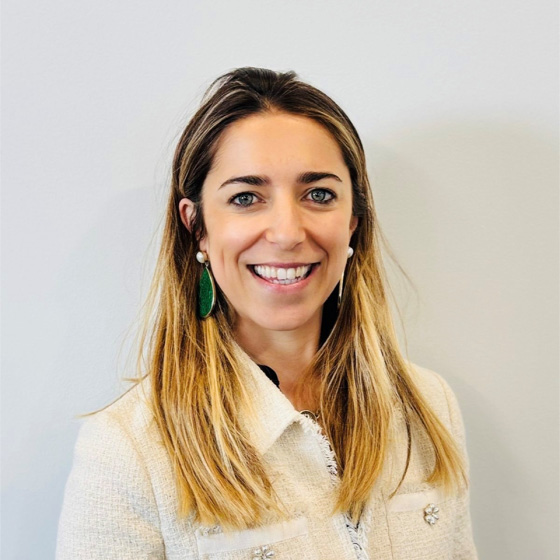
Alexia Hicks
Head of Fine Art, UK
Alexia has over 16 years’ experience in fine art insurance and heads up the Fine Art team in London. Alexia is responsible for the design and placement of the insurance programs for some major art galleries, auction houses and specialist fine art logistic companies as well as a number of significant museums, exhibitions and private, corporate & state art and jewellery collections worldwide.
Alexia is recognized as a leading broker in the international fine art insurance and risk management sector, providing clients with innovative and cost-effective alternative risk transfer solutions for their art-related activities.
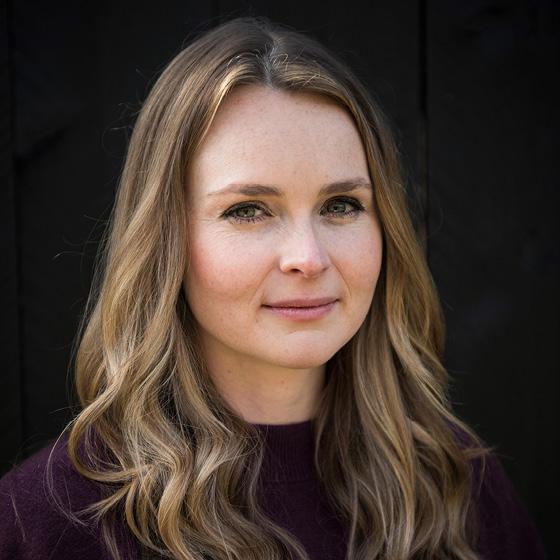
Amelia Hunton-Leslie
Associate Director
Fine Art, Jewellery and Specie
Amelia has over eight years of experience in the fine art insurance market, along with an additional five years in professional services within the commercial art sector. Prior to that, she volunteered in the public museum sector throughout her university years.
She specializes in working within the commercial sector of the art market, collaborating with auction houses, art logistics agents, dealers, museums, institutional collections, libraries and archives, and artists. She has a particular interest in supporting start-ups entering the sector.
Alexia Hicks
Head of Fine Art, UK
Alexia has over 16 years’ experience in fine art insurance and heads up the Fine Art team in London. Alexia is responsible for the design and placement of the insurance programs for some major art galleries, auction houses and specialist fine art logistic companies as well as a number of significant museums, exhibitions and private, corporate & state art and jewellery collections worldwide.
Alexia is recognized as a leading broker in the international fine art insurance and risk management sector, providing clients with innovative and cost-effective alternative risk transfer solutions for their art-related activities.
Amelia Hunton-Leslie
Associate Director
Fine Art, Jewellery and Specie
Amelia has over eight years of experience in the fine art insurance market, along with an additional five years in professional services within the commercial art sector. Prior to that, she volunteered in the public museum sector throughout her university years.
She specializes in working within the commercial sector of the art market, collaborating with auction houses, art logistics agents, dealers, museums, institutional collections, libraries and archives, and artists. She has a particular interest in supporting start-ups entering the sector.