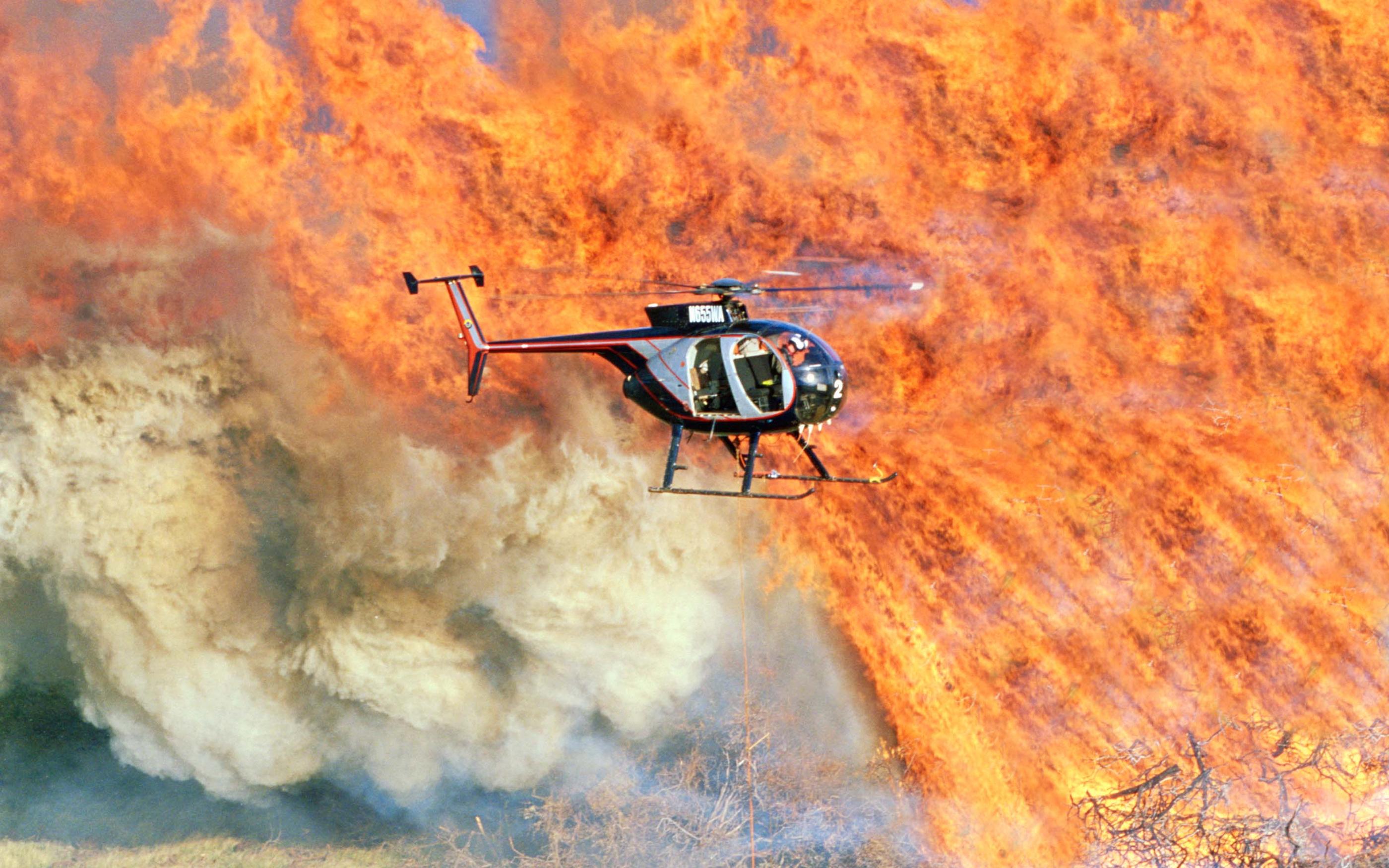
Fueled by climate change, expanding wildland-urban interfaces, and decades of forest mismanagement, wildfires have stopped being seasonal anomalies
In the face of escalating wildfire devastation across the western United States, a quiet change is taking root - not in Washington, not in Silicon Valley, but in the neighborhoods most at risk. These communities are no longer waiting for help to arrive. They are building resilience from the ground up.
Fueled by climate change, expanding wildland-urban interfaces, and decades of forest mismanagement, wildfires have grown to unprecedented scales. The consequences are visible in billions of insured losses, collapsing insurance markets, and families priced out of coverage in the very places they call home.
The Firewise Shift: A Blueprint for Collective Defense
Some communities are responding not with despair, but with design. Through coordinated investments in fire-resistant infrastructure, vegetation management, and public awareness, they are joining the Firewise USA program, a grassroots framework that turns neighborhoods into fire-adapted ecosystems.
When wildfires affect even 1% of a community’s population, participation in Firewise surges by 171% above the average. Annual investments in mitigation jump by over 34%. In essence, direct experience with fire leads communities and individuals to invest quickly and substantially in resilience.
Firewise USA® is a national program that supports community-level wildfire risk reduction through structured mitigation planning and investment. To gain recognition, communities must meet specific criteria, including conducting risk assessments and implementing mitigation actions. Firewise designation is used by several insurers as a basis for premium discounts, making it a relevant mechanism for both resilience and insurability in high-risk areas.
Insurance as a Catalyst, Not a Crutch
Insurance markets are reflecting on these community choices. In areas with active Firewise communities, post-wildfire premium hikes are markedly lower—roughly one-third the size of the average increase. The more residents participate in Firewise, or the more a community invests in mitigation, the smaller the premium rise becomes. This creates a reinforcing cycle where communities reduce risk, insurers reward them, and resilience becomes not just prudent, but economically rational.

Related content
But another emerging issue is that insurance supply significantly contracted in communities struck by major wildfire. When homeowners cannot acquire regular insurance coverage, reliance falls instead on California’s FAIR Plan, the insurer of last resort that provides limited coverage at a relatively high cost. Its market share remains small but growing in high hazard areas. While Firewise participation helps relieve affordability concerns, it does not appear to curb the increase in FAIR plan reliance following a major fire. More co-ordination might be needed between communities and insurers to maintain a robust supply of coverage.
Insurance Market Dynamics: Risk, Incentives, and the Economics of Resilience
Wildfires, with their increasing frequency and severity, are exposing the limits of insurance systems. Claims arrive in bursts, often concentrated in high-risk zones, leading to insurers to recalibrate premiums, raise prices to reflect elevated risk, or withdraw from markets altogether. Households are left facing both higher costs and fewer options, especially in the wildland–urban interface.
Claims arrive in bursts, often concentrated in high-risk zones, leading to insurers to recalibrate premiums, raise prices to reflect elevated risk, or withdraw from markets altogether.
This is a classic case of moral hazard versus risk-based pricing. Without mitigation incentives, homeowners may underinvest in resilience, expecting insurers or governments to bear the cost. But when insurers tie premiums to proactive measures, they align private incentives with public safety.
A good example of this approach is Willis's collaboration with The Nature Conservancy, which launched a first-of-its-kind wildfire resilience insurance solution. It demonstrates how insurance can be used not just to transfer risk, but to actively reduce it by encouraging community-level mitigation efforts.
This suggests that insurers are recognizing and rewarding risk reduction, and that communities are responding rationally to economic signals.
From a macroeconomic perspective, this dynamic has broader implications:
- Risk pooling is breaking down in high-hazard areas, leading to geographic segmentation of insurance markets.
- Capital allocation is shifting, as insurers reprice or retreat from wildfire-prone regions, affecting property values and local economies.
- Public-private coordination is essential, as regulatory frameworks like California’s Safer from Wildfires begin to formalize the link between mitigation and insurability.
Taken together, these dynamics show that insurers are not only responding to wildfire risk, they are helping to shape how resilience develops.
The Equity Gap: Resilience Must Be Inclusive
Yet not all communities are equally equipped to respond. In areas with higher shares of racial and ethnic minorities, the adaptive response is muted. Economic, social, and informational barriers are preventing some of the most vulnerable populations from accessing the tools of resilience. This is where policy must evolve. Incentives, resources, and outreach must be targeted—not just broadly distributed. Resilience must be inclusive, or it will be incomplete.
This creates a reinforcing cycle where communities reduce risk, insurers reward them, and resilience becomes not just prudent, but economically rational.
From a macroeconomic lens, this is a resilience dividend forgone. When vulnerable communities fail to invest in mitigation, the long-term costs—displacement, uninsured losses, infrastructure damage—compound. The opportunity cost of inaction is enormous, and it falls disproportionately on those least able to bear it.
When vulnerable communities fail to invest in mitigation, the long-term costs—displacement, uninsured losses, infrastructure damage—compound.
A Call to Reimagine Risk
The data is clear: communities can and do respond to wildfire threats with meaningful investments. But the scale of action still lags behind the scale of risk. In 2019, only 13.5% of the most at-risk ZIP codes had any Firewise site. Just 5% of their populations were Firewise residents. We need to think bigger. Imagine a future where wildfire resilience is embedded into zoning laws, insurance pricing, and community planning. Where simulation tools recreate the urgency of disaster without the destruction. Where insurers, regulators, and residents co-design risk mitigation strategies that are proactive, not reactive.
…it’s about recognizing that resilience is no longer a luxury; it’s a necessity.
This isn’t just about wildfires. It’s about rethinking how we manage climate risk together. It’s about giving communities the tools to shape their own safety. And it’s about recognizing that resilience is no longer a luxury; it’s a necessity.
Call to Action: Building the Future of Fire Resilience
The tools exist. The motivation is growing. Now is the time to scale.
- Policymakers can embed wildfire resilience into land use planning, building codes, and insurance regulation. Expand programs like Firewise and ensure they reach underserved communities.
- Insurers can go beyond pricing risk by partnering with communities to reduce it. Reward mitigation with premium discounts, and invest in public education and infrastructure.
- Community leaders can organize, educate, and mobilize. Programs like Firewise can form a platform for collective action.
- Tech innovators and researchers can develop simulation tools, predictive models, and digital twins that help communities visualize risk before it materializes.
- Philanthropists and impact investors can fund resilience as a public good, knowing every dollar spent on mitigation saves multiples in recovery.
Wildfire resilience will not be built by one group alone. It will be built when each of these actors takes up their share of the task, and when their efforts connect.
Authors