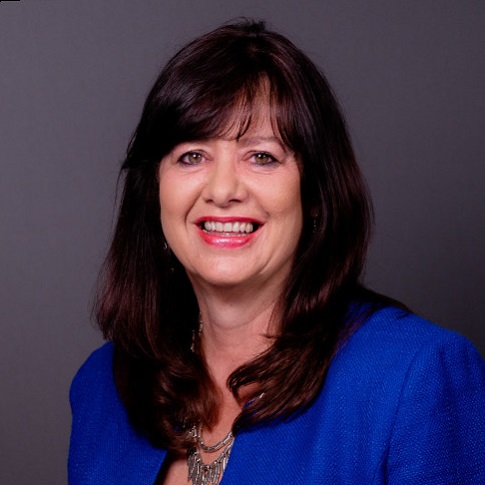
In this episode of Risk-Ready Recipes, Sue Newton, UK Food & Beverage Leader at WTW, is joined by Simon Lusher, Global Food and Beverage Leader, to unpack the findings of the latest global food, beverage and agriculture risk report. From geopolitical and supply chain disruption to AI, cyber, product safety and climate change, they explore how the risk landscape is evolving and where potential gaps in risk management and insurance coverage may arise.
They also discuss how stronger business continuity planning, scenario testing and a clearer understanding of insurance coverage can help businesses prepare for an increasingly unpredictable environment, ultimately building greater resilience.
Transcript for this episode
Simon Lusher: Well, overall, there was a feeling that risks were becoming more complex, and the confidence in businesses to manage those risks was declining. Which all goes back to the volatility in the industry, and indeed the world, at the moment.
Sue Newton: Welcome to the Risk Ready Recipes podcast series, where we serve up insights at the intersection of risk management and insurance in the food and beverage industry. Whether you're a manufacturer, producer, or distributor, our goal is to equip you with the knowledge and tools to navigate risk with confidence so you can focus on what you do best.
Today's podcast explores the key findings of our latest global food, beverage and agriculture risk report. This is the third biennial report providing a view of risk from senior decision makers across the sector. I'm really pleased to be joined today by my colleague Simon Lusher, our Global Food and Beverage Leader. Welcome, Simon.
Simon Lusher: Thank you very much for inviting me. I'm very pleased to be here.
Sue Newton: Great. So can we start, please, by taking a look at what has changed over the time we've been conducting these surveys, Simon? What are the major differences that stand out for you?
Simon Lusher: I think what stands out for me is less about major differences and more about similarities. We started this process in 2022. That's when we conducted our first survey. And this was a time when the industry was just coming out of the pandemic crisis. So there was a kind of a feeling of return to normality after lockdown. Second survey was in 2024 and that was happening just as the Russia and Ukraine crisis was starting.
Rather than that return to normality that we'd been predicting in our first survey, we saw concerns about geopolitics, supply chains and the general kind of risk environment becoming more volatile. And our third survey, the one we're talking about now, started just as the conflict in Iran was beginning.
More volatility, more problems with supply chains, more geopolitical risks. Obviously, that was already on the back of an industry shaken up by tariffs and climate risks as well. We saw some bad harvests in the intervening period between the two surveys. The return to normality hasn't happened. And it's very much looking that volatile environment is going to stay with us for the foreseeable future.
Sue Newton: And in terms of the US-Iran situation, what do you think that could actually mean for the sector in practical terms, Simon?
Simon Lusher: I think it's going to have a longer tail than just the end of the conflict. We've seen a massive reduction in fertilizer shipments coming out of the area, and it's a major provider of fertilizer. We saw that problem with Ukraine, but this is on an even larger scale, I think. The implications for future harvests is going to be a worry, I think. So that probably means that there's going to be some implications for commodity prices, availability of raw material going forward. All of which, of course, translates in food inflation in the groceries.
Sue Newton: Yeah. So if we zoom out a bit and look at the report overall. What are the risks that businesses scored as the ones that they were most concerned about right now, Simon?
Simon Lusher: Overall there was a feeling that risks were becoming more complex and the confidence in businesses to manage those risks was declining, which all goes back to the volatility in the industry and indeed the world at the moment. We saw an increase in health and product safety risks. I think this relates back to public concerns and legal concerns about ultra-processed foods, UPFs (ultra-processed foods).
It's been suggested that the UPF industry might be having its tobacco moment and the amount of litigation and class action in the US and elsewhere is supporting that idea. We have seen also an increase in concerns about artificial intelligence and technology in general, as businesses become more reliant on technology to not just hold data anymore. Now they're actually using it to run production lines and make decisions. That's both a risk and an opportunity. Sustainability and climate featured quite harshly as well on our last report but I think the feeling now is that we don't have a future challenge here. It's an immediate problem. There's a big concern.
Sue Newton: And zooming in on a couple of things that you were talking about. The AI side of things. Obviously there's huge opportunities and we're seeing businesses planning strategically around AI can make their businesses more efficient. How well are the risks side of that equation being looked at, do you think, and understood?
Simon Lusher: It's interesting, isn't it? I think AI is evolving so rapidly that keeping up with the risk side of it, it's difficult, especially when the people are getting blinded by the opportunities at the same time. The whole tech piece is interesting. I mean, it's becoming so embedded in production systems and it just creates a much larger attack surface for hackers.
Used to be that they would attack and steal data, or lock you out of your systems. This was a problem from reputation point of view and a data protection point of view. Now we're seeing businesses being shut down. We saw a large brewery recently, couldn't produce beer. We've seen all sorts of trouble in supply chains and inventory management for a major retailer.
The actual physical threat of cyber attacks has become much more of a worry for businesses. Something that they definitely need to be very mindful of because traditional insurance wouldn't respond to a cyber attack causing a fire or causing a production line to shut down.
Sue Newton: I think that point about traditional insurance not covering the fire, if it's started by a malicious cyber attack, isn't as well understood as it should be, really, which is something that we need to make sure that businesses in the sector really take into account, and consider buying specific cover for that if they feel the risk warrants it.
Simon Lusher: I'll be honest with you, Sue. It's not even particularly well understood by the insurance market. I mean, some underwriters will tell you that, yeah, that is covered by a policy. But, I don't want to get technical here, but if they've got the LMA 5400 Clause in there, then it's definitely not. Pretty much every PDBI (Property Damage and Business Interruption) policy we place these days will have that clause in it.
Sue Newton: Moving on to another thing that you were just talking about in terms of risk. Obviously, supply chain is up there as one of the key risks that businesses are managing in a very, very volatile environment.
How well do you think businesses really understand their supply chains to a deeper level, and the potential risks posed from within that supply chain to their business?
Simon Lusher: It's a good question. I think the food industry arguably has one of the simpler supply chains when you compare it to say, the automotive industry, which is reliant on thousands and thousands of technical components and chips, etc. Even so, the food industry has a more complex supply chain, I think, than perhaps is obvious at first glance.
There are multi-tiered suppliers, and also a lot of commodities come from climate challenged areas, or geopolitically challenged areas. The supply chain for the food industry is now by no means straightforward. Is it well mapped? I think probably most businesses have a good understanding of that. Their Tier 1 suppliers, i.e., the suppliers that are supplying them directly. But, once you get below Tier 1, to the supplier's supplier, if I may say it that way, suddenly it becomes a lot less visible. If you can't see it, and you can't map it, then that becomes very difficult to manage.
Sue Newton: One thing that stood out in the report that we haven't talked about yet was product recall. There was an increasing concern from respondents to the report about product recall. Do you have a view on why that is?
Simon Lusher: Well, first off, it's surprising that that has increased, because obviously product recall, product contamination, has been a major concern for the food industry for forever. So to see that go up was a surprise. We've been thinking about what the reasons behind that might be.
The conclusion we've come to it's probably down to the labor market. Labor shortages, turnover of staff, etc. which means people are coming in, perhaps moving into roles with not sufficient training. Perhaps that means that businesses have slightly less control over their production lines, and perhaps they did before.
Sue Newton: Another big theme from the report, ESG, with 84% of businesses saying it's a priority for them over the next two years, which is great to know. What do you think is driving that level of focus from the sector?
Simon Lusher: I think the food industry is a lot closer, perhaps, to climate change than other industries. It's dependent on agricultural produce, which is obviously highly, highly affected by droughts, floods, etc. It's extremely aware of the volatility in the climate.
I guess that's a risk it wants to manage. It's also very aware of public sentiment. The public are very much in favor of sustainable products, environmentally friendly packaging, etc. It's got that kind of public relations aspect to it as well. Of course, it's also got a concern about compliance and regulation and the environmental commitments that some governments have made. What we are seeing, even though that some of those commitments and regulations are being watered down in certain countries, we're not seeing the priorities of the food industry being watered down. That was good to see.
Sue Newton: Positive. What were the things in the report that surprised you. What came out that we weren't actually expecting to see when we set it up?
Simon Lusher: The thing that surprised me the most was the perception of insurance cover that was reported by almost half the respondents in terms of supply chain and 45% in terms of reputational risk. This is where we asked what insurances were they buying? And we were told that they were buying specific insurance for supply chain and specific insurance for reputational risk. The truth is they're probably not, Sue. There is a trade disruption insurance policy, which covers some risks in the supply chain. But the uptake of that is very low.
So they're not buying supply chain specific insurance. What they're probably buying is marine cargo, which doesn't tend to pick up losses arising from delay and obviously delay to supply chains, and disruption generally, is a major problem. So that remains uninsured.
There's some non-damage business interruption in property damage policies, but again, not enough to cover the entire supply chain. So this is probably a risk that risk managers or insurance buyers might think they have covered that they don't. And the same is true of reputation. Again, there is reputational risk insurance, but the uptake of that is very low, again. So unlikely they're buying that.
Then there's cover, I suppose you could say, in product liability policies, certainly in product contamination policies. But only for the event, that adverse publicity, public relations, etc, following a particular trigger on that policy. So again, not buying specific insurance but buying elements of that risk in other products. So I think insurance buyers need to have a close look at what their policy wordings are, and if they've got scenarios in mind to check that the insurance respond to them. I suspect in quite a few cases they probably wouldn't.
Sue Newton: I think one of the most important things, really, that we can help businesses with, is making sure that they are clear about what they are not covered for. Not just what they are covered for. Because they need to understand that, if certain things happen, that they won't be insured, probably because of decisions that they've taken not to cover it. We need to give them total clarity around that, really, don't we?
Simon Lusher: Absolutely. And the best way to do that is to take it from a scenarios perspective. Dream up things that might happen. Give a lot of thought to the knock-on effects to the business, etc, and then look at the insurance policy and say, OK, so it's claim scenario testing.
Sue Newton: Were you surprised by the fact that lots more businesses are now saying they have business continuity plans in place, which obviously is a really positive outcome?
Simon Lusher: It's good to see that increasing. I think the risk complexity and volatility you've mentioned already is supporting that. A business continuity plan is only as good as the data it's written. They need constant evaluation, review updating. If you've written a business continuity plan two years ago, and you've put it on a shelf, waiting for something to happen, then you probably really shouldn't be ticking the box that says that you've got a business continuity plan. Because there's a good chance that will not be fit for purpose when you dust it off and open it up.
Sue Newton: Yes, I don't think it's kind of all that common to have it properly tested either, is it? Even if it's been well developed, that final important stage of testing it, I think, isn't always carried out, is it?
Simon Lusher: I would agree with that, absolutely.
Sue Newton: Probably not surprisingly, the report says that organizations feel less in control of risk than they did before. And I guess that's a reflection of the volatile world that we're all living in, and that they're operating in.
Simon Lusher: Yeah, absolutely. I would agree with that as well.
Sue Newton: Given everything we've just been talking about, what should businesses be focusing on in terms of managing the risks that they face, do you think?
Simon Lusher: I think it's all about resilience. Resilience is no longer a defensive posture. It's a competitive advantage because it's a volatile planet. People that can withstand supply chain disruption, can sustain cyber events, etc, have a competitive advantage over those who can't. So, building resilience. So, literally we've been talking about scenario testing.
Look at the scenarios your business faces. What plans can you put in? What controls can you put in? How can you protect your supply chains? How can you build redundancy into your supply chains? It's a lot of work, but it will pay a huge amount of benefit in the future.
Sue Newton: I guess also, make sure that you're agile and that you can respond to whatever may come next. Obviously, we've had a lot of unexpected things hit businesses in the sector in recent years. Having a structure and a system in place, that means that you are agile enough to respond quickly.
Simon Lusher: Absolutely. The volatility we keep talking about I mean, that should make companies aware that the unexpected can happen and you've got to plan for it.
Sue Newton: When we're looking forward and in two years' time we'll be doing the next survey, what are you expecting from the next survey in two years time? Get your crystal ball out.
Simon Lusher: Well, I'm expecting to see much of the same, unfortunately. The priority of the various risk concerns might have changed. There might be new opportunities, but there isn't a magic wand that is instantly going to fix the problems we're facing. Climate change is here to stay. We know that there isn't an easy fix for the geopolitical situation.
I don't see things changing positively, which I sounds cynical and pessimistic, but that's why I keep saying that volatility is here to stay. It's going to be the businesses that can adapt to that, and as you say, be agile enough, and flexible enough to adapt. They're the ones that are going to be successful.
Sue Newton: I guess on one positive note, it'll be really interesting to see what AI has done for the sector over the next two years. In terms of a lot of businesses are at the beginning of their journey of bringing AI into production and it will be really interesting to see what's been achieved with it in two years time.
Simon Lusher: It will be. And having worked with AI and especially on the kind of supply chain innovation project that we've been working on, I think I mentioned in our last podcast. I mean, the pace of change has been ridiculous. What we talked about being able to do in two years, they turned out to be able to do it in two months. Yeah, two years is a very long time, as far as AI is concerned.
Sue Newton: That's super. Thanks, Simon. That brings us to the end of today's podcast. Thank you very much, Simon for your insights.
Simon Lusher: It's been a pleasure, Sue, thank you for having me.
Sue Newton: Thank you also to you for joining us. If you enjoyed today's discussion, please subscribe, rate, and share this podcast. Thank you and goodbye.
Thank you for listening to this podcast from Willis, a WTW business. The information in this podcast is believed to be accurate at the date of publication. This information may have subsequently changed or have been superseded, and should not be relied upon to be accurate or suitable after this date.
This podcast offers a general overview of its subject matter. It does not necessarily address every aspect of its subject or every product available in the market. It is not intended to be, and should not be, used to replace specific advice relating to individual situations.
We do not offer, and this should not be taken as, legal, accounting, or tax advice. If you intend to take action or make any decision on the basis of the content of this publication, you should first seek specific advice from an appropriate professional.
Some of the information in this publication may be compiled from third party sources we consider to be reliable. However, we do not guarantee and are not responsible for the accuracy of such. The views expressed are not necessarily those of Willis Towers Watson.
For further authorization and regulatory details about our Willis Towers Watson legal entities operating in your country, please refer to our Willis Towers Watson website. It is a regulatory requirement for us to consider our local licensing requirements.