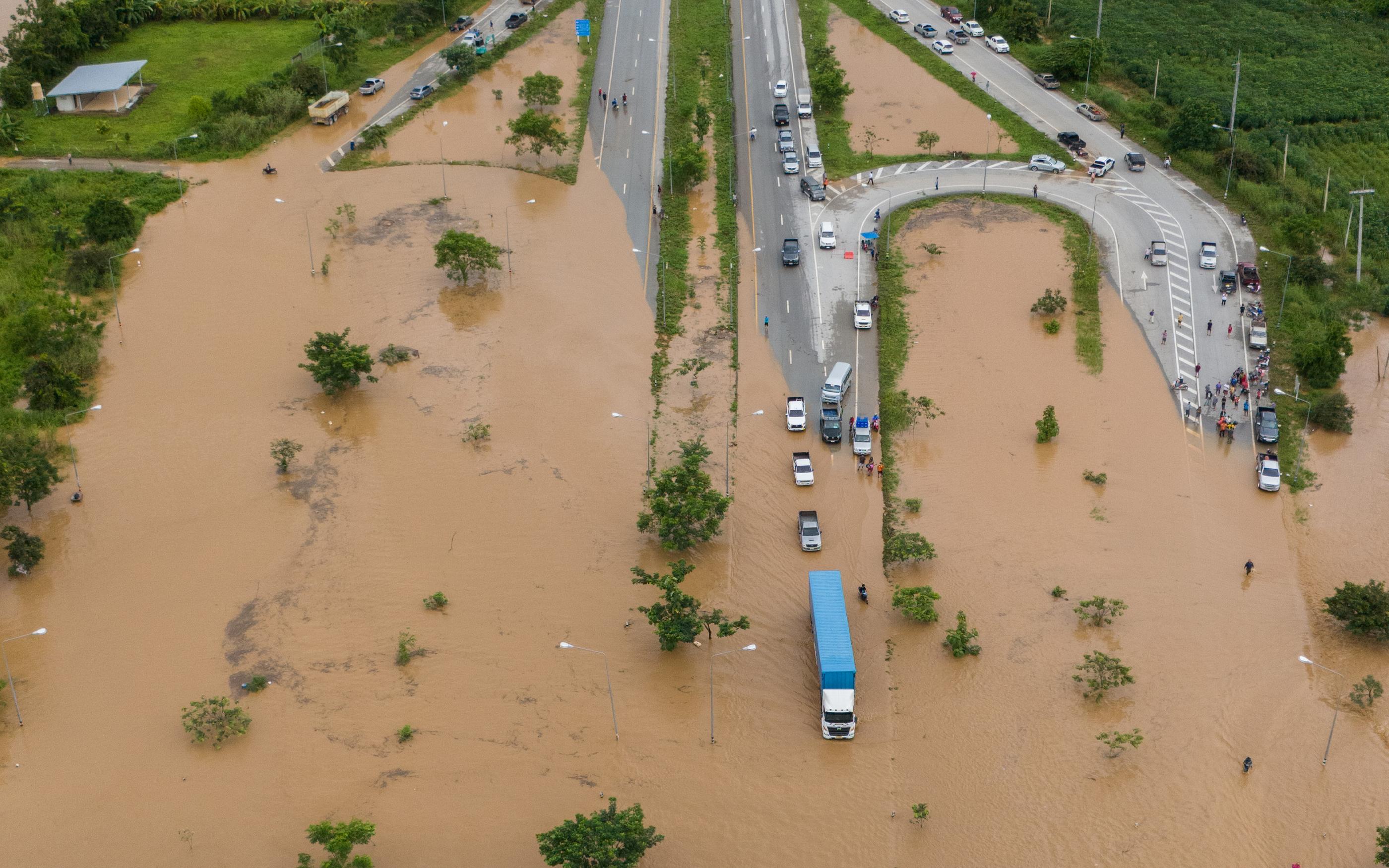
The Western North Pacific saw a slightly below-average typhoon season with 23 named storms, 15 typhoons and nine intense typhoons (equivalent to Category 3+ hurricanes), compared with the 1991 – 2020 average of 25, 16 and nine, respectively.[1] Total basin activity, measured by the Accumulated Cyclone Energy (ACE) Index, was 204 — almost one-third lower than the 1991— 2020 average. The reduced activity was in part due to the late start of the season, with the first cyclone not developing until May 23, the fifth latest start on record.
Despite lower-than-average storm counts, 18 made landfall, with nine at typhoon strength. The season was the deadliest since 2013, with approximately 1,200 fatalities, primarily due to Typhoon Yagi. Economic losses for the year were over $20 billion, while insured losses were significantly lower at $2 billion to $3 billion, reflecting a significant protection gap.
18storms made landfall, with nine at typhoon strength
1,200fatalities primarily due to Typhoon Yagi
$20bin economic damages
$2-3bin insured losses
Western North Pacific sea surface temperatures (SSTs) were above average in 2024, but cyclone development was close to average, likely due to the transition from El Niño to ENSO-neutral conditions, which increased both atmospheric stability and vertical wind shear. However, those storms that did form were fueled by the above average SSTs, and some were extremely damaging.
Three particularly notable aspects of the season stood out: Typhoon Shanshan, Typhoon Yagi and six consecutive storms that hit the Philippines within one month.
Shanshan strikes Japan
Typhoon Shanshan struck Japan in August 2024 as one of the strongest typhoons to make landfall in the country in recent decades. Sustained winds exceeded 130 miles per hour (equivalent to a Category 4 hurricane). Exceptionally high rainfall totals were reported due to its slow translational speed, with some areas receiving over 800 millimeters in a five-day period, resulting in severe flooding and landslides.
The storm underwent rapid intensification near Japan’s Amami Islands due to favorable conditions: low vertical wind shear, unusually warm sea surface temperatures and high ocean heat content. Climate change has been linked to the increased intensity of such storms, with typhoons as strong as Shanshan now around 36% more likely compared with preindustrial times.[2]
Economic and insured losses were relatively small, both at less than $1 billion in part because the storm affected areas with lower exposures. Other storms of comparable intensity that have impacted Japan in recent years have resulted in far higher insured losses. For example, Typhoon Jebi in 2018, which impacted the cities of Kobe, Osaka and Kyoto, resulted in insurance claims totaling up to $14 billion — an order of magnitude higher than from Shanshan.
Yagi: A costly and deadly Typhoon
Yagi (also named Enteng), the first super typhoon of the 2024 Western Pacific season, struck Southeast Asia and South China in early September (Figure 1).
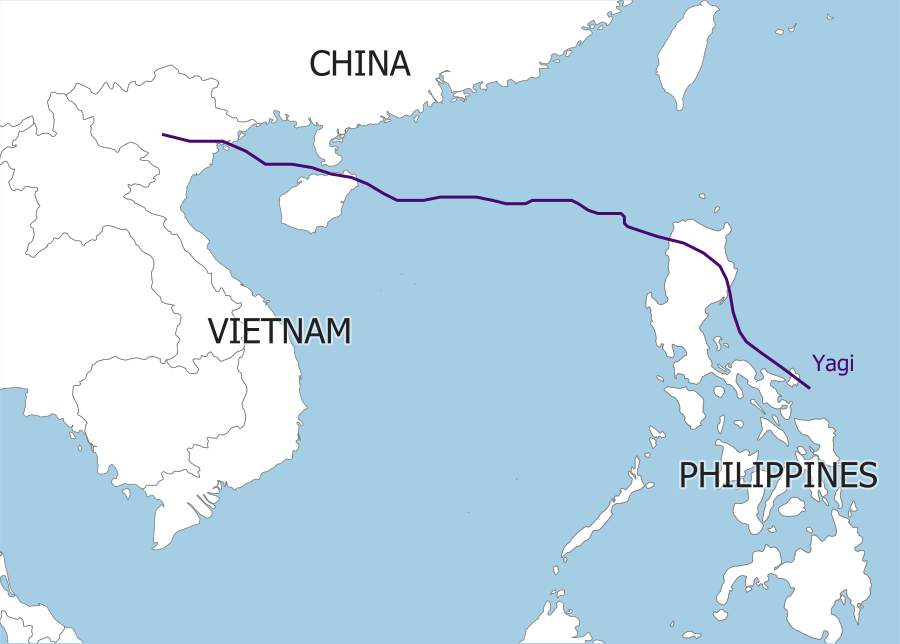
Figure 1. The track of Typhoon Yagi as it moved east to west from September 1 to September 7, affecting the Philippines, China and Vietnam.
Data source: IBTrACS
After making landfall as a tropical storm in Luzon, the largest island of the Philippines, Yagi rapidly intensified over the South China Sea due to unusually warm waters, reaching wind speeds of 160 miles per hour (a Category 5-equivalent hurricane). This sudden change left little time for preparation before the storm impacted Hainan, Guangdong and Northern Vietnam. Unusually strong winds and heavy rainfall extended as far inland as Myanmar, Laos and Thailand. With sustained wind speeds exceeding 150 miles per hour at landfall — equivalent to a Category 4 hurricane — Yagi was the strongest autumn typhoon to affect the Hainan province of China and the strongest ever to hit Vietnam, with wind speeds around 135 miles per hour. The storm led to 800 fatalities and caused economic damages of over $15 billion, ranking it among the top 10 costliest inflation-adjusted Western North Pacific typhoons on record. Insured losses were limited to around $1 billion due to low insurance penetration in South China and Vietnam.[3]
150+ mphwind speed at landfall
800fatalities
$15b +in economic damages
$1bin insured losses
Historically, the South China Sea has served as a "natural buffer," weakening tropical cyclones passing through the Luzon Strait due to atmospheric and oceanic environments unfavorable for typhoon intensification. However, climate change has reduced this effect by increasing both sea levels and sea surface temperatures, raising the risk of strong typhoons reaching southern China and Vietnam.[4]
Unprecedented storm clustering affects the Philippines
Typhoon clustering was a particularly striking feature of the 2024 season, with six separate storms affecting the Philippines within 30 days (Figure 2).
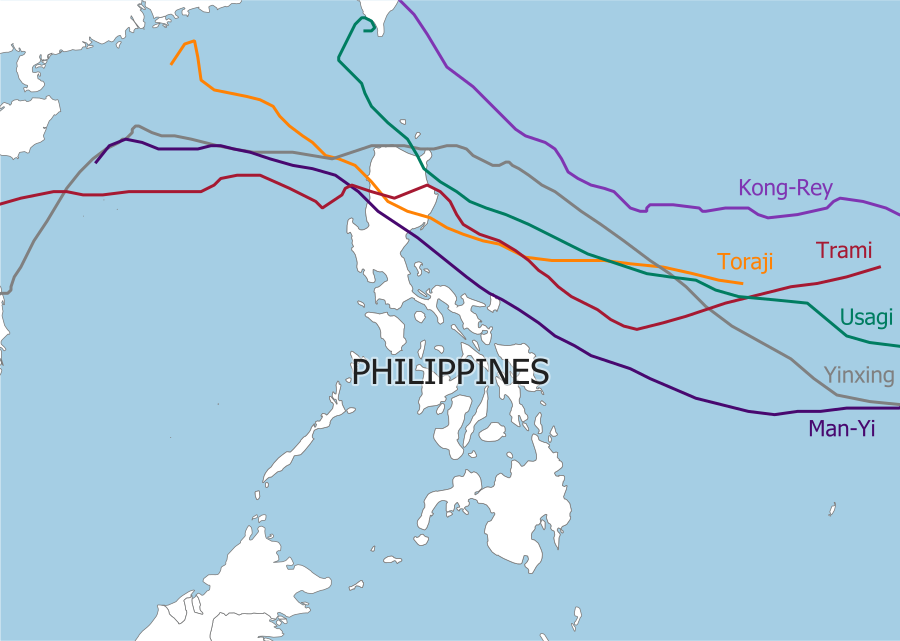
Figure 2. The tracks of the six tropical cyclones that affected the Philippines within 30 days (September 1 to November 2, 2024). The cyclones moved from east to west.
Data source: IBTrACS
Four were simultaneously active in the basin in November — the most for that month since reliable records began in 1951. All storms that made landfall did so on the northern island of Luzon, affecting over 13 million people, displacing more than half a million and causing hundreds of fatalities. The series of typhoons strained emergency response systems, leaving communities little time to recover between storms. The National Disaster Risk Reduction and Management Council estimated that economic losses were in the region of $500 million.
Researchers found that climate change played a significant role in this unfortunate, rapid sequence of typhoons. The conditions that allowed this series of storms to develop, including warm seas and high atmospheric humidity, were 1.7 times more likely to occur today than in pre-industrial times. Of the six storms, three — Man-Yi, Usagi and Yinxing — made landfall as major typhoons (wind speeds over 112 miles per hour), a phenomenon estimated to be 25% more likely due to human-induced warming.[5]
References
- National Oceanic and Atmospheric Administration (NOAA). Monthly Report. (2024) Return to article
- Grantham Institute – Climate Change and the Environment. Typhoon Shanshan. (2024) Return to article
- Insurance Asia News. Yagi third costliest typhoon in Asia with $1Bn insured loss. (2024) Return to article
- Sun, J.et al. Sea level rise, surface warming, and the weakened buffering ability of South China Sea to strong typhoons in recent decades. Sci Rep 7, 7418 (2017) Return to article
- World Weather Attribution. Climate change supercharged late typhoon season in the Philippines, highlighting the need for resilience to consecutive events. (2024) Return to article
Author

Contact