Key takeaways
- A single software flaw or shared blind spot can cause thousands of AI-enabled machines to fail simultaneously, creating enterprise-wide risk.
- AI-related losses can fall between traditional insurance coverages as cyber, operational and physical risks, potentially leaving organizations with unexpected gaps.
- When physical AI causes harm, responsibility may be shared among the manufacturer, software developer, operator and maintenance provider, complicating liability and insurance.
Board members and senior executives are learning that governance questions change when AI moves beyond screens and connects to physical devices. Its errors can lead to injury, damage and liability.
What is physical AI?
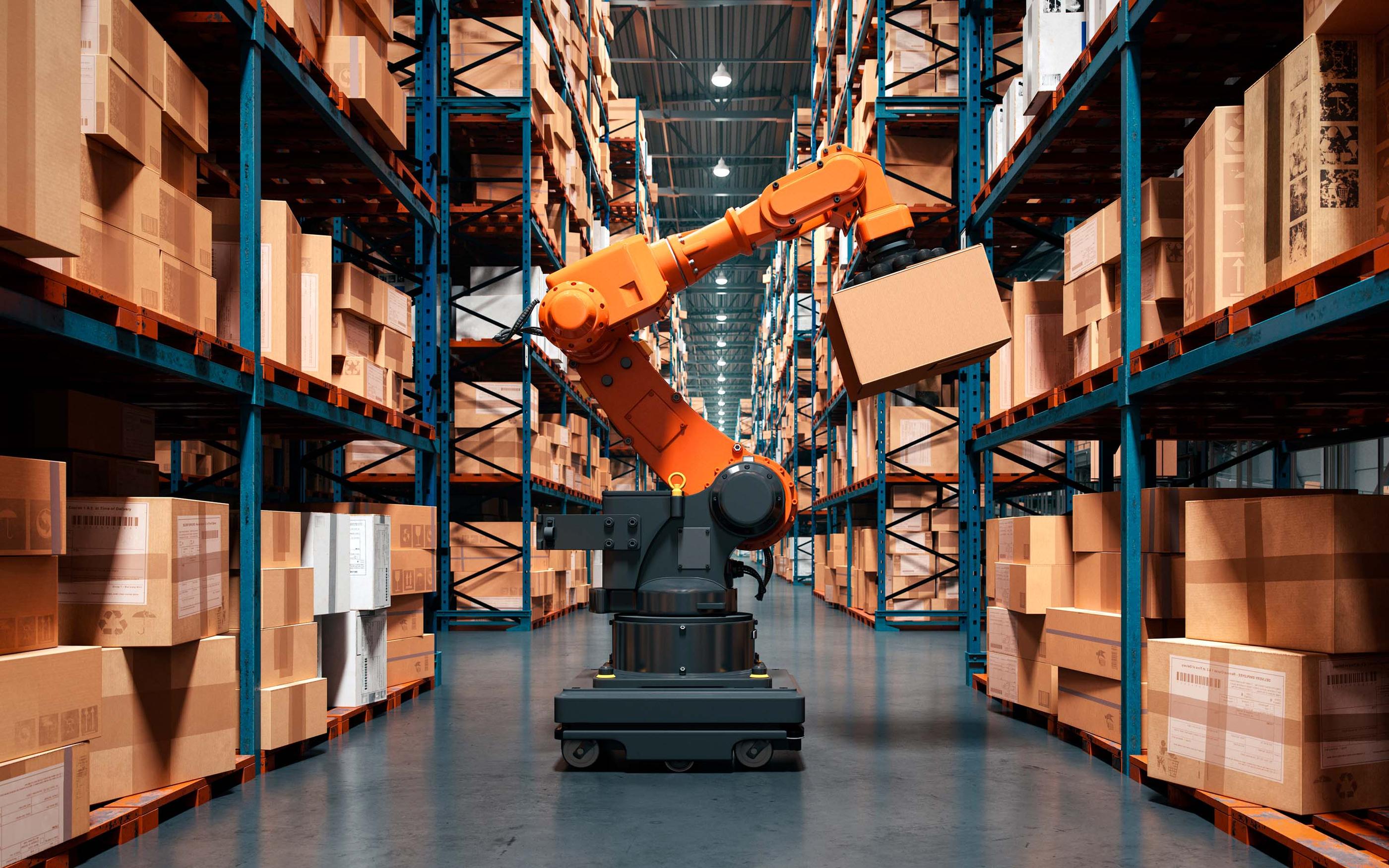
Physical AI is artificial intelligence that perceives, reasons and decides through machines that sense, move and act in the real world. Examples include industrial and mobile robots, autonomous vehicles and equipment, automated warehouse and manufacturing systems, drones, surgical devices and humanoid robots.
How does physical AI differ from traditional robotics and automation?
With conceptual roots tied to Norbert Wiener’s work in the 1940s, engineers and researchers have used names for the control systems of robots and automation such as embodied intelligence, robot learning and cybernetics. The term physical AI appeared as sophisticated autonomous systems developed the capacity for more advanced decision-making, including operating outside of factories and warehouses in public spaces such as roads, hospitals, stores and private homes.
Aslan Miriyev and Mirko Kovač formally defined physical AI in Nature Machine Intelligence in November 2020, describing it as a domain in which a machine’s body, sensing, actuation and control are developed together rather than separately. Metin Sitti’s “physical intelligence” paradigm followed in 2021. Nvidia CEO Jensen Huang used the term at GTC in 2024 and declared at CES in January 2025 that “the next frontier of AI is physical AI,” after which its usage proliferated in business and investor conversations.
Why does physical AI matter to boards and C-suites?
Physical AI impacts strategic and operational decisions:
- AI models make operating decisions: Traditional industrial robots follow programmed sequences, while AI-enabled systems determine and execute their own steps toward a goal. The behavior of AI-enabled machines can be difficult to predict, test, supervise and reconstruct after an incident
- Machines operate outside of controlled spaces, encountering unprogrammed situations: Unlike traditional industrial robots, humanoid robots and autonomous vehicles increasingly operate alongside people under less predictable circumstances. This complicates supervision, maintenance and liability
- Market economics are scaling quickly: Morgan Stanley estimates the humanoid robotics market could reach $5 trillion by 2050, with nearly one billion robots in use, as production scales and prices fall. However, robot density, the most widely cited automation measure (representing the number of installed industrial robots per 10,000 manufacturing employees according to the International Federation of Robots), lags 18 to 24 months, counts only industrial robots in manufacturing and omits many current physical AI applications
- Adoption and supply chain risk are unpredictable: Software diffuses at the speed of downloads, but robotics depends on capital replacement cycles, hardware development, safety certification, facility retrofit, supervisory skills and operational trust. Parts fail and are subject to supply chain limitations, and repair capacity can slow recovery
- Physical safety becomes more important: Health and safety has ranked as the top-reported risk in WTW’s Global Directors’ and Officers’ Survey since 2024. AI risk rose sharply in 2026, yet relatively few directors reported confidence in their AI oversight skills
- Failures can occur across a fleet: A flawed software update or shared blind spot can cause thousands of units running identical models to fail simultaneously
New forms of risk
WTW’s Sonal Madhok and Omar Samhan explain in Insuring physical AI: How robotics is reshaping risk and liability, that risk expands as AI moves from software into machines. Software-based AI can create intangible risks such as bias, intellectual property infringement, privacy breaches and incorrect decisions. Robotics adds the potential for collisions, fires and operational incidents. Cyber threats take on a physical dimension, as compromised robots may damage property or injure people rather than simply expose or lose data. As adoption grows, the boundaries among cyber, operational and physical risk blur.
The convergence creates overlaps and gaps in insurance coverage. Insurers are clarifying coverage through exclusions and endorsements. Some cyber policies now explicitly address AI-driven incidents such as algorithmic errors, and several major carriers exclude AI-related damages from general liability policies, creating a potential silent coverage gap.
Who is liable for harm caused by physical AI?
Physical AI broadens the liability landscape and creates shared responsibility. Consider a warehouse robot that drops a heavy box on a contractor, a medical robot that injures a patient or a home robot that causes injury. Liability could fall on the manufacturer for a design flaw, the software developer if an algorithm misjudges balance, the operator if training is inadequate or the maintenance provider if a component fails. The resulting exposure may span general liability, product liability, cyber, workers compensation and business interruption coverage.
What are key actions for boards and C-suites?
Boards and senior leaders increasingly are taking the following actions:
- Require human controls before autonomous equipment operates near people or in production: Assess failure modes and safety hazards for each application, establish permissions and geofencing, confirm who holds authority to stop a fleet, validate software updates before release, and record and escalate near-misses. Keep human supervisors trained and ready to intervene if a system deviates from safe parameters
- Bring physical AI into the existing AI oversight structure: Determine which board committee(s) own it, what management reports and what triggers escalation. Monitor evolving robotics and AI regulations and do not treat autonomous equipment as a facilities or procurement matter
- Update vendor contracts and procurement standards: Require vendors to disclose their model and harness architecture, update validation practices, and report processes for managing changes to underlying models. Clarify how liability is allocated among the manufacturer, model provider, integrator and operator
- Assess whether insurance and contractual risk transfer match the exposure: Review general liability wording for AI exclusions, confirm how cyber-caused physical damage is treated and examine specialist products emerging for autonomous systems
- Address workforce implications early and explicitly: Require a workforce impact analysis in the investment case. Ensure it covers role redesign, reskilling, supervisory capability for human-machine teams and the safety and wellbeing implications of working alongside autonomous equipment
- Assign clear accountability for physical AI risk: Hold a chief operating officer, chief safety officer, chief AI officer or equivalent responsible for areas such as fleet safety monitoring, software update validation, audit trail completeness and incident response
- Monitor regulatory changes: Stay ahead of quickly changing robotics and AI regulations worldwide, including the EU AI Act’s high-risk requirements and emerging U.S. state-level legislation
As physical AI moves from pilots to production, boards and senior leaders increasingly expand their governance focus beyond AI models to the machines and processes they control. Effective oversight enables organizations to operate safely, meet regulatory expectations and translate automation investment into durable business value.
A version of this article originally appeared on Forbes on September 15, 2026.
Contact

Campaign
Navigating AI risks and opportunities

Related solutions

Enterprise Risk Management Consulting
With our expertise and tailored solutions, we improve complex enterprise risk management by identifying, quantifying and mitigating unpredictable, interconnected risks.
AI Workforce Transformation
Turn AI ambition into workforce redesign for real business value.
Cyber Risk Management and Insurance
Safeguard your digital infrastructure and assets against cyber threats with our tailored coverage solutions and experienced teams.