The European Union (EU) Pay Transparency Directive aims to tackle the gender pay gap by mandating companies to report on their pay structures and promote transparency in remuneration practices. In this article, we will explore the reporting requirements outlined by the EU Pay Transparency Directive, discuss its potential impact on businesses and gender equality, and consider how organisations can leverage technology to help.
The EU Pay Transparency Directive requires companies with 100 or more employees operating within the EU to disclose information regarding their pay structures. Specifically, Article 7 states that workers have the right to request and receive written information about their individual pay level and the average pay levels for workers in the same or equivalent positions, as well as the average pay of a man and a woman doing the same or similar work. By shedding light on pay disparities, this directive aims to encourage companies to address gender-based wage gaps and promote fairer remuneration practices.
The reporting requirements encompass various aspects of pay equality. Employees must know and understand the following:
- What determines their total rewards package – inclusive of the value of their pay and benefits – as well as their pay progression
- The average pay of immediate peers doing similar work, broken down by gender
- Pay rate for their role and others, viewable in new job postings
- Gender pay gaps within the organisation for every level/category of work within the organisation
Naturally, this information will help employees assess whether or not they are paid equitably and lead to questions, particularly for those employees paid below average. Employers must be prepared to answer these inquiries in a timely and consistent manner.
How technology can help
With the vast amount of data that needs to be collected, analysed, and reported, technology can streamline and automate the process, making it more efficient and accurate.
Data collection
The systems you already have in place can likely enable you to gather and organise pay-related information. Most payroll systems, HR databases, and performance management systems come with tools to collect data, ensuring comprehensive and accurate reporting. By automating data collection, typically with help from your IT department, you may reduce the risk of human error and save valuable time and resources over time.
Pay Equity and Transparency
We help you become confident on pay equity and ready for greater pay transparency.
Related content
Analysis
Advanced analytics tools can process large datasets, identify patterns, and generate meaningful insights. This enables companies to analyse their pay structures, identify gender pay gaps, and assess the effectiveness of their remuneration policies both within the company as well as within roles with matching responsibilities.
- WTW offers tools to help, such as our Compensation Software or tap into our compensation strategy and design advice from top experts
- WTW partners with PayAnalytics to help clients analyse compensation and pay equity
Reporting
Technology that helps with the previous steps can also generate reports in user-friendly formats, making it easier for companies to comply with the company-wide data reporting requirements of the directive and provide accessible information to employees, stakeholders, and regulatory authorities.
As we’ve already discussed, workers will have the right to request and receive information about their individual position and how it compares to others in similar roles. Organisations will need to plan ahead to fulfill these requests in a timely manner, either by completing a report individually, on-demand with each request, or by sharing this information with all individuals proactively via annual statements or a real-time digital communication tool.
3 ways the right compensation platform supports pay benchmarking
Move on from spreadsheets.
Embark can help employees see where they fit in
WTW’s Embark software offers a powerful solution for companies to effectively communicate pay transparency to their employees in a personalised and individualised way. With Embark, employees can get a clear picture of where they stand within their salary range, their role within the organisation, as well as how men and women measure up on average within their role throughout the company.
- Real-time data feeds from your HRIS and payroll systems, paired with an annual assessment of gender pay by job level/role
- Targeted messaging to offer context as to why employees may sit where they are within the pay range
- Additional details about the company’s pay philosophy, career development, and the role the employee is currently in
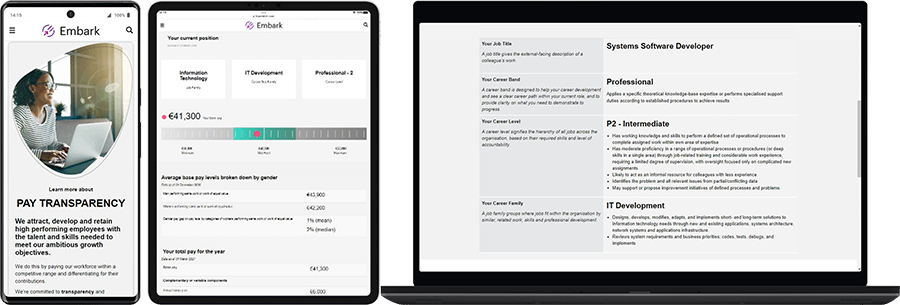
How Embark technology help pay transparency reporting.
This personalised approach to pay transparency empowers employees to have a clear understanding of their compensation and its components, fostering trust and transparency within the organisation. It not only enhances employee satisfaction and engagement but also promotes a culture of fairness and trust within the organisation.
The EU Pay Transparency Directive represents a significant step towards achieving gender pay equality by promoting transparency and accountability in remuneration practices. By requiring companies to report on their pay structures, the directive aims to address the gender pay gap and foster fairer compensation systems.
While businesses may face administrative challenges, compliance with the reporting requirements presents an opportunity for organisations to review and rectify any gender pay disparities. Ultimately, the directive aims to create a more equitable and inclusive work environment, benefiting both employees and businesses alike. Technology can help organisations not only meet the minimum requirements, but also take the employee experience to the next level.
Contacts


Embark
Delivering a better employee experience needn’t be complicated