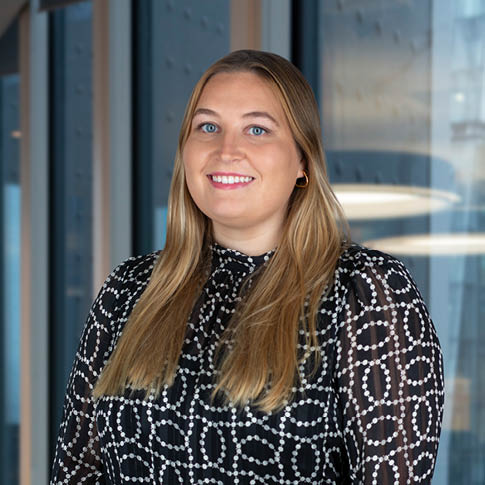
In this episode of the Global Marketplace Insights podcast, Charlie Dubec-Herlihy, Associate Director, Global Aviation and Space, is joined by Stephen Lewis, Executive Director, Global Aviation and Space, to explore how capacity, pricing and geopolitical events are shaping the marine insurance market in early 2026.
Transcript for this episode
STEPHEN LEWIS: If you have a client that can present strong data, has a good claims record, and can articulate robust risk management culture, you're probably going to get a better run in the market and therefore better results.
SPEAKER 1: Welcome to Global Marketplace Insights by Willis, a WTW business, a podcast series showing the latest trends from the specialty and regional insurance markets.
CHARLOTTE DUBEC-HERLIHY: Hello, and welcome back to the Marketplace Insight Podcast series, where we're discussing the current state of the aviation and space market as we head into the final quarter of 2026. I'm Charlie Dubec, associate director, and I am delighted to be joined today by Stephen Lewis, executive director. Stephen, we're currently hearing that the market is stable, which often people assume means business as usual. Is that really what we're seeing?
STEPHEN LEWIS: Yeah, from a broader perspective, it can look relatively stable, I suppose, but there's still a lot of capacity. Prices seem to be relatively flat. But I think when you drill down and you look at individual risks, things are a bit different. I think what's happening is underwriters now want to look much, much more closely at each risk. They're spending a lot more time analyzing the data. They're coming back. They're asking a lot more questions. And it's not a traditional soft market as such. There's definitely a lot more work that needs to be done by the broker and even by the client.
CHARLOTTE DUBEC-HERLIHY: OK, so it'd be fair to say that buyers can achieve favorable outcomes, but the process of getting there is a bit more demanding and selective?
STEPHEN LEWIS: No, absolutely. One phrase that we tend to use at the moment is differentiation. It's a market of differentiation. Underwriters are actually trying to see which clients are going to help them contribute towards the profitability of their book. So yes, there is capacity, and they will see umpteen risks per day.
But what they're trying to do is make sure that they can actually justify internally which ones they're writing, what coverage they're giving, and for what price. So what that means is that if you have a client that can present strong data, has a good claims record, and can articulate robust risk management culture, you're probably going to get a better run in the market and therefore better results.
CHARLOTTE DUBEC-HERLIHY: Thanks, Stephen. That's really useful insights for our client. Just touching on the claims trend and the large losses we've seen in the sector recently, why have we not seen a stronger reaction on pricing as a result, would you say?
STEPHEN LEWIS: Yeah, that's a very good question. Again, from the outside, catastrophe losses, they make the headlines. So the man or the woman in the street will be aware that, yes, there are aviation losses, but there aren't as many as there used to be. The market has adjusted for that. So why, when you do get a string of losses, especially last year at the beginning of the year, why doesn't that equate to an increase in premiums? And I think it's competition. There's a lot of capacity.
Absolutely, you listen to underwriters, they want to see the trajectory of premiums going upwards. They absolutely want to see it. They can't do that because there's always another underwriter who's willing to cut a better deal, again, if the client has presented the information well. So again, it's just capacity. It's the old supply and demand. There's a lot of supply. There's a lot of underwriters wanting to write good business.
CHARLOTTE DUBEC-HERLIHY: Yeah, indeed. And one question, as a team, we're seeing being asked more frequently by our clients is around limit adequacy. Would you say that's a fair assessment, organizations are starting to reassess historical limits and whether they're sufficient? And what kind of trends are we seeing in that space?
STEPHEN LEWIS: Definitely, definitely. We run something called a maximum probable loss analysis, where we look at a client's client exposures, how much exposure they might have to American passengers, for example. And that calculates what they might expect in a worst case scenario.
We're definitely seeing more clients asking for those analyzes now, because as you say, Charlie, those limits might have been in place for a number of years, and our clients are having to answer questions to their management as to, are those limits still adequate?
So we're seeing a lot more people asking for analysis of whether a bigger limit, if you like, is desirable. And some are making that choice and are increasing the limit in a stable market with good competition. It's a good time to do that, where the premium impact of increasing the limit is going to be relatively low.
CHARLOTTE DUBEC-HERLIHY: Yeah, indeed. I guess the capacity is helping to achieve those larger limits at a competitive price.
STEPHEN LEWIS: Yeah.
CHARLOTTE DUBEC-HERLIHY: And it's a good time to revisit those historical limits. We've touched on claims earlier. How else would you say insurers are evaluating risks today, and what are their big areas of focus?
STEPHEN LEWIS: Yeah, I glossed over that just a few minutes ago. I think underwriters are really trying to understand what the exact exposures are on a particular risk. So they're looking at a number of areas, whether it's they've got a lot of American exposure, whether it's a type of risk which is low in frequency but high in severity or vice versa.
They're looking at claims, history, contractual liabilities. There's a lot more on that. We didn't used to see that. But now underwriters do, especially for a manufacturer or an MRO. They are saying, what is the general state of the contracts and the indemnity language with their customers. That's looked at much more closely.
So they need to make sure, as I said internally - the point is, if there's a loss in a particular client, a particular area, they, the underwriter, will be asked, what did you do to understand the risk? Why did you write the risk? What's your justification? If they can demonstrate that, that's fine. So part of our job is to help articulate that to the insurers, to make them able to do that internally. So it's almost like a continuation of the broker's role, if you like.
CHARLOTTE DUBEC-HERLIHY: You just touched on some key things that we as brokers need to do to help prepare the submission for the market. But what practical advice would you give buyers whilst they're preparing for a renewal?
STEPHEN LEWIS: We always talk about the importance of making sure that insurers understand the client's business. It's also very important, I think, that the insureds, the clients, understand what insurers are looking at and what they value, and it's a continuity of that mutual engagement we have through client visits, through underwriter visits to go and see the clients.
But if you start that early, if you have an open dialogue and give enough time for underwriters, maybe, to ask further questions, which they will do, and we're definitely seeing a lot more of that, you're going to get a much better result. So it's starting early, having an open engagement, and being very transparent and understanding each other, if you like.
CHARLOTTE DUBEC-HERLIHY: So yeah, I think it is true that, still, very much remains a relationship business, isn't it?
STEPHEN LEWIS: Definitely.
CHARLOTTE DUBEC-HERLIHY: So just, if you could, just touching on the wider aviation insurance development, such as reinsurance and the war risk capacity, how are we seeing things in those sectors developing?
STEPHEN LEWIS: Yeah, reinsurance conditions I think are relatively consistent with what we've been seeing lately. Capacity is strong. We haven't seen any decisive corrections coming from the reinsurance market, which would then follow through and impact the direct buyers.
War is an interesting one. Again, the man on the street, you'd see all the conflict happening, both in Ukraine and in the Middle East at the moment, and you would think war capacity. And for the aerospace market, you're really looking at excess war, terrorism, liability coverage, and manufacturers hull.
You'd think that some of that capacity would be drying up or that prices are going up, but I don't think they are. I think what we saw was, after the Russian invasion of Ukraine, prices went up so steeply that it attracted more capacity, which has been had the effect of bringing those prices down.
So despite what is happening in the world at the moment, I think we're seeing the prices there relatively flat, which is a bit of a surprise-- if not flat, actually reducing here and there. But, of course, it is an unstable environment. And I think of all of the markets, it's the war market that reacts most quickly to any change. So just keep an eye on what's happening in the geopolitical world.
CHARLOTTE DUBEC-HERLIHY: Yeah, so basically stable across all our sectors at the moment. But we'll watch and see, and who knows how things could progress.
STEPHEN LEWIS: It's stable, but it is subject to volatility, which by the definition of the word could happen very, very quickly.
CHARLOTTE DUBEC-HERLIHY: And looking ahead, what do you think could change the direction of the market? We've said it's broadly stable. What do you think might change that?
STEPHEN LEWIS: I was discussing this with an underwriter this morning. And we always hear the term a market changing loss. And I'm not sure that's the case anymore, because I think, some years ago, after one particularly nasty loss, yes, it was an airline loss, the market immediately put rates up by 30%.
That was very, very short lived, because the fact it is a market underwriters are free to, if you like, undercut each other or to provide competition. That started happening. So those increases, they disappeared very quickly. And actually, the market then corrected and started giving reductions following that.
And also, if underwriters are being a lot more selective, in other words, it's not just a blanket direction, like the whole market is going up by 20%. Underwriters are being much more selective. That gives them the ability to select, within all the risk that they're offered, which ones they want to at what price. So I don't think, necessarily, it's going to be a big market changing loss event, if you like. A series of events, maybe, but those series of events would probably have to lead to some withdrawal of capacity, which could be driven by, again, by reinsurance.
So the last time we saw the market change a little bit, unfortunately, it was just before COVID, which was really bad timing for our clients. There was a big exodus of capacity from the market, and we saw rates going up for about two years in a row. And again, that started to come down because, of course, the market is cyclical. As prices go up, capacity is attracted and prices remain level or are brought back down again.
And then finally, of course, the geopolitical volatility in the world. That may, again, not lead to any blanket change in pricing, but it may well lead to restrictions in coverage, in restrictions in coverage for geographical limits for a client, operations to certain regions, and maybe even some coverage. War type coverage could change.
CHARLOTTE DUBEC-HERLIHY: Thank you. That's really interesting. And I think it comes back to the point that while capacity is surplus, any of quick change is less likely. And finally, as we look towards 2027, what are the key takeaways for our aerospace buyers?
STEPHEN LEWIS: It's the same message that it's always been. Engage early. Be open, be transparent. Share as much information as you can. Understand what the underwriters are looking for. And if you don't understand, ask your broker. Your broker will help you out. And yes, the market will be trying to change direction, but navigate your way through that with good preparation and early engagement.
CHARLOTTE DUBEC-HERLIHY: Stephen, thank you for your contribution to this episode. And for our listeners, thanks for joining this episode of The Market Insights Podcast. We look forward to joining you on the next one.
SPEAKER 1: WTW offers insurance related services through its appropriately licensed and authorized companies in each country in which WTW operates. For further authorization and regulatory details about our WTW legal entities operating in your country, please refer to our WTW website.
It is a regulatory requirement for us to consider our local licensing requirements. The information given in this podcast is believed to be accurate at the time of publication. This information may have subsequently changed or have been superseded, and should not be relied upon to be accurate or suitable after this date.
This podcast offers a general overview of its subject matter. It does not necessarily address every aspect of its subject or every product available in the market. And we disclaimer all liability to the fullest extent permitted by law. It is not intended to be, and should not be, used to replace specific advice relating to individual situations, and we do not offer, and this should not be seen as legal, accounting, or tax advice.
If you do intend to take any action or make any decision on the basis of the content of this podcast, you should first seek specific advice from an appropriate professional. Some of the information in this podcast may be compiled from third-party sources we consider to be reliable. However, we do not guarantee and are not responsible for the accuracy of such. The views expressed are not necessarily those of WTW. Copyright WTW 2026. All rights reserved.
Disclaimer
Podcast guests

Listen to this episode on:
PODCAST SERIES
Global Insurance Marketplace Insights Q3 2026