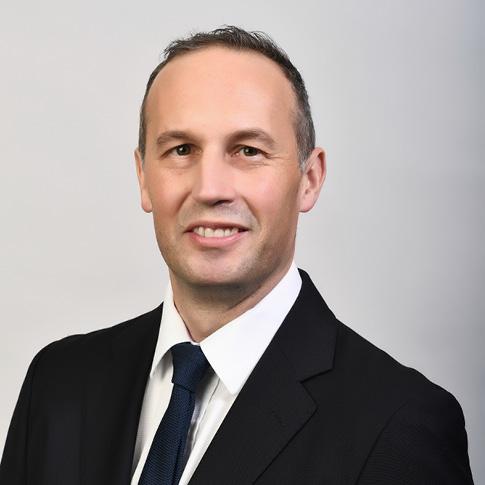
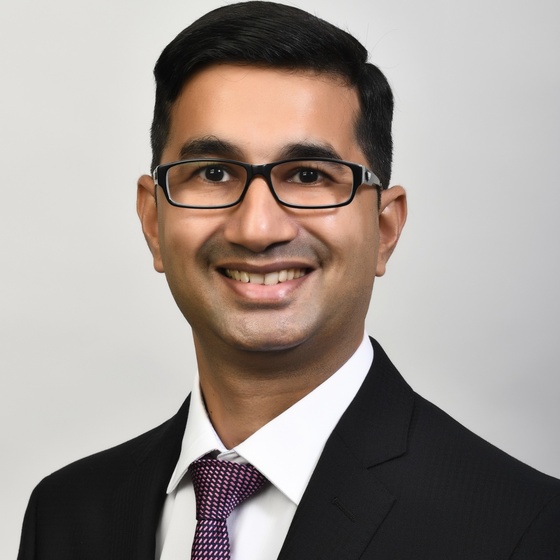
In this episode of the Global Marketplace Insights podcast, Ben Dunston, Placement Leader for Asia and Namit Mahajan, Head of FINEX, for Asia provide insights into the current state of the insurance market in Asia.
Transcript for this episode
NAMIT MAHAJAN: The clients that can present a clear and compelling risk story are not just getting a good price, they are getting higher limits, lower deductibles and more importantly, consistent coverage terms.
SPEAKER 1: Welcome to Global Marketplace Insights by Willis, a WTW business, a podcast series showing the latest trends from the specialty and regional insurance markets.
BEN DUNSTON: A very warm welcome to the Asia insurance market update. We'll talk through what matters to most to clients right now. Where rates are heading, how insurers are allocating capacity and coverage, and the practical steps to take in your next placement. I'm Ben Dunston, the placement leader at Asia, and I'm joined by Namit Mahajan, who leads financial lines for Willis in Asia. Namit good to have you.
NAMIT MAHAJAN: Thanks, Ben. There's a lot to cover, so let's dive straight in.
BEN DUNSTON: Thanks. So we asked our business and our clients what mattered to them. And the first question that came back on behalf of the clients is, what are the current and forecasted rate trends in Asia? And so I'll take this one first and maybe pass it to you after, if that's okay. The headline in Asia is that it remains firmly a buyer's market. The latest industry data shows Asia commercial rates are down 5% in the second quarter of 2026. But actually, it's important that you look at the entire progress during the year and not quarter by quarter. But this is actually the eighth consecutive quarterly decline. So things have definitely been moving south. And that's mirrored in the global trend as well. Property was down 5%, casualty down 3%, financial and professional lines 7%, And cyber led to fall up 8% as well. However, there is a lot of caveats within that information. It's very important to mention for well-managed non-cat exposed risks in appetite, we're often seeing more rate decrease than that. Now what have you seen.
NAMIT MAHAJAN: I think importantly, these trends are genuinely broad based, Ben, and are not confined to any single line of business. The record levels of industry capital and intense market competition continue to support attractive terms across property, casualty and broader financial lines. The clients that can present a clear and compelling story are not just getting a good price, they are getting higher limits, lower deductibles and more importantly, consistent coverage terms.
BEN DUNSTON: This is a good distinction, Namit. Actually, the rates is not just about rating decreases, also benefits to the client across other parts of the terms and conditions and the policy. And actually, it's worth stressing that Asia is not a single market. Vietnam actually rose on its regulatory pricing tariffs. Korea and Taiwan saw steeper falls with property down around 15% mark. Japan however, is a casualty outlier, with localized increases. So look the trend is soft, but the texture is very country specific. It's driven by reinsurance, it's driven by government policy and each market's stage of maturity.
On the forecast going forward, some in the market argue that this soft market cycle is actually fragile. The market may actually run out of premium base if it continues to drop, at which stage really it's only holding up because we haven't had a major catastrophe. And some people believe that one big event could turn it quickly, although I'm not personally convinced that's the case. Namit, what's your view?
NAMIT MAHAJAN: It's a very interesting point actually, Ben. And I tend to agree with your views. While a major catastrophe would certainly affect the directly exposed line, I don't believe the broader market is being supported simply by absence of large losses. The reality is that the industry is carrying record levels of capital, as we have mentioned previously, there is intense competition on quality risk. These are structural factors rather than short term conditions. And as an example, if you look at cyber, despite increasing loss activity in the last couple of years, pricing continues to soften due to abandoned capacity and strong competition. So, whilst I believe the pace of softening may moderate in certain sectors, I would expect overall market conditions to remain favorable throughout the remainder of 2026.
BEN DUNSTON: Yeah, demand for insurance is only really building in Asia as well. We're seeing enormous inward investment with data centers above all. The APAC data center investment hit $12 billion in 2025. And I remember seeing data that indicated well over $100 billion by 2030, although these numbers do change with Johore, Malaysia, India and new hubs in China and Japan. And also hyperscaler AI CapEx is still climbing. That plus other industry areas such as logistics and warehousing in Southeast Asia that are tied to shifting supply chain. Really, it's creating a wave of new high value assets that but all need capacity, which speaks to the growth story for the Asia region. Second question that came in Namit, what developments can Asian clients expect in how insurers allocate capacity and coverage on their risks. Do you have a view on that, Namit?
NAMIT MAHAJAN: Absolutely, Ben, I think as mentioned previously, what we are seeing is that capacity in the market is plentiful. And if anything, growing. The global reinsurance capital reached a record $790 billion in early 2026. And in recent reinsurance renewals, property catastrophe rates fell by almost 15%, the largest reduction in more than a decade. The 1 April renewal also saw double digit reductions, including around 20% of Japanese excess of loss property program. India saw a similar story, with loss -free layers going down by almost 20% Financial lines also continue to mirror the same trend, with ample capacity and competitive market conditions delivering favorable outcomes for the client.
BEN DUNSTON: Yeah, and it's important to link the reinsurance market as well with the direct and fac market, because reinsurance relief flows straight through to what insurers can offer the clients as well. We're seeing a lot of it deployed through MGAs. We're seeing an increase in auto follow facilities such as our own Gemini, for example, which offers a slug of capacity that sits behind the lead in almost every product. And it's great for filling a program quickly. And it's there throughout the hard and soft market cycles in future. On coverage, what are you seeing?
NAMIT MAHAJAN: A similar trend Ben. I think the direction is broadly positive. We're seeing broader wordings, bigger sub-limits, but there are certainly pockets to watch. As an example, in cyber, we are seeing insurers are applying greater scrutiny to emerging AI exposures. And we believe as a loss, trends become clearer, the underwriting and coverage will continue to evolve. in property, as another example, cyber exclusions and territorial and communicable disease wordings remain under scrutiny.
BEN DUNSTON: Yeah, it's true. And, the clear exception to this softness is anything political, political violence exposed or war exposed. Middle East war rates, for example, have repriced several times over the war and PV exclusions are being tightened. And of course, the knock on effect of that is any supply chain exposure, is the other thing that's linked to the geopolitics and the regional conflicts around the world at the moment. So this impacts everything with a delivery time, notably construction projects as well.
NAMIT MAHAJAN: So the key takeaway for clients, Ben, is that there are plenty of capacity in the market and insurers remain keen to deploy it, and buyers are generally benefiting from improving terms and conditions.
BEN DUNSTON: Third question that came in, what strategic advice should Asian clients consider for upcoming placements? Namit, if you had to give a client a short playbook for this market, what would that be?
NAMIT MAHAJAN: Ben, my playbook would have four key steps. Number one, start early. Engage market 90 plus days ahead of renewal to secure capacity. And especially when you are touch cash before cover markets like Japan, Korea, and India. Number two, tell your story. Highlight risk improvements, loss prevention and future plans. In a data driven soft market, the quality of your submission directly drives the outcomes you are looking for. Number three, explore different capacity bases. You need to test regional, speciality and London markets. Conditions vary widely and your broker should be pressure testing these markets to get the most competitive capacity. And number four, use risk and analytics. Quantify and justify your limit strategy rather than just simply benchmarking against peers.
BEN DUNSTON: I'd add one more as well, use the savings strategically. Clients should reinvest the premium reductions into resilience so they can have options to buy more, limit their hold options to explore deductible reductions, move restrictive endorsements or additional coverage, or even lock in multi-year deals. These can often carry an extra 5% to 10% discount in year two, so this is the best buying window for around 7 to 10 years, but it won't last forever. So lock in the gains now. So Namit, in closing, do you feel like there's any major domestic market developments to watch in H2?
NAMIT MAHAJAN: Certainly Ben, a few country level themes are worth keeping on the Radar. Japan's casualty firming, cash before cover regulations in China and detariffing of the property market in India are all live. Local pricing tariffs in a handful of markets continue to run counter to the regional softening. So the picture really is country by country.
BEN DUNSTON: Yeah and although it's not a domestic market issue, we can also look at climate as well. This is especially in the second half of the year where traditionally when we see the impacts of nat cat around the world and the extended El Niño is an issue. When you also look at the last five years of cat losses in the market, each one has been over $100 billion plus. And we always talk about the new normal. But the new normal is really a very extreme number. And that's one place where the underwriters won't follow the softening down if it's the cat exposed. But overall, for Asian clients, I think the message is a really positive one. And the advice that you heard from both Namit and from myself is a well prepared, well told risk has more leverage today than at any point in a number of years gone by. So Namit, thank you very much for your contribution in this podcast.
NAMIT MAHAJAN: Thank you for having me, Ben.
SPEAKER 1: Thank you for joining this WTW podcast, featuring our latest global market commentary. WTW offers insurance related services through its appropriately licensed and authorized companies in each country in which WTW operates. For further authorization and regulatory details about our WTW legal entities operating in your country, please refer to our WTW website. It is a regulatory requirement for us to consider our local licensing requirements.
The information given in this podcast is believed to be accurate at the time of publication. This information may have subsequently changed or have been superseded and should not be relied upon to be accurate or suitable after this date. This podcast offers a general overview of its subject matter. It does not necessarily address every aspect of its subject or every product available in the market, and we disclaimer all liability to the fullest extent permitted by law. It is not intended to be, and should not be used to replace specific advice relating to individual situations. And we do not offer and this should not be seen as legal, accounting, or tax advice.
If you do intend to take any action or make any decision on the basis of the content of this podcast, you should first seek specific advice from an appropriate professional. Some of the information in this podcast may be compiled from third-party sources we consider to be reliable. However, we do not guarantee and are not responsible for the accuracy of such. The views expressed are not necessarily those of WTW.
SPEAKER 2: Copyright WTW 2026. All rights reserved.
Disclaimer
Podcast host
Podcast guest
Listen to this episode on:
PODCAST SERIES
Global Insurance Marketplace Insights Q3 2026