In this episode of the Global Marketplace Insights podcast, Thomas Haddrill, Mohammed AlSudairy and Ahmed Abdel Gawad discuss the current trends and conditions in the insurance markets of Eastern Europe, the Middle East, and Africa.
Transcript for this episode
AHMED ABDELGAWAD: So we're seeing a lot more deployment of capacity in the traditional sense, but also through vehicles like MGAs, facilitation, and structured solutions. So for clients, they're able to access the expert underwriting capabilities as well as capacity in an alternative market like Dubai.
NARRATOR: Welcome to Global Marketplace Insights by Willis, a WTW business, a podcast series showing the latest trends from the specialty and regional insurance markets.
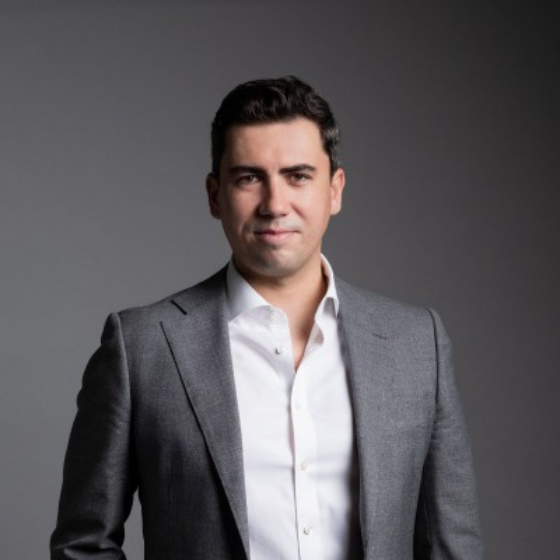
THOMAS HADDRILL: Hello, and welcome back to the Willis's Marketplace Insights podcast series. Today we're discussing the current state of the market in Central and Eastern Europe, the Middle East and Africa or CEEMEA as we refer to it at Willis. I'm Tom Haddrill, I'm the head of placement for the CEEMEA region. I'm usually alone for these updates, but today I'm lucky to be joined by two very distinguished guests.
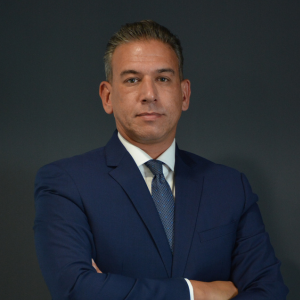
First, Ahmed Abdelgawad , who's head of natural resources for CEEMEA. He's leading our teams and spearheading our proposition in the geography for the global specialty division, which covers upstream and downstream, renewables, power and utilities, and metals and mining. Ahmed is based in Dubai and he covers the whole geography from there.
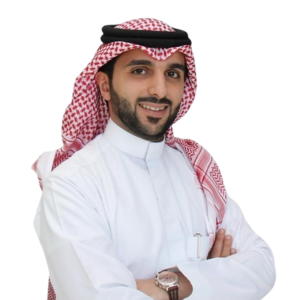
View Full TranscriptI'm also delighted to be joined by Mohammed AlSudairy, the CEO of our newest company in the Willis Group, I think, WTW Saudi Re, our reinsurance broking entity in the Kingdom of Saudi Arabia. It's an incredibly exciting venture, and Mohammed is based in Riyadh and joined Willis earlier this year. Pleasure to have you both with me.
I'll start by situating the conversation a little bit because this region is very broad. We cover a very diverse range of geographies. And earlier this year, I recorded a round up that at that time said that we were seeing market conditions across the region softening. So then as now, the decline was not necessarily as sharp as we're seeing in the UK or North America or the Pacific, but the trend is definitely downwards, which is welcome news for clients. We see this in the CEE region, in South Africa, and a lot of the other larger markets.
But there are regional pockets of variation. So today, with the help of my guests, we'd like to dive into the Middle East much more deeply. MENA (Middle East, North Africa) is one of the top global destinations for investment by Willis at the moment, and we are really very excited by the opportunities to grow our footprint there and to provide value for clients. So with new offices in Saudi Arabia and investment in our presence in the UAE, I think it really is the right time for us to dive in.
So with that, Mohammed, I'd like to turn to you first for a helicopter view of conditions. We've recently come off Monte Carlo globally. We're seeing the conversation to the 1:1 renewals ramp up. We're seeing capital and risk, in fact, moving dynamically into the reinsurance industry. So how's that translating in the Middle East and in Saudi more specifically perhaps?
MOHAMMED ALSUDAIRY: Well, thank you for the time and thank you for giving me the opportunity. Just to give you just a brief about what's happening in the Middle East, there is a new mandate of the local session of 30% local session that is required for local companies in the Kingdom. We're seeing a shift specifically in the treaty market. Less appetite on the surplus lines and more on a quota share perspective that will have a positive impact on clients that they're retaining more and sharing the risks with reinsurers.
We're seeing as well a lot of capacities that are shifting their appetite from purely fact to more of a treaty, because the Saudi market is increasing their limits under the treaty and having more skin in the game, as well writing more business within their treaty capacity. That gave also a positive impact that will reach the goal of the Vision 2030, which is to be 4.5% penetration on the GDP. Currently, we're 2.5%, so it's like double the market within 2030.
So currently in 2024, we were $20 billion GWP. We're expected to reach around $40 billion in 2030. So this will have a positive impact for reinsurers operating in the Kingdom, and as well with insurance companies that are already existing and having a decent capacity under their treaty.
THOMAS HADDRILL: So really rapid growth and a lot of capacity coming in. Ahmed, more specifically for specialty lines business and natural resources, what are the trends you're seeing impacting our clients there?
AHMED ABDELGAWAD: I think it's pretty much the same. We're seeing a huge influx of demand for insurance capacity, a rated insurance capacity in the Middle East. And the Middle East, specifically Dubai, but also the regional markets, have become a credible alternative to the London market. I think pricing has moved very similarly to London. It's definitely in a soft phase of the market cycle and we're seeing additional capacity come in.
So for NR (Natural Resources) specifically, although it's only marginal increases year-on-year, capacity has definitely increased. And for downstream, for example, in Dubai market, we're able to offer $1.8 billion of downstream capacity. So for the region, it's definitely looking like a great alternative and a great support to the global insurance market and our specific continued pressure downwards across lines of business, with some specific, maybe anomalies, around technology deployment, etc.
THOMAS HADDRILL: Yeah. So I mean, a lot of that's being driven by new entrants into Dubai. We were talking about that a bit earlier on, and I think that there's been some several new firms joining the market in Dubai. Could you talk to that a little bit and how that's impacting our relationship with clients and partnership, and what they can expect to see?
AHMED ABDELGAWAD: Sure. I guess based on the demand, definitely supply is followed, and a lot of that specialty expertise has followed. We've seen a lot of the markets moving their specialty capabilities into the region again, which kind of counters maybe the last 10 years of outwards kind of transition of the specialty expertise. So we're seeing a lot more natural resources expertise and underwriting capability in Dubai.
We're also seeing the implementation of new MGAs within Dubai. I think the DIFC quoted 43% of all new insurance licenses are under MGAs for this year. So we're seeing a lot more deployment of capacity in the traditional sense, but also through vehicles like MGAs, facilitation, and structured solutions. So for clients, they're able to access the expert underwriting capabilities as well as capacity in an alternative market like Dubai.
MOHAMMED ALSUDAIRY: If I may just add one more thing, which is what Ahmed have mentioned, which is really, really important that, yes, they're moving to Dubai, but also supporting the Saudi market and as well the expertise that we're seeing now in Dubai. We're also seeing more experts coming to the Kingdom, which is adding a lot of flavor to the insurance industry.
THOMAS HADDRILL: Well, absolutely. And as you get that influx of capacity and entrance and capability, differentiation will be key, right, Mohammed?
MOHAMMED ALSUDAIRY: Yes.
THOMAS HADDRILL: I think that what are you seeing in terms of demand from clients and the delivery from the market in terms of that differentiation, that specialty expertise, what's on top of mind there?
MOHAMMED ALSUDAIRY: So when it comes to human resources, clients, they would like to see more presence on expert people to be closer to them, being there for them, and giving them the required services that they require. And most importantly as well with different products that we bring into the market. So currently, the Saudi market having to do surety bonds, which is a really high demand in the market currently. And as well as at Willis, we're differentiated ourselves by bringing new products such as parametric covers and agriculture, which is will go in line with the Vision 2030 that we are supposed to reach 4.5% penetration and bringing new products will support this vision.
THOMAS HADDRILL: Interesting. And in natural resources, Ahmed, we were talking about innovation there. What do you see in the space and what have you been able to deliver recently?
AHMED ABDELGAWAD: So again, I think parametric is always going to be a frontrunner for natural resources. It's a natural fit for us with the ESG considerations and the investment or diversification into more renewable sources of fuel and energy. So that's definitely something which clients are engaging with us to talk about quite a lot. We've also been able to respond quite quickly to some of the more global exposures or concerns that organizations may have, like the global tariffs. As of late, our team is able to put together an innovative solution to protect organizations against loss of revenues due to some of these tariffs. The solution, called Tariff Guard, and our US team is able to react really quickly and be able to put that together and secure capacity around that.
The way that we look at things is that we look holistically. And as Mohammed quite rightly said, we can talk in isolation about one of our entities in Dubai or in Saudi, but really, it's the collective expertise in connectivity, in knowledge sharing, etc that we're able to bring to bear for clients. And the local understanding and knowledge of a sector in a certain territory allows us to inform our global resources to be able to react positively to that and innovate on their behalf. So for us, there's been quite a few innovations as of late, and we look to do more in the future as we look at bringing capacity closer to clients.
THOMAS HADDRILL: So more capacity, a downward pressure on rates and pricing, an increase maybe in the specialty expertise available in the region, and certainly a more crowded space there, and clients with pretty strong uptick in demand for that specialty expertise, rather than maybe just being price-takers in traditional lines of business. So in terms of that kind of question of the challenge from clients and their strategy, Ahmed, what have you been saying to clients in recent months on how they can be successful in the market, maybe particularly running into the 1:1 or the beginning of 2026 renewal season. What should they be having top of mind to be successful?
AHMED ABDELGAWAD: Sure. I think the first thing that I would say is probably expect more. There's a lot available right now in the market, and it doesn't only have to be pricing. Pricing is clearly going to be one of the lead kind of deciding factors for many buyers. However, there's a lot more available. I think coverage has to be a focus, where the market is at the moment, we're clearly in the downward cycle, but it will turn. And with the exposure to increased net care, this could turn quite quickly, which means that the board conversations get quite difficult for clients at that point.
So maybe a coverage conversation with their risk partner, the risk broker is also something to discuss, looking at broader, deeper cover whilst looking at a more competitive pricing or rating. I think also data is clearly going to support any decision-making as we move towards the end of the year. The capacity available is being pushed to be deployed. Although it hasn't increased significantly, there is a huge push to deploy the capacity, but it needs to be differentiated.
So the risks in the market need to be well-understood, well-managed, and that's something that they should be asking their risk partner to participate in, in delivering better risk management and better understanding of their risk profile, and also their internal risk appetite. So I think, overall, just ask more from their risk partner. There is a lot available at the moment. If it's pure pricing, that's also there. But I would also add in their coverage and an understanding around utilizing the risk management and data available.
THOMAS HADDRILL: Absolutely. Mohammed, I'm not expecting you to completely disagree with Ahmed here, but I think, what would you be saying to clients in Saudi in support of the same question in terms of strategy?
MOHAMMED ALSUDAIRY: So currently, like we have mentioned that there is a lot of capacity coming in and there is also capacity regarding the treaty and fact. And with the local session that is happening in the market, it will enhance the client's needs and the insurance company's requirements. And due to the fact that we're seeing a lot of new products coming in, such as surety bonds, and we have IDI, and these kind of products that it's wide range of cover, and this is well-observed within the country and the support of reinsurers for that product. So what I would recommend with insurance companies is that if they have retained more and they have more quota share in their balance, it will enhance their capabilities within negotiation with reinsurers, and as well it will enhance the requirement of their capital in the company.
So this is an angle that it's a focus for everyone. And we're seeing as well with the insurance authority supporting the insurance companies by enhancing their capital requirements, their solvency. And we're seeing a lot of improvements in the financial statements of insurance companies.
THOMAS HADDRILL: Well, gentlemen, that was really, really a very, very interesting and fantastic roundup. I think that's really all we have time for, sadly. So thank you very much for your contributions on this episode of the Market Insights podcast. And to our audience, thank you for listening and see you next time.
NARRATOR: Thank you for joining this WTW podcast, featuring our latest global market commentary. WTW offers insurance-related services through its appropriately-licensed and authorized companies in each country in which WTW operates. For further authorization and regulatory details about our WTW legal entities operating in your country, please refer to our WTW website.
It is a regulatory requirement for us to consider our local licensing requirements. The information given in this podcast is believed to be accurate at the time of publication. This information may have subsequently changed or have been superseded, and should not be relied upon to be accurate or suitable after this date. This podcast offers a general overview of its subject matter. It does not necessarily address every aspect of its subject or every product available in the market. And we disclaimer all liability to the fullest extent permitted by law.
It is not intended to be, and should not be, used to replace specific advice relating to individual situations. And we do not offer, and this should not be seen as legal accounting or tax advice. If you do intend to take any action or make any decision on the basis of the content of this podcast, you should first seek specific advice from an appropriate professional.
Some of the information in this podcast may be compiled from third party sources we consider to be reliable. However, we do not guarantee and are not responsible for the accuracy of such. The views expressed are not necessarily those of WTW.
Copyright WTW 2025. All rights reserved.
Disclaimer
Please note the observations in the Global Marketplace Insights podcast series are based on our experience with WTW clients and trends across the global markets, but they are not a whole market study.
Podcast host
Podcast guests
Listen to this episode on:
Podcast series
Global Marketplace Insights – Insurance trends from Q3 2025