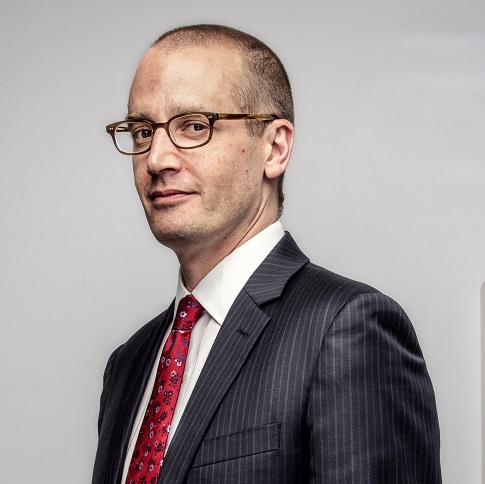
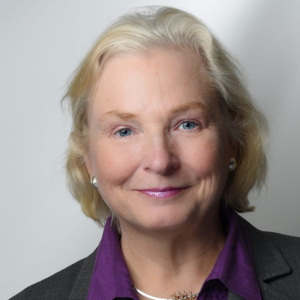
In this episode of Risk-Ready Recipes, Sue Newton, UK Food & Beverage Leader at WTW, speaks with Sam Wilkin and Silja Stawikowski from our Political Risk teams in the US and Germany. They discuss the current geopolitical landscape for food and beverage businesses, how to identify emerging risks and the extent to which those risks can be transferred.
Transcript for this episode
SAM WILKIN: You often see food and beverages companies, well, sometimes selling to a state entity, like in the case of alcoholic beverages, you sometimes see them selling to major distributors, having an agreement with a key distribution partner, so that can be a source of risk. You often see them sourcing from a really specific location. And if that's disrupted, looking at a kind of trade disruption type of risk.
SUE NEWTON: Welcome to the Risk- ready Recipes podcast series, where we serve up insights at the intersection of risk management and insurance in the food and beverage industry. Whether you're a manufacturer, producer, or distributor, our goal is to equip you with the knowledge and tools to navigate risk with confidence so you can focus on what you do best.
Hello and welcome to today's podcast "Geopolitics on the menu" I'm your host, Sue Newton, head of WTW UK food and beverage practice and I'm really pleased today to be joined by two of my specialist political risks colleagues. I've got Sam Wilkin from the US and Silja from Germany with me today. Food and beverage businesses are operating in a very challenging geopolitical environment, and we'll be exploring these challenges today and providing our thoughts on how best to navigate these. Sam, could we start with the situation on tariffs, please. Could you give us our view on how things stand at the moment?
SAM WILKIN: Sure, a pleasure. So while the world was out on holiday, we passed two big turning points on the tariff. The first one is about uncertainty. We now know more, well, maybe not quite half of tariffs of US imports, but for close to half of US imports, we know what the tariff rates are. So the levels of uncertainty are going to be dramatically lower in the second half of the year.
We also passed a bad turning point, and this turning point is about the economic impact. So it was a big surprise to most economists. I guess we haven't seen a high tariffs in a very long time. There was a big surprise to most economists. There was actually a kind of tariff stimulus effect in the early part of the year as Americans who knew there were huge tariffs coming rushed out to buy anything they could to get ahead of the tariffs.
And that included many people who bought washing machines, they bought cars, they bought phones, they bought computers, construction materials, what have you. Now, I think that would have a less direct effect on the food and beverage sector, but it will have an indirect effect because basically we saw this economic stimulus through the first half of the year really unexpected, mainly impacting China, exporting countries like Germany, the EU more broadly, and to some extent the UK and Japan. We saw this stimulus benefiting any country that was exporting to the United States.
And that will reverse in the second half of the year, not only are we going to get the expected negative impact of tariffs, but you're going to have a particularly bad Autumn because a lot of these purchases were front loaded. So they're going to not happen in the second half of the year because they already happened in the first half of the year. So it's going to be a pretty slow Autumn, especially for exporters, and I think that general downturn has the potential to impact the food and beverages.
SUE NEWTON: Silja, you got anything to add on that?
SILJA: Well, not really. I think tariffs will touch all countries in the same way. The only thing what I've been asking myself is that how long will these tariffs, which are now being defined by the US, how long will they be valid, or can they be rechanged, or can they have, you know, as we've got a dealmaker as a president, can they all of a sudden be lowered or for some products, can they be even higher again? So what's going on? Sam, what's your feeling about this?
SAM WILKIN: Yeah. So there is still some uncertainty. In Europe, that's mainly Switzerland that there's still a lot of tension. Obviously, there's a big fight going on with Canada. The deals with Mexico and China to other big US trading partners remain to be signed. But by and large, the Trump administration is trying to set these tariffs up in such a way that they stick and are pretty hard to reverse.
That's especially true for the sector tariffs, which are based around national security legislation. They're trying despite recent court ruling, they are trying to make it true for the country tariffs by, I mean these individual deals were incredibly painful for everyone concerned, including the businesses, obviously, in these countries, also for US negotiators, also for our international partners.
But the idea behind doing all of these individual deals is that it makes it very hard for a future president to reverse, even if they could. So you've got all these benefits from geopolitical lock in, adopting us positions on export controls on transshipment and so on. And you also have measures where countries have agreed to buy various US products, particularly, in the agricultural sector, particularly, in the food and beverage sector.
And that those individual deals are designed to create a kind of a thicket of negotiations that is just hard to cut through and prevents the Trump tariffs from being reversed by a future administration. At least, that's the hope among the Trump administration. And one thing to keep in mind is that the tariffs even if there is this big drag in the Autumn, that's maybe a couple tenths of a percentage point of economic growth. The tariffs are not going to be the driving factor, especially now, big sigh of relief, the EU has got this deal, the UK has got this deal.
A lot of the retaliation was in the food and beverage sector. So it looked like we were really going to get into it and we didn't. Instead, we got the deals. So big sigh of relief there, but overall, the driver of the economy I think is going to be more of what's been going on because the tariffs don't have that big of an impact, more what's going on with current conditions. Like Germany has been doing very badly, less than half a percentage point of growth. The UK doing only a little bit better. Other European countries, especially in the tourism-dependent economies doing substantially better, but it depends on the country.
SUE NEWTON: In terms of practical things, it strikes me that tariffs are one of those things that you just have to live with. Is there anything that companies could be doing from a practical point of view to tackle any changes in tariffs? It strikes me there's not a lot really.
SILJA: Not really. So I think that tariffs is something, well, you cannot predict them. They are unforeseeable and you cannot really measure their impact on your business. But they are, of course, other points where when we look at geopolitics or political risks in general and what is happening in the world, there are risks which can be through risk transfer solutions. They can be covered by insurers and other market players. So I think that tariffs is very important as a topic, but as risk, other risks are also lurking.
SUE NEWTON: Sure. So can we move on to talk about the conflicts that we've got around the world. And obviously, in particular, we've seen a lot of impact on the UK food and beverage sector from the conflict in Ukraine, with price increases on fertilizer and energy costs, and the way that's passed through into general price inflation. What's the current position in terms of that conflict and other conflicts around the world, and potential impacts on the sector from those?
SAM WILKIN: Yeah. So I think Sue, you've kind of put your finger on what's been troubling the UK recently. You have this almost stagflationary situation where the economy is not doing so great, but inflation is still persistently there. And that's been making it really hard for the Bank of England to respond from the conflict in Ukraine. Specifically, what we've been looking at, well, two things, what we've been looking at:
One is, I've been interviewing a lot of commodity trading companies, including soft commodities like agriculture for a piece of research we've been doing. And they are really concerned still about the potential for Black Sea disruption, because of course, Russia and Ukraine are the bread and basket. So that would and the crucial impact of fertilizers, this debt potential has the potential to rebound, impact the European economy, impact the UK economy once again.
The other thing that companies tend to be really concerned about coming out of Russia, Ukraine is gray zone attacks. Gray zone attacks refers to the gray zone between war and peace, where it's kind of ambiguous what's happening. That's one major reason that states engage in these kind of attacks. Examples are things like Russian attempts to cut pipelines, cut undersea cables, put parcel bombs on airplanes, arson attacks.
We've seen all sorts of things recently. One major concern recently of intelligence agencies around the world has been sabotaged for hire. There's kind of platforms that Russia has set up where you can bid for jobs and be paid by Russia for doing things that are very disruptive. And the risk here is that as we put more and more pressure on Russia, as Trump tries to put pressure through tariffs, as the EU tries to put pressure through threatening to get troops involved, as we try to put more and more pressure on Russia in pursuit of a peace deal, a very admirable goal, you run the risk that Russia responds in some way, probably through the gray zone.
And so we did a big project recently looking at how gray zone attacks could materialize, how they could impact one of our big food and beverage clients. How that could impact throughout the company, not just on the risk management side, but also in terms of people risks in terms of operations and I think trying to get ahead of these risks is really crucial, especially in the food and beverage sector.
SUE NEWTON: Sure. And in terms of that exercise that you did, Sam, what would you say were the key things that you learned from undertaking that exercise, the key lessons that came out really?
SAM WILKIN: Well, the reason why it's crucial, especially for food and beverages, is because food and beverage is in a crisis is vital. It's a vital sector. And so you're going to see a lot of government intervention potentially. Often well-intentioned, sometimes maybe even positive in your benefit. But you're going to be dealing with a lot of government intervention to keep your products on the shelves.
You also in recent years have seen this trend towards food and beverage companies getting scale way more, really trying to increase efficiency by having big production locations in office or even distribution hubs in central particular locations, and that makes things a lot more efficient but it also creates a really big problem if you're going through a scenario of, well, what happens if due to a risk event, this goes offline?
So for me, there were a tremendous number of unexpected impacts. Once you looked at a gray zone attack, a gray zone scenario and how that could rebound across the entire organization, not just risk management, but also operations, supply, sourcing, government affairs, people, it's really the impacts can be quite broad.
SUE NEWTON: And Silja, thinking about it from a risk transfer point of view, how much of this risk can actually be transferred to insurers as a possible option really?
SILJA: That's a very good question. There are many ways that you can find support from the markets. I want to grab a one thought of you Sam that, of course, that if you have key export markets and really, for example, from the European view. Also food and beverage, many, many companies are exporting their goods in Egypt or to Saudi Arabia, to India and also to the LATAM countries. And of course, they might be politically also more volatile countries and these countries, they have got now a huge meeting in China.
So they are all members of the Shanghai Cooperation Organization led by China. And all these events and all these members coming together and discussing how they can fold new business south-south, and where they can find new alliances and partners, I think this also will have major impact on the business in future times. So it's not only about tariffs and gray zone attacks, but it's the larger geopolitical scale, if we have a look at that. And yes, also here, risks can be covered. So we need to differ.
I think Sue and Sam, please hop in, if you are talking of an export transaction or if you are talking of an investment abroad. So if you are making deals and you export your goods, are they going to corporates? so that you would have, for example, the risk of non-payment and political risk covered, or are you making deals with ministries of ministry of agriculture or ministry of health? That's OK, but
then you have, of course, the traditional risk counter frustration because a ministry, a public entity can breach the contract. And then, of course, you don't get the payments either the contract is breached. So non-payment really, or that you've got political risk lurking, that you are not allowed to export or import your goods depending on in which direction they are going. And as for foreign entities. If you have your major hub, let's say somewhere in a LATAM country or in other areas where the political situation in general is volatile, you have the topics of confiscation, expropriation, nationalization, so that your operational license can be withdrawn or not extended.
And these are all risks that we saw them even in Russia. Coming back to Russia, many companies were forced to leave the country. Not that they would be really expropriated but the Russians told them that you can't or you are forced to sell your company for one ruble, and you need to leave the country. So it's like a forced abandonment or a forced divestiture. That's the one topic.
Then, of course, as we don't how much the countries have got debts. So what's about their currencies. So it's currency inconvertibility and transfers attached to both risks? And so these and, of course, political violence, the classic one: war, civil war, civil unrest, terror, sabotage. So coming back to gray zone attacks, are they sabotage attacks? It needs to be defined. Sam, what would you add to these topics?
SAM WILKIN: Yeah, I think those are key coverages. You often see food and beverages company, well, sometimes selling to a state entity. Like in the case of alcoholic beverages, you sometimes see them selling to major distributors, having an agreement with a key distribution partner, that can be a source of risk. You often see them sourcing from a really specific location, and if that's disrupted, we're looking at a kind of trade disruption type of risk. So certainly, these kind of risks are. I don't know, Sue, did I miss anything where the exposures of food and beverages are high to this risk?
SUE NEWTON: No, I think that was good, Sam. And I think perhaps it's not as well understood as it could be that these types of risks can actually be transferred, and exploring those options is not something that's necessarily always done. So I think raising awareness around that is important really. So Silja, you've been doing a lot of work and getting a lot of media coverage around political polarization. Would you like to tell us a little bit about the work you've been doing around that, please?
SILJA: Yeah, sure. So we had a very good report coming out, I think, eight weeks back regarding polarization and how it has an impact on various countries worldwide. So that was a great job done by Sam and his team for polarization in general. So it depends on how you look at. So from where does it come from? Who's defining the word polarization? But one thing is for sure, it is growing.
So it has an impact due to the social media, due to the digital world more and more on our opinions, on our actions, how we behave, what are our remarks, our comments to certain activities or non-activities. And then from the trait level and to the business world coming up, it depends on, OK, with whom do you want to do business with? Would it harm your reputation if you do business with a certain counterpart?
And I think the outcome some of this was, and a very important one, that apart from the major geopolitical risks, polarization is being seen as risk number two. So this is something I think very, very fascinating and we surely need a deeper dive in.
SAM WILKIN: Yeah. We did an extensive piece of research looking at political polarization and how it had evolved in over 200 countries over more than 100 years. One of the things that we found was that a particularly pernicious type of polarization is called effective polarization. This is when you may even agree on some policy issues, say between Republicans and Democrats in the US, but you just don't like people who support members of the other political party.
And this effective polarization, it started rising in the United States in the 1970s. Since 2000, it has been rising around the world. It is now at a global record high, this type of polarization. And as Silja mentioned, that kind of global rise does really, I don't want to point fingers because it's not necessarily causal, but it does coincide with the global adoption of social media. And what we've seen is this kind of polarization spills over from politics into personal and business decisions that we make every day like, who will I marry? Where will I live? What products will I buy? Who will I employ?
And so the result of this kind of spillover of these kind of political politics into our everyday and our business lives, it really creates a huge range of risks for business. And if I could give you a little postcard from the future because we in the US have gotten really more polarized than just about anybody else, it impacts everything from company culture, to your brand getting associated with a certain political view and that having a major impact on your sales, to CEO activism and the consequences that can have for your company all the way down to political unrest and political violence, which Silja mentioned before.
So I think this is a topic that companies need to look at specifically and get ahead of specifically, because it is rising really rapidly, and it is causing direct impacts on businesses across a huge range of business functions.
SUE NEWTON: So, Sam, I guess this should be part of businesses ERM approach and thinking through key risks in the way that you would think through other key risks, really.
SAM WILKIN: Yeah, I think these geopolitical issues really lend themselves to a scenarios approach because the political risks tend to be hugely unpredictable, but they do tend to have a little time to emergence. In other words, you hear me talking about polarization. Hopefully, something terrible is a long way off. Even if you don't think something's going to happen, like Trump was campaigning on tariffs, but people didn't think he would be elected. But at least you what potentially could happen.
And you can consider scenarios, people didn't think Russia would invade Ukraine, even though but that was advertised a long way in advance, particularly, by the US government, which was saying it was going to happen. And so even if you don't know, even if you can't predict the future, you can at least get some scenarios and work through those scenarios and figure out what the impact on your company would be, specifically in risk management, if we're talking to risk managers, but also in all kinds of areas.
We're doing this big project with the gray zone attack with food and beverages client of ours, and really was striking just how many different areas of the company were impacted once you had worked through this scenario.
SUE NEWTON: Yeah And I guess, what you want to do is you want to manage out the risks, you can manage out. And then I guess, Silja, having options to transfer where you can't manage out and the impacts are potentially serious is also important as part of the consideration really.
SILJA: I think Sue and Sam, at the end, it's important that the companies have got their various risks and their export or investment activities in focus, because as we do say here in Germany, "you cannot start to cover your house when it's burning". So this proactive, strategic thinking of what Sam was already describing that you might or you need to look for the worst scenario and hope for the best.
SUE NEWTON: Great. I think that brings us to a close. That's the end of today's podcast. Thank you to Sam and Silja for their insights today and thank you to you for joining us too. If you found today useful, please subscribe, rate, and share the podcast. And we look forward to seeing you next time. Thank you.
Thank you for listening to this podcast from Willis, a WTW business. The information in this podcast is believed to be accurate at the date of publication. This information may have subsequently changed or have been superseded, and should not be relied upon to be accurate or suitable after this date. This podcast offers a general overview of its subject matter. It does not necessarily address every aspect of its subject or every product available in the market. It is not intended to be, and should not be used to replace specific advice relating to individual situations.
We do not offer, and this should not be taken as legal, accounting, or tax advice. If you intend to take action or make any decision on the basis of the content of this publication, you should first seek specific advice from an appropriate professional. Some of the information in this publication may be compiled from third party sources we consider to be reliable. However, we do not guarantee and are not responsible for the accuracy of such.
The views expressed are not necessarily those of Willis Towers Watson. For further authorization and regulatory details about our Willis Towers Watson legal entities operating in your country, please refer to our Willis Towers Watson website. It is a regulatory requirement for us to consider our local licensing requirements.
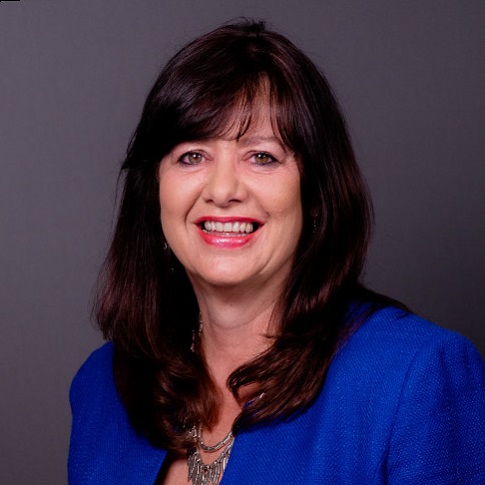
Podcast host
Podcast guests