

In this episode of Construction Blueprints, host Kate Colberg speaks with Cynthia Garcia, Chief Risk Officer at Bernards, about the critical role of crisis management in construction.
Within this episode, our experts discuss how Bernards built a culture-aligned framework featuring site and corporate response teams, a comprehensive risk register, and a Quick Reaction Guide (QRG) for fast decision-making. Cynthia shares real-life experiences with fatalities and serious accidents during projects that have shaped her perspective on the importance of having an updated crisis management plan.
Transcript for this episode
CYNTHIA GARCIA: Whether it's a site accident, a natural disaster, leadership disruption, supply chain interruptions or failures, having a crisis management plan ensures that the organization can respond quickly, protect its people, and get on with the business of building.
SPEAKER: Welcome to the WTW podcast Construction Blueprints, where we discuss the latest risk management and insurance trends as well as issues facing the construction industry. We'll speak with a variety of construction leaders and experts on global topics, who can help provide you a blueprint for building your industry knowledge.
KATE COLBERG: Hello, and welcome to our Construction Blueprints podcast. I am your podcast host, Kate COLBERG, the Alert:24 Risk Advisory Lead for North America. And I am delighted to be joined today by Cynthia Garcia, the Chief Risk Officer for Bernards, a California-based construction company. In this episode, we will explore Cynthia's personal experience in dealing with crises in the workplace, how her and I came to work together to update Bernards crisis management plan, and what updating the crisis management plan look like.
Cynthia, welcome and thank you for joining us. We appreciate that. Can you share a little bit more about your career background with our listeners? How long you've been at Bernards, and where were you before then?
CYNTHIA GARCIA: Sure. Thanks for having me. It's a pleasure. I've been with Bernards for a little over three years. And prior to that, I was lucky enough to serve at KHS&S contractors and international specialty contractor, and with Morley Builders, a general contractor also headquartered in Southern California.
KATE COLBERG: Great, thanks. How we met. Let's get into a little bit how you and I started working together. Cynthia had reached out to her broker-- Bernards broker, which is Willis-- because she had identified the need for an updated corporate crisis management plan. And the broking team, knowing that this was Alert:24's expertise, put you in touch with us and our team. Can you tell me a little bit more about how or why you came to the realization that Bernards crisis management plan needed some updating? Was this a Cynthia initiative, an executive leadership team initiative, or was it a combination of both?
CYNTHIA GARCIA: So, interestingly enough, the very first day I started, they actually had a consultant in-- a PR consultant, and we were doing training on crisis management communication. Apparently, Bernard' had just updated the plan. And through that, there happened to be a non-work-related fatality that occurred on the project site shortly thereafter, and after I started.
And so that actually had me start kicking the tires and having a conversation with our larger executive team. So it was a combination of both. And our executive team wanted to make sure that certain elements of our plan accurately reflected the current state of affairs at Bernards, our current team structure, and our growing and evolving risk culture. So the decision to update the plan was actually a shared initiative between the leadership of Bernards.
KATE COLBERG: Nice. That's interesting. I didn't that about you having the consultant in. It's very interesting. Now, you in particular have a very interesting background, which makes you, more than most, uniquely qualified to understand the importance of a robust corporate crisis management plan. Could you please tell us a little bit more about that, about your background?
CYNTHIA GARCIA: Sure. I think this is like getting the showing up prize. It doesn't feel like a real win. But yes, I appreciate the opportunity to share a little bit more. So over the course of my career, I've unfortunately experienced several real-life situations that have deeply shaped my understanding of crisis management. The deaths of two CEOs, a fatality or two on a project, and multiple serious accidents and injuries have all underscored the importance of having a clear, actionable plan in place.
So these events were incredibly difficult, but they also reinforced how a well-structured crisis management framework can help our people not only survive, but thrive and our business respond appropriately, maintain stability, and move forward. So it's not just about the protocols, but it really was about supporting our teams, protecting our reputation, and ensuring continuity in the face of uncertainty.
So these experiences have given me a deeper appreciation for the role of crisis management and how it plays out across various scenarios, and how they continue to inform how I approach planning and preparedness today.
KATE COLBERG: And in light of these terribly unique experiences that you've had, what observations did you have specifically regarding the crisis management plans?
CYNTHIA GARCIA: Yeah. So the things I reflect on is that the deployment of a crisis management plan can look really different depending on the company's culture. Our people and how we do things influences how we communicate and how that communication flows during a crisis. And who those key stakeholders are, and the messaging.
And so whether it's formal and top-down, if it's open or cross-functional, it's not only essential to build a solid plan, but really tailor it to how the organization actually operates day-to-day, not what we aspire to. And a plan that doesn't really take into consideration the company's culture, at the end of the day, won't be followed when it matters the most. So one of the observations I have is, communication is key and it's critical. But how you do that, how you embrace your people, how you embrace key stakeholders, really is dependent on who the company is as a person, as a being, and adapting within that.
KATE COLBERG: Yeah, it really needs to work for the culture of the location. Absolutely. We, Alert:24, had the Bernards team complete something that we call the risk register. This is where the organization makes a comprehensive list of possible threats to Bernards and their employees, and then rank how probable that threat or risk is versus how disruptive those threats or risks would be.
So an example would be active assailant attack. That's an extremely disruptive risk or threat, but a low probability. Whereas a minor workplace injury, particularly, in the world of construction, is much higher probability but lower overall risk threat to the whole corporation as a whole.
So tell me a little bit about making that risk register. How did you at Bernards go about ensuring that it was as comprehensive as possible because as we know, the risks or threats when it comes to construction and construction sites are quite vast.
CYNTHIA GARCIA: Sure. So creating the risk register was actually a very collaborative and thoughtful process, not only involving key stakeholders internally, but also partnering with you, Kate and Joe. And so to make sure it was as comprehensive as possible and actually really realistic and useful, I started by pulling insights from multiple sources.
So past incidents that we might have experienced. What has the industry experience using benchmarks, insurance claims data, and again, partnering with the field as well as leadership, the mix gave us really a well-rounded view of what could we face realistically, not something esoteric. And it gave us both operational and safety-related reputational and strategic kind of perspectives to take into consideration.
But we also made sure we included risks that aren't always at top of mind like leadership transitions. Or in today's world, if you turn on the news and don't hear about AI, it would be a shocker. So cyber threats and supply chain disruptions, because those can be just as impactful and sometimes, more visible than site level issues that might not make the news.
So, I leaned heavily on lessons learned from both my own real-life situations, but from others on the team to bring broad perspective and make sure we weren't just checking the boxes but really preparing for what could happen at our company. So, the goal was to build a tool that's not only thorough, but really usable. Why do we practice? Why is there a rough draft before the final?
So, the goal of the risk register is to give us real-life, hands-on learning experience to walk through scenarios so that in the moment of crisis, we're not scrambling, we already have a cheat sheet. And I think we get into our quick reference guides later, but to walk us through.
KATE COLBERG: Yeah. It was interesting to watch you do that because we hadn't been thinking about AI, but, of course, that is coming down the pipe very quickly. And you already had-- you as a corporation already had tariffs on your radar as that was starting to come because we started working together in November of 2024. Then that started already becoming an issue as we were working together. Pivoting just a little bit, what part of the process of updating the crisis management plan surprised you if there was any surprises?
CYNTHIA GARCIA: So, I really love the expertise and outside-of-the-box thinking that our resources bring to us. So, a lesson I learned from you all was that the CEO should not be a part of our core crisis plan. So, my other two organizations that was different. And so, as we thought about it and we debated internally also at your suggestion, it made a lot of sense because it's not about the reflection of their importance, but it was a strategic decision.
So, the CEO's focus during a crisis needs to be steadfast on the business, reassuring our stakeholders, guiding our organization forward. Meanwhile, there's a dedicated crisis team trained and equipped to manage the incident. So, they handle the tactical, the communication, and the coordination. This doesn't mean the CEO is over here not involved at all There are strategic updates that are happening. But I think the separation allows both sides to operate effectively without distraction.
So, the crisis management team is handling the situation with input and guidance. But the CEO's main focus is on the broader business of business continuity and resilience. So, it's about putting the right people in the right roles at the right time. So, I love that lesson I learned from you all.
KATE COLBERG: Yes. I had the wonderful opportunity to meet your CEO, and he is the epitome of someone who I would trust to keep everything at steady while you guys are taking care of the crisis and of course, keeping him updated every step of the way. Let's talk a little bit about your plan itself, Bernards crisis management plan. Tell us about the different teams that we had designated-- the CRT and the SRT? What are their roles in the crisis? And what is the benefit of having those two teams instead of just one team-- either locally or at HQ-- leading the entire crisis response?
CYNTHIA GARCIA: Sure. So, our crisis management plan includes two designated teams, a corporate response team, CRT, and a site response team, SRT. So, the site response team handles the immediate on the ground actions. So, for example, securing the site, ensuring the safety of our people, and initiating first level communication. They're the closest to the incident and can act quickly to stabilize the situation.
Even thinking about Bernards or perhaps our peers, most of us are spread out geographically. And with traffic-- even if we were within the same city limits-- the ability realistically for us to be there in that moment to support the people in need is still really delayed. So that's the point of the site response team.
The corporate crisis team provides a strategic oversight and manages external communication, coordinates with legal, insurance, other executive leadership, the board, and ensures alignment with the broader company policies and objectives. So having both teams, rather than relying solely on one centralized or local group, like I said, really allows us to respond swiftly and effectively at the site level while maintaining strategic control and consistency across the organization.
So, it's a structure that balances speed with oversight, and it's proven to be much more, at least in my experiences, to be much more resilient and supporting the people in need in the moment.
KATE COLBERG: Yeah, I can't imagine how difficult that would be if you had a site that was four hours away. You at headquarters trying to control everything. Giving your site response team the ability to just handle everything is a really great aspect of your crisis management plan.
So, you had us, Alert:24, create something called the QRG, the quick reaction guide, which you referenced a little earlier. It's not something that all clients have us prepare. I really like it. Tell me the thought process behind that request and what benefit there is to have that guide?
CYNTHIA GARCIA: Sure. Again, stemming from my past experiences, the idea behind the quick reaction guide, QRG, was to create something that's immediately actionable in a high-pressure moment. So, while it's critical to have well-thought out fully-realize crisis plans, they're really lengthy and hard to navigate in the heat of the moment.
And so, the QRG distills the most critical steps, contacts and decisions into a simple, accessible format that anyone can reference. So, it's about practicality. It's about having a flow chart. Who do I call when that stuff happens. And giving confidence to our team members in moments where we don't expect to encounter. We prepare for these really unexpected, hurtful, harmful moments.
But we as humans aren't thinking, oh, when I drive, I'm not thinking I'm going to get into an accident today. But if I looked at the statistics, I probably would never get into a car. So, in those moments, it's really about practicality-- what can we do and provide to the boots on the ground folks who have to live with this when something goes wrong? We don't want them scrambling. We want them to there's a group of people around them to support them and walk them through. And so, it's a tool that supports fast, confident decision-making. And it helps the team stay calm and coordinated when time is of the essence.
KATE COLBERG: Yeah, I really like that. All in your CMP is over 100 pages. So having that quick reaction guide is really fantastic. I thought it was a great idea, and it looks great and is useful. What else do you want listeners to know about crisis response plans, either the process of updating one or the importance of having one?
CYNTHIA GARCIA: Sure. So, I don't how many of you I'll date myself have seen those infomercials on TV. The set it and forget it cooking tools. So, what I would say is, listeners, the one critical takeaway is crisis response plans aren't a set it and forget it document. It's a living framework that needs to evolve with you and your business. So, the process of updating one should be really proactive not reactive.
So, after something happens, you should do an after-action review and make adjustments. But after something happens is a little too late to realize, hey, I need to go dust that thing off the shelf and loosen all the cobwebs off of it. So, it's about regularly assessing new risk, changes in leadership, changes in roles, shifts in operations, and like I talked about, lessons learned in real life situations.
So every update is an opportunity to strengthen clarity, reinforce what went well, what are some growth opportunities for us, and how can we adapt to help the organization be resilient. And most importantly, I think having a plan isn't about optics or compliance. Really, at the heart of it, it's about protecting our people, preserving hard-earned trust, and ensuring that the business can move forward, even in the face of disruption. A strong plan gives teams confidence, and that confidence is critical when every minute counts.
KATE COLBERG: That is fantastic. Do you think it's essential for every construction company to have a crisis management plan?
CYNTHIA GARCIA: Absolutely. Regardless of your size. A construction companies operate in dynamic, high-risk environments where unexpected events can have serious safety, financial, and reputational consequences. We are literally creating in the dirt, right?
KATE COLBERG: Yes.
CYNTHIA GARCIA: So, whether it's a site accident, a natural disaster, leadership disruption, supply chain interruptions or failures, having a crisis management plan ensures that the organization can respond quickly, protect its people, and get on with the business of building. A well-developed plan provides clarity on roles, communication protocols, decision-making processes. And it's just not about reacting, it's about being prepared, minimizing impact and helping businesses move forward with confidence.
KATE COLBERG: Cynthia, thank you so much for contributing to this episode. And for sharing your perspective on such an important topic.
CYNTHIA GARCIA: Take care and stay safe.
KATE COLBERG: Thank you to everybody who's listened and thank you for joining Willis Construction Blueprints podcast. We'll talk to you all in the next one.
SPEAKER: Thank you for joining this podcast from Willis, a WTW company featuring the latest thinking and perspectives on people, capital, climate and risk in the construction industry. For more information, visit wtwco.com. WTW offers insurance related services through its appropriately licensed and authorized companies in each country in which WTW operates. For further authorization and regulatory details about our WTW legal entities operating in your country, please refer to our WTW website. It is a regulatory requirement for us to consider our local licensing requirements.
The information given in this podcast is believed to be accurate at the date of publication. This information may have subsequently changed or have been superseded and should not be relied upon to be accurate or suitable after this date. This podcast offers a general overview of its subject matter. It does not necessarily address every aspect of its subject or every product available in the market, and we disclaimer all liability to the fullest extent permitted by law.
It is not intended to be and should not be used to replace specific advice relating to individual situations, and we do not offer, and this should not be seen as legal, accounting, or tax advice. If you intend to take any action or make any decision based on the content of this podcast, you should first seek specific advice from an appropriate professional.
Some of the information in this podcast may be compiled from third party sources we consider to be reliable. However, we do not guarantee and are not responsible for the accuracy of such. The views expressed are not necessarily those of WTW. Copyright WTW 2025. All rights reserved.
Podcast host
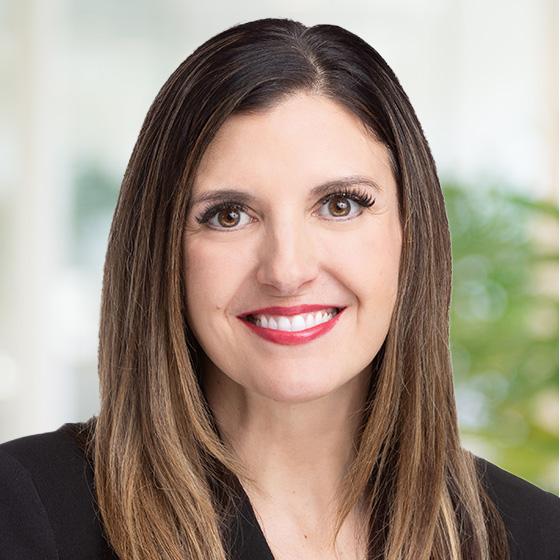
Kate Colberg
Risk Advisory Lead, North America, Alert:24
Kate Colberg began her career with the U.S. State Department’s Overseas Security Advisory Council (OSAC), focusing on South and Central Asia. After leaving government service, she built a 20+ year career in risk and crisis management, serving as a response consultant and case manager for numerous incidents including kidnap for ransom, piracy, extortion, and unlawful detention. Her expertise includes coordinating evacuations for multinational corporations, conducting physical site security assessments for corporate and government clients, and delivering international travel safety training tailored for female travelers. Kate has spoken at major industry events, including as keynote for the National Women in Business Aviation Conference. She holds a B.S. in Global Security and Intelligence Studies, is CPP-certified, and remains active in ASIS and OSAC.
Kate Colberg
Risk Advisory Lead, North America, Alert:24
Kate Colberg began her career with the U.S. State Department’s Overseas Security Advisory Council (OSAC), focusing on South and Central Asia. After leaving government service, she built a 20+ year career in risk and crisis management, serving as a response consultant and case manager for numerous incidents including kidnap for ransom, piracy, extortion, and unlawful detention. Her expertise includes coordinating evacuations for multinational corporations, conducting physical site security assessments for corporate and government clients, and delivering international travel safety training tailored for female travelers. Kate has spoken at major industry events, including as keynote for the National Women in Business Aviation Conference. She holds a B.S. in Global Security and Intelligence Studies, is CPP-certified, and remains active in ASIS and OSAC.
Podcast guest
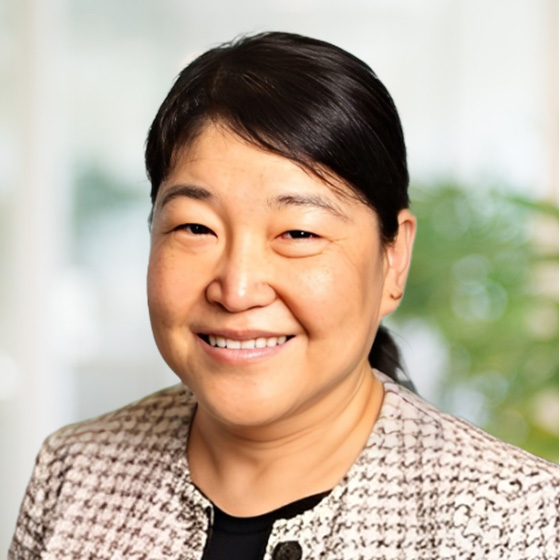
Cynthia Garcia
Chief Risk Officer
With over 27 years of experience in construction risk management, Cynthia provides thoughtful leadership and oversight for all comprehensive risk management, legal, safety, and insurance practices for Bernards. She collaborates closely across the entire enterprise to identify, assess, mitigate, and deploy strategies & practices with all stakeholder's. An accomplished industry thought leader, Cynthia serves as a board member for the School of Risk Management at CSU Fullerton, on the board of directors for the Orange County Chapter of Risk and Insurance Managers Society (RIMS), and the board for Women In Construction-West Coast. She’s been awarded Safety Professional of the Year by the American Society of Safety Engineers (ASSE) and has been honored with the Women to Watch award by Business Insurance. Her collaborative approach to strategic partnerships has been instrumental in cultivating trusted relationships within the risk management and business communities. She focuses on creating and fostering a safe space for open communication where teams work together to develop innovative solutions to business challenges.
Cynthia Garcia
Chief Risk Officer
With over 27 years of experience in construction risk management, Cynthia provides thoughtful leadership and oversight for all comprehensive risk management, legal, safety, and insurance practices for Bernards. She collaborates closely across the entire enterprise to identify, assess, mitigate, and deploy strategies & practices with all stakeholder's. An accomplished industry thought leader, Cynthia serves as a board member for the School of Risk Management at CSU Fullerton, on the board of directors for the Orange County Chapter of Risk and Insurance Managers Society (RIMS), and the board for Women In Construction-West Coast. She’s been awarded Safety Professional of the Year by the American Society of Safety Engineers (ASSE) and has been honored with the Women to Watch award by Business Insurance. Her collaborative approach to strategic partnerships has been instrumental in cultivating trusted relationships within the risk management and business communities. She focuses on creating and fostering a safe space for open communication where teams work together to develop innovative solutions to business challenges.