RICK HAYES: And Cédric.
CÉDRIC THIBAULT: Thanks for having me, Rick.
RICK HAYES: And Nick.
NICK KOMISSAROV: Thanks for having me, Rick.
RICK HAYES: So we will discuss Bermuda's actuarial expertise, technological advancements and regulatory updates in the insurance and reinsurance sectors. But before we start, I will introduce the speakers a little bit more.
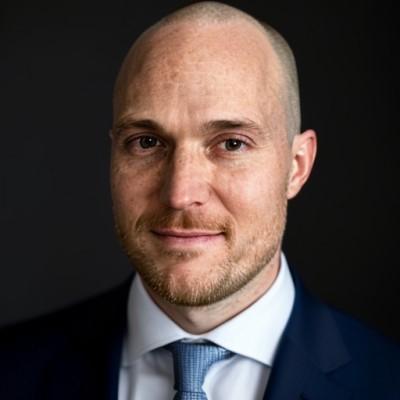
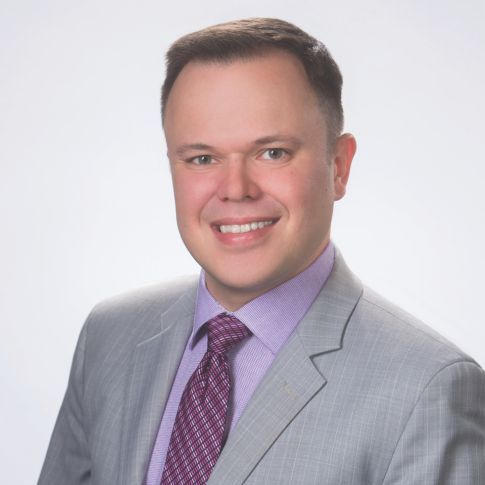
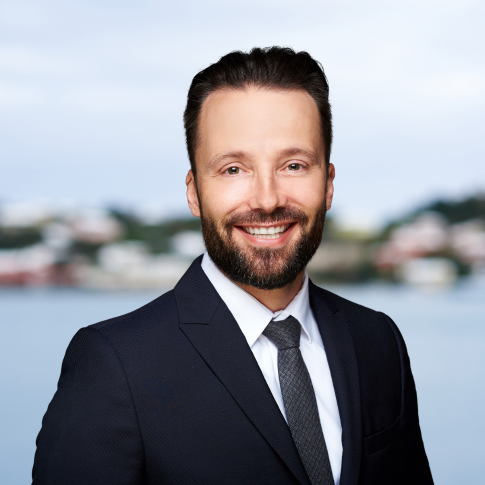
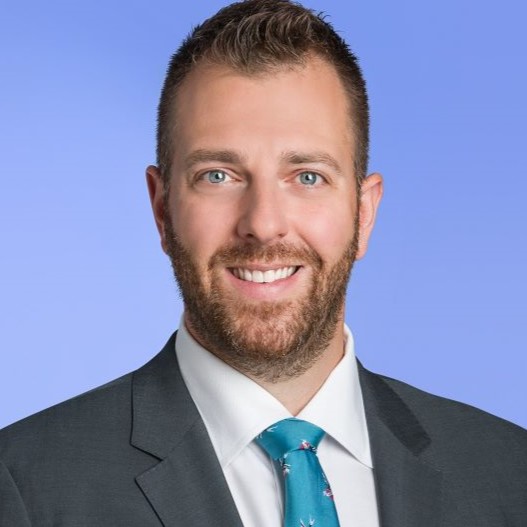
So first off, Martin Laframboise is a qualified actuary director at WTW and has been actively involved in Bermuda's insurance sector for almost 10 years now. With a strong background in risk management and reinsurance, Martin brings valuable insights to our discussion.
Cédric Thibault is a qualified actuary based in Bermuda with over 20 years of experience in both life and annuities, insurance, and reinsurance. He has profound knowledge in model risk management, IFRS 17 transformation, and financial reporting.
Nick Komissarov is an actuary with extensive experience in reinsurance and insurance. He has contributed significantly to the development of innovative insurance products and regulatory compliance strategies.
So now to kick us off. I'll start off with a high-level question. So Martin, Bermuda is often described as a global hub for reinsurance. What's driving that reputation?
MARTIN LAFRAMBOISE: So Bermuda is a common domicile for reinsurance. In fact, it's well known as the world's risk capital. And to put things in perspective, in numbers, as of year-end 2023, approximately 3.5% of the reserves of the global life insurance sector are held in Bermuda, and that's a significant footprint.
But what really makes Bermuda stand out is its robust regulatory framework, combined with its political stability, and also the depth of actuarial and financial expertise. It's a place where innovation meets discipline.
NICK KOMISSAROV: And to build on that, Bermuda is also instrumental in closing the global protection gap. Reinsurance here help the primary insurers or cedants manage capital more efficiently, which, in turn, supports onshore product innovation and broader coverages to policyholders.
MARTIN LAFRAMBOISE: Yeah. And Nick, before we go any further, I think it's important for the benefit of the audience to understand the benefit of reinsurance to the insurance market and how Bermuda plays a role in this reinsurance ecosystem.
So reinsurance serves the insurance market by helping close the global protection gap, which, according to several sources, account for trillions of dollars. It allows cedants to transfer risk to reinsure, for example, which, in turn, allows direct insurers to sell more new business.
It allows the insurance company to be more comfortable in selling new products for a number of reasons, one of which is that the direct insurer can benefit from having the reinsurer access to expertise-- underwriting expertise, for example, and so they can price and design their insurance products with their partner. So Bermuda plays a key role in this ecosystem.
RICK HAYES: All right. Thank you both. So now let's talk about the regulatory side. So the Bermuda Economic Balance Sheet, how does that differ from traditional accounting?
CÉDRIC THIBAULT: The Bermuda Economic Balance Sheet, or EBS, uses a market-consistent valuation approach. It includes a technical provision which comprise the bell and a risk margin. The bell accounts for the expected future liabilities, while the risk margin adds a buffer for uncertainty for liability cash flows. This approach enhance transparency and risk sensitivity compared to the traditional GAAP or statutory accounting.
To calculate the best estimate liability, an insurer can either use the standard approach or the scenario-based approach in the Bermuda regime.
RICK HAYES: Thanks for that. So Martin, can you explain the scenario-based approach for calculating the bell?
MARTIN LAFRAMBOISE: This is a valuation methodology. The scenario-based approach allows insurers to use their actual asset portfolios and investment strategies to model earn rates under several prescribed interest rate scenarios. And the most punitive of those scenarios resulting in the highest bell is the one binding, and this method essentially provides a more tailored and realistic view of liability valuation, especially for products that are long in duration or that are complex.
NICK KOMISSAROV: SBA offers a more dynamic and responsive approach that incentivizes robust risk management, including asset liability management.
RICK HAYES: All right. And for those that are unfamiliar, Bermuda recently updated its required capital requirements, known as the Bermuda Solvency Capital Requirement, or BSCR. So what are some of the changes introduced in 2024 BSCR updates?
NICK KOMISSAROV: So BSCR is Bermuda's required capital calculation. It consists of these major components-- market risk, long-term insurance risk, operational risk. The 2024 amendments updated the long-term insurance risk component. They introduced the lapse risk and the expense risk into the framework. These are phased in over 10 years for existing reinsurers.
Lapse stress captures adverse policyholder behavior, while expense risk addresses the risk of inflation and the rising administrative costs. Both are recalculated under stress scenarios and are expected to significantly impact products with high optionality or administrative overhead.
MARTIN LAFRAMBOISE: Yeah. And Nick, I would add that these changes are designed to enhance the robustness of the BSCR framework to ensure that insurers are better prepared for a range of potential risks as well.
RICK HAYES: So going back to lapse risk, how is it calculated and why is it so important?
MARTIN LAFRAMBOISE: Lapse risk, Nick, and Rick, which is embedded into the best estimate liability valuation, is assessed using three scenarios-- lapse up, lapse down and max lapse. Each recalculates the best estimate liability and the most punitive result is the one binding. This lapse risk is crucial for products where surrender values exceed asset values or where policyholder behavior can significantly affect cash flows.
RICK HAYES: And so what then, is the lapse cost and how does that affect SBA users?
NICK KOMISSAROV: OK, I'll take this one. So the lapse cost is a new component that's added to SBA bell. It's derived from lapse risk and the historical experience that companies would have reflecting the cost of disintermediation. This ensures that the reinsurers account for the financial impact of policyholder behavior under stress conditions.
RICK HAYES: So, what are the recent asset-related regulatory updates in Bermuda?
MARTIN LAFRAMBOISE: Rick, there are several that are, let's say, effective year end 2024. And of those updates, the one that stand out are the prescribed default and downgrade floors, the mandatory modeling of transaction costs and asset sales, there is also explicit modeling of derivatives, and BMA approval for certain asset classes, like, for example, structured securities or private assets. And all of these changes, they aim to enhance the realism of asset modeling under the SBA.
NICK KOMISSAROV: Yeah. And really, these updates are designed to introduce prudent modeling on the asset side of the balance sheet. These updates provide a more accurate view of an insurer's financial position.
RICK HAYES: All right, so shifting gears a little, can any of you tell me more about the prudent person principle and why it's significant?
CÉDRIC THIBAULT: Yes, sure. The prudent person principle is the principle that mandates that insurers manage policyholder funds with care, prioritizing capital preservation and risk transparency. It restricts speculative use of derivatives, requires liquidity, stress testing for complex assets, and enforce accountability for outsourced investment functions. It aligns Bermuda with global best practices in fiduciary responsibility.
MARTIN LAFRAMBOISE: And also, Rick, it's a very important component of Bermuda's regulatory framework to make sure that the insurers and reinsurers act in the best interests of policyholders.
RICK HAYES: Understood. So has the BMA strengthened governance requirements for the SBA?
MARTIN LAFRAMBOISE: Yeah. The BMA now requires a comprehensive SBA model documentation, validation of data inputs, as well as a full model risk management policy framework covering the model lifecycle. And all of these measures are there to ensure that the models used in regulatory reporting are robust, transparent and importantly, well-governed.
RICK HAYES: So what are the new public disclosure requirements proposed for year-end 2025?
NICK KOMISSAROV: So there's a bunch of them. So insurers and reinsurers have to disclose their asset holdings at a granular level, similar to U.S. Blue Book; liabilities by product, including gross and net reserves; as well as year-over-year changes for these reserves.
The insurers also have to disclose ALM strategies, including the stress testing that is done and the justification. These disclosures aim to enhance transparency and market discipline.
RICK HAYES: And is the Great Financial Crisis, or GFC, stress test part of that requirement?
CÉDRIC THIBAULT: Due in June, this stress test mimics the 2008 crisis, with prescribed shocks to fixed income equity and real estate assets plus credit defaults. It assesses whether Bermuda insurance sector poses systematic risk for the global financial system and test the resilience of insurers under extreme conditions.
NICK KOMISSAROV: Really, a critical tool for assessing the resilience of the insurance sector, ensuring that it can withhold severe financial shocks like the 2008 Great Financial Crisis.
RICK HAYES: And how do you think these regulatory changes affect Bermuda's competitiveness?
NICK KOMISSAROV: While these changes may impose some short-term compliance burdens and some additional costs. These updates really enhance Bermuda's credibility, transparency and alignment with international standards. These changes strengthen Bermuda's position as a trusted, well-regulated domicile for global insurers and reinsurers.
MARTIN LAFRAMBOISE: I would say, Rick and Nick, it's a strategic move that ensures Bermuda remains credible in the global market.
RICK HAYES: OK. And on that note, so how does Bermuda's regulatory framework compare internationally?
MARTIN LAFRAMBOISE: Well, it's well-known that Bermuda's framework is Solvency II-equivalent for commercial insurers, as well as recognized by the NAIC as a reciprocal jurisdiction. It focuses on many quantitative and qualitative requirements, such as risk-based capital requirements, market-consistent valuation, and governance standards. It is among the top regulatory regimes globally.
RICK HAYES: OK. And from what you can gather, what role does the Bermuda Monetary Authority, or the BMA, play in shaping the market?
NICK KOMISSAROV: So the BMA is a proactive regulator. It issues consultation papers, engages the industry and industry groups in getting feedback, and it's continuously updating the framework to reflect the emerging risks and changes to global standards.
So these recent changes really emphasize efficiency, transparency and policyholder protection.
RICK HAYES: All right. Now my final question, and circling back to all the information you've provided thus far. So what should insurers and reinsurers do to prepare for these changes?
CÉDRIC THIBAULT: To prepare for these changes, firms should enhance their modeling and governance frameworks, review asset portfolios for compliance with the new SBA and prudent person rules, prepare for expanded disclosures, conduct internal stress testing aligned to ensure compliance or ownership of the risk ecosystems. Proactive adaptation will ensure compliance and strategic advantage in the evolving Bermuda market, that's for sure.
RICK HAYES: So thank you all for joining on this insightful discussion about Bermuda's insurance and reinsurance market. Thank you, Martin.
MARTIN LAFRAMBOISE: Thanks, Rick. It was a pleasure to be here.
RICK HAYES: Great. And thank you, Nick.
NICK KOMISSAROV: Thank you, Rick. It was awesome.
RICK HAYES: And thank you, Cédric.
CÉDRIC THIBAULT: Thank you so much, Rick. Hoping to have the chance to host you in Bermuda very soon.
RICK HAYES: Yeah. It'd be great to get down there. So stay tuned for more episodes where we delve into the latest trends and developments in the industry.
NARRATOR: Thank you for joining us for this WTW podcast featuring the latest perspectives on the intersection of people, capital and risk. For more information, visit the Insights section of wtwco.com. This podcast is for general discussion and/or information only. It is not intended to be relied upon, and action based on or in connection with anything contained herein should not be taken without first obtaining specific advice from a suitably qualified professional.