
As we enter the ‘new normal’, how companies and employees operate has changed significantly. It’s not merely about doing things differently; rather, a fundamental shift in work cultures that have been entrenched over decades. This requires the adoption of new ways of working, combined with the alignment of Total Rewards to support the change.
Employee benefits, already a key engagement lever if done correctly, have become even more important as health and wellbeing becomes top of mind for both employers and employees – we discuss this more in depth in part two of this series. As work has transformed and now largely sits beyond the bounds of an office environment, employees are struggling with:
- Fear of inadequate insurance cover, such as coverage for a work-related accident or injury while working from home
- Medical benefits and accessibility of healthcare
- Concerns about remote medical access, for both consultations and diagnostics
- Mental wellbeing as they juggle work-life balance, and for some the effects of physical and social isolation
- Support for vaccination costs in countries without government subsidies or limited access
- Financial wellbeing amid uncertain job security
How can employers respond?
The first step is to understand the impact these changes and new ways of working has on your workforce and the diverse needs of employees and their families. Benefit programs will need to be agile to allow employee choice in terms of what they need to address, their unique circumstances and life stage requirements. Employers must ensure that their benefit plans are simple, effective and forward-looking.
Employee listening is crucial
Employee listening is challenging at the best of times, and even harder with a dispersed and remote workforce. But to design an impactful and relevant benefit strategy, it’s crucial to have a line into your workforce, their levels of engagement, their needs and wants—and even more so during this unsettling time.
To design an impactful and relevant benefit strategy, it’s crucial to have a line into your workforce, their levels of engagement, their needs and wants.
Employees are buffeted by many concerns – work-life balance, carer responsibilities, healthcare access, employee burnout, and overall impact on their physical, emotional, social and financial wellbeing.
Employers can create an effective listening strategy using a variety of employee insight tools such as surveys, focus group discussions, online collaboration sites, and face-to-face (albeit virtual) feedback to consistently capture employees’ evolving views on new ways of working. From a benefits perspective, this can also capture feedback on which elements of Total Rewards employees value to optimise return on investment.
It’s important not to lose sight of communication being a two-way, ongoing exercise with intent and purpose to deliver value to employees. It should fulfill the need to promote awareness and effective use of benefits, wellbeing and career programs, by providing personalised information, education, decision-making support and navigation tools.
Benefits in the new normal
What’s shaping the new employee benefits landscape?

Access the full article
Aligning benefits with work transformation
In a time where the pandemic pushed many into isolation, poor health and even unemployment, it’s unsurprising that stress has become a more severe issue for the workforce. Employers have noted this shift and prioritised wellbeing as a holistic proposition in the workplace. A significant number of employers (78%) in markets across Asia plan to use their wellbeing program as a differentiator in three years, compared to only 21% who are doing so today.
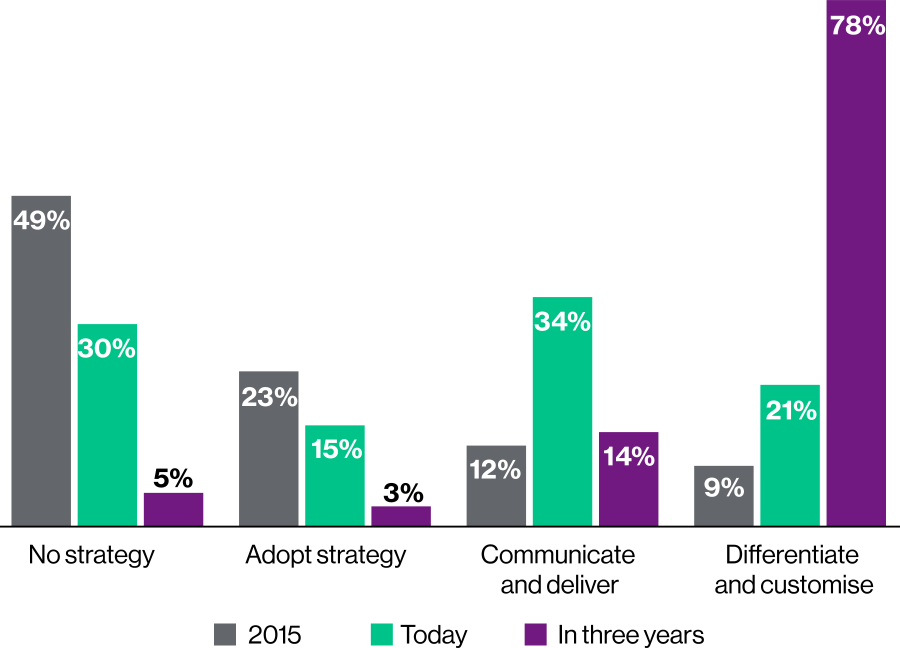
An increasing number of employers plan to use wellbeing as a differentiator within three years
Graphic showing the number of organisations planning to differentiate their wellbeing program from competitors and customise to meet employee needs. 9% in 2015, 21% today, and 78% in three years.
Source: 2020 Wellbeing Diagnostic Survey – Asia Pacific; 2015/2016 Global Staying@Work Survey (Hong Kong India, Philippines and Singapore)
Employers are also considering what reimagined work will mean for their Total Rewards. For benefits, many are looking at:
- Virtual care/telehealth, ensuring all employees have access and understand what is available
- Tailored benefits to meet the needs and personal preferences of a broader variety of workers
- Flexible retirement and financial security programs
- Fair, inclusive and accessible health and wealth-related benefits
To read more about how to align employee benefits with the transformation of work and future-proof your benefit strategy, please complete the form on the right to access the full article.
Author

Employers have noted this shift and prioritised wellbeing as a holistic proposition in the workplace.