

This episode explores how Metatomic’s innovative dry reprocessing technology could transform America’s 94,000 metric tons of spent nuclear fuel into a strategic energy resource for advanced reactors and long‑term energy independence.
Transcript for this episode
MIKE STAKE: The issue is that we have 94,000 metric tons of spent nuclear fuel, and of that 94,000 metric tons, only 5% of it has been used. So whatever you see sitting in disposition, there is no use for it at this point other than to sit in a cask on a piece of concrete for infinity. And as a co-founder of Metatomic, that was not acceptable to me.
SPEAKER 1: Nuclear is back not as a theory, but with new technologies and new risk frameworks as the energy industry looks to close the gap between demand for electrification and clean, dependable supply. This is the atomic effect.
KATE FOWLER: Thanks for joining our podcast today. I'm your host, Kate Fowler, global head of nuclear at Willis Towers Watson, helping developers, operators, and investors navigate and mitigate the long-term risk of fusion and nuclear energy life cycles.
Today, we're talking about spent nuclear fuel. The United States has generated over 90,000 metric tons over decades of commercial nuclear power. This material has been managed safely the entire time, primarily through on-site storage and pools and dry casks at nuclear plants.
One option to manage the spent fuel, which has been discussed is nuclear fuel reprocessing, where usable material is recovered and waste volumes are reduced. As advanced reactors and fuel cycles evolve, reprocessing is re-entering the conversation, raising important questions around policy risk, and long-term waste strategy.
Today, I welcome Mike Stake, founder and CEO of Metatomic Energy, to the podcast to discuss spent nuclear fuel and how Metatomic is changing the conversation around reprocessing. Mike has extensive experience in private equity and entrepreneurship. Over the years, he has worked with two private equity firms where he has successfully created, grew, and sustained multiple enterprises.
Additionally, he has owned and operated several companies across diverse industries. Currently, Mike serves as the co-founder and CEO of Metatomic Inc. which I mentioned, where he is leading innovative efforts in the nuclear power sector. His career reflects a commitment to growth, innovation, and excellence, making him a key figure in the evolving landscape of nuclear energy and beyond. Thanks for joining me today, Mike.
MIKE STAKE: Thank you Kate. I certainly appreciate the opportunity to discuss this very important topic as far as strategy, national security, certainly, supply and demand for uranium and alternatives to that supply and demand of uranium.
KATE FOWLER: Awesome. So let's go ahead and set the context for our listeners that are new to this topic. What is spent nuclear fuel and why is it such a challenge in the US today?
MIKE STAKE: Well, we only have one reactor, the AP1000 that is a light water reactor. And so that reactor has been doing a great deal of energy throughout the last 60 years. However, we don't have a diverse of fleet.
So certainly advanced reactors are being developed at this moment so that we would have some diversity of fleet. The issue is that we have 94,000 metric tons of spent nuclear fuel. And of that 94,000 metric tons, only 5% of it has been used. So whatever you see sitting in disposition, there is no use for it at this point other than to sit in a cask on a piece of concrete for infinity.
And as a co-founder of Metatomic, that was not acceptable to me to have only 5% of the energy pulled out of a core, and then the 95% of the core sit forever. So we came up with the Metatomic solution of converting the spent nuclear fuel to a molten salt fuel for the advanced reactors that are being developed at this point.
KATE FOWLER: And reprocessing can sound a little futuristic to some people who may not be familiar with it, is this a new concept and what does it actually do or mean?
MIKE STAKE: It's really not a new concept. In fact, the UK, India, France, they all still reprocess light water fuel through a Purex process. What Metatomic has come up with is a dry, nonaqueous process where we don't introduce any other toxins to separate. And in fact, what separates Metatomic atomic is, is that we don't separate.
So there's not a risk of proliferation. And certainly, in the '70s, we were about to do reprocessing and recycling of light water fuel through Purex system. However, President Carter decided that we should not be doing this through an executive order because of the proliferation risk. So we haven't done anything since the '70s regarding any of our spent fuel and the mitigation of that spent fuel.
KATE FOWLER: So those policy-driven barriers, are they still in place today or have those been eliminated?
MIKE STAKE: No, they have not been eliminated. And in fact, Metatomic has been very adamant and very participative in trying to take those barriers down because this is a new system of processing and we have developed it through several patents. We also have just been awarded a European Patent as of November of 2025.
We're continuing to work with this technology. It certainly has to continue to be developed, but it is different from Purex because we don't introduce any new toxins to separate, nor do we separate. It all stays in one batch. So there's a lot of policy, things that-- certainly, I live in South Carolina and Metatomic has spent the last two years helping South Carolina develop legislation for the ability to process spent fuel and also develop advanced reactors. And that law was signed into effect back in May of 2025 in Bill H.R. 3309.
KATE FOWLER: So, Mike, you talked about your technology, the fuel being specifically useful for molten salt technologies, which is different than what we have today. Can you talk a little bit about what is molten salt technology and what does that mean, and how is your fuel utilized in that process?
MIKE STAKE: So in the conversion of spent fuel from a uranium dioxide to uranium tetrachloride, or you certainly could have a fluoride salt. So this salt is it sounds scary, but at 750c or 700c, 500c, it becomes a molten liquid. But when you take the heat away, it turns to a solid.
So the safety ability for the molten salt is better and we'd like to say walk away safe. And certainly we wouldn't walk away from it. But once the heat is taken away, it turns into a solid.
And so if you would happen to have a criticality and say the freeze plug in some designs, the freeze plug melts, then it goes to another vessel and just turns into a solid. That's the end of the event. And the molten salt, it works at atmospheric pressure, which is also another safety factor.
KATE FOWLER: So it has that passive safety features that we see with some of the other technology designs that makes it walk away safe?
MIKE STAKE: Correct.
KATE FOWLER: So when you're talking to policymakers, what are the biggest misconceptions about reprocessing that you've encountered? And are they safety-driven? Are their proliferation risk concerns as-- what are the misconceptions that people think about?
MIKE STAKE: Quite honestly, I think it's education and it's the lack of education. We have the technology to do this safely. And as you introduced, all of our spent fuel has been safely guarded and safely stored and still continues to this day. So there's as far as that portion of it, it's really education of policymakers and also the education of the public that we can do this safely. And through the Metatomic solution of spent fuel to a molten salt fuel, we have a real ability to rid ourselves of a legacy waste.
KATE FOWLER: So getting the support of regulators and policymakers, I guess the next step really comes down to financing the technology. So from a financing standpoint, what has to be true for reprocessing to be commercially viable in the US?
MIKE STAKE: Well, certainly from a Metatomic standpoint, we absolutely need more funding for the development of the conversion of spent fuel to a molten salt fuel. So that has to be ongoing. And it certainly is my desire that we have a reactor and the fuel come together in my idea 2033.
It is fine to continue to develop the AP1000 light water reactors. They'll continue to be with us for the next 80 to 100 years, which is great. We need the energy.
If we can continue to develop the advanced reactors in the mid 2030s, 2033, 2034, 2035, then we have a great advantage to meet the 2050 goal of 400 gigawatts. Currently, we have about 97 gigawatts of power available. The advent of the Trump administration's goal of 400 gigawatts, that's a big leap.
KATE FOWLER: So reprocessing really does become more compelling as the reactor mix changes or the technology mix changes here in the US.
MIKE STAKE: And I think it's vital, though, that we continue to work on advanced reactors. Certainly the AP1000 has always been the tried and true. And certainly with Vogtle coming to life in Georgia, it has certainly taken it from a first of a kind to an n-th of a kind that we can continue to look at Vogtle and what they did to complete those.
And certainly here in South Carolina, we look toward the next reactors which is V.C. Summer. And V.C. Summer will be the next two reactors in the United States that will be completed just by the virtue that one reactor is already somewhere around 48% completed, and the second one is about 30%, 33% completed. So they'll be quickly done. Certainly, I appreciate Brookfield coming in and financing that operation to fulfill the energy needs of South Carolina.
KATE FOWLER: So as a fellow South Carolinian, I'm excited to see that this technology is being developed here. I guess your initial plans for deployment, will it be within South Carolina, or are you looking to deploy reprocessing facilities across the United States?
MIKE STAKE: We have opportunities within South Carolina, but certainly within the Southeast region, Virginia, North Carolina, South Carolina, Georgia, and Tennessee. In that Southeast area, we have such a great talent and workforce and supply chain that V.C. Summer will certainly attract that. But we also have to make sure that in the Southeast, we become the nucleus of what will occur for the rest of the United States. I think that we really have an opportunity nationally to make a big difference in the way that we create energy and distribute energy.
KATE FOWLER: So you mentioned education of policyholders with nuclear facilities, as I'm sure you know consent-based siting has become a big topic, getting communities engaged and embracing new things coming into the area. Is that something that this technology will pursue as well, consent-based siting for deployment of the technology since you will be bringing in spent fuel from all over the United States?
MIKE STAKE: I certainly appreciate you bringing that up on consent base. Metatomic's plan is to co-locate. And certainly you're going to hear a lot more about co-locating. We've spoken about this on a national level for many, many years.
And for Metatomic, it would make sense to co-locate because that's where the spent fuel is, wherever there's a reactor site. We don't have to ask for additional land or consent base, we don't have to ask for any transportation, we don't have to ask for guards, gates, and guns, they're already there. And as far as speed goes, we could always do an addendum to the NRC license that exists at that reactor site. So from a land perspective and consent base, I think that this is a winning idea for co-location.
KATE FOWLER: No, I think that's great. And I mean, as far as scale looks like for reprocessing, if you're going to be co-located, I guess what is the dream is this to have a reprocessing facility co-located with each type of unit that could utilize the reprocessed material, or would it be more regionalized?
MIKE STAKE: We would like to be co-located. So wherever there's a reactor, we'd like to be on that site. Certainly from an economic standpoint, sitting in South Carolina, we have access to somewhere around 17 reactors. So I think that we need to look at the economic model if it would make sense to have a regional for this area, for the Southeast. In other places, I think it would be more economically viable to be co-located.
KATE FOWLER: And if we're having this conversation again in 10 years, what does success look like, not just for Metatomic, but for the US and of moving into that policy side of things and licensing and regulation? What does success in the next decade look like for us?
MIKE STAKE: Success for the United States is energy independence, and that's certainly something that I'm very aware of and want to continue to promote is energy independence and energy dominance. And that is something that we have got to double down on right now, because it's not about so much the competition between China or Russia or anything like that. Certainly DOE was formed for energy independence.
So 10 years from now, it would be my desire that we have the AP1000s that we've already committed to up and running. We are marching toward our goal of 400 gigawatts by 2050. We're starting to have an infrastructure within the United States where we're able to support industry AI, data centers with converted spent nuclear fuel in the form of molten salt fuel.
Certainly, in South Carolina, we have a large manufacturing base. We need energy creation for that manufacturing base. And South Carolina is not alone, other states have a need for energy creation in some form or fashion. In 10 years, I would like for us to meet our goal of 400 gigawatts of energy creation.
KATE FOWLER: So you mentioned a fuel inventory, and as something the nuclear industry has talked about, where are we going to get the uranium for all of these plants that are being developed, and this is obviously a solution. I'm an engineer, so what is the math here? So if we've only used about 5% of the energy from the spent fuel, I guess, how much of the 95% that's left can we get energy from? And what does that mean in reduction of fresh uranium that would be needed for these new reactors?
MIKE STAKE: Well, if I could, and I'm a math person too, I love that idea. So let's say that we have 100 casks sitting on concrete right now. By the Metatomic solution toward spent fuel, we would be removing somewhere in the neighborhood of 96 of those casks for energy.
KATE FOWLER: Very nice. So we've answered all of the questions that I have. Was there anything in particular that you wanted to make sure we talked about that we haven't already?
MIKE STAKE: I think that education of the public, certainly education of the policymakers, policymakers, I think, need to really understand that energy is independence. And we have to continue to bet on a brighter future through energy. Certainly, in the conversion of spent fuel to a molten salt fuel will be able to save the uranium that we have as a strategic supply, and we can also meter it.
We'd also don't need to bring in uranium from Russia or other parts of the world as an import. So it is my desire that we export energy from the United States to other parts of the world.
KATE FOWLER: So as far as educating policymakers in the public, what is your desired path forward for that because you're just one person and I'm just one person? How do we continue that conversation and push that knowledge onto the right people?
MIKE STAKE: Well, the way that we need to start developing our workforce is, and this is going to sound crazy, we need to start working with the children that are in middle school right now. If we're going to have that 10 year look, we need to start working with the middle school and educators and just having a basic knowledge of the nuclear industry and a basic knowledge of, there's 300 different jobs within the nuclear industry.
You don't have to be a nuclear engineer, you don't have to be a nuclear chemist, you could be a welder, you could be an electrician, you could be a lot of things within the nuclear industry. And right now the estimate is that we're about 4 million people short of what we really need.
So the opportunity exists, and that's what I'm really excited about within the industry, is that I'm excited that there's so much opportunity for people who are looking to shift or transition careers, or create a new career, or help develop the children within middle school, high school, college so that they're the ones that are going to be on the workforce when we're 10 years down the road, 20 years down the road. Those are the people that we really need to start bringing up and helping them understand the opportunity, but also the advantage we have with a clean energy source that's 365 24/7.
KATE FOWLER: I love to hear that. So as a mom of 3 and having a STEM background, I'm excited to see that we have that in the education now, the STEM programs, but I completely agree. I think that early development of our youth to be in the industry is going to be critical to the path forward.
MIKE STAKE: Absolutely. And certainly, Kate, when were you interested in nuclear? When did you say, I want to be a nuclear engineer?
KATE FOWLER: It didn't happen for me until college. So I didn't know anybody in the nuclear industry. And when I was in college, was right at the cusp of the last nuclear renaissance. And my college had a nuclear reactor on site and that's how I got interested. But my first introduction was what drove the passion.
So I think now, saying nuclear renaissance now feels a little bit like a dirty word because it hasn't gone so well historically. But I think anything we can do to introduce that job profile and that technology early on may ignite that passion in people earlier on than it did with me.
MIKE STAKE: And certainly from the nuclear renaissance, we're at a nuclear turning point. This is where we turn the nation to a clean energy, an energy that we can continue to support just from a numbers standpoint. I had talked about 94,000 metric tons. If not 1 metric ton was created today, Metatomic would have somewhere in the neighborhood of 60 years worth of legacy work, just converting what we have right now, 60 years.
KATE FOWLER: That's incredible. So I'm going to close this out with one final comment and question. I had done another podcast here at Willis recently, and we were debunking nuclear myths, and one of them was specifically around nuclear fuel. And you talk about 94,000 metric tons, it sounds like a lot. And it's obviously a problem that needs to be addressed.
But for the context of people who are maybe not from this industry, what does 94 metric tons actually look like from a land span? I think a lot of people imagine that there are these massive facilities just full of nuclear waste all over the country. Is that what it is or is it a smaller issue than what may be perceived?
MIKE STAKE: As far as the nuclear fuel supply around the country, all spent nuclear fuel produced in the United States would fit on a football field at a depth of less than 30 feet. So it doesn't take up a whole lot of space, but we have so much energy stored within it that we need to take advantage of that.
KATE FOWLER: There's a lot of potential there. Well, today's conversation shows that spent nuclear fuel isn't a question of safety, but a long-term decision-making process. The US's manage this material responsibly for decades, yet the absence of a permanent strategy continues to shape policy, public confidence, and investment.
As new reactor technologies and fuel cycles emerge, options like reprocessing are coming back into focus not as a single solution, but as part of a broader toolkit for reducing uncertainty, strengthening public opinion, and managing risk over time. It's encouraging to see companies like Metatomic advancing thoughtful, modern approaches that reflect today's technical, regulatory, and nonproliferation realities. Mike, thank you for sharing your perspective and for the work your team is doing to move this conversation forward.
MIKE STAKE: Thank you, Kate. I certainly appreciate the opportunity. And certainly you had alluded to that you're one person and I'm one person. Well, if we go talk to two people and they talk to two people, then we continue to educate each other and each one teach one. So that would be my desire.
KATE FOWLER: Thank you. And thank you to our listeners for joining us today.
SPEAKER 1: Thank you for joining us for this WTW podcast featuring the latest perspectives on the intersection of people, capital, and risk. For more information, visit the Insights section of wtwco.com. This podcast is for general discussion and/or information only, is not intended to be relied upon and action-based on or in connection with anything contained herein should not be taken without first obtaining specific advice from a suitably qualified professional.
Podcast host
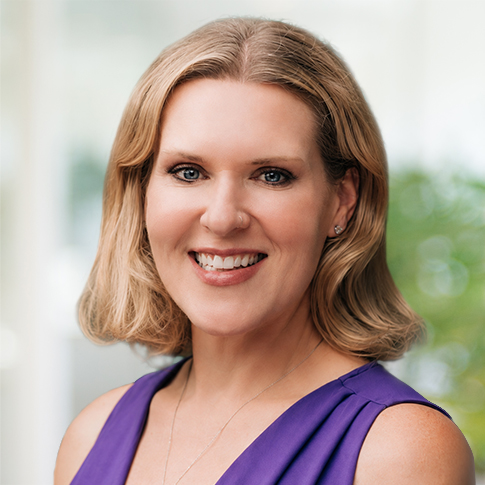
Kate Fowler
Global Head of Nuclear, Willis Global Construction Specialty
Kate is the Global Head of Nuclear, based in Charlotte, NC, USA, as part of the Global Construction team. She brings 16 years of commercial nuclear industry experience to Willis including underwriting, client management and nuclear engineering within the power and insurance industry. Previously, she held the global nuclear leader role at Marsh, served the US Nuclear industry for nine years as a property loss control engineer and senior nuclear underwriter at the US Nuclear Mutual, Nuclear Electric Insurance Limited (NEIL), and as a fire protection and safe shutdown engineer at a nuclear power facility in Nebraska.
In her role with our current nuclear team, Kate is instrumental in fostering connectivity and delivering innovative solutions for our nuclear-focused clients within Willis' Global Construction and Natural Resources Specialty businesses, further enhancing our support for clients.
Kate Fowler
Global Head of Nuclear, Willis Global Construction Specialty
Kate is the Global Head of Nuclear, based in Charlotte, NC, USA, as part of the Global Construction team. She brings 16 years of commercial nuclear industry experience to Willis including underwriting, client management and nuclear engineering within the power and insurance industry. Previously, she held the global nuclear leader role at Marsh, served the US Nuclear industry for nine years as a property loss control engineer and senior nuclear underwriter at the US Nuclear Mutual, Nuclear Electric Insurance Limited (NEIL), and as a fire protection and safe shutdown engineer at a nuclear power facility in Nebraska.
In her role with our current nuclear team, Kate is instrumental in fostering connectivity and delivering innovative solutions for our nuclear-focused clients within Willis' Global Construction and Natural Resources Specialty businesses, further enhancing our support for clients.
Podcast guest
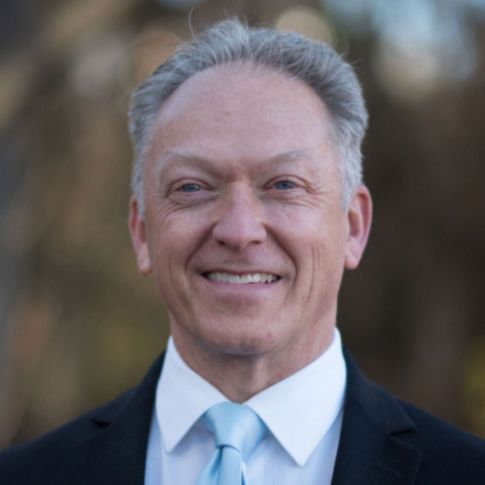
Mike Stake
Founder and CEO of Metatomic Energy
Mike Stake
Founder and CEO of Metatomic Energy