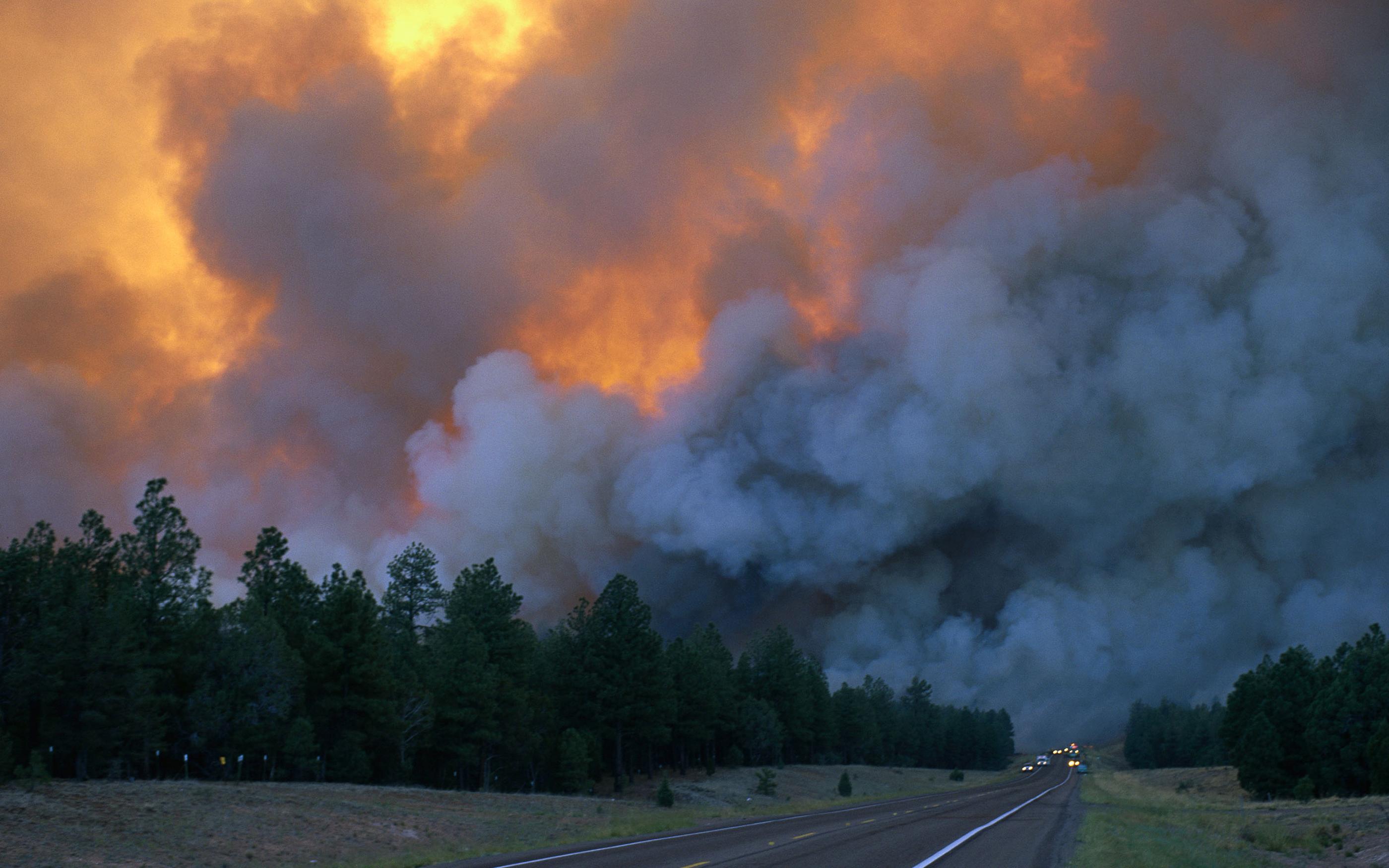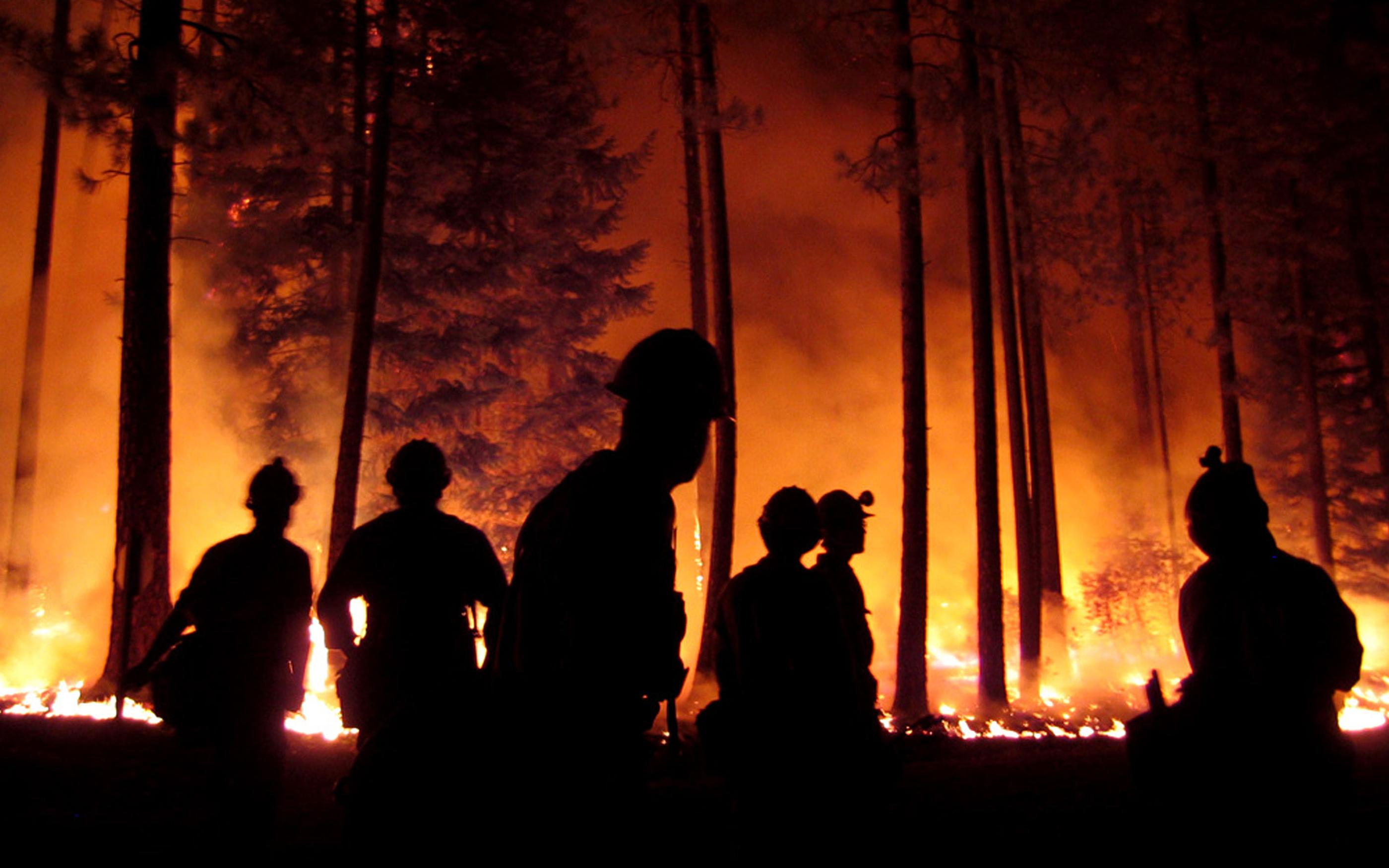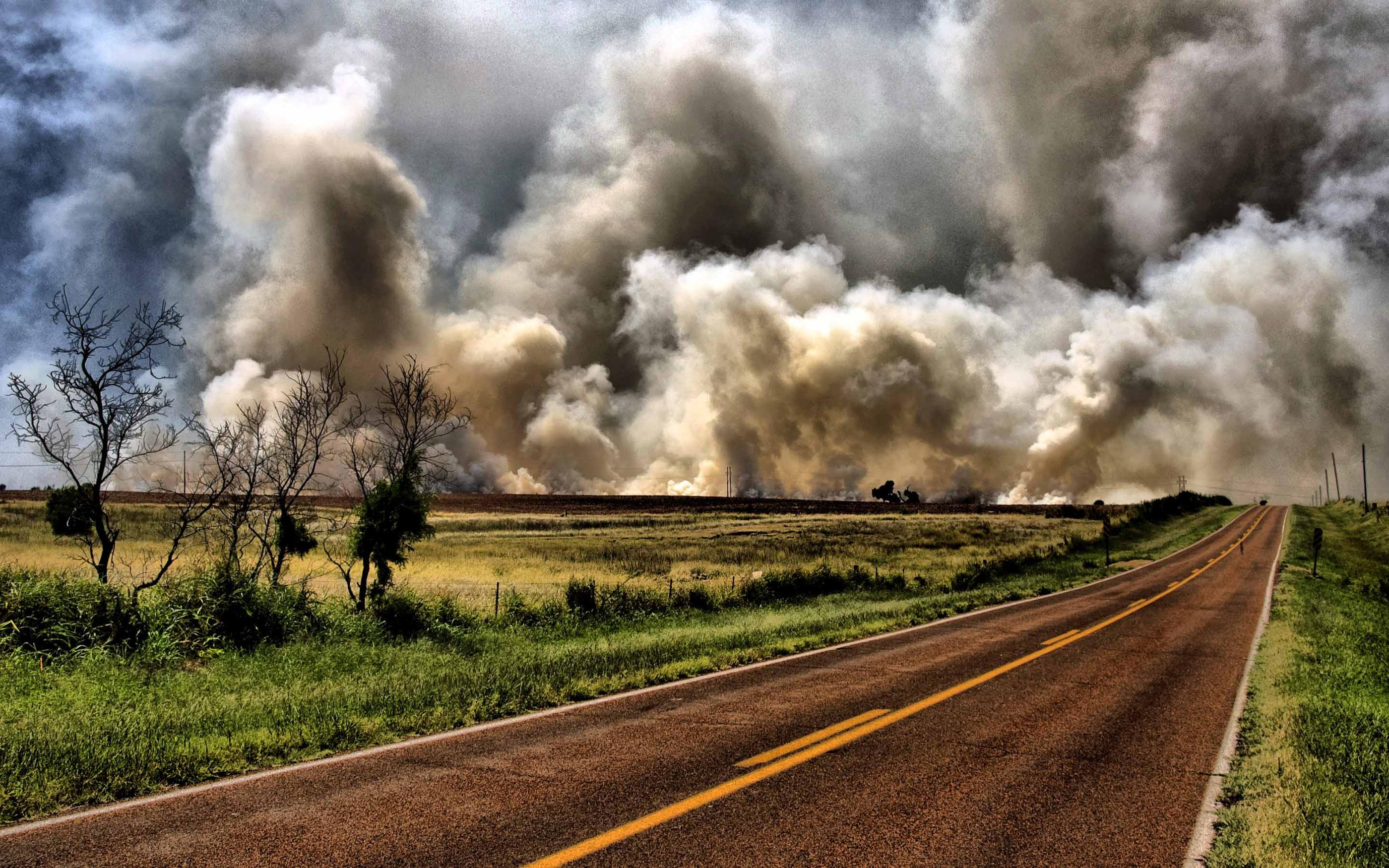
Unprecedented wildfires raged across the Texas Panhandle in late February 2024, consuming over 510,000 hectares and destroying over 500 structures. The Smokehouse Creek Fire, the largest wildfire on record in Texas and the second largest in the U.S., burned 426,600 hectares (Figure 1). Ignited on February 26, 2024, in Hutchinson County, this wildfire rapidly spread across Hemphill and Roberts counties, including the town of Canadian. It cut power to 11,000 people and claimed the lives of three people and 15,000 cattle. Insured losses are expected to exceed $350 million, while the Investigative Committee on the Panhandle Wildfires has estimated that total economic loss to the Panhandle, including the economies it feeds, may ultimately exceed $1 billion.[1]
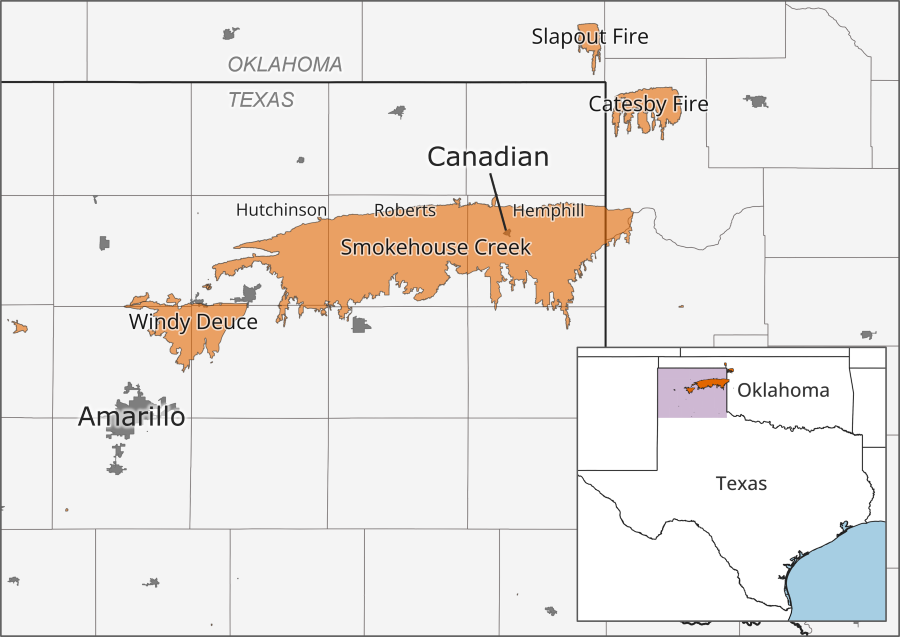
Figure 1: Extents of the largest fires in Texas and Oklahoma, between February and March 2024 (main panel, orange), with urban areas shown in gray. County borders shown in dark gray. Inset: The Panhandle region of Texas is highlighted with purple shading.
Data source: National Interagency Fire Center, WFIGS 2024 Interagency Fire Perimeters.
The Smokehouse Creek Fire highlights how climate change, human factors and poor land management exacerbate wildfire severity, offering five key insights for risk managers.
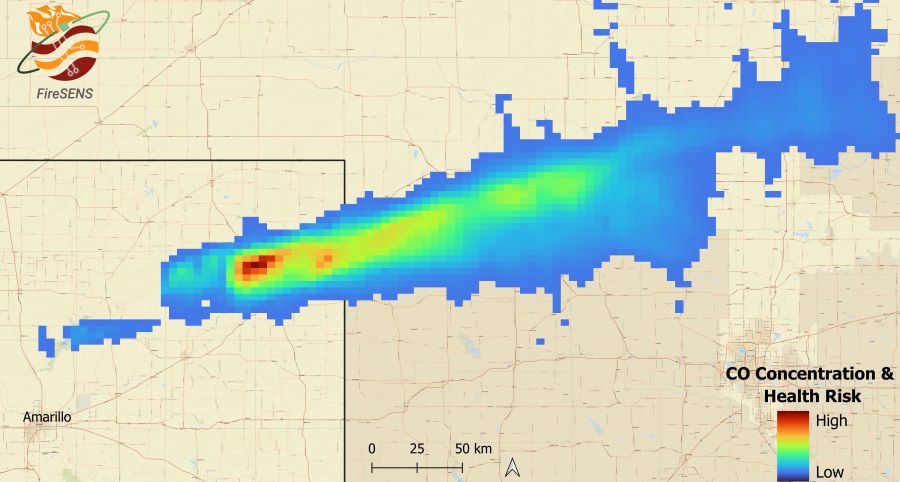
Figure 2. Carbon monoxide plume extent measured using the Sentinel-5P TROPOMI sensor on February 27, 2024. The areas indicated in red are experiencing the highest concentrations of CO and, consequently, the highest adverse health impacts.
Data source: RSS-Hydro
Risk assessment
Evaluate wildfire exposure and vulnerability beyond the traditionally high-risk states on the U.S. West Coast. These assessments should consider how climate change is altering the frequency and severity of wildfire events.
Strategic preparedness and mitigation
Improve local mitigating actions, such as creating defensible space around structures. Insurers can support and incentivize these efforts through premium discounts and community programs.
Risk transfer solutions
Partner with natural catastrophe risk specialists to better quantify wildfire risks and develop innovative solutions for managing and transferring these risks, helping to close the protection gap.
References
- King, K. et al. Investigative Committee on the Panhandle Wildfires: A report to the House of Representatives 89th Texas Legislature. (2024). Return to article
- National Weather Service. Two days of wind, dust and critical fire weather (26-27 February 2024). (2024). Return to article
- The Texas Tribune. Texas requires utilities to plan for emergencies. That didn’t stop the Panhandle fires. (2024). Return to article
- Personal communication. (2024). Return to article
- Texas A&M Forest Service. Texas Fire Protection Plan. (2023). Return to article
- Climate Central. Burning Hot: 50 Years of Fire Weather Across the United States. (2024). Return to article
- Fire Information. Historical Fire Statistics. (2024). Return to article
- The Texas Tribune. Many homes burned in the Texas wildfires weren’t insured, creating a steep path to recovery. (2024). Return to article
- WWF. Fires, Forests and the Future: A Crisis Raging Out of Control? (2020). Return to article
- Ford, B. et al. Future fire impacts on smoke concentrations, visibility, and health in the contiguous United States. GeoHealth, 2(8), 229-247. (2018). Return to article
Download
| Title | File Type | File Size |
|---|---|---|
| Five key insights from the 2024 Texas Panhandle wildfiresPDF | 15.1MB |
Authors


Contact