
Introduction
Across Asia Pacific, the rising cost of living and concerns about financial security are reshaping what employees need from their employers. Despite growing employee demand for support, there are considerable gaps between employee expectations and employer priorities.
Financial stress is affecting wellbeing, resilience and performance
A third of employees in Asia Pacific are living pay cheque to pay cheque, while a similar number have financial problems negatively affecting their lives.
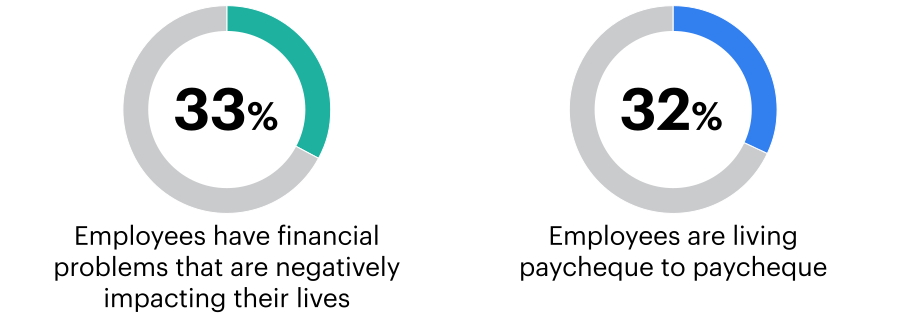
Financial problems affect a significant number of employees
Source: 2026 Global Benefits Attitudes Survey, Asia Pacific
Financial challenges rarely exist in isolation. Employees facing financial distress are more likely to experience burnout, lower wellbeing and poor retirement preparedness.
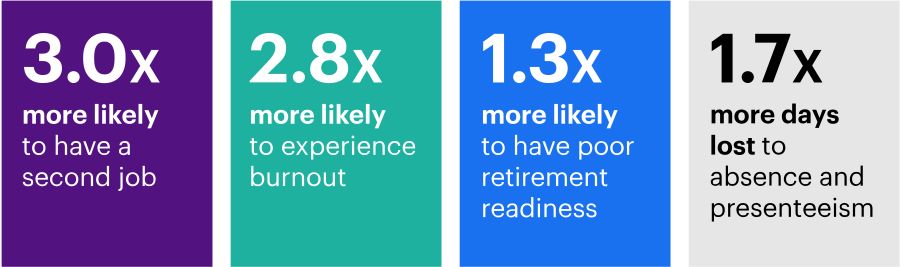
The workforce impact of financial distress
Source: 2026 Global Benefits Attitudes Survey, Asia Pacific
The implications are beyond individual financial health and represent a broader workforce risk. Employees under financial pressure are more likely to have poor lifestyle habits and delay or miss healthcare appointments. They also take on additional work, and lose more time through absence and presenteeism, laying bare the close connection between financial wellbeing, workforce health and performance.
Financial wellbeing is where employees want the most support
In seven of the 10 Asia Pacific markets surveyed in WTW’s 2026 Global Benefits Attitudes Survey, financial wellbeing ranked as the number one area where employees wanted employer support. Employees increasingly view financial wellbeing as a core component of their overall wellbeing. It ranks in the top five benefits they deem important and want improved.
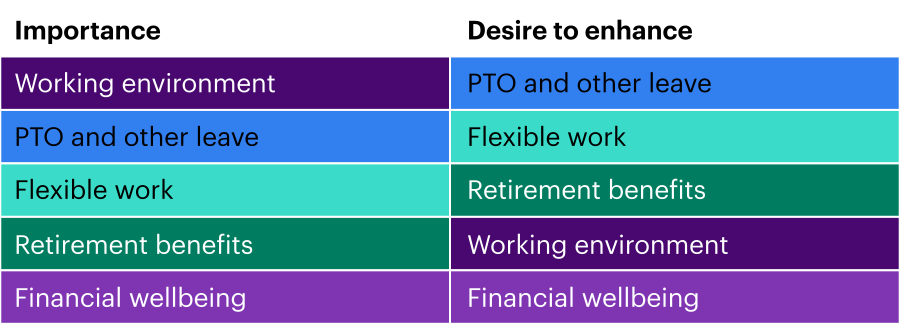
Financial wellbeing ranks among the top five areas employees value and want improved
Source: 2026 Global Benefits Attitudes Survey, Asia Pacific

Financial wellbeing is the largest gap between employer and employee priorities
Source: 2026 Global Benefits Attitudes Survey, Asia Pacific
However, financial wellbeing remains the area where employer and employee priorities are least aligned. Employers continue to invest heavily in physical and emotional wellbeing initiatives, and rightfully so, given the health challenges employees continue to face . But as employees increasingly struggle with financial challenges, the disproportionate focus from employers on other areas of wellbeing means there is a disconnect between employee expectations and employer priorities when it comes to support for financial wellbeing.
This highlights an opportunity for employers to recalibrate their wellbeing priorities and direct greater attention and investment toward financial wellbeing. Integrating financial wellbeing into the broader employee benefits strategy and better aligning with wellbeing programmes can help organisations address employees’ most pressing needs more effectively.
Employees want practical support
As financial concerns grow, employees are looking for help with real-world financial challenges, in addition to education. Education remains a core focus for employers and has an important role in helping employees improve financial literacy and make more informed decisions. However, employers also need to meet employees where they require the most support.
Employees’ top three priorities include growing savings, saving for retirement and protecting wealth, highlighting a focus on building short- and long-term financial resilience.
However, this can mask important differences in needs between employee groups. Those experiencing financial distress are more likely to prioritise help with managing debt and accessing emergency funds.
Understanding what different employee groups value most can help employers design more relevant and effective programmes.
Employer action is growing in selected areas
Employers in Asia Pacific are focused on supporting employees to build financial stability and prepare for financial shocks. This has translated into initiatives focused on education and building financial resilience, although the availability and range have changed relatively little over the past two years.
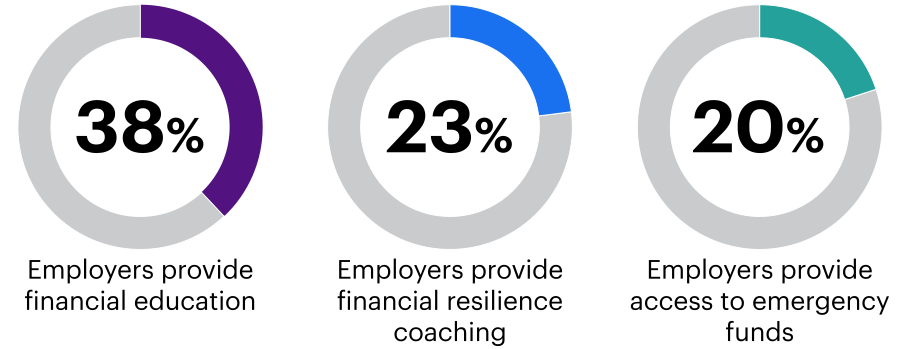
What employers currently provide
Source: 2026 Wellbeing Diagnostic Survey, Asia Pacific
An area of increased employer activity is in preparing employees for financial shocks, with more organisations offering assistance in the case of catastrophic events. This includes death, serious illness and financial crisis.
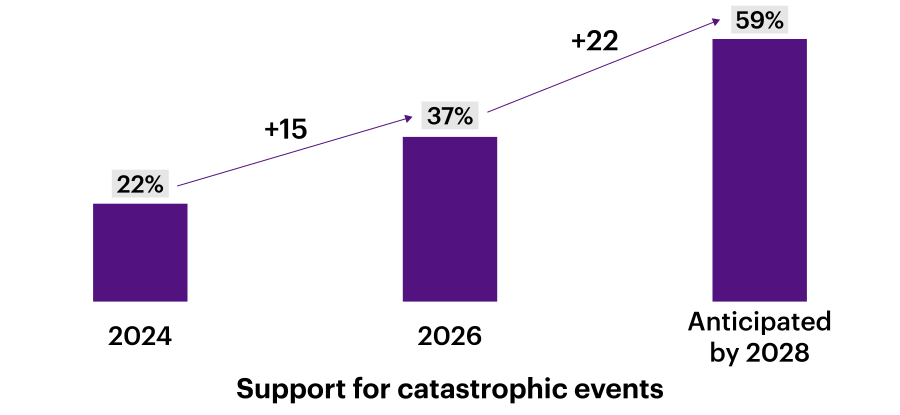
Employers are increasingly preparing employees for financial shocks
Source: 2026 Wellbeing Diagnostic Survey, Asia Pacific
Retirement readiness remains a challenge
Employees’ focus on retirement savings is not a surprise. Long-term financial security is a significant concern across Asia Pacific, particularly among employees approaching retirement age.
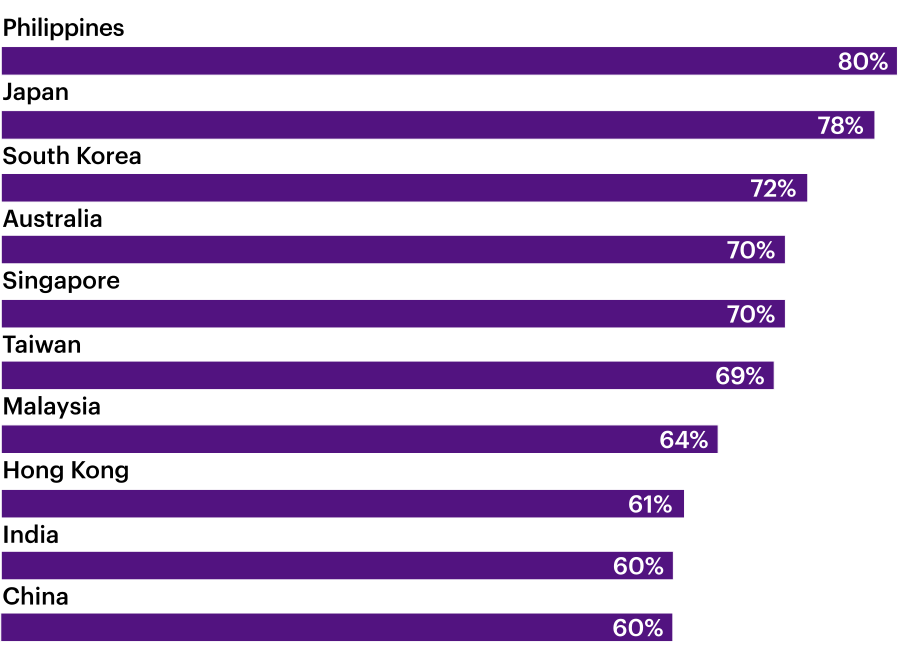
Concerns about retirement income remain widespread for employees aged over 50
Source: 2026 Global Benefits Attitudes Survey, Asia Pacific
Between 60% and 80% of employees aged 50 and over in many Asia Pacific markets worry about having enough income to last throughout their retirement.
While immediate financial pressures often dominate the conversation, concerns about retirement readiness show that employees also need more help with longer-term financial security. This highlights the importance of effective retirement planning and retirement benefits that optimise outcomes for employees.
Employers should consider how benefits and financial wellbeing programmes can help employees build financial confidence throughout their working lives and into retirement.
What leading employers are doing
- Aligning financial wellbeing strategies to employee needs and priorities
- Looking beyond financial education alone
- Providing practical support that improves financial resilience
- Using workforce data to anticipate areas of greatest need
- Addressing short-term financial pressures and long-term retirement readiness
- Measuring the impact of financial wellbeing on workforce outcomes
- Considering AI-enabled digital tools to improve and simplify access to financial wellbeing resources
Financial wellbeing is no longer purely a rewards issue. It is becoming a workforce performance, resilience and health issue. Closing the gap between employee and employer priorities requires financial wellbeing to be considered alongside physical, emotional and social wellbeing as part of an integrated strategy.
By aligning programmes with what employees value most, employers can help build financial resilience and strengthen broader workforce outcomes.
Next snapshot: Navigating AI's impact on benefits, wellbeing and the employee experience.

Sources
2026 Global Benefits Attitudes Survey, Asia Pacific
2026 Wellbeing Diagnostic Survey, Asia Pacific
Get in touch