
The economic landscape across Asia Pacific is expected to encounter headwinds this year as GDP growth is projected to slow down, while high inflation remains. As such, companies need to have a more insightful approach in how they do business, and this includes evolving how they conduct compensation benchmarking and build a competitive rewards and talent strategy.
Organisations may consider applying advanced and targeted data analytics to understand the internal and external business environments and reflect them when designing rewards and talent strategies.
Analyse the supply and demand of talent in the market
The average employee turnover rate in Asia Pacific declined from 16.5% in 2021 to 12% in 2022, according to our 2022 Salary Budget Planning Report – Asia Pacific (December edition). This can indicate that more employees are opting to stay with their current employers rather than leaving them.
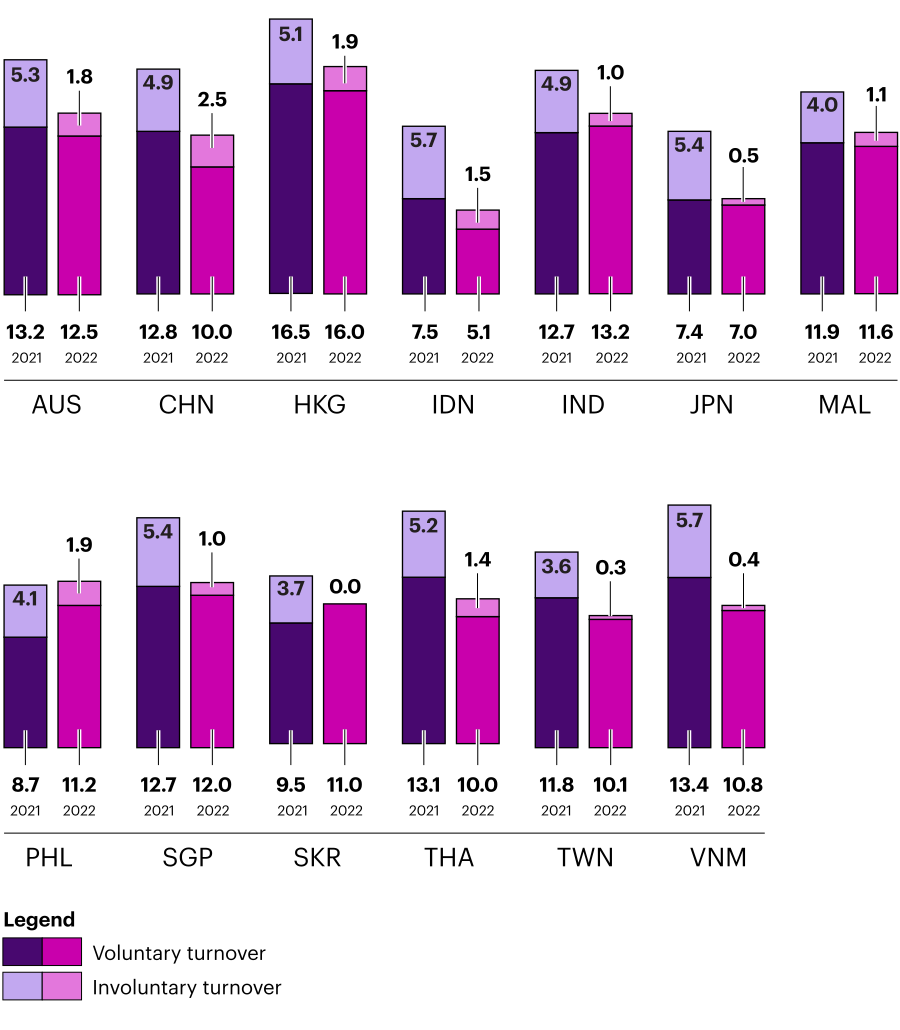
Figure 1: Talent turnover rates across Asia Pacific markets
However, organisations across Asia Pacific report that they expect the labour market to be tough this year (Figure 2). More than half (66%) of companies surveyed said they still encounter problems in attracting and retaining talent in 2023. Though this is a 20% decrease from last year, it is still expected that attraction and retention hurdles will prevail in 2023.1
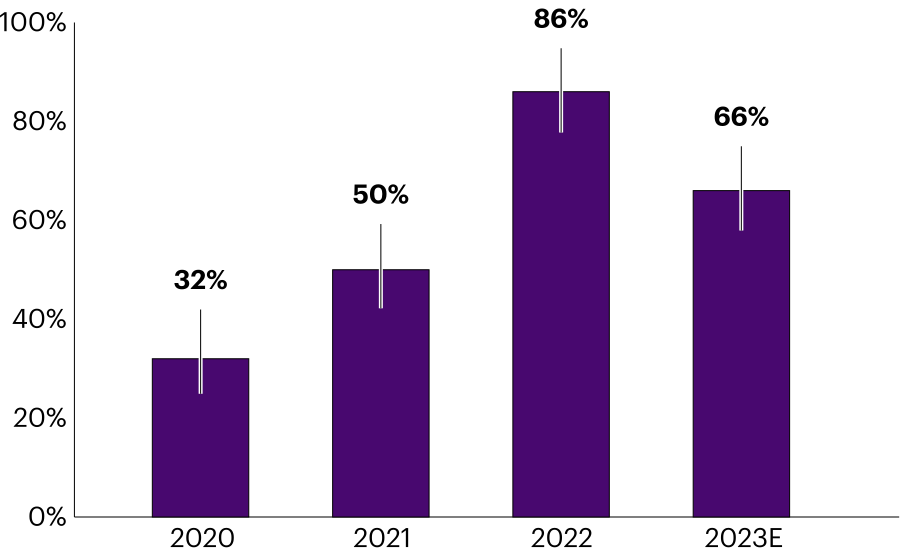
Figure 2: Asia Pacific employers experiencing difficulties with talent attraction and retention
In 2020: 32%
In 2021: 50%
In 2022: 86%
In 2023E: 66%
It appears that a lower turnover has reduced the difficulty of talent attraction and retention for employers, but the competition for talent is expected to remain. At a closer look, the attraction and/or retention challenges tend to be specific to a certain function, and not the entire workforce. The field of Information Technology (IT) tends to be the toughest for companies when it comes to sourcing talent (Figure. 3).1
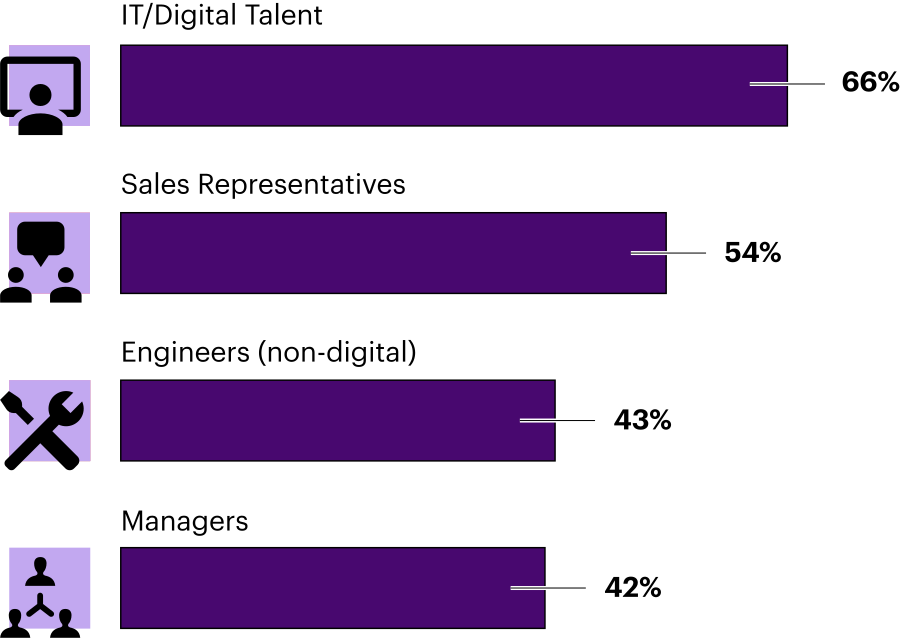
Figure 3: Functions with talent attraction and retention challenges in Asia Pacific
IT/Digital Talent: 66%
Sales Representative: 54%
Engineers (non-digital): 43%
Managers: 42%
This is mostly due to the digital transformation taking place, where Artificial Intelligence, machine learning, as well as business intelligence are gaining prominence in the market. Business intelligence uses technology to analyse data and transform it into useful information that will guide executives, managers and workers in making critical business decisions. Organisations also find it hard to recruit for the sales function, as improving economic conditions ramp up competition for sales talent. Engineering is another area where companies compete for talent as they need more people to support the restructuring of the global supply chain.
Implement same-store analysis to offer competitive pay
Same-store analysis pertains to evaluating the compensation structure provided by a firm’s competitors within a certain market. This requires having a broader view of salary trends in reference to the supply and demand of talent across different job roles, job levels and locations. For instance, in Asia Pacific, pay for engineering has been higher than other job roles as engineers are very much in-demand (Figure 3). The pay increment is more prominent in career level P3 to P5, which is the senior engineer level, across different markets in Asia Pacific as the demand is higher. This is especially noticeable in Vietnam, India and Indonesia (Figure 4).2
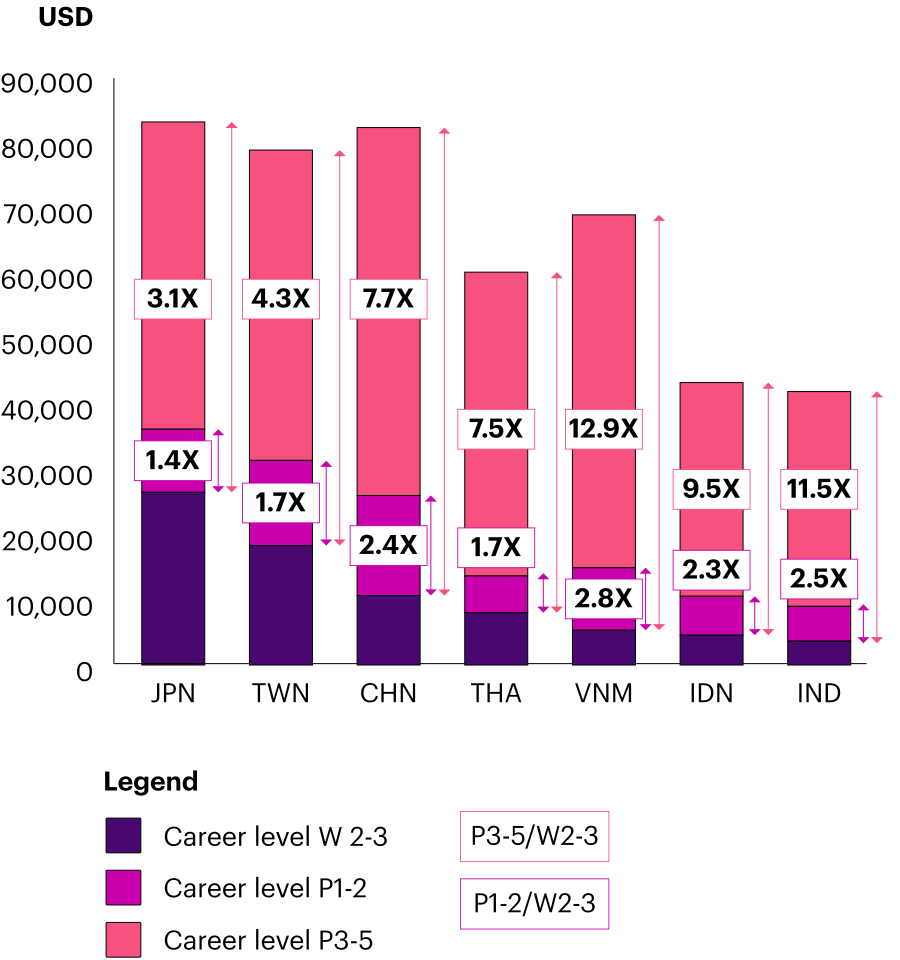
Figure 4: 2022 Actual total annual compensation (median) for engineering
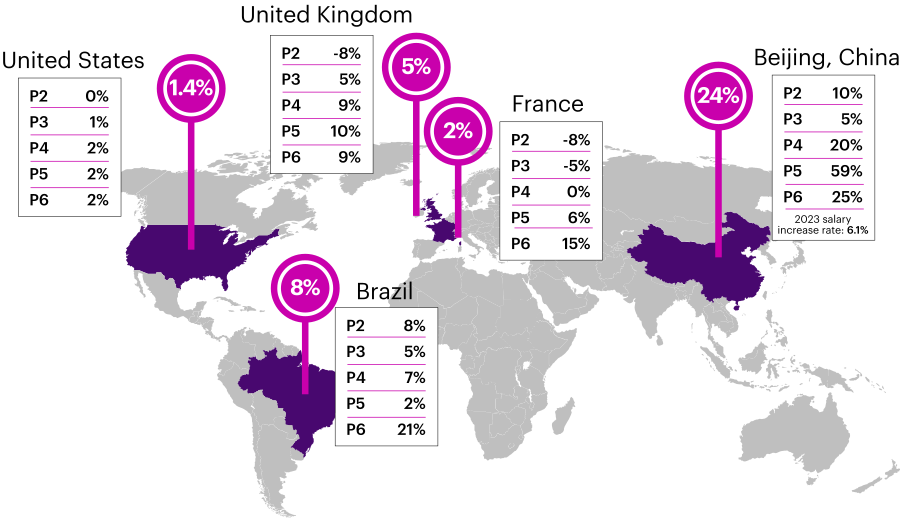
This trend can also be seen for IT- or technology-related jobs. In China, companies in the Technology, Media and Gaming (TMG) industry are paying higher premiums for new hires in senior levels to drive attraction (Figure 5). However, premiums tend to be lower in France due to the influence of unions while in the U.S., lower premiums tend to be driven by career progression that establishes pay parity between new and existing employees. Having this information will help multinational companies in designing their pay practices according to the labour market conditions in a particular country and be able to offer competitive pay.3
Salary Budget Planning Report – Global
Make informed pay decisions with the latest data
Trending Topic
Beyond Data

Related Articles
Aside from external market conditions, organisations need to assess their current headcount to maximise compensation spend. Think of your organisation as a pyramid where you have fewer managing directors at the top and more people at the lower levels. If you examine the pay structure, it may look like an inverted pyramid where pay is more concentrated at the top than the lower levels. This can mean that an organisation is top heavy and may need to be re-evaluated to ensure that funds and headcount are allocated accordingly to the current business and market demands.
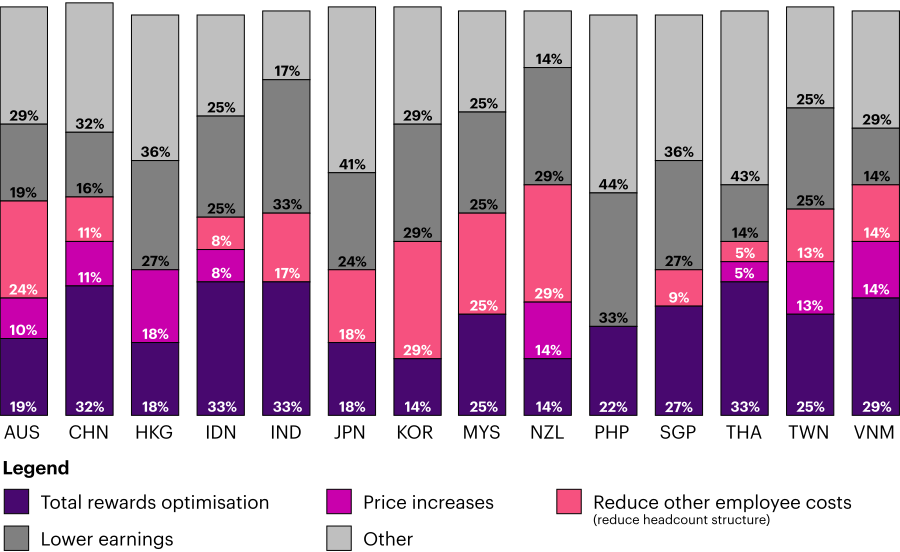
There are other measures to maximise compensation spend without negatively affecting an organisation’s costs. This includes total rewards optimisation, which involves leveraging non-monetary rewards that can improve employee experience. This is now commonly observed in the PHS industry (Figure 6).1
Author