A significant challenge insurers face, particularly in the tail of the distribution, is the failure of imagination.
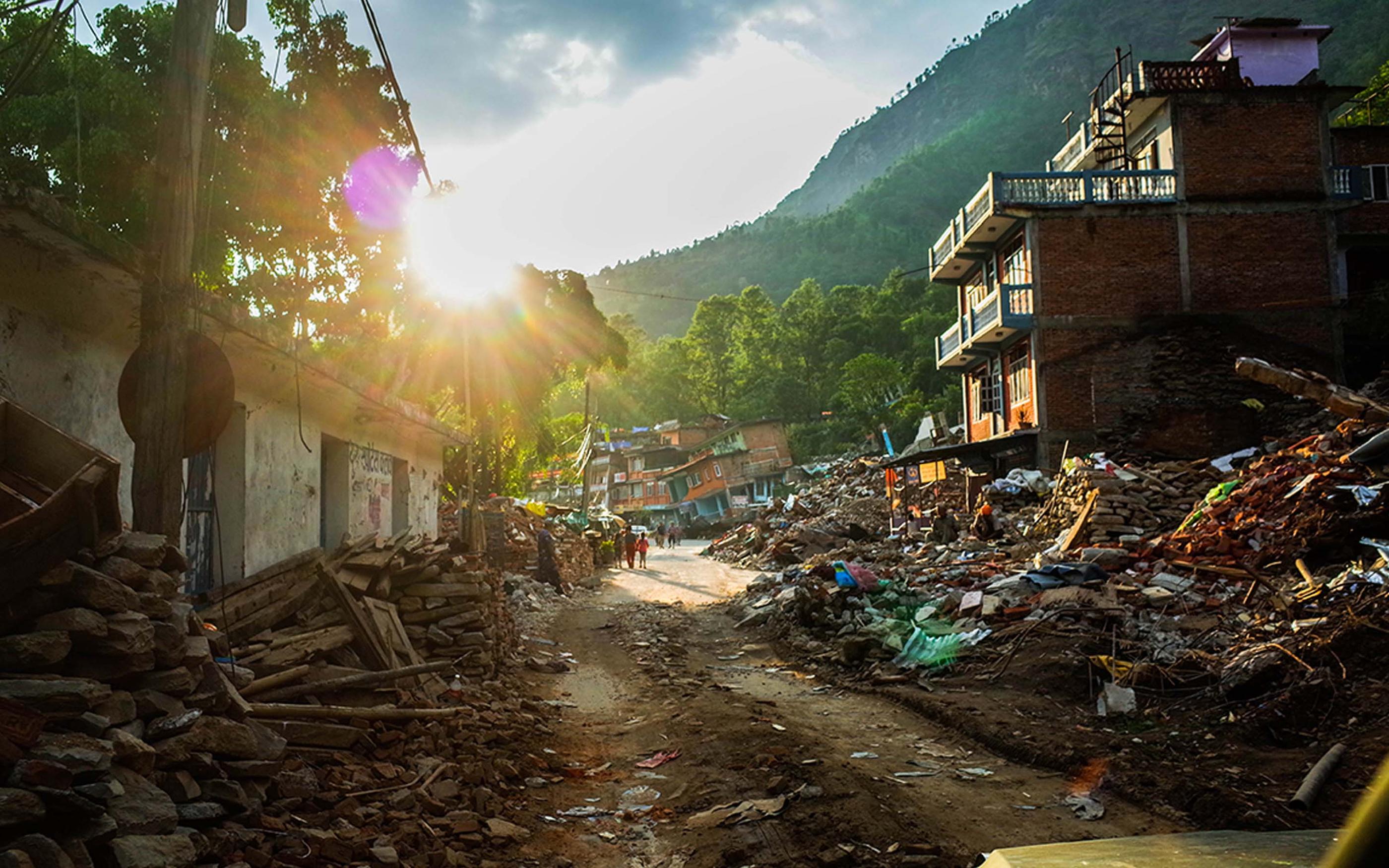
An example of failure of imagination was evident during Hurricane Katrina in 2005, when levees protecting the city failed, resulting in devastating flooding and nearly 2,000 fatalities. Despite the known risk of levee breaches in New Orleans prior to the event[3], such scenarios were not incorporated into catastrophe models used for risk management at the time. As a result, many (re)insurers unwittingly had large flood exposure concentrations in the city, which translated into substantial losses when the levees failed, resulting in the costliest insured loss on record at the time.
This problem stems from limitations in the brain. Human thinking is riddled with cognitive biases[4] that skew our judgment. Our ability to imagine potential future outcomes is limited by the availability bias, causing us to overestimate the likelihood of events that are more memorable, the recency bias, which draws too heavily upon the most recent experiences and the hot hand fallacy, whereby a string of successes can lead to an overestimation of future success. But the point of scenario development is to imagine unimaginable – but possible – future events. How can we achieve this with brains that are inherently wired to cling to the familiar?
How can AI help us to better understand climate risks to help with planning accordingly and via adaptation and mitigation strategies?
Natural Catastrophe Program 2024
Our 2024 Natural Catastrophe program will bring together multi-disciplinary expertise from our WTW Research Network.
Generative AI, particularly LLMs, presents a compelling solution to overcome the limitations of human imagination…
It is also important to note that the quality and specificity of a prompt provided to an LLM can significantly influence the accuracy, relevance, and usefulness of the scenario produced. Investing time in prompt engineering – the practice of carefully crafting inputs to elicit the desired outputs from generative AI – is therefore vital. At WTW, we have been refining this practice to aid our insurance clients in developing a broad range of scenarios relevant to their exposures.

What’s on the horizon?
AI is advancing quickly, with breakthroughs now spanning beyond language models to areas like weather forecasting, including hurricane landfall predictions[6]. It is entirely plausible that within a few years, AI will not only generate natural catastrophe scenario narratives but also produce synthetic hazard data for these scenarios, such as hurricane wind fields. Eventually, we might even see AI-generated catastrophe models capable of simulating probabilistic losses. The potential applications are as vast as they are exciting, and our engagement with this technology can unlock the door to new capabilities in catastrophe risk assessment.
Footnotes
- Schwartz, P. (1996). The Art of the Long View: Planning for the Future in an Uncertain World. New York: Currency Doubleday. Return to article
- Shell Scenarios. Return to article
- Lousiana State University, The Climate Change and Public Health Law Site, Hurricane Pam Exercise. Return to article
- Daffron (2023), How do you weigh a biased perception of risk?, WTW. Return to article
- Open AI. Return to article
- Lam et al. (2023), Learning skillful medium-range global weather forecasting, Science. Return to article
Authors

LLMs should therefore be viewed as tools to assist with the heavy lifting of generating scenario narratives, rather than a turnkey solution.