SPEAKER: Welcome to Digital Uptime by Willis, a WTW business. In each episode, we examine the evolving landscape of digital infrastructure and data centers, their interconnected risks and challenges, and the strategies that help businesses redefine risk and keep resilient in our digital first economy.
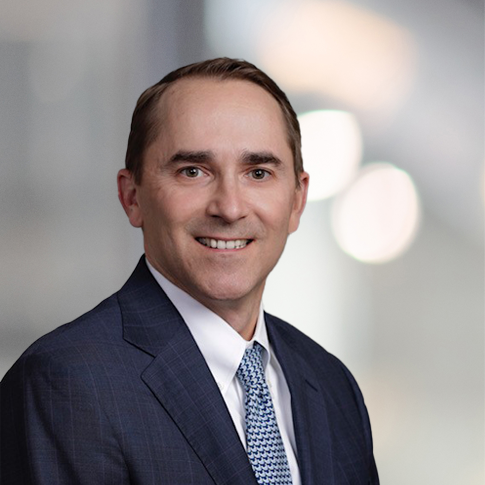
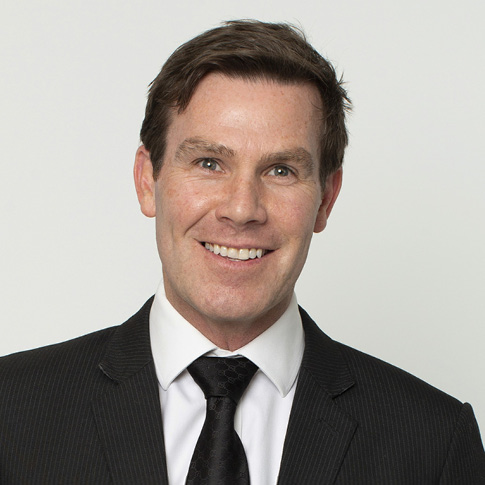
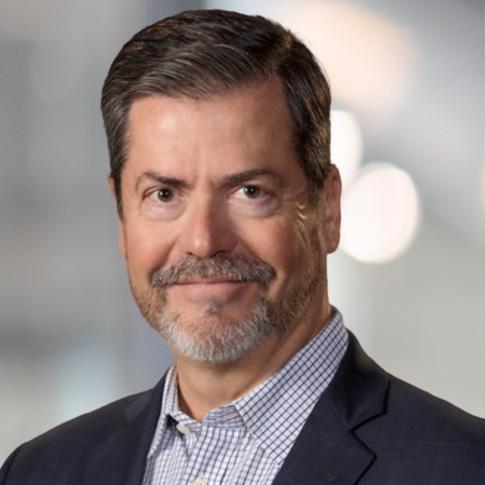
TOM GRANDMAISON: Hello, and welcome to our new podcast series, Digital Uptime. I am Tom Grandmaison, chief client officer of the Willis North American construction industry practice and your podcast host today. I'm delighted to be joined by George Haitsch, our North American head of technology, media, and telecom industry practice, as well as Trent Williams, our global construction chief broking officer.
In this episode, we will explore how Willis is positioned currently and our plans for how we will support clients in the arena of digital infrastructure going forward. So let's get things started. George, please tell us how Willis has supported the data center segment the last few years, and why do you feel Willis is so well positioned over the next three to five years to support stakeholders in that space.
GEORGE HAITSCH: Thanks, Tom. Absolutely. We've had fantastic momentum in the data center space, building off of our industry focus and segmentation strategy that Willis has really leaned in on over the past several years. I lead our tech industry division for North America, and we've made some fantastic strides in that sector, building credibility and connecting with our data center clients and those companies that are influential in this space.
And as the momentum picked up with the release of ChatGPT two-and-a-half years ago and the incredible momentum that that spurred with respect to reconsideration of what a data center needs to be in order to support artificial intelligence and the realization that the scale, scope, and technical and energy capabilities that are required are at a level that had previously not been committed.
Within Willis, we partnered up with our construction team. That industry group has been a global leader for decades and really focused on bringing together a value proposition that connected the construction phase of the data center through the operational phase in a way that has been differentiating and has really put us in a position to bring a unique set of capabilities to clients well in advance of many other players in the market.
TOM GRANDMAISON: Great, thanks, Trent, how should various stakeholders in the data center space view last week's Willis press release announcing the digital infrastructure group?
TRENT WILLIAMS: Thanks, Tom, and thanks for having me. Yeah, look, the press release was exciting. It's a great step forward. It was a great signal. And the signal is intent. I think what it signals with that intent is how serious we are at Willis about this.
Now, I do want to stress this is not new. As a global organization, we have been acting as a global community in this space for quite a while. But to actually go external with the fact that we didn't just want to put a figurehead in and say, this is what we're doing, or have it dominated in one particular part of the world or one particular global specialty business-- George mentioned the construction there.
But we really want consistency, and we've built this with client at the heart of what we do. In every interaction, it's all about the client. So if, for example, have a North American client who is looking to build a facility in Asia, for example, you're going to have a consistent feel, consistent response, consistent advice from us the whole way through. If you're a European contractor and you're looking to build something in Sydney, Australia, for example, we're going to give you advice around what the PPA looks like.
We're going to give you advice consistently around some of our modeling analytics that are available. That's the exciting part to me is that every corner of the globe is covered and every component of our business.
So it's not just construction, it's power, it's tech and media, it's cyber. And the last thing we want to do is have, for example, construction brokers giving advice on marine or marine brokers giving advice on the cyber. So it's a really exciting step forward for us.
TOM GRANDMAISON: Thank you. George, with the rapid evolution comes a new set of complexities. Drawing on Willis's experiences to date, what are some of the primary risks and challenges for organizations to be thinking about? And can you also talk a little bit about Willis's eight-point risk framework.
GEORGE HAITSCH: Absolutely. There are a lot of things that clients and prospective clients that are getting into this sector really need to be thinking about that are unique to the digital infrastructure sector. There's a tremendous amount of concentration risk that needs to be considered.
The scale and scope of these hyperscale campuses are very significant. And the insurance market is working hard to provide capacity and solutions that really meet the need. And Willis is working very aggressively to have a bespoke solution launched for [INAUDIBLE] 2026 that addresses that in a meaningful way. So we're excited about that.
The power grid and energy systems that Trent mentioned, the dependencies really tee up failure, overreliance on the grid, overreliance on certain forms of energy, which is creating a unique situation. There are cooling components as well, so you have both the generation of energy and the required cooling.
When you think about the fact that these data centers are 24/7, 365, it's a really daunting process that needs to be supported. There are environmental dependencies as well as hardware supply chain vulnerabilities that we need to think about.
And some of those vulnerabilities really tie back to some of the large geopolitical situations that are happening around the world given the ponderance of Taiwan with respect to semiconductors, which are critical to the infrastructure of any data center. So that's a systemic risk that could be triggered by geopolitical situations, not unlike what's happening right now in the Middle East, are things to think about as well.
And then there's regulatory issues that need to be considered as well as market and systemic risk. Regulations around artificial intelligence are still developing all around the world. So that's something that we're keeping an eye on, and risk management professionals in the space need to be thinking about as well.
With respect to our eight-point framework, it's a really great summary because it goes from emerging and strategic risk through physical damage, the financial risks to operations and reputation. It factors in climate, environmental, and third-party liability risks. It talks about cyber and data-related risks, compliance and legal risks, supply chain risk, and, finally, operational risk.
And it ties it all back together, in typical Willis fashion, around what would the financial impact to a client be and how do we want to think about creating a risk financing strategy via insurance, but also via other tools to make sure that we're protecting the bottom line, make sure that we're protecting cash flow, and make sure that we're protecting those financial components that are most critical to each individual client.
So it's that unique nature of taking an analytical approach to managing risk that we're tying together and bringing a solution to market for digital infrastructure risk.
TRENT WILLIAMS: Before we move on there, I think George raises some really good points there around the fact that we've put this global group together. just the regional differences around regulatory was one piece, but also how are we going to power these facilities is another. It's different region by region. So having this global group and a global approach is going to be so critical to how not just for the next 12, 24 months, but how this goes forward as well.
TOM GRANDMAISON: Yeah, and I love how our eight-point risk matrix is a thoughtful approach to right terms and conditions, right limit, right pricing, not necessarily leading with capacity. Trent, with respect to capacity, how is Willis partnering with insurance carriers to line up support?
TRENT WILLIAMS: Look, I think there has been a shift in the last 12 to 18 months. I think Willis and broadly the insurance market has gone from being quite transactional. We have another data center facility to place, and we're taking it to market to being quite strategic as to how we do this.
So a lot of the conversations we're having with carriers are all about, I guess, well, two things, one, what we're learning from the client experience, but, two, how can we build something that's sustainable for the next 12 months but sustainable into the future as well?
And what I mean by that is these projects are-- like limits are rapidly lifting. The technology is rapidly evolving. So what the solution looked like 12 months ago all of a sudden is becoming obsolete the next time a project comes up. So we're just trying to talk to our carrier partners around not just what it looks like now, but where this is going. And it's heading in a direction of change.
So we're talking to them around being strategic, really trying to think about how can we differentiate. And it's interesting, all the carriers at the moment are trying to differentiate. So whether it's by product or whether it's by enhancements or whether it's like, for example, in Lloyd's, there's consortiums being built because a lot of the syndicates realized that their capacity on its own is simply not going to be enough for some of the limits that are required.
So the carriers, like brokers, are trying to differentiate. And I think the conversations we're having, and I'll give an example here, is that North America are talking around a first-party integrated approach, so construction through operational. It's not a new model. Obviously, we've got great experience in design, build, operate, maintain.
We've also got great experience globally and in North America around public and private partnerships so that the model is not new. But making sure we've got this first party to start with integrated approach, construction through operational, but then looking at how we can incorporate marine and incorporate cyber, and down the track, how do we put liability into that as well?
So we're not coming at it saying we've created a solution for our clients. We're saying this is what our clients want, and we want to work with our carrier partners to build what's fit for purpose for those clients, not just today but for the future. And I think that's really important.
Just a final point on that one as well is some of these discussions that we're having in North America, we've also got great experience in London through our London team and what we're doing with European contractors out of London. So we have an opportunity here as a large organization to be really, truly global, to build on what we're doing in North America, London, and Europe.
We've got a lot of data centers that have been placed through the Asia-Pacific region as well. We've got a growing presence in Dubai through the DIFC. So to bring that all together globally and not just tell clients we have a facility that we've built and it's placed through London or it's placed through North America, is that we're talking really thoughtfully.
I mean, there's so much investment that's being slated for Asia, for example. The Asian markets, we need to be engaging with Asian markets up front and talking to them about thoughtfully, where do you want to play? Is it on the up front? Is it reinsurance?
Excitingly, we've rebuilt Willis Re, so we'll make sure that reinsurance is a key part of what we do going forward. To me, there's so many opportunities. Making sure that the local markets and the regions that we have a presence have a play in this, have a stake in what we're doing, that's the exciting part, is we're not directing all of the opportunity through one particular market. It's a truly joined up, global approach.
TOM GRANDMAISON: Great. George, can you talk a little bit about Willis's approach to capacity and insurable limits and maybe some of the other important stakeholders beyond buyers of insurance that we need to educate and hit upon?
GEORGE HAITSCH: Yeah, I think we take a thoughtful, strategic approach that's framed by, as always, our analytics and framed by understanding our client's risk financing capacity and looking at things from a realistic, market-driven perspective. You really need to frame the conversation around the life cycle of digital infrastructure, which really starts with construction and goes through operational.
And in the interim, there is the supply chain risk that comes in with all of that hardware that's being moved into the data centers and often being stored adjacent to or on a construction site as these various rooms get stood up.
It's important to think about things in the totality of risk and choose limits by line that are reflective of the exposure and understanding in cycling back to that eight-point framework, which we think is very comprehensive and touches on key areas, what are the points that are insurable, what are the points that are material, and what's the market capacity relative to the exposure?
So far, there are some very significant data center projects for hyperscale campuses, but the majority of them are insurable, and we're seeing tremendous success in that respect.
The other area that's evolving is really around financing, Tom. The banks don't want to be overexposed. There's concern that this data center boom is just that, a boom, and with a boom, can there be a bust? So they don't want to-- just like insurers, they're underwriting their risks, and they want to make sure that there's not a concentration. They want to make sure that they're not overexposed.
And this is where the rush of capital into the market, following where the money is, is a factor that needs to be managed. And that's something that is becoming more relevant to conversations with clients, more relevant to those clients and conversations with their lenders, and certainly the participation of major technology companies in this who have the balance sheets to fund their own projects is certainly influential and helpful.
But it's for the rest of those in the investment community that we really need to be thoughtful and align all of those risk solutions, not just on the digital infrastructure side, but being thoughtful and aligning with our financial services team, with our real estate team, private equity team to make sure that we're bringing solutions to protect those clients that are investing into the space as well.
TOM GRANDMAISON: Trent, expanding a little bit beyond what you just mentioned relative to first-party integrated policy forms, what are your thoughts around how the insurance companies have to think differently about data centers in the way they assess or provide insurance to the data center segment?
TRENT WILLIAMS: I think they're already thinking differently. I do think the way they're organizing themselves and structuring themselves, they're definitely thinking about it differently with regards to, I guess, how they assess risk.
I mean, George touched on it there. These limits are getting so high. Is the pure limit of the total facility required, or can we help with some modeling around what an MFL analysis looks like or, dare I say it, buying less insurance and being a bit more thoughtful and strategic?
But one of the things that I think the collective, both underwriting and broking worlds, we need to get together and innovate. And, look, we're in a market cycle at the moment. That's obviously user friendly for clients. There's great results out there.
There's a lot of carriers that are looking at construction infrastructure and obviously digital infrastructure and wanting to be a partner in that space. We're in a market cycle where there's a lot of capacity available, a lot of players that are present. I look at the forms that we're using in this space.
So I look at the builder's risk form. I look at what London use for contractors or risk. It's old language, it's old form. It wasn't really written or the language isn't really appropriate for digital infrastructure. So I think innovating around product and being thoughtful around where this is going and not using off-the-shelf offerings, or we've used this form forever in a day.
We really need to be thoughtful about where we take this with regards to coverage. And I think that's how we can work really closely as a collective, clients, carrier partners, and ourselves as brokers and advisors to make sure that we're building this for the long term because a lot of the language that you see in current forms was not drafted or scripted for what we're seeing at the moment, particularly around the evolving technology that's there.
So I do think that's-- again, it comes down to a similar approach that we've got with our global group, which is that insurance companies, insurance brokers historically have not been structured or set up to deal with the breadth of digital infrastructure.
So as I mentioned before, you've got construction, you've got large property, you've got cyber, you've got marine, you've got climate, you've got-- insurance companies have set up no differently. They've got all these different lines of business and profit centers, as they call them, to really bring that together and have a joined-up approach as underwriters.
Because it's really, really pointless if we're talking to one carrier about multi-class offerings when they can do two or three of the classes that we're needing, but they have an issue with two or three or one of them. So having a joined-up approach, being thoughtful around innovation is where collectively the whole industry can start to think differently.
TOM GRANDMAISON: Final question for you both. Beyond what we've talked about here today, what else should buyers of insurance in supporting construction or the operations of data centers should be thinking about as you look down the road three to five years? Start with you, George.
GEORGE HAITSCH: Sure. I think focusing on their business model and understanding where their company wants to go and how they're being tasked to support that, and then working with their broker partners and their carrier partners to get in front of that risk and to build a platform that can scale with the company just like any other company that's anticipating significant growth.
When you have that hockey stick experience, which is what we're seeing right now with data centers, knowing that you're partnering for the long term, knowing that you're building a strategy that's going to support your business operations and the way that the business operations require it, I think, is what we need to be thinking about.
There's a lot of focus on the here and now, and that's important too because people are really rushing in, and we need to be responsive to the needs of these individual companies. But the folks at that company really need to be thinking about today and tomorrow. So that's the one point that I would emphasize.
And then just re-emphasizing what Trent just highlighted. There are people with pockets of expertise. But partnering up with a company that has that comprehensive suite of solutions and that expertise across energy, marine, construction, technology, financial services, et cetera is really going to ensure that you're in a position to benefit from a full and comprehensive perspective as you scale this program today and as you build something that's going to serve you and your company for the future. That's, to me, what buyers should be thinking about.
TRENT WILLIAMS: Great summary there, George. I think for me, the word's got to be commit. And I think as brokers and carrier partners, we've got to commit to this. Yes, we talk about it as being a boon, but it's such a big opportunity that doing it piecemeal or off the side of the desk is just not going to work.
And I don't want to give my age away here. But some of the brightest and sharpest minds on tech and AI at the moment are the next generation coming through. Can you imagine joining the industry at the moment as a broker or an underwriter and getting a chance from the ground floor to be part of the AI infrastructure boom that we're on or future path that we're on?
It's such a fascinating part of the industry and part of what we're going through globally. To be able to get in at the ground floor, I think would be so exciting. So we need to lean on some of those young, sharp, bright minds that are out there. And the cutting-edge ideas are going to come from the younger generation coming through.
So being really embracive of that and making sure that we're getting opinions, like I said before, not just from different parts of the globe and different global specialty businesses, but different levels of experience. I mean, what we can learn from the younger generation is going to take us forward. So I think commit and be embracive of people of all experience levels as we go through because this is a huge opportunity for all of us.
TOM GRANDMAISON: Trent and George, thank you very much for contributing to this episode and for sharing your perspectives on such an important topic. Thank you to everybody who listened in today and joined this Willis podcast. We'll talk to you on the next one.
SPEAKER: Thank you for joining this podcast from Willis, a WTW company, featuring the latest thinking and perspectives on people, capital, climate and risk in the construction industry. For more information, visit wtwco.com. WTW offers insurance related services through its appropriately licensed and authorized companies in each country in which WTW operates.
For further authorization and regulatory details about our WTW legal entities operating in your country, please refer to our WTW website. It is a regulatory requirement for us to consider our local licensing requirements.
The information given in this podcast is believed to be accurate at the date of publication. This information may have subsequently changed or have been superseded and should not be relied upon to be accurate or suitable after this date.
This podcast offers a general overview of its subject matter. It does not necessarily address every aspect of its subject or every product available in the market, and we disclaimer all liability to the fullest extent permitted by law. It is not intended to be, and should not be used to replace specific advice relating to individual situations. And we do not offer, and this should not be seen as, legal, accounting, or tax advice.
If you intend to take any action or make any decision on the basis of the content of this podcast, you should first seek specific advice from an appropriate professional. Some of the information in this podcast may be compiled from third-party sources we consider to be reliable. However, we do not guarantee and are not responsible for the accuracy of such. The views expressed are not necessarily those of WTW. Copyright WTW. All rights reserved.