
Increased regulatory requirements have consistently been identified as a top driver for organizations to increase communication about their pay programs, according to participants in WTW’s 2024 Pay Transparency Survey. Unfortunately, several factors related to sharing pay information (beyond what employees get in their paychecks) are tormenting most compensation departments.
But there is a path to tranquility.
Factor 1: Understanding what’s meant by ‘pay transparency’
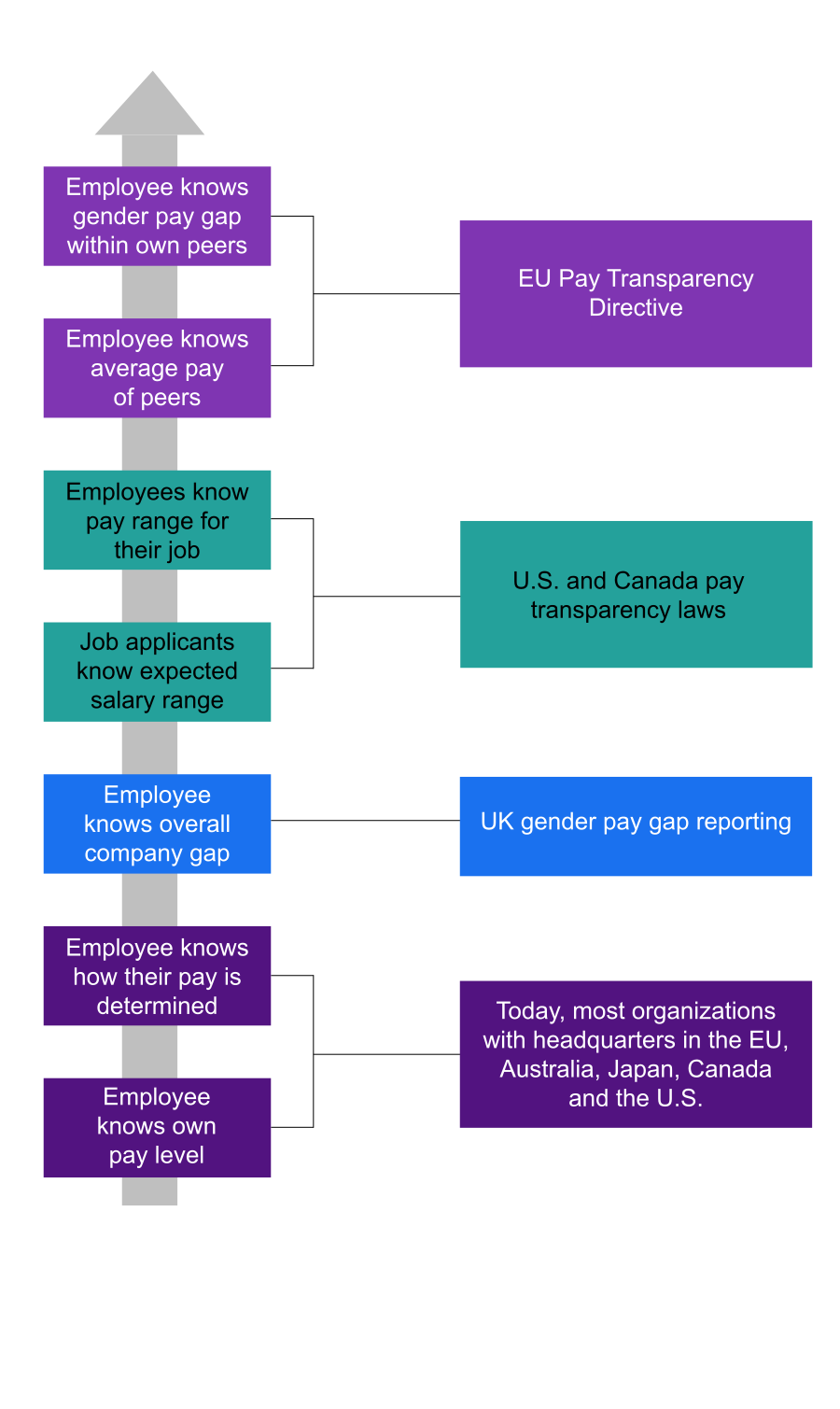
Pay transparency is defined differently depending on where you live. Why? Governments use pay/salary/wage transparency in their rules and regulations, but provisions vary. For example, pay transparency in the United States focuses on pay ranges, typically around the sharing of pay ranges in job postings. However, in some U.S. jurisdictions this extends to sharing this information with current employees too.
In the United Kingdom, Ireland, Japan, Australia and federally regulated employers in Canada, pay transparency is about disclosing gender pay gaps. And in Europe there are several countries (e.g., Spain, France, Sweden) with pay reporting requirements. But the EU Pay Transparency Directive is a game changer in terms of taking provisions from both pay range transparency and pay gap reporting and then bundling the two together (Figure 1).
Factor 2: Deciding what to share
So, we know that what needs to be shared with employees varies widely. Participants in WTW’s annual pay transparency survey shared that employee expectations also are driving increased communication. That adds to the list of considerations for compensation departments to weigh when deciding what pay information to proactively provide to employees. For North American organizations, job level, variable pay opportunities and how individual base pay is determined and progresses typically is shared, but more than 70% of North American organizations are planning or considering sharing more pay information, including:
- Individual employees’ pay ranges
- How pay ranges are designed and managed
- Individual employee compa-ratio/position in range
70% of North American organizations are planning or considering sharing more pay information.
Factor 3: Fear
Who’s afraid of pay transparency? Compensation professionals. They are concerned about managers’ ability to explain the pay program as well as how employees will react. And they’re right to be afraid; both managers and employees are asking questions about pay positioning, pay management, pay program terminology and navigation.
Employers should expect these questions, as many organizations don’t focus their pay program education on employees or even managers — the people who are most frequently relied upon to share compensation information but receive less education than senior leaders. You can calm these fears, though.
Move from tormented to tranquil
We feel for you. After all, compensation departments have a lot going on at the moment. But that’s exactly why getting your house in order is so important. We have created a starter kit of steps that will help you make progress in what needs to be done.
Identify where you want to be
Start by developing your pay transparency ambition and defining the levels of transparency that your organization aspires to achieve. This will require a deep dive to:
Talk to an expert
Related content

- Outline each geography
- Identify compliance/legal requirements
- Determine where you aim to be
- Decide what pay information will be shared with each stakeholder group in your workforce
Remember: Pay transparency laws are very inclusive. That means no employee groups are excluded.
Evaluate your job and pay structures
Do you have a career framework that uses gender-neutral factors and organizes jobs based on employees’ knowledge and skills (AKA job architecture) as well as their level of contribution and impact to the organization? This type of framework is necessary for ensuring that you structure and manage pay consistently and fairly. And this is a requirement for U.S. employers that have an EU footprint — it’s specifically outlined in Article 4 of the EU Pay Transparency Directive.
Inventory your pay policies and practices
Past pay and talent practices need to be reassessed. Is existing salary/salary history being used to make pay decisions upon hire, promotion or transfer? Do caps on promotions exist? These prevalent practices can cause or perpetuate inequity. And, in many jurisdictions, salary history is banned from being used to make pay decisions.
Outline your data needs
Data needs to be accurate and available across the organization so that you can prepare the required disclosures and analytics. Develop a regular cadence for conducting pay equity analyses. This will enable you to proactively address pay gaps and inform rewards actions to prepare for increased transparency.
Also, ensure your pay equity methodology reflects new legislative and regulatory requirements. For example, the EU regulations will require data across all total rewards elements (including in-kind benefits), and the results should be evaluated at the entity, employee group and individual employee level. It is important to have a documented process that includes investigating and remediating pay gaps, and reporting results on a regular basis.
Develop inclusive pay education and communication
Start by plotting a multi-year roadmap to guide you on your pay transparency journey. Also, develop managers to be confident in their pay decisions and addressing employee questions. Employees and managers should be a priority for education and training. Drip-feed pay education to your employees so they better understand compensation basics as well as how your compensation programs translate to their current job and rewards opportunities.
Tranquility awaits
The challenges that compensation departments must face are never-ending. With regulations and reporting around pay transparency increasing, this is not the time to fake it ‘til you make it. Both New York State and New York City have proposed legislation requiring pay data reporting similar to EEO-1 reporting. Of course, the specifics of each might vary — similar to what California and Illinois have in place.
It's these types of factors that make it so important for compensation professionals to get their houses in order and have a plan in place to address how their organization will meet its obligations, both today and into the future.
Author

Pay transparency laws are very inclusive. That means no employee groups are excluded.