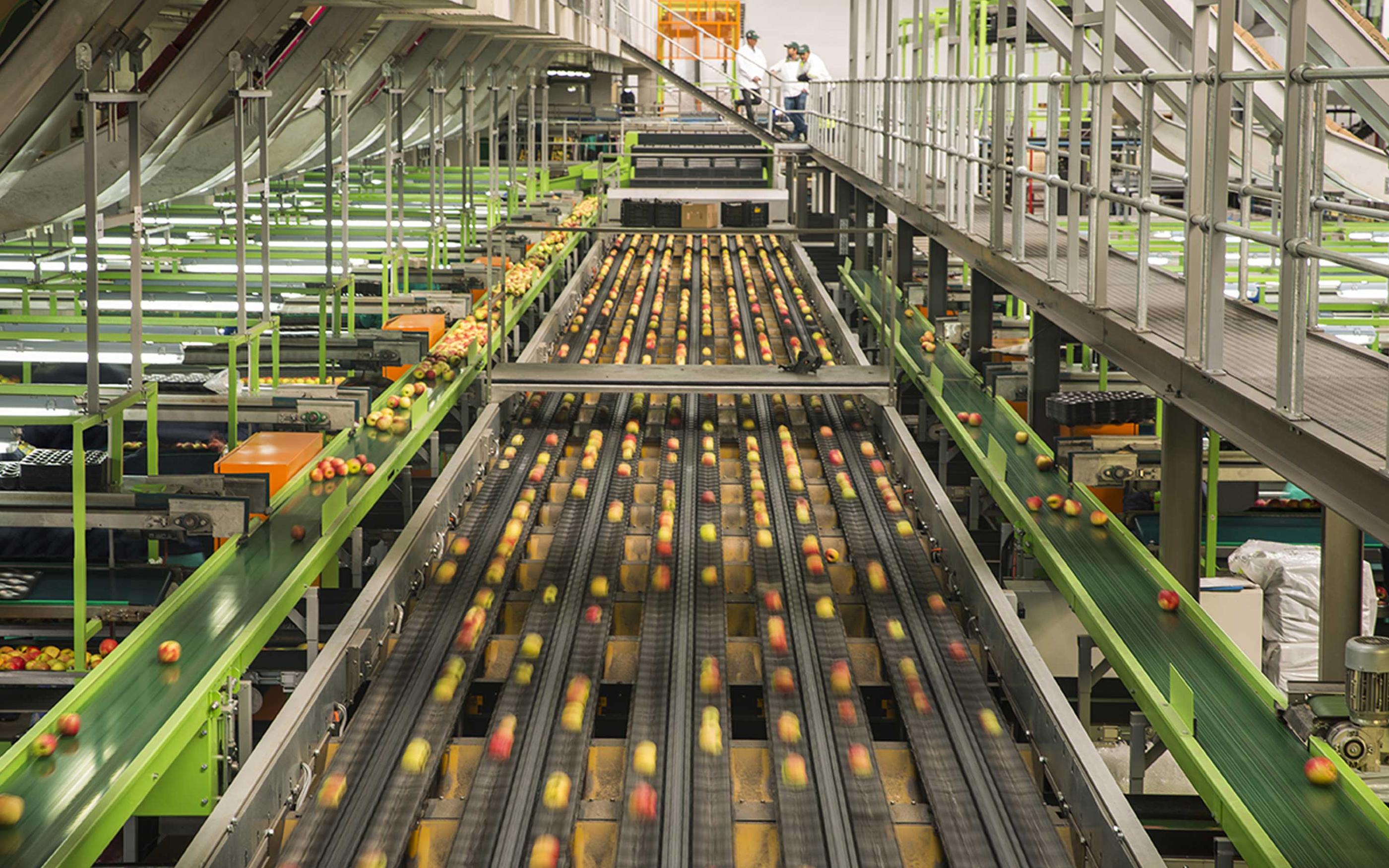
In the past, supply chains were treated as operational necessities; important, yes, but not central to strategy. The focus was on growth, efficiency, and shareholder value. But that mindset has proven too narrow. Over the last three decades, a relentless series of disruptions has exposed the fragility of global supply networks and, by extension, the organizations that depend on them. From the 1997 Aisin fire to the COVID-19 pandemic, the Suez Canal blockage, and the Russia–Ukraine war, each event has served as a strategic wake-up call.
Over the last three decades, a relentless series of disruptions has exposed the fragility of global supply networks and… the organizations that depend on them.
Today, supply chains have moved from the margins to the center of strategic thinking. Supply chains have evolved from operational support functions to strategic enablers of organizational resilience. Given the systemic nature of modern risks, resilience should be addressed at the leadership level and not confined to technical or procurement domains.
Resilient supply chains depend on executive commitment and governance structures that extend beyond operational tools and tactics. Resilience must be integrated into core organizational processes and decision-making and not treated as an add-on. It’s a strategic capability that touches everything from capital allocation to crisis response.
In this new reality, the ability to anticipate, absorb, and adapt isn’t just a competitive advantage; it’s what will define the leaders of tomorrow’s economy.
A Timeline of Disruption
- 1996 – GM Brake Parts Strike: An 18-day strike halted North American production in under 48 hours, revealing the vulnerability of centralized sourcing.
- 1997 – Toyota & Aisin Fire: A fire at a single supplier disrupted Toyota’s production, underscoring the risks of single-source dependencies.
- 1999 – Taiwan Earthquake: Microchip production was disrupted, affecting global electronics supply chains.
- 2000 – Cisco & the Dot-Com Crash: Demand collapse left Cisco with $2.25 billion in excess inventory, showing how growth-optimized supply chains can become liabilities.
- 2000 – Philips Lightning Strike (Nokia & Ericsson): A lightning strike crippled semiconductor output; Nokia responded swiftly, Ericsson did not, resulting in lost market share.
- 2001 – 9/11 Attacks: Heightened security measures led to global shipment delays and exposed geopolitical vulnerabilities.
- 2004 – Indian Ocean Tsunami: Infrastructure devastation across South and Southeast Asia disrupted manufacturing and transport.
- 2005 – Hurricane Katrina: Damage to the Port of South Louisiana highlighted the importance of business interruption insurance.
- 2007–2013 – Boeing 787 Delays: A globally dispersed supply chain without sufficient integration caused years of production delays.
- 2008 – Global Financial Crisis: Trade finance withdrawal precipitated a collapse in global trade volumes.
- 2011 – Japan Earthquake & Tsunami (Apple): Core suppliers went offline; Apple’s diversified sourcing enabled rapid recovery.
- 2011 – Renesas Earthquake Shutdown: A critical automotive chip factory went offline, rippling through the global auto industry.
- 2011 – Thailand Floods: Disrupted electronics and automotive supply chains, revealing geographic concentration risks.
- 2015 – Tianjin Port Explosion: A catastrophic incident at one of the world’s largest ports caused long-lasting disruptions.
- 2017 – NotPetya Cyberattack (Maersk): A ransomware attack disrupted global logistics operations.
- 2017–2018 – Cluster of Natural Disasters: Hurricanes, typhoons, and extreme weather events impacted supply chains across Asia and North America.
- 2018–2019 – US–China Trade War: Tariffs and trade barriers disrupted global sourcing strategies.
- 2020 – COVID-19 Pandemic: Lockdowns in China and elsewhere exposed the fragility of global manufacturing hubs.
- 2021 – Ever Given Suez Canal Blockage: A six-day blockage delayed billions in global trade, symbolizing systemic fragility.
- 2021–2022 – Semiconductor Shortages: Misjudged demand led to widespread shortages across industries.
- 2021 – Colonial Pipeline Attack: A ransomware attack caused regional fuel shortages in the U.S.
- 2022–2023 – “Epic Miscalculation”: Excess demand and logistical chaos created severe bottlenecks and inflationary pressures.
- 2022 – Russia–Ukraine War: Disrupted energy and grain exports, particularly affecting Europe.
- Ongoing – Panama Canal Droughts & Red Sea Attacks: Environmental and geopolitical pressures continue to reshape global shipping routes.
The Systemic Nature of Modern Risk
What makes today’s disruptions so dangerous is not just their frequency, but their interconnectedness. A drought in the Panama Canal, a ransomware attack on a logistics provider, or a port explosion in Tianjin can ripple across industries and geographies, halting production, eroding trust, and triggering inflation. Supply chains behave as complex adaptive systems, where local shocks can produce nonlinear, emergent effects.
Organizations must move from deterministic planning to probabilistic preparedness, recognizing that resilience begins not in the supply chain, but in the boardroom.
More critically, many of these vulnerabilities are self-inflicted. Strategies once hailed as best practice, lean inventories, sole-sourcing, just-in-time delivery, have optimized for efficiency at the expense of resilience. In stable times, they deliver performance. Under stress, they magnify exposure.
This reality demands a strategic shift. Enterprise architecture itself can be a source of risk, requiring internal scrutiny alongside external threat monitoring. And addressing it isn’t a matter of operational tweaks - it’s a leadership imperative. Organizations must move from deterministic planning to probabilistic preparedness, recognizing that resilience begins not in the supply chain, but in the boardroom.
From Efficiency to Resilience: A Strategic Re-orientation
For decades, supply chain strategy was synonymous with cost-cutting and speed. Efficiency ruled. But recent adverse events have shown that resilience can't be something you tack on later, it has to be part of the supply chain design from day one.
The organizations that have navigated volatility most effectively, Toyota, Apple, Nokia, didn’t get lucky. They made resilience a design principle. They diversified sourcing, modularized product architecture, empowered frontline decision-making, and maintained financial buffers. These aren’t reactive fixes; they’re strategic choices rooted in foresight.
Resilience, in this context, is not about preparing for every possible disruption. It is about preparing for the right disruptions with the minimum investment needed to succeed. This principle of efficient resilience requires a surgical approach:
- Identify critical vulnerabilities: Components, suppliers, or processes whose failure would cause outsized damage.
- Allocate resources strategically: build redundancy and flexibility only where the risk-adjusted return justifies it.
- Treat resilience investments as real options: strategic levers that preserve flexibility and can be activated when needed.
This approach avoids the trap of over-engineering, where excessive buffers erode competitiveness. Instead, it supports agility, continuity, and long-term strategic advantage.
Resilience as a Boardroom Mandate
Resilient organizations share more than operational traits. It’s fair to argue that they embed strategic intent into their structural flexibility, decision velocity, information visibility, strategic redundancy, cultural preparedness, and integrated governance. These aren’t just process improvements, but a result of leadership choices that originate at the very top.
Boards can no longer treat supply chain risk as a technical issue buried in operations. It belongs squarely within enterprise risk management. That means:
- Oversight of systemic vulnerabilities, not just financial exposures.
- Investment in visibility and foresight, not just dashboards and reports.
- Scenario planning and stress testing, not just quarterly reviews.
- Cross-functional governance, where supply chain, finance, risk, and strategy are aligned.

Related content
Resilient supply chains depend on executive commitment and governance structures that extend beyond operational tools and tactics.
Resilience should be treated as a cross-functional capability that informs strategic planning and operational execution. And like any capability, it must be institutionalized across the organization. That institutionalization begins with the board.
Resilience Beyond the Firm
Supply chain fragility has moved beyond the boardroom, and is now a geopolitical issue. The line between corporate strategy and public policy is blurring, as governments step in with industrial policies, reshoring incentives, and infrastructure investments aimed at securing national resilience. From the U.S. CHIPS Act to the EU’s Critical Raw Materials strategy, a new era of geoeconomic alignment is taking shape.
Public–private partnerships in trade finance, insurance, and infrastructure resilience are no longer optional; they’re strategic enablers.
For business leaders, this shift calls for more than just understanding, it demands that everyone pull in the same direction. Supply chain strategies must now reflect not only shareholder value, but also regulatory expectations and national security priorities. Public–private partnerships in trade finance, insurance, and infrastructure resilience are no longer optional; they’re strategic enablers.
Boards must recognize that resilience has outgrown the boundaries of the firm. It is now a national priority, and firms that fail to adapt risk not only competitive disadvantage, but political exposure. In this new landscape, strategic relevance depends on the ability to operate at the intersection of policy and performance.
A Mission-Driven Approach to Organizational Resilience
In an age of volatility, organizations must ask a fundamental question: What is our mission, and how do we safeguard it under stress? A mission-driven approach to resilience reframes the conversation. It’s not about defensive posturing; it should be more about strategic intent. That means:
- Protecting continuity of service, especially in sectors where disruption carries societal consequences — healthcare, energy, finance.
- Safeguarding stakeholder trust, from customers and employees to investors and regulators.
- Preserving strategic autonomy, so the organization can act decisively when it matters most.
A resilient organization is one that safeguards its mission under stress. It maintains continuity of service, protects stakeholder trust, and preserves strategic autonomy, even in the face of disruption. Effective resilience strategies prioritize readiness and responsiveness, enabling leadership to act decisively under stress. It is not enough to simply survive volatility. Resilient organizations use adverse events to shape their response to risk, emerging stronger and more aligned with their purpose.
Resilience should be treated as a cross-functional capability that informs strategic planning and operational execution.
Conclusion: Durability by Design
While disruption cannot be avoided, organizational durability requires intentional design and strategic foresight. The future competitive landscape remains uncertain; however, historical patterns indicate that organizations that embed efficient resilience into strategy, culture, and governance are consistently better positioned to endure.
That embedding must begin in the boardroom. It is not enough to delegate resilience to operations or risk management. It must be treated as a leadership priority that is integrated into capital allocation, strategic planning, and enterprise oversight.
Rather than a technical solution, resilience should be viewed as a strategic capability embedded in governance and culture. And in a world shaped by cascading risks and systemic uncertainty, it is increasingly the foundation of long-term value creation.
Author

While disruption cannot be avoided, organizational durability requires intentional design and strategic foresight.