
There is huge potential in Asia Pacific for employers to differentiate themselves through employee benefits designed to address diverse employee needs. Our 2022 Global Benefits Attitudes Survey found when offered choice or flexibility in their benefits, more employees say that their benefits package meets their needs (Figure 1).1 More and more, employees are asking to be heard and to be better supported in their quest for a balanced sense of wellbeing — physically, emotionally, socially and financially.
Our recent studies across the Asia Pacific workforce revealed that there are events and lifestyle choices shared by employees within a similar life stage, but there are also unique circumstances emerging from shifts in employee behaviour, economic forces and sociocultural perceptions. Future-focused leaders recognise that employees do not come into the workplace completely unlinked from their very own concerns and needs. In fact, these can make or break career-related decisions for many employees.
For example, as more women enter senior positions and boardrooms, menopause will become a major issue for employers to address in the workplace. A recent UK survey found that 10% of women aged 45 to 55 left their jobs due to lack of employer support as they experienced menopausal symptoms.2 Across Asia Pacific today, only 13% of employers have healthcare provisions for perimenopause and menopause.3
Designing inclusive benefits requires long-term commitment – from every level and every role in the organisation – to awareness and continual education. And doing so can reap three major advantages for talent attraction and retention.
Designing inclusive benefits requires long-term commitment – from every level and every role in the organisation – to awareness and continual education.
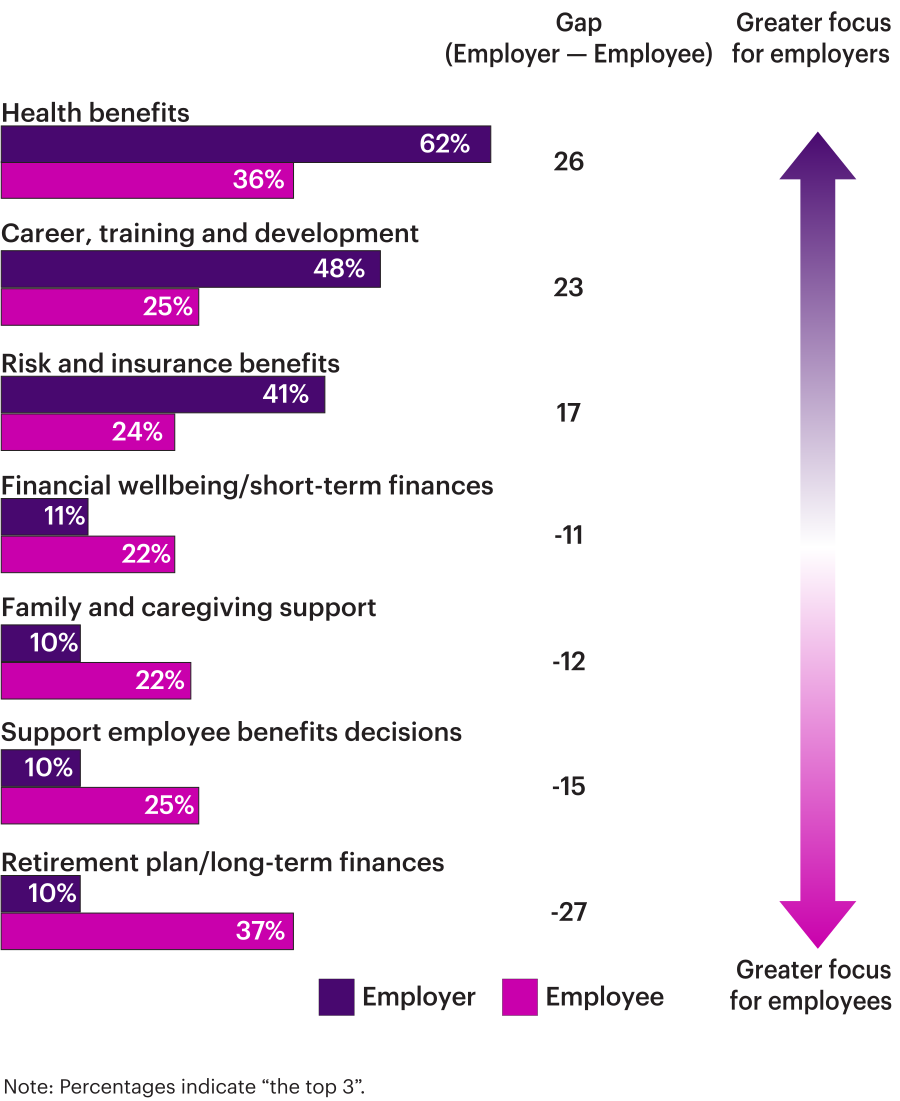
Figure 2. Alignment issues in benefits between employers and employees
Sources
1 2022 WTW Global Benefits Attitudes Survey
2 People Management magazine
3 2023 Inclusive Healthcare Questionnaire
4 Diversity Council Australia, India’s Business Responsibility and Sustainability Report (BRSR), Japan’s Corporate Governance Code
5 Harvard Business Review
6 2023 WTW Benefits Trends Survey
Authors


How employee attitudes are changing
Highlights from the 2022 Global Benefit Attitudes Survey