In this episode of the Global Insurance Marketplace Insights podcast, Lucy Fitzpatrick and Thomas Haddrill explore the current trends and conditions in the insurance markets of Eastern Europe, the Middle East, and Africa.
Transcript for this episode
THOMAS HADDRILL: So, yes, there is relief. But it's still risk-dependent, as I said. Strong performance, clean loss history, and high-quality data remain the biggest differentiators to any client.
SPEAKER: Welcome to Global Marketplace Insights by Willis, a WTW business, a podcast series showing the latest trends from the specialty and regional insurance markets.
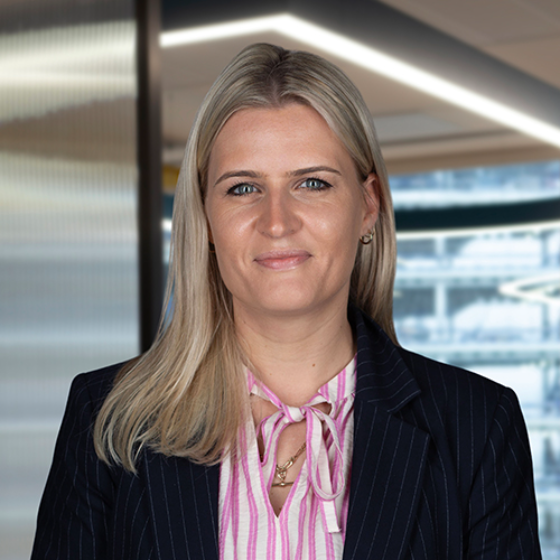
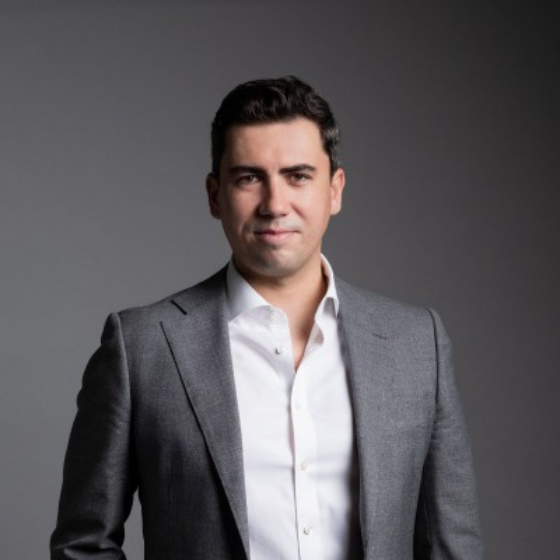
Hello, and welcome to our latest Market Update podcast. I'm Lucy Fitzpatrick, Carrier Management Lead for the CEEMEA region. Today I'm joined by my colleague, Tom Haddrill, Head of Placement for CEEMEA. Tom works closely with insurers and clients across Central and Eastern Europe, the Middle East, and Africa, helping navigate the international insurance market.
In this short discussion, we'll cover what we're seeing in Q1 2025, including capacity, coverage, pricing, and some key trends from across the region, along with some practical placement advice and a look ahead to what clients can expect as we move further into 2026. So, Tom, let's start with the big picture. How would you describe the overall international insurance market environment as we sit here in Q1, 2025?
THOMAS HADDRILL: Thanks, Lucy. Overall, I'd say the market is stable, but still fairly disciplined. One of the big contextual shifts we're seeing at the moment is the strength of global carrier and re-insurer balance sheets. Over the last year, many major market players have reported record financial results. This is really reinforcing the confidence that underwriters have and the capital that they have available to them as well.
So for example, Lloyd's delivered a record profit of 10.6 billion pounds for 2025. Leading re-insurers like Munich Re posted a record 6.1 billion euro profit. Swiss Re achieved a record profit of nearly five billion, net income. So it wasn't just the re-insurers. You had large global insurance carriers that reported exceptional results too, like Zurich with its highest ever profit. AIG dramatically improved its performance.
Chubb had record net income of well over $10 billion. And even carriers a bit further down the rankings like QBE and Generali achieved best-ever operating results. So I think all of that contributed to a market that's got really strong capital backing, really ample appetite.
They're still applying that capacity selectively, though. For clients in Central and Eastern Europe, Middle East and Africa, that means underwriting discipline remains fairly high, especially where risks involve geopolitical sensitivity or maybe complex exposures.
SPEAKER: Great. So can we unpack that a little bit? So starting with capacity, are you seeing enough appetite from insurers for risks in our region?
THOMAS HADDRILL: Yeah, broadly. Capacity is very healthy. And as we touched on just now, the strong financial performance of these carriers over the last year is really reinforcing stability in that space. Across the region, I'd say increased reinsurance capacity has contributed directly to rate reductions.
Property, we're seeing down at least by 10% with declines much more steeply in the Middle East and even South Africa, which has had a very hard market in recent years. South Africa has seen major reductions. For well-performing risks with strong data and loss records, insurers are deploying meaningful limits and then competing much more actively. But selectivity is still a defining feature of the market.
You have certain natural resources sectors, some infrastructure. And as I said, those exposed to political or security volatility will definitely face closer scrutiny. On coverage, underwriters remain disciplined. We continue to pay careful attention to wordings including cyber war, geopolitical exclusions. And insurers expect clarity around evolving hazards, systemic exposures, and also risk accumulation as they go forward.
SPEAKER: Great. And how does that translate into pricing? Are clients seeing any relief yet at all?
THOMAS HADDRILL: Yeah. In short, yes. And this is where those record global results really start to influence the dynamics. The combination of strong re-insurer profitability and capital growth is supporting greater competitive tension in many, many lines. Good performance definitely strengthens market capacity.
And even with many of the CEOs and COOs at their results' presentations flagging attention to the market cycle, underwriters will be under great pressure to grow. Specifically in our region, I'd say on property, we're seeing average reductions of around 10% with up to 15% in the Middle East and Africa, more in some cases.
For casualty, rates are down around 5% on average, with reductions of up to 10% in Saudi Arabia, the GCC as well. And financial lines are down definitely 10% overall across the region. Cyber is down a similar amount. So, yes, there is relief. But it's still risk-dependent, as I said. Strong performance, a clean loss history, and high quality data remain the biggest differentiators to any client.
SPEAKER: Great, thank you. You mentioned geopolitical sensitivity. It would be great to get your perspective on the situation in the Middle East at the moment, particularly tensions involving Iran and the Strait of Hormuz. How is that impacting the market at present?
THOMAS HADDRILL: Yeah, it's certainly a factor, especially for marine, energy, political violence lines. Strait of Hormuz remains one of the most critical global transit corridors. So any escalation prompts concern around aggregation and supply chain vulnerability. Underwriters are messaging that they're not withdrawing capacity. But of course, there's a lot of scrutiny there and sign-off up the chain in many instances.
We'll continue to see war risk premiums surge for marine and aviation, likewise for fixed assets. But the capacity is there. And we're on hand to guide clients through this. There's a lot of content out there already. And we'd be happy to go into client-specific risks and concerns if they have them. But, long term, insurers are so far seeing this as an earnings event, not a capital event. One rating agency has called this manageable.
But that is predicated on the conflict remaining relatively short-lived, I'd say, and without massive destruction to oil infrastructure across the region. There's also potential second order effects for carriers as this drags on, such as loss cost inflation, weaker asset values, civil unrest, and even supply chain shocks in other sectors. We'll also see rising trade credit claims as this drags on, so not to mention the impact on economic activity in the region in the long term, too.
SPEAKER: Thank you. So given everything we've discussed so far, what practical advice would you give clients approaching renewals in the current environment?
THOMAS HADDRILL: Yeah, so for me, three things really stand out. Preparation matters. I think I say that every time we do these. Engage early and be open to structure. The clients who succeed are the ones who present themselves proactively and strategically, working well with their broker, of course.
SPEAKER: Thank you. That's really good advice. And finally, looking ahead, what are your expectations as we move further into 2026?
THOMAS HADDRILL: Yeah, I'd expect similar conditions. We've got strong capacity. We've got stable but increasingly hostile competition amongst carriers. And given the strength of re-insurer and carrier capital positions, many of whom are coming off those record earnings years. I mentioned earlier on, we're really unlikely to see a hardening unless it's driven by a major global shock. So let's see.
SPEAKER: Tom, thank you. So to summarize, we're seeing a stable but selective market with increased competition across CEEMEA, supported by the exceptionally strong financial footing of many global insurers and re-insurers.
Strong risk presentation and early engagement remains critical to achieving the best outcomes. So thank you to everyone listening to this episode of the Marketplace Insights Podcast. If you'd like to discuss how these trends might affect your program, please do get in touch with your usual contacts. And we'll see you at the next one. Thank you.
Thank you for joining this WTW podcast featuring our latest global market commentary. WTW offers insurance-related services through its appropriately-licensed and authorized companies in each country in which WTW operates. For further authorization and regulatory details about our WTW legal entities operating in your country, please refer to our WTW website.
It is a regulatory requirement for us to consider our local licensing requirements. The information given in this podcast is believed to be accurate at the time of publication. This information may have subsequently changed or have been superseded and should not be relied upon to be accurate or suitable after this date. This podcast offers a general overview of its subject matter. It does not necessarily address every aspect of its subject or every product available in the market.
And we disclaim all liability to the fullest extent permitted by law. It is not intended to be and should not be used to replace specific advice relating to individual situations. And we do not offer and should not be seen as legal, accounting, or tax advice. If you do intend to take any action or make any decision on the basis of the content of this podcast, you should first seek specific advice from an appropriate professional.
Some of the information in this podcast may be compiled from third party sources we consider to be reliable. However, we do not guarantee and are not responsible for the accuracy of such. The views expressed are not necessarily those of WTW. Copyright WTW, 2026. All rights reserved.
Disclaimer
Podcast host
Podcast guest
Listen to this episode on:
PODCAST SERIES
Global Insurance Marketplace Insights Q1 2026