
This article continues from Part 1: Nordic talent economics: Employee pay and retention strategies to consider, which explored how organisations in the Nordics are approaching compensation, benefits and retention strategies in a competitive market. Building on those findings, we now turn to the next dimension of the talent landscape.
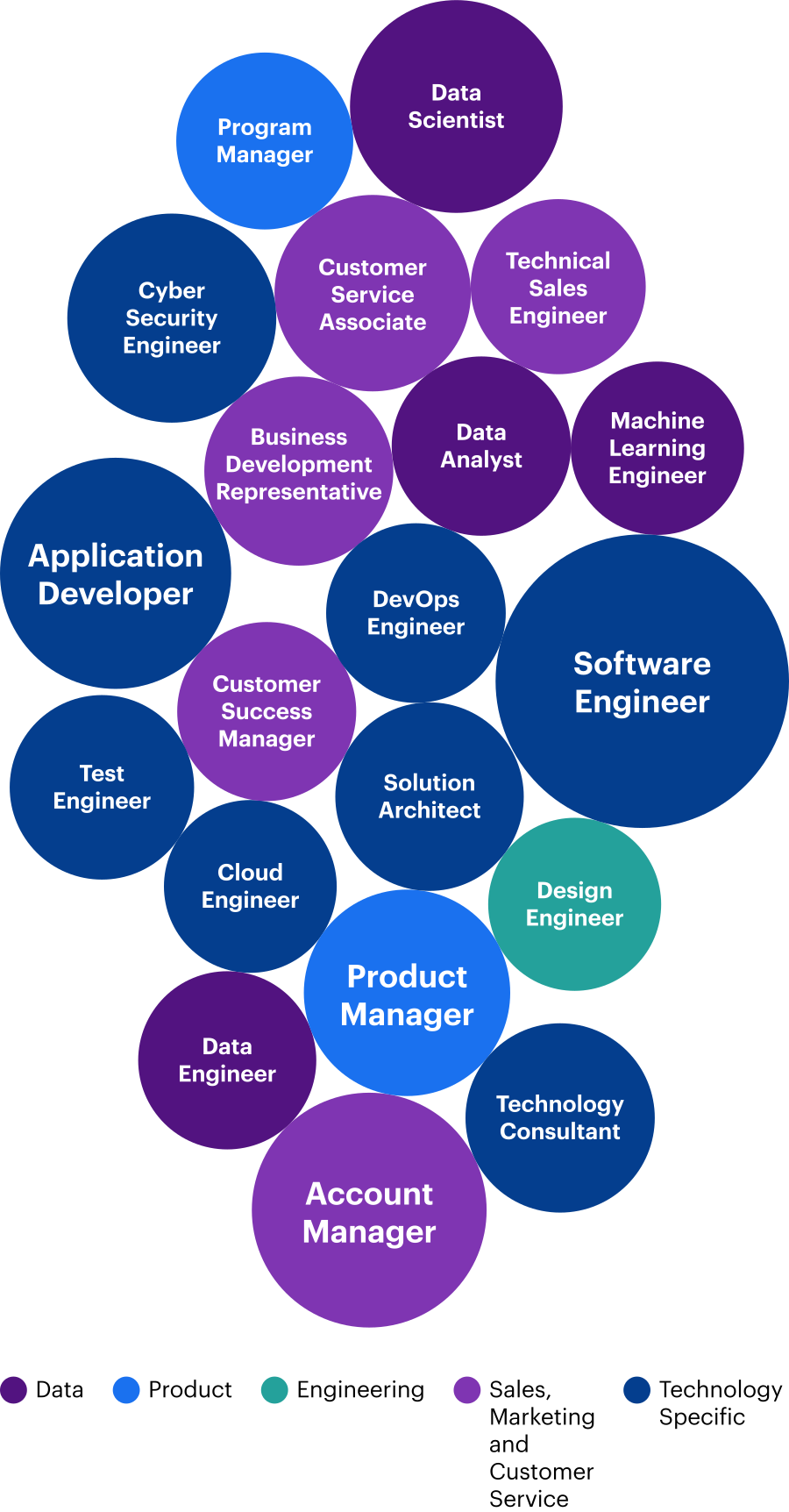
The continued surge in demand for technology-related roles across Europe is evident. Our 2025 Q3 Talent Intelligence Report shows that, from the top 20 jobs in demand, the most-sought positions are (in rank order):
Increased digitalization, cloud adoption and data-drive strategies across organisations in all industries account for the bulk of this heightened demand (Figure 1).
Additionally:

Sales and customer-focused roles
Positions such as sales manager, business development representative and customer success manager underscore the persistent need for strong client engagement, revenue generation and long-term relationship building.

Program and project management
Roles like program manager reflect the growing complexity of technology initiatives and the need for professionals who can deliver results on time and within budget.

Design engineering and application development
As organisations increasingly build out proprietary products and solutions, demand remains high for engineers and developers who can rapidly prototype, test and deploy cutting-edge applications.
Understanding and addressing the primary factors that attract and retain employees is essential against this backdrop of heightened competition for specialized talent. Drawing on survey data and local market trends, several factors consistently rank as top drivers of employee engagement and retention:
In this second part of a two-article series, we explore the factors driving attraction and retention among these high-demand roles and, specifically, how organisations in Denmark, Finland, Norway and Sweden are responding.
Headline attrition figures from the technology sector in the Nordics hide very different stories about workforce dynamics and the underlying forces that drive people in and out of jobs, according to our 2025 Global Salary Budget Planning Survey — Western Europe (July edition).
In Denmark, a remarkably low voluntary turnover rate of 1.5% combined with the region's highest involuntary attrition rate of 5.2% reveals a workforce that tends to stay put but faces the most significant restructuring pressures across the Nordics. This stark contrast suggests Danish employees demonstrate strong loyalty or satisfaction with their current roles, yet employers are more actively managing performance issues or undergoing organisational changes than their regional counterparts. Danish HR teams should focus on understanding why voluntary departures are so rare, whether this reflects genuine engagement or limited external opportunities whilst ensuring their involuntary exit processes are handled with care to maintain employer brand and team morale.
Norway presents the most dynamic voluntary turnover landscape in the region, with 5.3% of employees choosing to leave of their own accord, whilst maintaining a moderate 3.6% involuntary attrition rate. This suggests Norwegian firms operate in a competitive talent market where skilled workers feel confident about external opportunities. The relatively balanced ratio between voluntary and involuntary exits indicates healthier workforce dynamics than some neighbours. Norwegian organisations should prioritise retention strategies including competitive compensation, clear career progression, and strong leadership development to maintain their talent advantage.
Finland demonstrates exceptional workforce stability across both metrics, with the region's lowest voluntary turnover at just 1.0% and the lowest involuntary attrition rate at 2.4%. This remarkable retention performance suggests deep employee satisfaction, strong cultural alignment, or potentially limited mobility in certain sectors. However, Finnish employers should investigate whether this stability masks underlying issues, ensuring that low turnover doesn't reflect complacency or insufficient talent development that could create future vulnerabilities when market conditions change.
Sweden shows an interesting middle ground with 3.0% voluntary turnover and the second-highest involuntary attrition rate at 4.8%. This pattern suggests Swedish workers are moderately satisfied and somewhat cautious about job moves, yet employers are actively managing workforce composition through structured exits. The high involuntary rate relative to voluntary departures may reflect proactive performance management, strategic restructuring, or regulatory frameworks that encourage formal processes over spontaneous departures. Swedish organisations should examine whether their performance management systems are effectively identifying and developing struggling employees before termination becomes necessary.
Taken together, these attrition snapshots underscore that turnover is not a one-dimensional metric (Table 1). Behind each percentage point lies a narrative about market tightness, cultural norms, talent management effectiveness and regulatory frameworks. By dissecting the why behind voluntary and involuntary exits, organisations can craft more nuanced strategies, whether by enhancing engagement and development to curb preventable departures or by refining performance management and support programs to ensure that when exits do occur, they remain as positive and productive as possible.
| Country | Voluntary | Involuntary |
|---|---|---|
| Denmark | 1.5% | 5.2% |
| Finland | 1.0% | 2.4% |
| Norway | 5.3% | 3.6% |
| Sweden | 3.0% | 4.8% |
The growing competition for talent in technology, media and gaming across the Nordics is pushing organizations in all industries to adapt how they attract and retain people. While pay remains important, Denmark, Finland, Norway and Sweden are also prioritizing flexibility, inclusion and employee experience to balance short-term needs with long-term transformation goals.
The WTW 2025 Global Salary Budget Planning Survey — Western Europe (July edition) highlights some clear contrasts in compensation strategies. Sweden leads, with 29% of employers already making changes and another 21% planning to act. Denmark is more cautious, with only 16% taking steps so far and another 16% planning changes. Finland and Norway fall between the two, where roughly 40% of organizations are either already implementing or planning adjustments.
Workplace flexibility has become a critical differentiator. Norway and Denmark is currently ahead, with 48% respectively 47% of employers already acting in this space. Sweden and Finland show steady progress, reflecting how flexibility is now a baseline expectation across the region.
When it comes to diversity, equity and inclusion (DEI), the Nordics are remarkably aligned. Between 40% and 47% of companies in each country report having already taken action, with another 19% to 23% planning further initiatives. This suggests that DEI has moved firmly from aspiration to action, with inclusive cultures seen as essential to engaging diverse talent.
Efforts to improve the employee experience are also gaining momentum. Norway, Finland and Denmark are slightly ahead, with 48%, 46% and 46% of companies respectively reporting active initiatives in areas such as development, wellness and day-to-day support. Sweden (41%) is not far behind, highlighting that this has become a regional priority rather than a country-specific effort.
The Nordic approach illustrates that success is not defined by pay alone. Denmark emphasizes flexibility, Finland blends compensation with employee experience, Norway combines inclusion with development, and Sweden pushes ahead on both compensation and wellness. Together, these strategies create an ecosystem where competitive pay, modern working practices, inclusive policies and meaningful development opportunities all contribute to long-term talent attraction and retention.