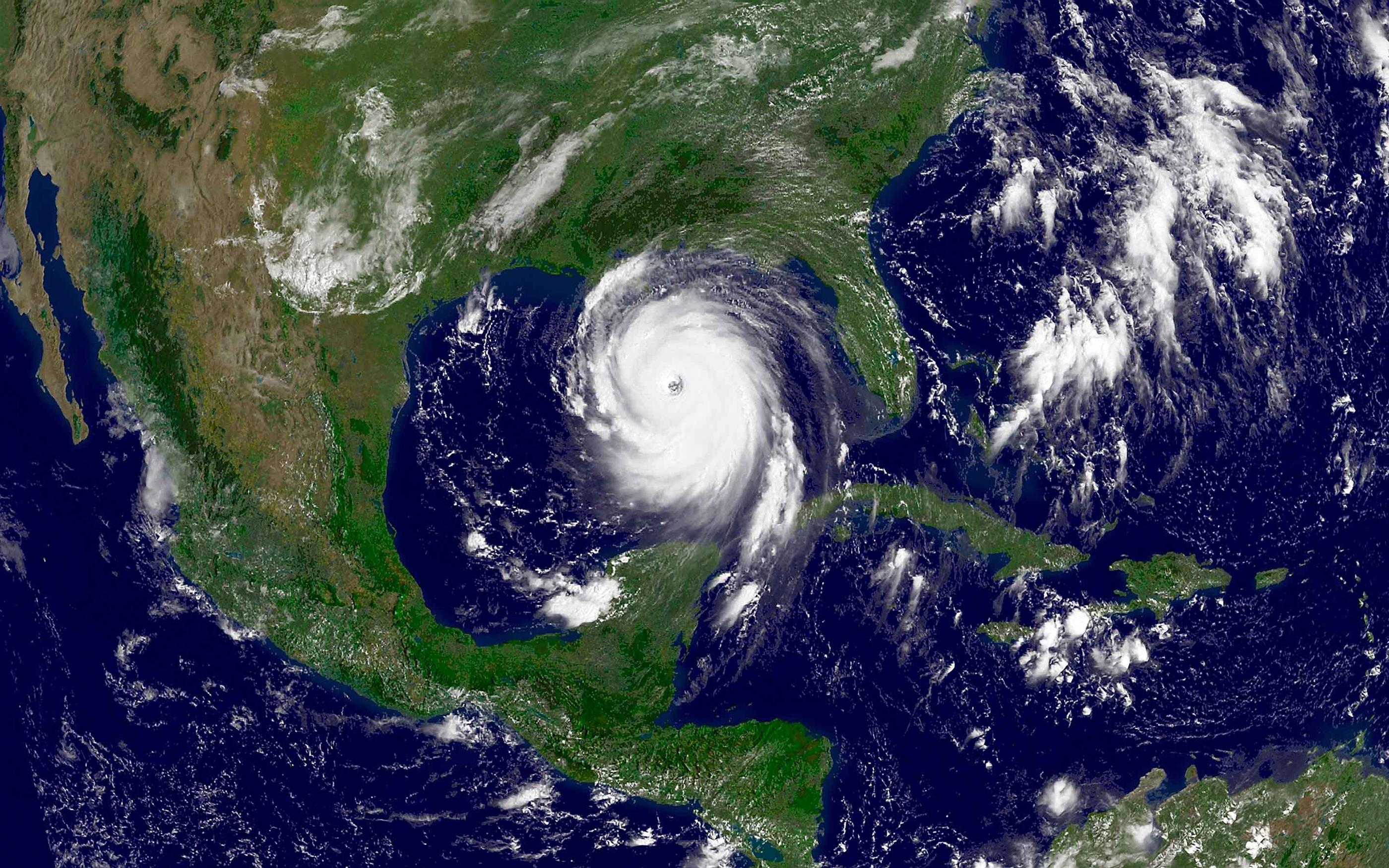
On August 29, 2005, Hurricane Katrina made landfall near Buras-Triumph, Louisiana, as a Category 3 hurricane with sustained winds of 125 mph (200 km/h). It had previously reached Category 5 intensity over the Gulf of Mexico, peaking at 175 mph (280 km/h), before weakening prior to landfall. Katrina generated a storm surge over 20 feet (6 metres) high along parts of the Mississippi coast, overtopping and breaching levee systems in New Orleans.
In total, there were over 1,800 fatalities, more than 200,000 homes destroyed, and around 1.2 million people displaced. Economic losses exceeded USD $250 billion (inflation adjusted to 2025 values), while insured losses reached around USD $100 billion (in 2025 terms), making Katrina the most expensive natural catastrophe on record.
Twenty years on, Katrina still shapes how we think about catastrophe risk. But the next $100+ billion catastrophe won’t follow Katrina’s script. Risks have changed. So have our cities. Even the hazards themselves are changing. Rather than ask “are we ready for another Katrina?”, the question should be: “are we ready for a completely different kind of disaster?”
Here are 5 key reasons why the next major catastrophe won’t look like Katrina, and how ready we really are, scored out of five.
01
The devastating flooding from Hurricane Katrina is often described as a surprise, but in hindsight it was alarmingly foreseeable. Just a year earlier, in 2004, Hurricane Ivan came close to a direct hit on New Orleans, prompting warnings of widespread flooding. But when Ivan veered north and made landfall in a less densely populated area, its potential catastrophic impacts were quickly forgotten. And just months earlier, Hurricane Pam — a FEMA simulation exercise — had already modelled widespread flooding from levee overtopping in New Orleans.[1] The warnings were there, in both models and nature. This oversight highlights a critical weakness in risk thinking at the time: failure to learn from counterfactuals. We tend to prepare for what has happened, not for what nearly did.
So how can we avoid being blindsided by the next “predictable surprise”? We can use downward counterfactual analysis, the practice of examining past near-miss events and asking “what if this had been worse?”.[2] Unlike some traditional disaster scenarios, which can feel abstract and unlikely, these are rooted in real past events so are tangible and relatable. Though the concept is gaining traction, downward counterfactuals are not systematically used in exposure management. As a result, we continue to miss chances to prepare for disasters history has already warned us about. Yet even the past has limits. With a changing climate, the same catastrophe hitting the same place today could unfold in entirely different, and potentially more devastating, ways.

Score: 2/5, inadequately prepared
True proactive planning for “predictable surprises” is still more the exception than the rule.
02
Katrina revealed how insurers had concentrated exposure in high-risk areas, leaving them vulnerable to flooding from a single event. In response, (re)insurers began monitoring and capping their exposure in vulnerable zones. Portfolios were diversified geographically to reduce the risk of excessive loss in any one area. In essence, the practice of exposure management was born.
This practice has strengthened the industry’s resilience, but new forms of accumulation are emerging, and they’re not always tied to one region or peril. Climate-driven events can impact multiple regions at once, from simultaneous wildfires to flooding across river basins.
Urban sprawl adds another challenge. Though gradual, it drives high-value development into areas not previously seen as high-risk, like the wildland-urban interface. Even when exposure is well-managed at postcode level, the expansion of built-up areas can strain emergency services and infrastructure, complicating evacuation and recovery, and increasing business interruptions claims.[3]
Additionally, not all accumulation is visible on a map. Infrastructure interdependencies, such as from power grids and digital networks, can concentrate risk in ways geography can’t show. A major cyberattack, for example, could simultaneously disable critical services, disrupt supply chains, and trigger widespread business interruption across multiple sectors and regions.
Score: 3/5, moderately prepared
We’ve learned this lesson from a geographic flood accumulation perspective, but we don’t anticipate other types of loss accumulation sufficiently well.
03
One of Katrina’s harshest lessons was that infrastructure we take for granted can catastrophically fail. The New Orleans levee breaches — unmodelled by insurers at the time — exposed this blind spot. In the typical (re)insurance reactive style, many models now include the failure probabilities for New Orleans’ levees, but not for other, less extensive yet still vulnerable defences.
The challenge is anticipating critical infrastructure failures that haven’t yet occurred. One of the biggest barriers is the failure of imagination, our tendency to overlook risks we haven’t experienced before. Human cognitive biases, such as availability bias, cause us to overfocus on memorable past events and ignore less obvious possibilities, narrowing our view of what’s plausible.
To address this, we can use tools that stretch our imagination. Large language models (LLMs), a branch of generative AI, have the potential to rapidly generate diverse, novel catastrophe scenarios that a human (or group of humans) may miss. While many insurers already include scenario analysis to help plan for unforeseen circumstances, current exposure management processes don’t yet systematically include these highly imaginative what-ifs. This must be done with care — LLMs can misinterpret context or generate inaccurate details — but with expert review, they can expand, not replace, our ability to imagine what could go wrong.
Score: 1/5, severely underprepared
Where Katrina exposed a physical weakness in a known location, the next failure could be digital, decentralised, and invisible until it happens. We don’t yet use the tools available to expand our imagination to help us plan for unfamiliar future events.
04
When infrastructure fails, the consequences go far beyond physical damage. Katrina showed how cascading effects — costly repairs, delayed claims settlement, and a paralysed local economy — can drive insured losses far beyond expectations. At the time, catastrophe models couldn’t account for such post-disaster complexities. Today’s models apply adjustments for things like demand surge and claims inflation, but those adjustments remain relatively unsophisticated. Also post-event loss amplification (PLA) factors are still largely based on historical averages and expert judgement.
What’s different now is the scale and interconnectedness of exposure. Major cities are more densely built, more reliant on just-in-time supply chains, and more digitally dependent. A future disaster could disrupt essential services — power, water, internet — across multiple cities or regions simultaneously, triggering ripple effects in housing, healthcare, finance, and beyond. Add new vulnerabilities like cloud data storage or gig-economy labour, and the system-wide impacts become even harder to model or contain.
Climate change amplifies this risk by increasing the frequency, intensity, and overlap of extreme events, stretching infrastructure and recovery systems in unpredictable ways.

In short, future events won’t just cost more, they’ll unravel in more directions at once. Current methods for estimating PLA don’t yet reflect this messy, layered complexity.
Score: 2/5, inadequately prepared
Katrina prompted PLA to be considered, but we still rely on simple, backward-looking estimates that don’t reflect the complexity or scale of future cascading losses.
05
Hurricane Katrina sparked public outrage over insurance coverage gaps, especially the distinction between wind or flood (storm surge) damage. These conflicts triggered protracted court cases that proved costly and reputationally damaging for insurers, who subsequently tightened up policy wordings relating to peril type coverage.
Yet few insurers have robust modelling capability to quantify the financial and reputational impact of such disputes.
Looking ahead, the risk may be growing. A future $100+ billion catastrophe could involve novel, layered factors, like an AI system failure, cyberattack, or civil unrest coinciding with a natural disaster, raising even more contentious and ambiguous coverage questions. In such cases, insurers may have to deal with more disputed claims, class actions, and regulatory scrutiny.
Compounding the risk is the growth of social media, which now shapes how disasters unfold in the public eye. A single viral post from a dissatisfied policyholder can spark widespread backlash long before a claim is fully assessed. Yet few insurers have robust modelling capability to quantify the financial and reputational impact of such disputes.[4] The result is exposure to costs that can escalate in both scale and speed, and where reputational fallout once took months to unfold, it can now do so in hours.
Score: 2/5, inadequately prepared
While policies are clearer for known grey areas, policy wording may have to continue to evolve to avoid the risk of costly litigation and public backlash which remains a high risk given changing threats and the speed at which disputes can now unfold.
Climate change amplifies this risk by increasing the frequency, intensity, and overlap of extreme events, stretching infrastructure and recovery systems in unpredictable ways.