

Insights from the 2025 WTW Pulse Survey
In a labor market characterized by rapid transformation, economic uncertainty and accelerating technological change, the concept of “job hugging” has emerged as a defining workforce trend across the Middle East. The 2025 WTW Job Hugging Pulse Survey, conducted in October 2025 among HR and Total Rewards leaders, reveals how this phenomenon is reshaping organizational dynamics in the United Arab Emirates (UAE).
With 299 regional responses (80 of them from the UAE) the study provides a nuanced picture of why employees are staying, why they leave, and what organizations stand to gain or lose as job hugging becomes more widespread.
Although this analysis is UAE-specific, companies’ practices collected for Egypt and Saudi Arabia are showing the same job-hugging trends. More broadly, the Middle East region reflects a similar pattern, pointing to a shared regional dynamic.
Job hugging describes employees who stay in their roles longer than they otherwise might, driven less by satisfaction and more by:
This behavior has grown in visibility as talent markets cool, competition for roles intensifies, and the skill requirements for many jobs shift with technological advancements.
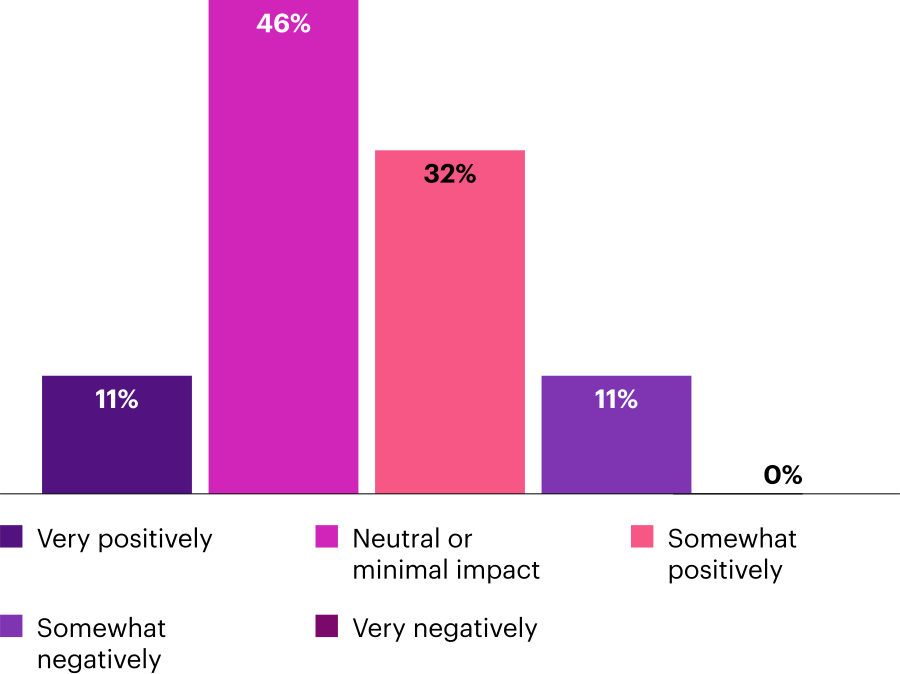
Survey results show that 46% of UAE respondents perceive a neutral or minimal impact of job hugging on their organizations. Stability and continuity are clear benefits, particularly in sectors where tenure deepens expertise.
But neutral does not necessarily mean harmless. Despite providing short‑term consistency, job hugging introduces long‑term risks – especially for economies focused on agility and innovation.
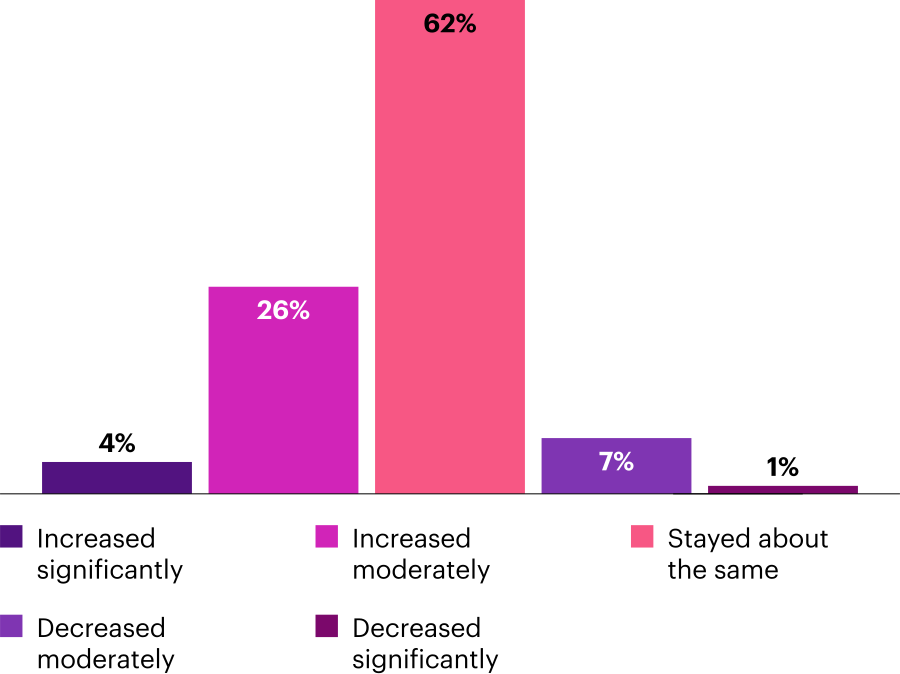
UAE organizations report that voluntary turnover has largely remained consistent compared to the previous year, with 62% saying it has “stayed about the same.”
Meanwhile, moderate turnover best describes current employee behavior in which employees are relatively open to opportunities but are not actively seeking them, suggesting a cautious attitude toward career moves.
This slow‑down in mobility can have downstream effects on talent pipelines, leadership readiness and wage inflation.
Across the region, especially in the UAE, job security during economic uncertainty is the overwhelmingly dominant reason employees stay. It ranks as the top choice among survey respondents, far ahead of compensation or culture.
Other significant “stay factors” include:
Yet one reason stands out as particularly relevant to the region: Limited attractive external opportunities, reflecting a more competitive market across certain sectors and levels.
When employees do decide to move on, the driving force is unmistakable: 67% cite better pay and benefits elsewhere as the primary reason.
Close behind are:
This demonstrates that while job hugging slows turnover, it does not eliminate flight risk, especially when the market improves.
In the UAE, the most significant risk attributed to prolonged job hugging is career progression bottlenecks, particularly for emerging local talent. Without natural attrition or mobility, succession paths become blocked and younger employees struggle to advance.
Other notable risks include:
These risks highlight the importance of balancing retention with ongoing workforce renewal.
Despite its risks, job hugging offers meaningful benefits. In the UAE, the top advantage cited is building long‑term institutional knowledge, which is crucial in a rapidly expanding and maturing economy.
Other reported benefits include:
For industries where expertise and relationships matter, continuity can be a competitive asset.
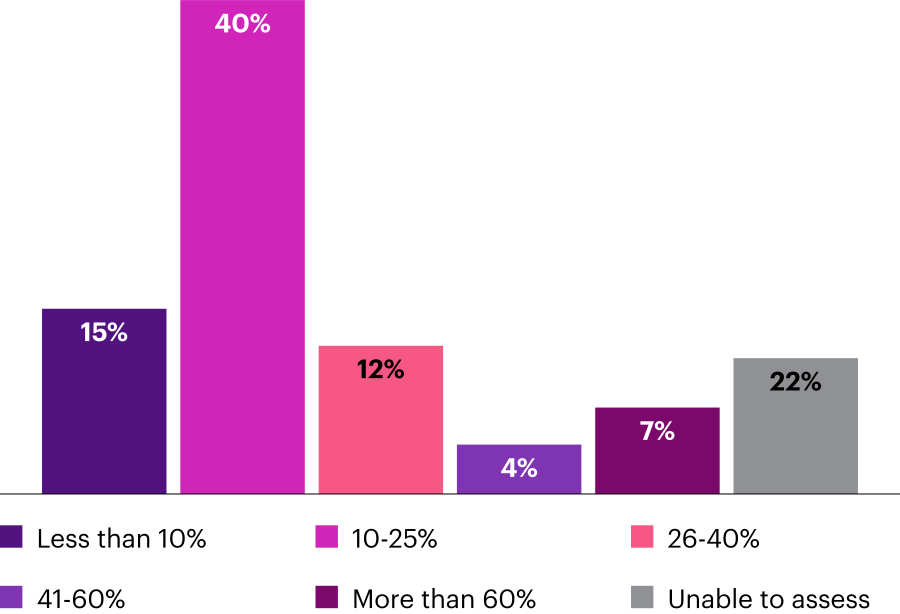
Most UAE organizations estimate that 10–25% of their workforce is job hugging. A smaller but notable segment falls into the 26–40% range, signaling that as markets remain tight, employee behavior is becoming increasingly entrenched.
If market conditions improve within the next 12–18 months, UAE respondents anticipate a moderate level of flight risk, with many employees likely exploring external opportunities once confidence returns.
This potential “unfreeze” in the market underscores the need for proactive talent strategies today.
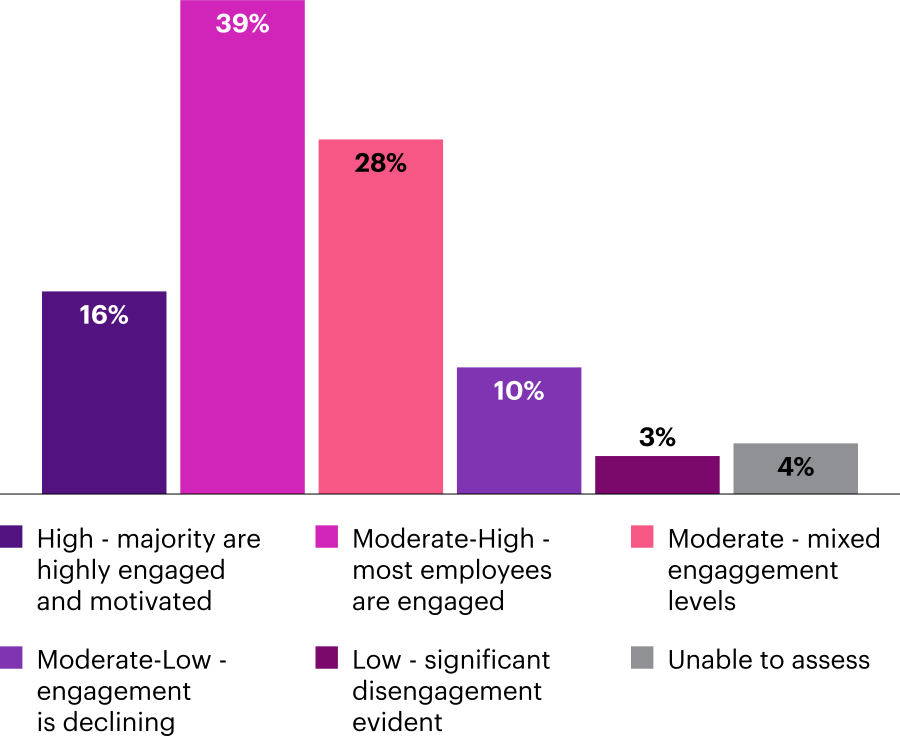
UAE organizations generally report moderate‑to‑high engagement, a promising sign that many job‑huggers remain committed, not complacent.
However, technological readiness is more concerning:
This suggests a widening skill gap unless organizations accelerate reskilling and workforce development initiatives.
Over the past year, organizations in the UAE have seen no significant change to some improvement in their ability to attract high‑quality external talent.
This stability may reflect both improved hiring processes and reduced candidate competition due to job hugging.
The verdict: It depends.
The survey reveals no consensus – only nuance. Leaders highlight advantages, such as:
But others warn of substantial drawbacks, like:
The most common theme: Job hugging is beneficial only when paired with engagement, development and mobility. Without these, it becomes a long‑term liability.
The findings point toward several strategic priorities:
Job hugging is neither inherently good nor bad – it is a symptom of deeper market dynamics. For the UAE, it reflects a maturing workforce, heightened economic caution and shifting skill demands. Organizations that view job hugging as an opportunity for strategic planning – not just a retention trend – will be best positioned to leverage stability while protecting their agility and innovation edge.
Laurent Leclere support local and international organizations accessing latest Compensation & Benefits practices survey databases across the Middle East region and/or across industries. Based in Dubai, he helps organizations developing their competitive edge on C&B matters.
Radhika Gupta brings deep expertise in HR and Rewards Transformation and M&A advisory at Willis Towers Watson. She has led complex transformation initiatives for leading GCC organizations and supported high-impact M&A transactions, providing strategic guidance on people strategy, leadership and rewards, across the full deal lifecycle from pre-deal due diligence to post-merger integration.
Piya Oberoi supports multinational organizations across WTW’s CEEMEA region and beyond, advising on benefits, wellbeing, and broader people strategies. Based in Dubai, she works closely with global employers navigating change in today’s evolving workplace.


